
The following article is part of Dot Dot Dot’s ‘Pulse Check’ series that provides real-time industry analysis by connecting the dots between trends, brands, and wider cultural movements.
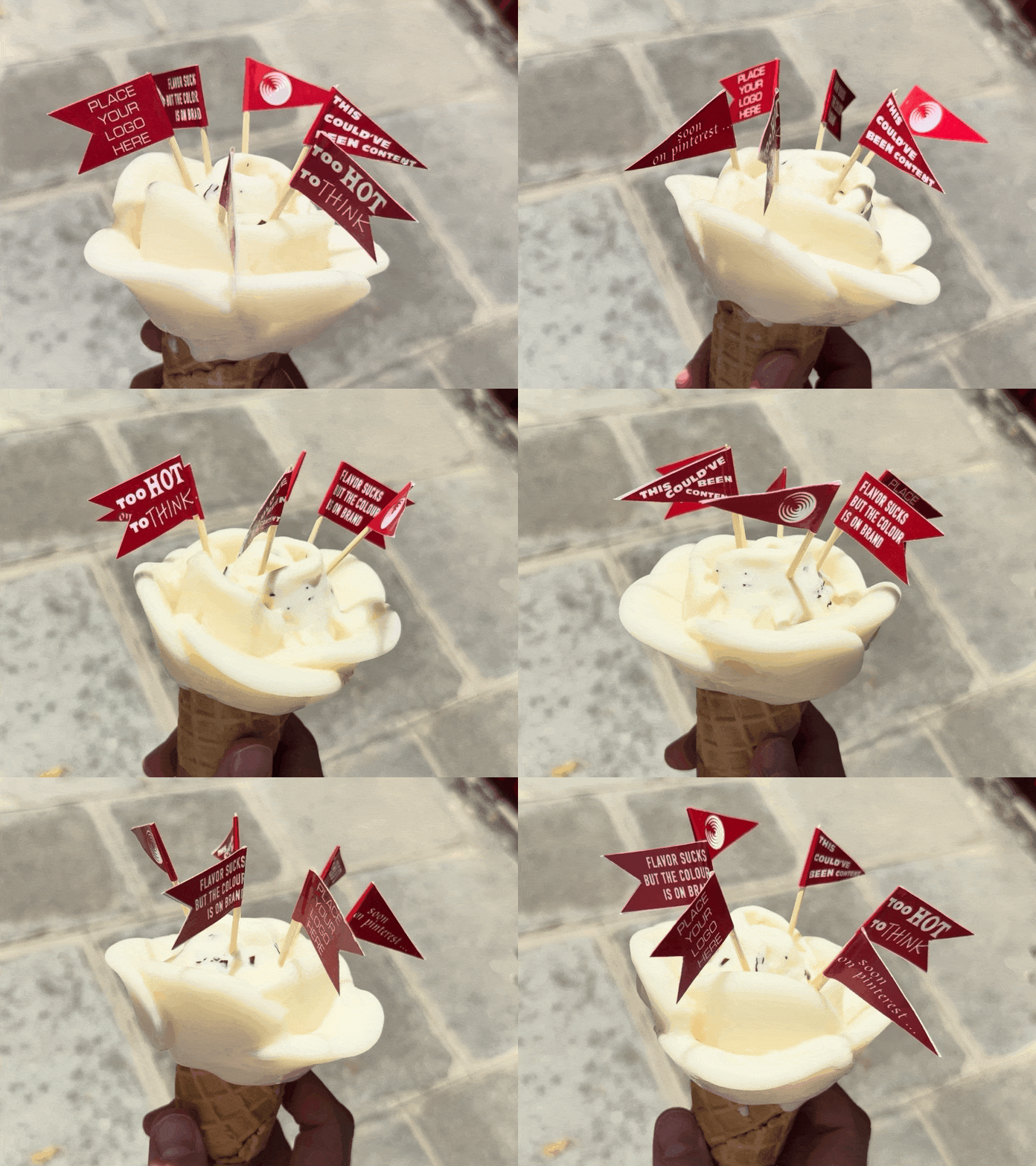
DISCLAIMER: Ice cream. This entire article is about ice cream.
We’ve written just over three and a half thousand words (with McKinsey citations, BCG research, and market size figure) on a frozen dessert that melts before you’ve finished photographing it. There are a handful of interviews with ice cream makers who operate at the intersection of food and fashion culture. There’s a section about the psychology of status objects that takes a good four minutes to read. All of it is about ice cream.
If you’re one of those people who claims not to like ice cream: this week’s newsletter is not for you. We don’t want you here. You will find this piece deeply alienating and frankly so will we if you read it. Ice cream is mentioned a staggering 43 times, there are approximately a dozen photographs of it, and we have spoken to people whose whole lives are organized around making it well. You would be miserable. Go outside. Come back next week when we do something else.
For those who DO like the joys in life… tuck in.
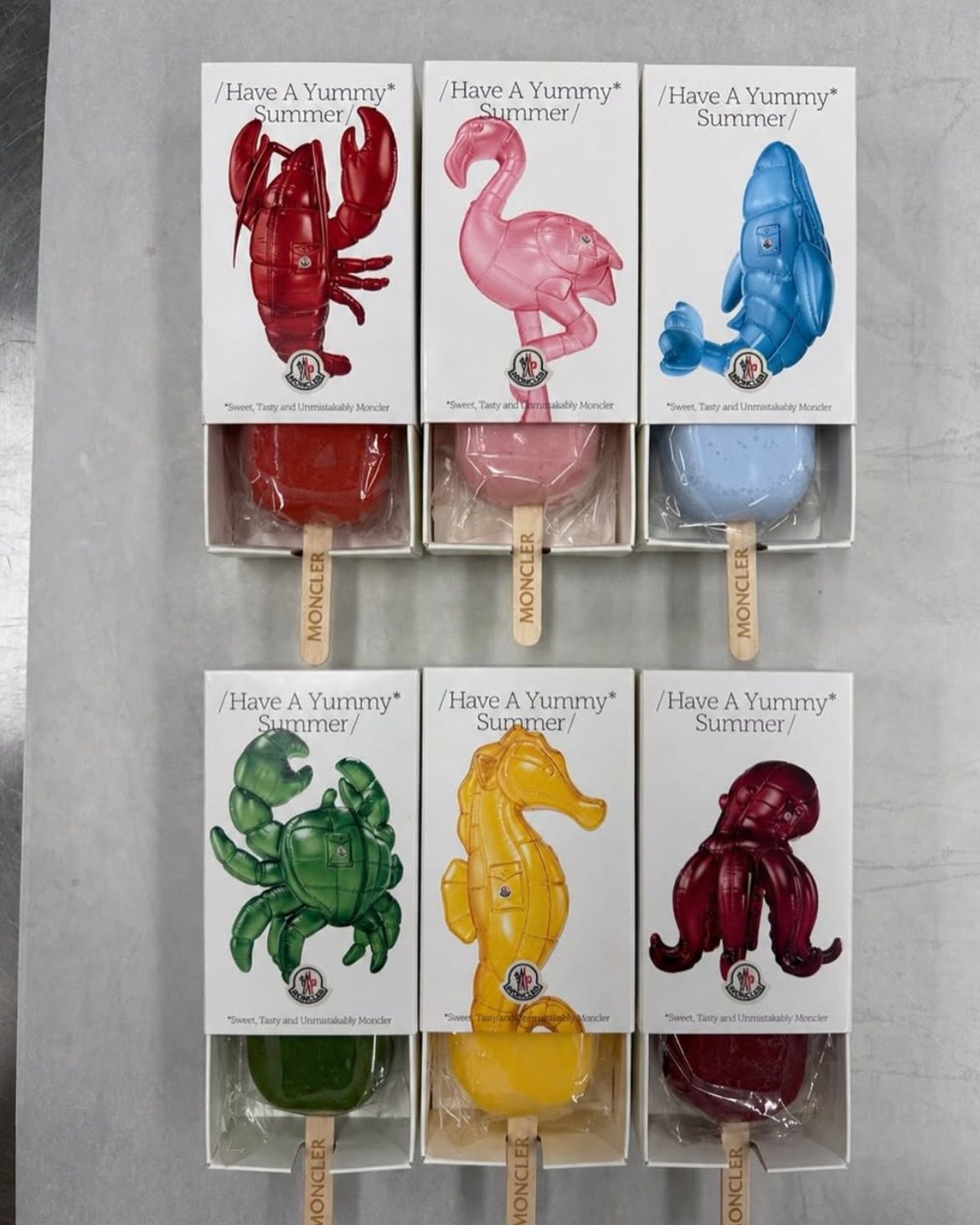
My feed over the past few days has felt like a fever dream I find oddly comforting. Moncler’s latest Puffy summer campaign using bright red, pink, yellow and blue ice cream on a stick in the colors of its new puffer jackets. MAIN ROSE (Zara Larsson’s new lingerie line) posting bright, multi-layered ice cream in line with her Midnight Sun album roll out.
Folderol in Paris (the ‘it’ natural wine bar and ice cream shop in the 11th) got so crowded it hired a bouncer and hung a sign reading no TikTok, which did nothing. The concept spawned imitators in New York, London, Tokyo, and Detroit. Jesus, we really are millennials.
But something more structural is happening beneath all of this. What ice cream is actually mapping, in real time, is a fundamental reorganization of where an entire generation parks its desire, and what it now costs to feel like you belong to something worth belonging to.
You know the image. Girl, great coat, impeccable in that way that looks accidental. Soft serve in hand. Her boyfriend in the frame (Jaded London jeans, washed-out pastel cardigan, small chain, slightly overgrown moustache) tolerating this photograph with the energy of a man who has been asked to be in many photographs. The cone is picture-perfect against an exposed brick backdrop. She has not yet eaten the ice cream. She is waiting for the light. The ice cream does not care about the light. The ice cream is melting. Even better.
I’ve seen this image outside Chunk Provisions in London, Gelateria DODO in Seoul, Erewhon in Silverlake, Ijskuypje in Amsterdam where the queue wraps around the block as if it’s a Supreme drop, Tano Gelato in London where you need to know where the entrance is (which means the photograph also carries the social capital of I found the secret door, as Dot Dot Dot friend Tora Northman tells us).
A Windsor ice cream shop posting daily scoops shot on an iPhone. Its recent berries and clotted cream video got 53 million views, chocolate orange 5.5 million. Criminisi Ice Cream’s Blue Bubblegum Blitz gelato: 44.1 million and counting.
Then there’s Dylan Lemay, a former Coldstone Creamery employee who built a social following of over 15 million people doing nothing but making ice cream and is currently the number one creator on TikTok in the food and beverage space.
What the hell is all this then? Well, ice cream is a category so visually inherent and emotionally immediate that it creates content as a side effect of simply existing. And that makes for quite a Dot Dot Dot story…
Start with the economics, because they explain everything else.
The global ice cream market sits at approximately $113 billion today and is expected to grow annually by 5.8% at CAGR over the next few years. It held firm through a pandemic and through the sharpest inflation in a generation. More important than the size is where the growth is concentrating: the premium and artisanal segment, driven disproportionately by younger consumers.
Half of Gen Z and millennials in the US report actively seeking out new ice cream experiences more often than the year before. Between January and May 2025, American ice cream spending surged 26.5% year-over-year, with Gen Z identified as the primary generational driver.
The same generation every luxury brand describes as aspirational but financially constrained is spending measurably more on premium ice cream. The price floor of aspirational fashion has risen so aggressively over the past decade that what once functioned as a reachable symbolic purchase now requires a genuinely different income bracket to justify. The Bottega Veneta pouch. The entry Loewe puzzle. The “accessible” Saint Laurent bag. These were never cheap, but they were once legible as achievable.
That era is functionally over. Brands made a deliberate decision to compress their customer bases upward, toward the ultra wealthy. It produced a generation with deep brand literacy, genuine aesthetic investment, and a structural inability to participate through product.
According to Boston Consulting Group, 73% of Gen Z actively cut everyday spending to redirect money toward experiences and quality goods that reflect their values. McKinsey meanwhile states that groceries (not fashion, not travel, not even dining out) rank as the number-one category where Gen Z and millennials planned to increase spending. Groceries. The category that contains the $20 Erewhon smoothie, the €7 seasonal soft serve, the artisanal gelato with the queue. The category that has quietly absorbed the aspirational energy luxury fashion spent decades trying to own.
Economists have a term for this—”affordable indulgence substitution”—but the term flatters the theory by making it sound more stable than it is. What’s actually happened is a structural collapse in the price of social status. The Diptyque candle, the Charlotte Tilbury lipstick, the “small luxury” that the original lipstick effect pointed toward were still objects meant to be enjoyed individually in private, still sitting on a shelf communicating taste to nobody but you.

Ice cream, iced matcha, the $9 pastry from the right artisanal bakery, the bubble tea drop that lasted one weekend in one city aren’t substitutes for the bag in the way a candle is a substitute for the bag. Clearly they are a different category of transaction entirely. One that figured out that the social signal doesn’t require a moment or a location or a community of people who made the same choice. It’s become more important than a durable object.
The candle costs €60 and nobody knows you own it. The soft serve costs seven euros and it’s been seen by two hundred people by the time you’ve reached the corner. Luxury spent a century building the infrastructure of desire around scarcity and exclusivity. This generation found a shortcut that costs less than a glass of wine and delivers the same feeling of being in the right place, with the right people, at the right time. It’s important to understand the scale of this structural repricing of what status costs as it has very significant implications for every brand that built its identity around being expensive.
Yeha Shin, founder of Korean gelateria DODO which was founded in 2020 and operates five locations across Seoul, and who has collaborated on ice cream projects with everyone from Salvatore Ferragamo and Hublot to Birkenstock and recently those Moncler animal-shaped popsicles, agrees: “Ice cream has become more than food in that it sits somewhere between nostalgia and aspiration, which makes it surprisingly powerful as a cultural object.”
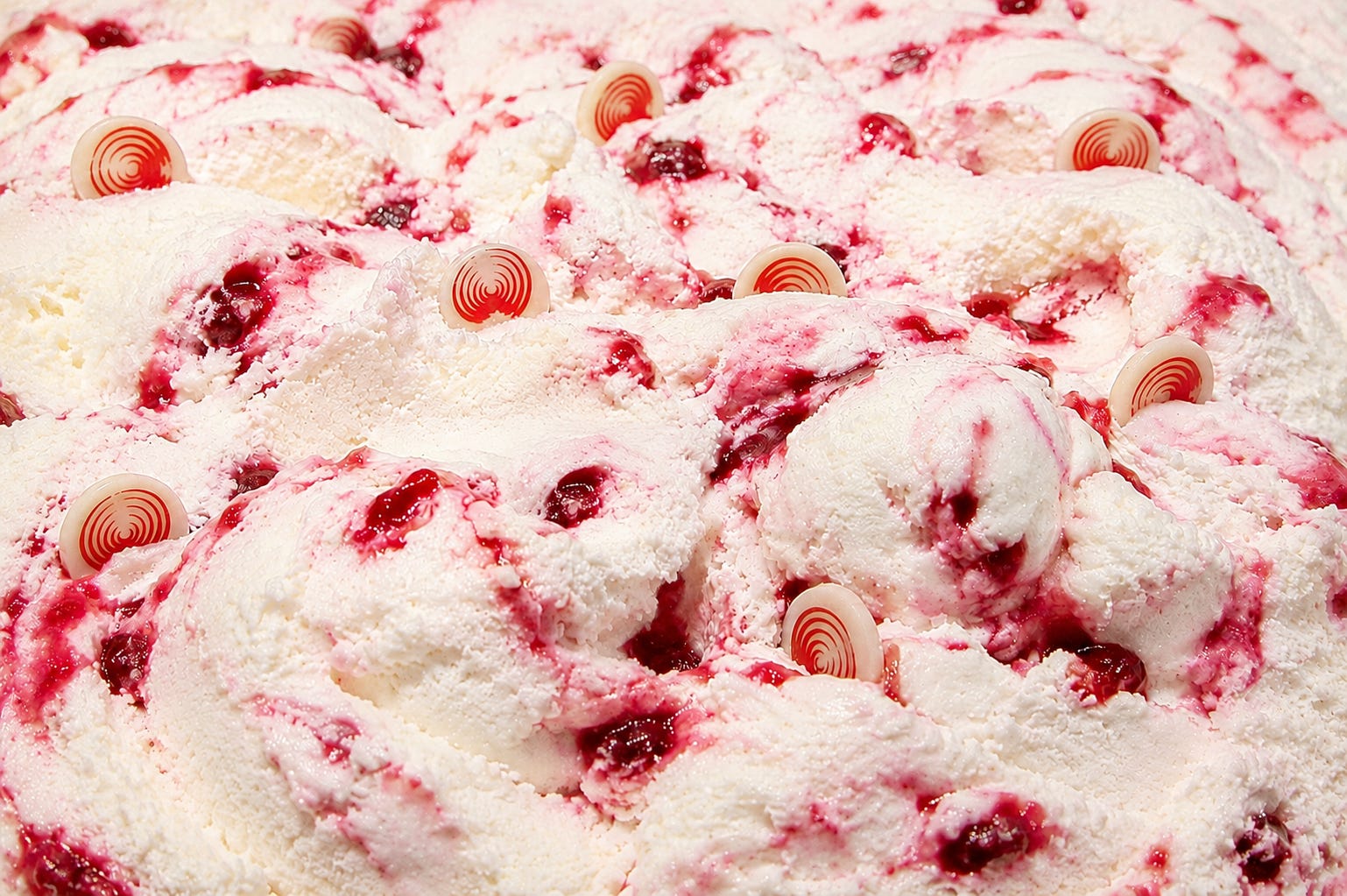
To promote this article, we partnered with Shin at DODO’s Gangnam location on a yoghurt raspberry swirl flavored ice cream with our Dot Dot Dot logo chocolate buttons. All inspired by our logo. How fun!
“We live in an era where people want to share things that feel beautiful, fun and emotionally resonant. Ice cream delivers that instantly. This emotional reaction in a very short moment is accessible, unlike luxury fashion. Almost anyone can participate in it. In that way it can feel like a small, accessible luxury [in its own right].”
Comments
Nothing yet. Say the first thing.
Sign in to join the conversation.