
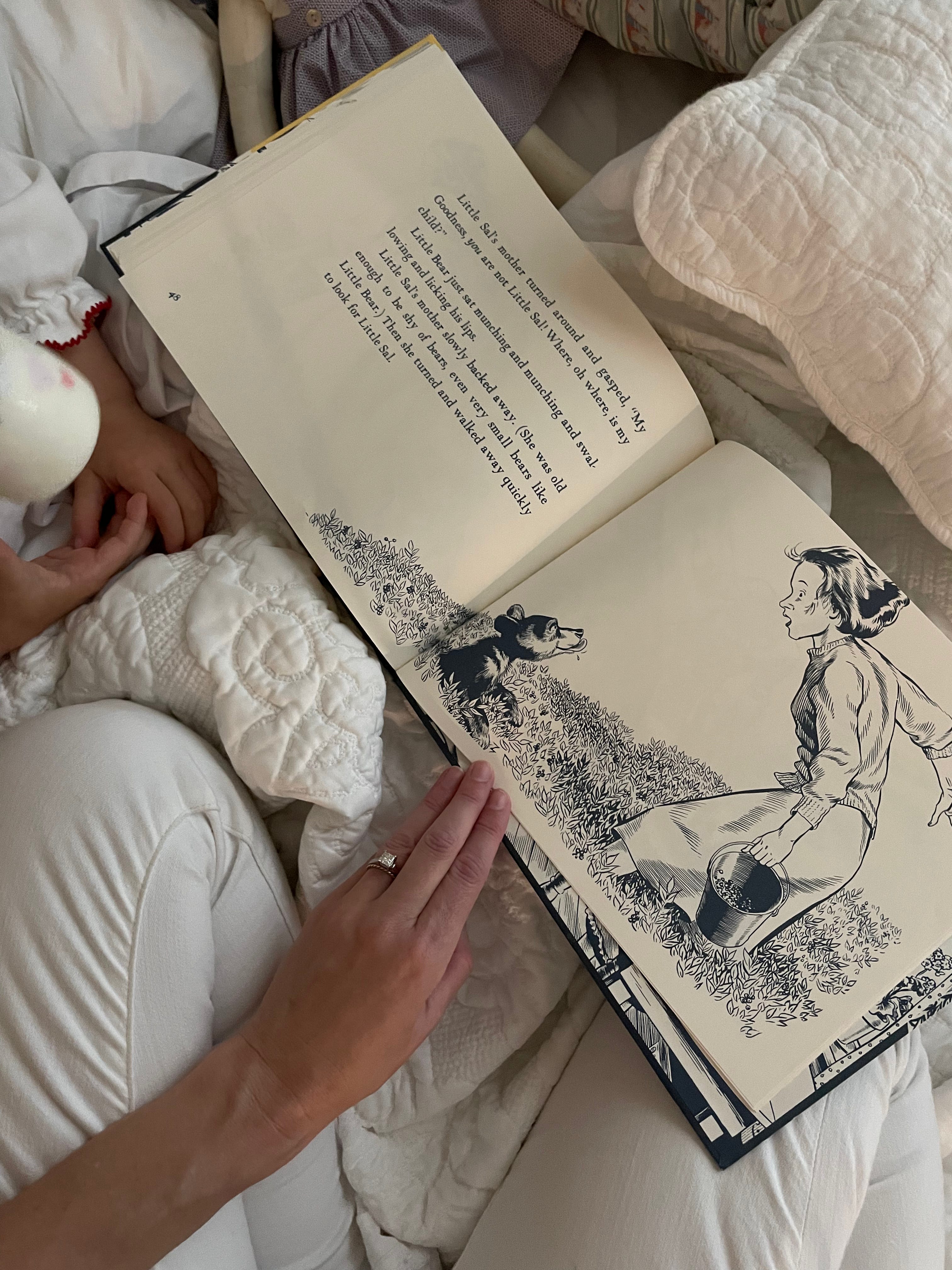
Way before our Classic Children’s Summer Book Club was even an idea I wrote a post about my experience reading to my children (updated copy below). In age where some Ivy League students can’t finish a novel (something I feared would happen as you’ll read below), and there is an attention span crisis among children and teens, I believe in what I wrote even more.
Five years ago, when my preemie daughter was released from the NICU, my husband and I were willing and ready to do anything and everything to help her brain development. But I’ll never forget how surprised we were at her doctor’s first - and most important - piece of advice.
This respected neonatologist told us that the best thing we could do for our child was to read to her as much as possible. He told us to read to her in the morning and at night, in the waiting room of doctor’s offices, and even in the carpool line. Even when we didn’t think she was listening, we were to still read to her because it was the absolute best thing we could do for her brain and development.
I admit, at first I thought it odd that his number-one piece of advice wasn’t some new drug, or therapy, or even a Kumon class to get her ahead of the game! But later I found out why: study after study shows that reading to children when they are young is the best indicator of success in school. Perhaps this doctor had seen evidence of this in his patients and that’s why he was so adamant. Whatever the reason, his words stuck with me. Even though that first year we were consumed with breathing tubes and oxygen tanks and surgery after surgery, my husband and I always tried to make time to read board books and picture books to our baby girl.
That following year, my oldest daughter began attending a school that emphasized reading classic children’s literature aloud to your children. So, to kill two birds with one stone, I began reading to both girls the same timeless books my mother and grandmother read to me as a child: The Tales of Peter Rabbit and Caps for Sale, just to name a few. I knew they were way above my almost-two-year-old’s head, but surely it couldn’t hurt her little brain to hear such rich, beautiful words and to see the vivid illustrations of these older books.
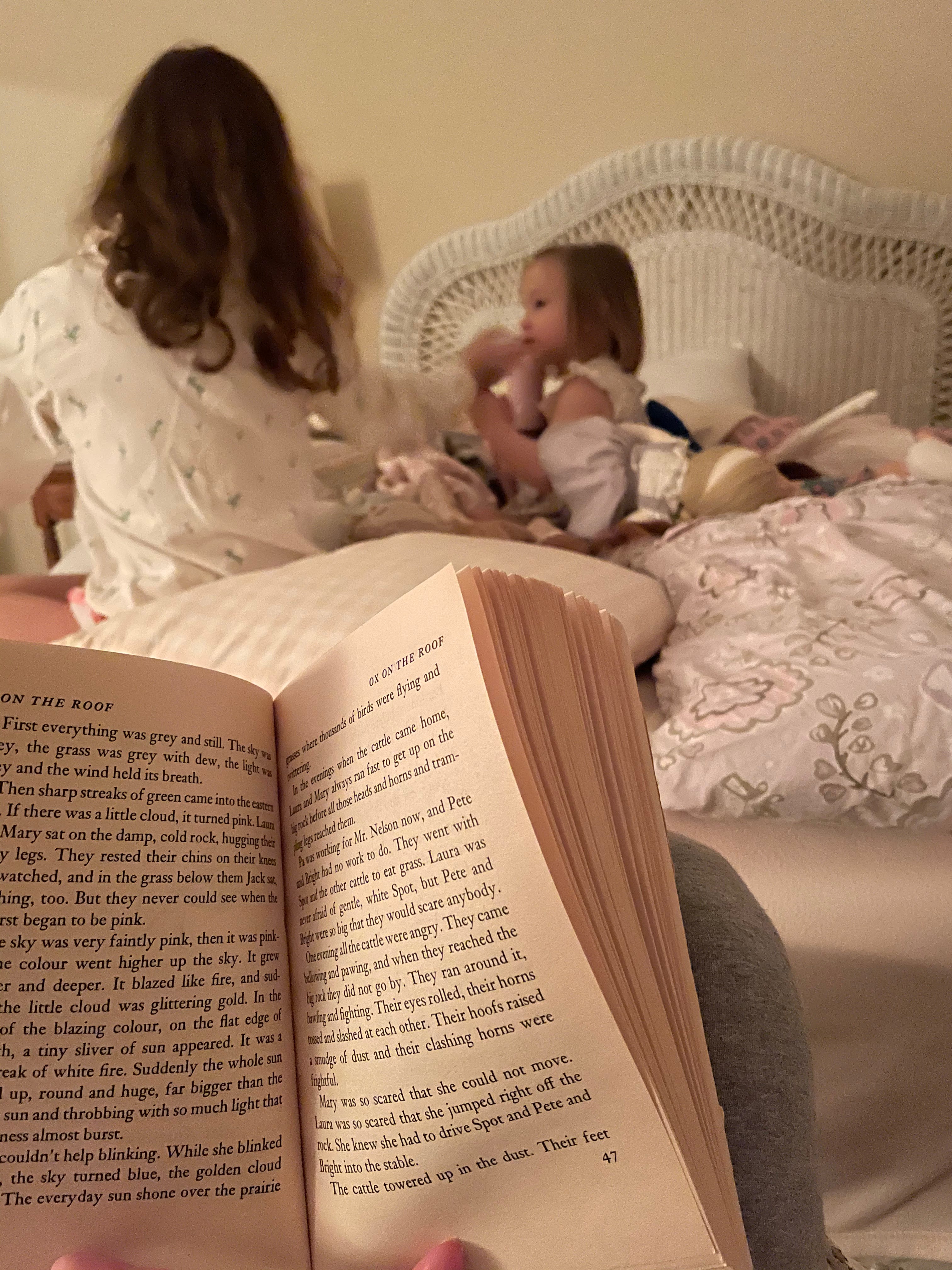
As they both got older, we progressed into longer “read aloud” books. When they were three and six years old, I read them Happy Little Family and All-of-a-Kind Family - longer chapter books with few illustrations. My three-year-old would often play in her bed while I read, but afterwards she would make comments or ask questions that let me know she had been listening the entire time. The next summer past summer I read them Little House on the Prairie and The Black Stallion, and both girls soaked up every word of adventure, danger, and fun.
Today our once-preemie baby, now almost five, astounds her grandparents (and me!) with the range of her vocabulary and the articulation of her words - something that has to be partly attributed to the wonderful advice her doctor gave me years ago and the gifted authors who wrote such beautiful and enduring stories. (And I don’t mean to sound as if I’m bragging about my child - if you knew the story behind my pregnancy and birth, you would be astounded too!)
Ironically, what started out as a task to help my premature daughter has, in fact, become such a precious gift to me. The time when I read to my children is usually the sweetest time of our day. Together we have laughed hysterically at Louis, the silly yet genius swan in The Trumpet of the Swan. We have cried at the sweetness of a wealthy couple in The Lion in the Box. And I can’t tell you how many serious moral discussions we have had about Beatrix Potter’s The Two Bad Mice. These are memories I will hold dear forever.
I believe children who have swum through the pages of beautiful literature their entire childhood will no doubt be set apart in adulthood - by their vocabulary, their critical thinking skills, their knowledge of other cultures and history, and, most importantly, their awareness and compassion for others. Exposing them to beautiful literature as a child will also help them be able to sift through the muck and mediocrity our culture throws their way in various forms of media and recognize and hold tight to the beautiful and important things of our world.
I can say from experience that reading stories from centuries past has transported my girls out of their 21st-century American bubble and given them a bit of (much-needed!) perspective. They were shocked when Laura and Mary were so incredibly grateful for the one piece of peppermint candy they got in their Christmas stockings in Little House on the Prairie. And they were astounded at the responsibility of the eldest daughter in The Courage of Sarah Noble, who did all the cooking, cleaning, and mending for her father while he built their family a house from scratch. (I remind them of that when they start whining about having to make their beds!)
So how do you know what good books to read to the children in your life? It takes effort to sift through a lot of the lackluster books out there as many of the books on the children’s shelves of the library or bookstore are what I call “filler” books. They aren’t bad, per se, but they add little depth to our children’s lives. They are basically time-fillers - many of them watered-down stories with pop culture-like characters with the intention of making children want to read more. (Good intention, bad execution - in my opinion!)
Want an example of good versus mediocre literature? Here’s an excerpt from a “filler book” that was displayed at my local library:
“She figured wrong. Katie Sue talked back! Just as sassy as she could be, she said, ‘How DID you get so bossy?’ Then that puny little thing, that loony thing, grabbed the ball and bounced away.” (The Recess Queen, 2002)
Now here’s an example of a quality children’s book for the same age group:
“Once again the big silvery moon rose high in the sky. The owls winged noiselessly from the sycamore to the pine woods. Nothing else stirred in the silent snow-covered land.” (The Big Snow, 1948)
Now imagine two children. One child has grown up reading mostly “filler” books with syntax like in the first example. The other child has grown up reading books with rich, beautiful language like in the second. Which child, when he gets to high school or college, will have a much easier time reading and enjoying the required readings of Chaucer, Austen, or Fitzgerald? And which one will have to scour the internet to figure out what those books are all about because they aren’t used to reading literature with much depth?
And let’s not underestimate the power of a captivating illustration in a children’s book. I can’t tell you how many times my children have stopped me in the middle of a sentence to notice something special about an illustration. I sometimes get annoyed at the interruptions, but I know it is so wonderful that they are mesmerized by beautiful artwork. I hope this will stay with them throughout their lives.
And a quick side note: I am not totally against “filler” books. We do have some of those and other junky character books in our house. But my children rarely ask me to read those to them. They always go back to the time-tested stories and illustrations. (It’s not something I have magically done, either - I just think children are innately drawn to stories of adventure and redemption and victory - just like adults!)
Whether you have children of your own or not, you can still share wonderful stories with the children in your life. You can read to your nieces and nephews or your grandchildren when they visit! You could even consider volunteering to read to children at a local Boys and Girls Club.
I think one of the unexpected benefits of reading these books to children before they are school-aged is that they don’t see reading as “homework” or a “chore,” but as something to be savored and enjoyed.
What I have found - and why I am writing this - is that reading wonderful literature to children when they are young will not only give them an expansive vocabulary, it will give them an appreciation for beautiful things, a love for books, and, hopefully, an empathy for those around them. What a wonderful gift to give to the next generation!
I wrote the original blog post over 10 years ago and I would write the same today. Reading to my children wonderful books is one of the best things I did for my children. My teens possess the things I hoped they would have above. (I will write more about that another time.)
There are so many wonderful classic children’s books that the younger generations aren’t even aware of because they aren’t in the school book fairs or book stores. That’s why I started our Classic Children’s Summer Book Club. I highly recommend layering in some of these precious books to your family reading time!
Thanks for reading The Influence of Motherhood! This post is public so feel free to share it.
Comments
Nothing yet. Say the first thing.
Sign in to join the conversation.