
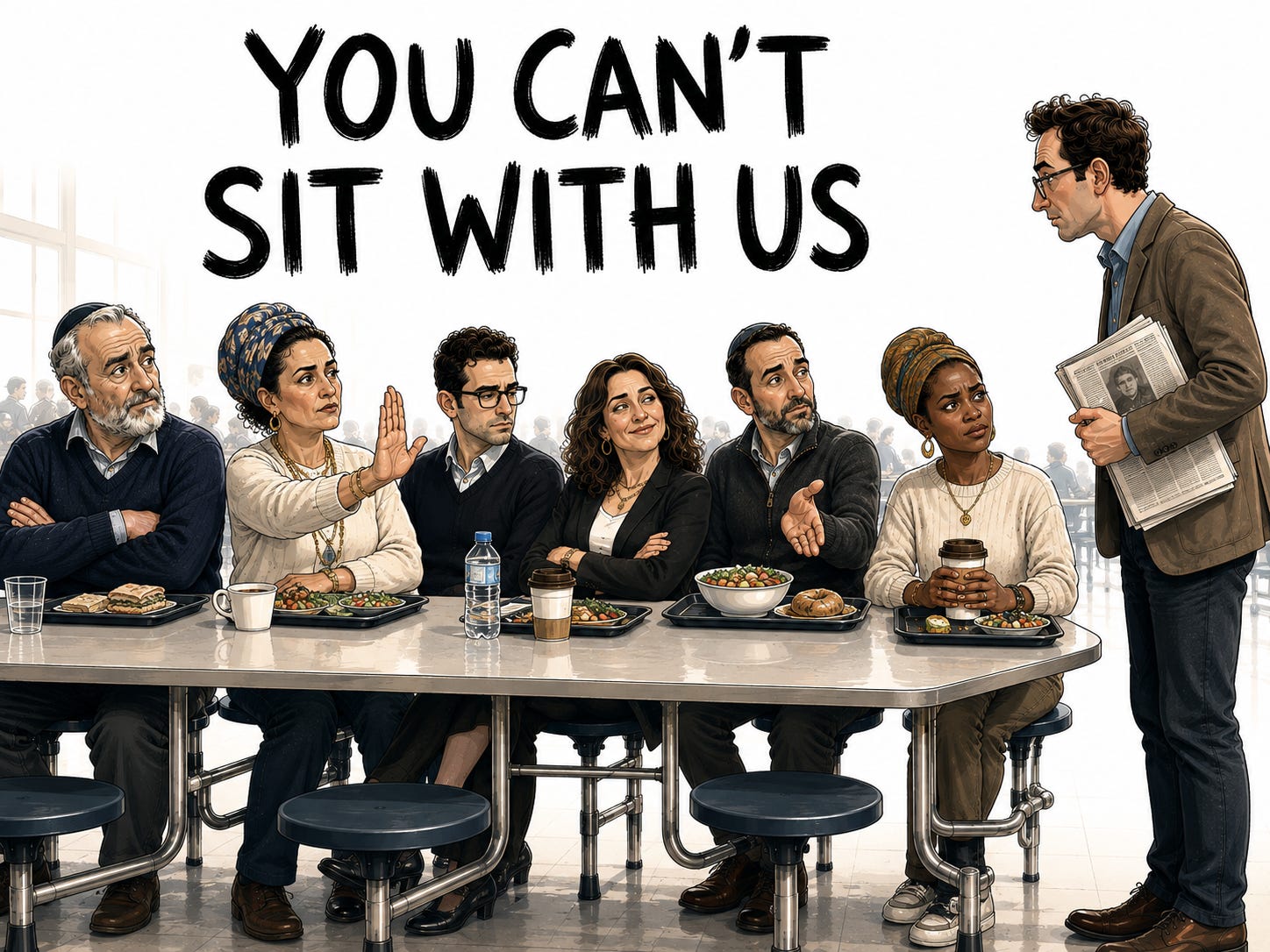
In high school, the lunch table was about popularity.
When it comes to the Jewish future, it’s about something else: responsibility.
There’s a particular kind of Jewish public figure who’s become impossible to avoid in the conversation about Israel. They’re accomplished, credentialed, and highly visible. They appear on television, teach at elite universities, win Oscars and Emmys, serve in Congress, and then tell the rest of us what Jewish morality requires.
I don’t care if a Jew criticizes Israel. Israelis have argued fiercely about their own government for decades. Criticism was never the betrayal.
The line gets crossed somewhere else, when engaging with Israelis becomes something to apologize for, when Holocaust memory becomes a rhetorical prop, when “genocide” becomes a badge of moral seriousness instead of a legal conclusion that has to be demonstrated, and when Jewish identity itself becomes the credential offered in place of evidence.
This isn’t a list of Jews who disagree with me.
It’s a list of people whose arguments deserve to be examined rather than applauded simply because the person making them is Jewish.
Before writing this, I did the underlying work myself.
In War Math, I went through the casualty data and the mathematics behind the claim that Israel is committing genocide, because if casualty data are being offered as evidence of intent, the data have to survive scrutiny.
Read it first if you want the numbers.
This essay is about the people making the argument.
Peter Beinart
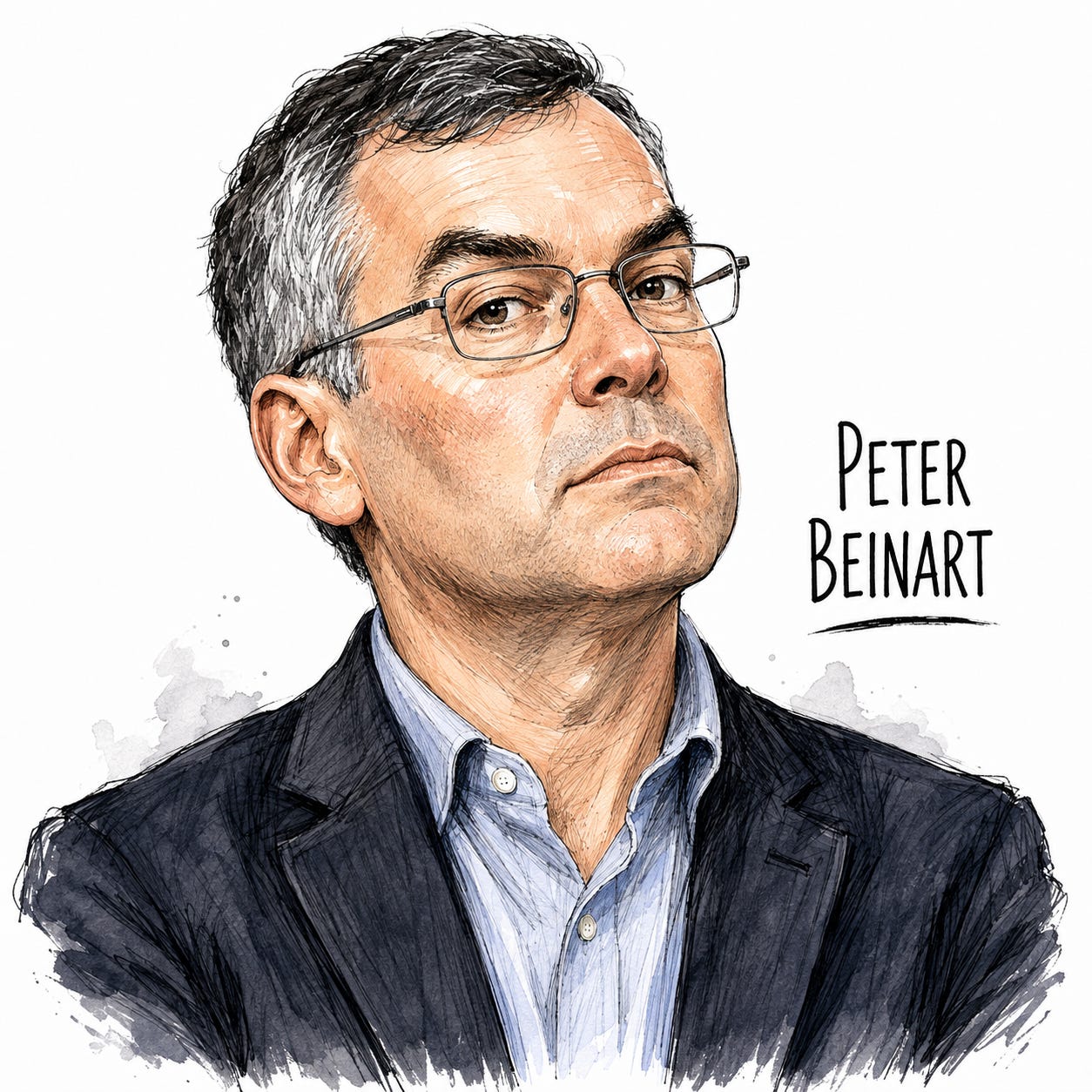
In November 2025, Beinart went to Israel to speak at Tel Aviv University despite BDS objections. He initially defended the value of talking to Israelis with whom he disagreed. Then he apologized, calling the appearance a serious mistake and saying he’d let his desire for that conversation override his solidarity with people demanding a boycott of the institution that had hosted him.
A Jewish American intellectual went to Israel to talk to Israelis, then apologized for doing it. That creates a framework where the ordinary act of sitting across from another Israeli and having a conversation becomes something morally suspect.
I don’t accept that framework.
Peter Beinart, you can’t sit with us.
Norman Finkelstein
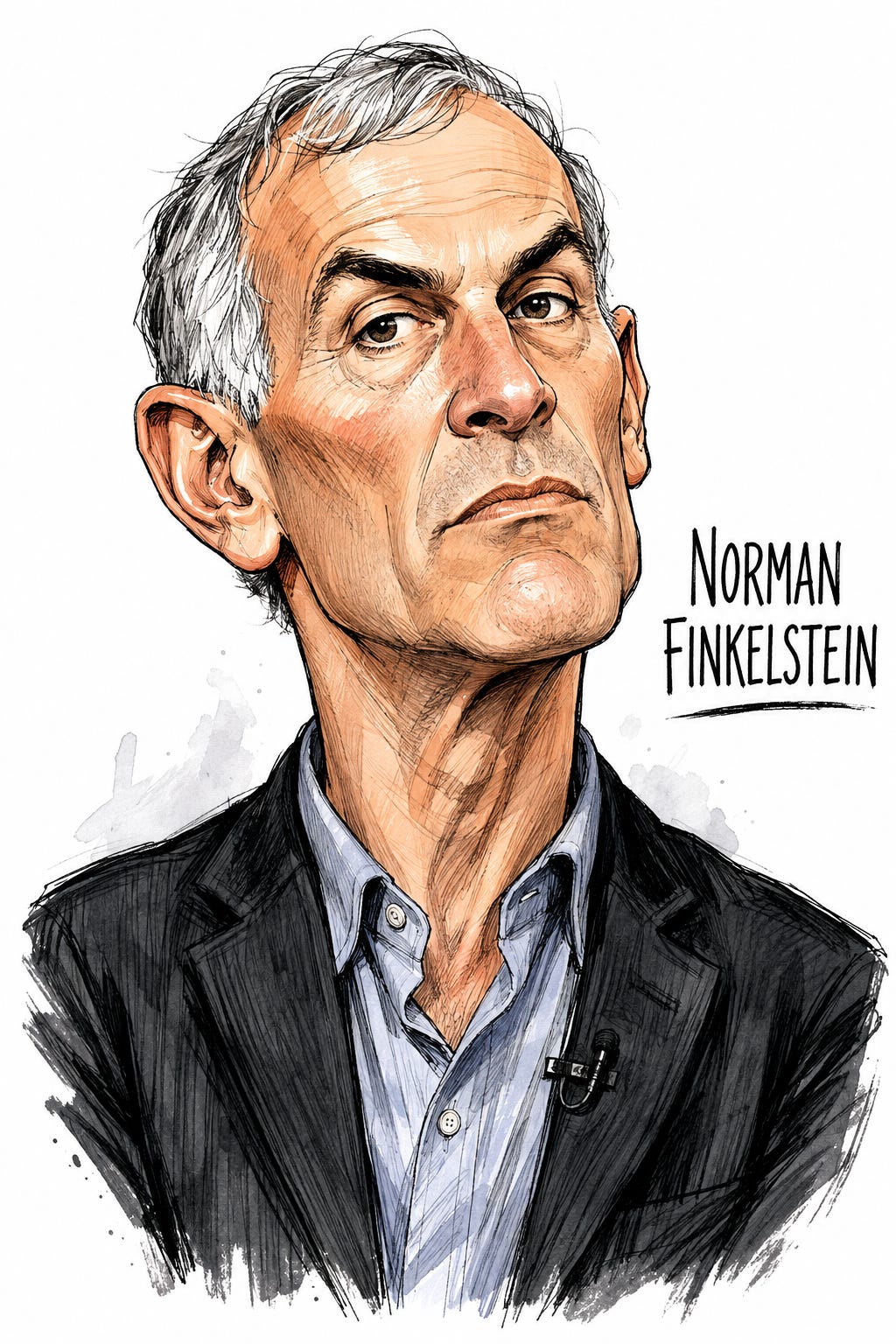
In February 2025, speaking at the University of Wisconsin Milwaukee, Finkelstein said there was no war in Gaza. There was genocide.
That’s a legal claim.
The Genocide Convention requires specific intent to destroy a protected group, in whole or in substantial part. Finkelstein has spent decades studying international law. He knows the distinction, which is precisely why his conclusion should be tested rather than accepted on authority.
The word carries enormous rhetorical force because of Jewish history. That makes the burden of precision greater, not smaller.
Norman Finkelstein, you can’t sit with us.
David Grossman

Grossman is different. He’s one of Israel’s most celebrated living writers, and his son Uri was killed serving in the IDF in 2006.
For years he refused to use the word genocide about his own country.
In August 2025, in an interview with La Repubblica, he stopped refusing:
“My heart is broken, but I must say it: it’s genocide.”
I take that seriously.
Grossman’s conclusion comes from years of engagement with Israel, war, grief, and the moral consequences of Israeli policy, and his sincerity is obvious. I’d rather confront a painful argument made in good faith than dismiss it because I dislike where it leads.
But sincerity doesn’t establish a legal proposition.
Pain doesn’t establish specific intent.
And a novelist’s anguish, however profound, doesn’t make his reading of military intent automatically correct.
David Grossman, you can’t sit with us.
Avraham Burg

Few people carry stronger Zionist institutional credentials than Burg: former Knesset Speaker, former Jewish Agency chairman, former interim President of Israel.
His recent writing has become a sweeping moral indictment of the direction of the Israeli state and of the relationship between Jewish identity, sovereignty, power, and land. In his August 2025 essay, he appealed to Jews worldwide to join an international accountability effort against Israel.
States can be judged morally, of course. Leaders can be removed, laws changed, militaries investigated, and citizens can demand something better.
But there’s a difference between demanding accountability from Israel and treating Jewish sovereignty itself as the underlying moral problem. That’s the line I believe Burg has crossed.
Avraham Burg, you can’t sit with us.
Hannah Einbinder

At the 2025 Emmys, Einbinder closed her speech with “Free Palestine.” Afterward she described it as her obligation as a Jewish person to distinguish Jews from the State of Israel, and she has supported the Film Workers for Palestine boycott campaign.
I don’t need Einbinder to defend Israeli policy to sit at this table.
I need her to reckon with the fact that a thirty second acceptance speech doesn’t resolve a century of Jewish history, particularly when the person delivering it is using her own Jewish identity as part of the moral authority behind the message.
Israel isn’t an abstraction to millions of Jews who have family, citizenship, history, language, and culture there.
A celebrity platform isn’t an argument.
Hannah Einbinder, you can’t sit with us.
Bernie Sanders
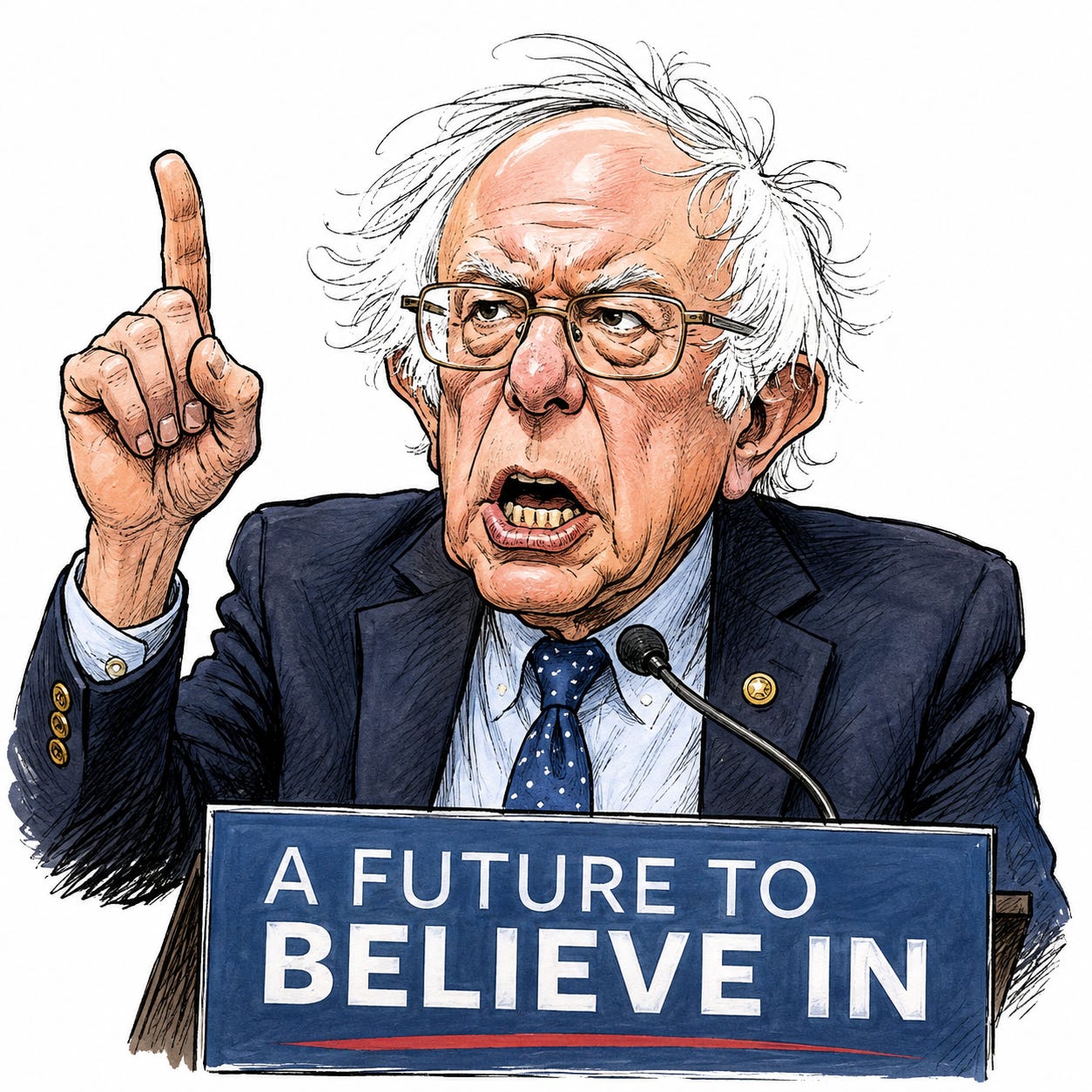
This one is personal.
I worked for Bernie Sanders.
I supported him.
There was a time I hoped he’d become the first Jewish president of the United States, and I believed his moral seriousness meant something.
That’s exactly why this is painful.
When I see his name now, I sometimes feel shame.
Not shame that he’s Jewish.
Shame that I once thought his independence and his moral seriousness stood for something I could be proud of, and that he’s now embraced an accusation against Israel that I believe the evidence doesn’t support.
On September 17, 2025, Sanders published an essay titled “It Is Genocide,” writing that the conclusion was “inescapable.” He cited the United Nations, genocide scholars, Israeli organizations, Amnesty International, and Human Rights Watch.
Fine. Then let’s examine it.
Because “inescapable” is a conclusion, not evidence.
Under the Genocide Convention, the critical mental element is specific intent, dolus specialis, to physically destroy a protected group in whole or in substantial part.
That’s a far higher bar than saying a war caused horrific suffering.
A senator with Sanders’s platform owes the public the argument, not just the verdict.
That’s why I did the numbers.
That’s why I wrote War Math.
I don’t expect him to agree with me.
I expected him to show his work.
And I expected better from someone I once hoped would become the first Jewish president of the United States.
Bernie Sanders, you can’t sit with us.
The Accusation Matters
“Genocide” carries extraordinary weight in Jewish history, and that weight is precisely why the word demands precision.
The Genocide Convention requires specific intent to destroy a protected group, in whole or in substantial part. The scale of civilian suffering matters enormously to any assessment of a war, but suffering by itself doesn’t establish that intent.
A scholar reaching the conclusion doesn’t prove the conclusion.
A UN report existing doesn’t eliminate the obligation to examine its methodology.
A Jewish person reaching the conclusion doesn’t make the conclusion uniquely Jewish, or exempt from being asked to show the work.
That’s why I wrote War Math, to take the argument out of the realm of slogans and put it into the numbers.
The numbers don’t answer every question of international law, but they test the factual story being offered as evidence of genocidal intent.
The story has to survive the math.
I Don’t Care If You Criticize Israel
I don’t care if a Jew opposes Netanyahu.
I don’t care if a Jew believes Israel has committed war crimes.
I don’t care if a Jew thinks the campaign has been disastrous.
Make the argument.
Show the evidence.
Cite the law.
Explain the history.
I will engage.
What I reject is the idea that a Jew becomes morally superior by distancing himself from Israel, or that the most respectable Jewish voice is automatically the one most willing to condemn the Jewish state.
There’s a real asymmetry here.
The senator gets a headline.
The novelist gets a profile.
The actress gets applause.
The academic gets a platform.
The ordinary Jew gets the consequences.
The Jewish student harassed on campus gets none of that. He lives with the consequences of arguments made by people far more insulated from them, people whose careers and social standing can benefit from positions whose costs are ultimately absorbed by Jews with no comparable platform.
That’s where this stops being abstract for me.
Everything above is an argument about evidence, what the law requires, what the numbers show, and why a conclusion needs to earn itself rather than borrow authority from the speaker’s identity or platform.
But evidence isn’t the only thing at stake.
If you get the evidence wrong from a stage that big, real people absorb the cost of your mistake.
If my daughter grows up in a world made less safe because the applause was worth more to you than getting it right, I don’t care how famous you are, how many awards you’ve won, or how many people stood and cheered.
Fame isn’t an exemption from being wrong.
Neither is conviction.
If you make my family less safe, make my daughter less safe, or make her future less safe because the social credit is worth it, the next election is worth it, or the Oscar is worth it, you can’t sit with us.
I don’t care how famous you are.
I don’t care how many awards you’ve won.
I don’t care how many people applaud when you speak.
My daughter doesn’t get to opt out of the consequences of the world you help create.
Neither does yours.
That’s the responsibility that comes with having a platform.
I don’t know anyone’s private motives, and I’m not going to invent them.
Some of these people are sincere.
But sincerity was never the standard here.
Evidence was.
Credentials were never the standard.
Jewish identity was never the standard either.
So Who Gets to Sit at the Table?
Not people who agree with me about everything.
Not people who think Israel is incapable of wrongdoing.
The table is for Jews who can criticize their government without questioning their people’s right to exist, who can care about civilians in Gaza without erasing Israeli civilians, and who understand that solidarity was never supposed to require unanimity.
For too long we’ve been told to choose:
Israel or morality.
Our people or our principles.
That’s a false choice.
I’m done accepting it.
We can hold Israel accountable.
We can demand better.
We can oppose specific governments and policies.
We can argue with Israel.
We can argue with each other.
We can be furious at Israel.
We can love Israel.
We can do all of those things without deciding that Jewish sovereignty itself is the problem.
And we can still say:
Israel is ours.
The Jewish people are ours.
Our history is ours.
Our future is ours.
Nobody gets to make us ashamed of that.
Nobody gets to make my daughter inherit the consequences of their moral posturing and then call it courage.
And nobody gets to sit at our table while telling us that abandoning our own people is the price of being a good Jew.
You can’t sit with us.
Author’s Note
I am an Israeli-born Jew.
I have criticized Israeli governments and will continue to.
This isn’t an argument for Jewish unanimity. It’s an argument that claims should be judged by evidence, law, and history, not by the identity of the person making them.
If someone calls Israel genocidal, I want to know what evidence establishes the required intent.
If someone invokes Holocaust memory, I want to know whether it illuminates history or exploits it.
If someone invokes Jewish identity as moral authority, I reserve the right to ask whether the argument actually deserves that authority.
And if someone uses a public platform in a way that makes ordinary Jews less safe, I reserve the right to say that their platform has consequences.
That’s not hatred of Jews.
It’s an argument about Jewish responsibility.
And I refuse to believe that being a good Jew requires abandoning my people.
Sources and Further Reading
Peter Beinart: November 2025 Tel Aviv University appearance and subsequent apology following BDS criticism.
Norman Finkelstein: February 2025 University of Wisconsin Milwaukee remarks concerning the Gaza war and his characterization of it as genocide.
David Grossman: August 2025 La Repubblica interview in which Grossman described the situation in Gaza as genocide.
Avraham Burg: August 2025 writing concerning Israel, Jewish identity, and international accountability.
Hannah Einbinder: September 2025 Emmy remarks and subsequent explanation of her position.
Bernie Sanders: September 17, 2025 essay, “It Is Genocide.”
Companion investigation: War Math
The legal definition of genocide should be evaluated against the Genocide Convention and the actual evidentiary record, rather than treated as synonymous with civilian suffering or the scale of destruction in a war.
No posts
Comments
Nothing yet. Say the first thing.
Sign in to join the conversation.