
On Wednesday this week, I went to Camber Sands with my writer friend, Shakira, and we talked about our writing projects as we walked and while the sand whipped our ankles. We talked about our dreams for writing, but also how when everything is possible, nothing is ever finished.
Writing as an occupation was supposed to be what I had always wanted. What I thought I wanted was freedom from constraint. Here I am, with the freedom I always craved, realising it may not be what I’ve hoped it would be.
The word ‘freedom’ once implied belonging, being among one’s own people, not sealed off from them. The Germanic root is tied to the word ‘friend’. Think affection and bond. ‘Isolation’, from the Latin ‘insula’, ‘island’ via the French ‘isolé’ and the Italian ‘isolato’. Isolation makes an island of us: we are cut off from the currents that make thinking move and flow.
Constraint, by contrast, comes from ‘constringere’ which to bind together, tie tightly, shackle; to give form through tension.
But these days my process is scattered. I have fellowships to apply for, a 26-page poetry manuscript to finish, one fiction manuscript, and two non-fiction proposals to shape and send to agents. There are also a short story and a flash piece in progress, alongside plans to set up community writing classes, pitch an Arvon residential, apply for Arts Council funding with a friend, and collaborate on a script with another. I’ve been writing back into a collaborative project with the poet Kelvin Corcoran, arranging a performance with a musician, and planning a trip to Iceland’s lava and ice caves. There are pitches to make to Wellcome Stories, submissions to press outlets like Ugly Duckling Press, The Paris Review, and Fence, and the idea of re-entering competitions like the Bridport Prize after years not doing that. I also want to return to writing discrete poems rather than long sequences.1
This morning, for example, I’ve flitted between writing this post and a flash fiction piece. There is a longer version that is a short story, but could be a novel. I’ve toyed with the words. 1057 words became 277 words and then became 213 and now it is 800 words again. All is not lost; flash makes everything tighter and more concise.
I’m like a child in a sweet shop that cannot choose what my money should be spent on. I used to have just one project on the burn, that consumed my focus until it was finished. Often, either my reflective practice or the material I was teaching led me to my next project. Thinking through ideas and possibilities for student writing was perennially generative, as I was persistently looking at methodologies operating in the work of the poets I was teaching.
I voice-noted my friend Thea that I was feeling a bit stuck and disorientated when working from home. More than that, having unlimited time to write, unbounded days without structure, has been making me sort of miserable. Historically, I was always time poor, writing fragments during snatched moments, working on vignettes between other commitments, and despite my current productivity, that former process seemed more directed and focused than this limitless time, stretching out…
With her typical wisdom, Thea validated this, saying that she’d recognised that feeling years ago, after reading a George Orwell essay I suspect this one on the life of a writer, which really does make you (re)consider the impulse. At that point she’d had the foresight to realise that she was constitutionally unsuited to the life of the writer, and for that matter, freelancing.
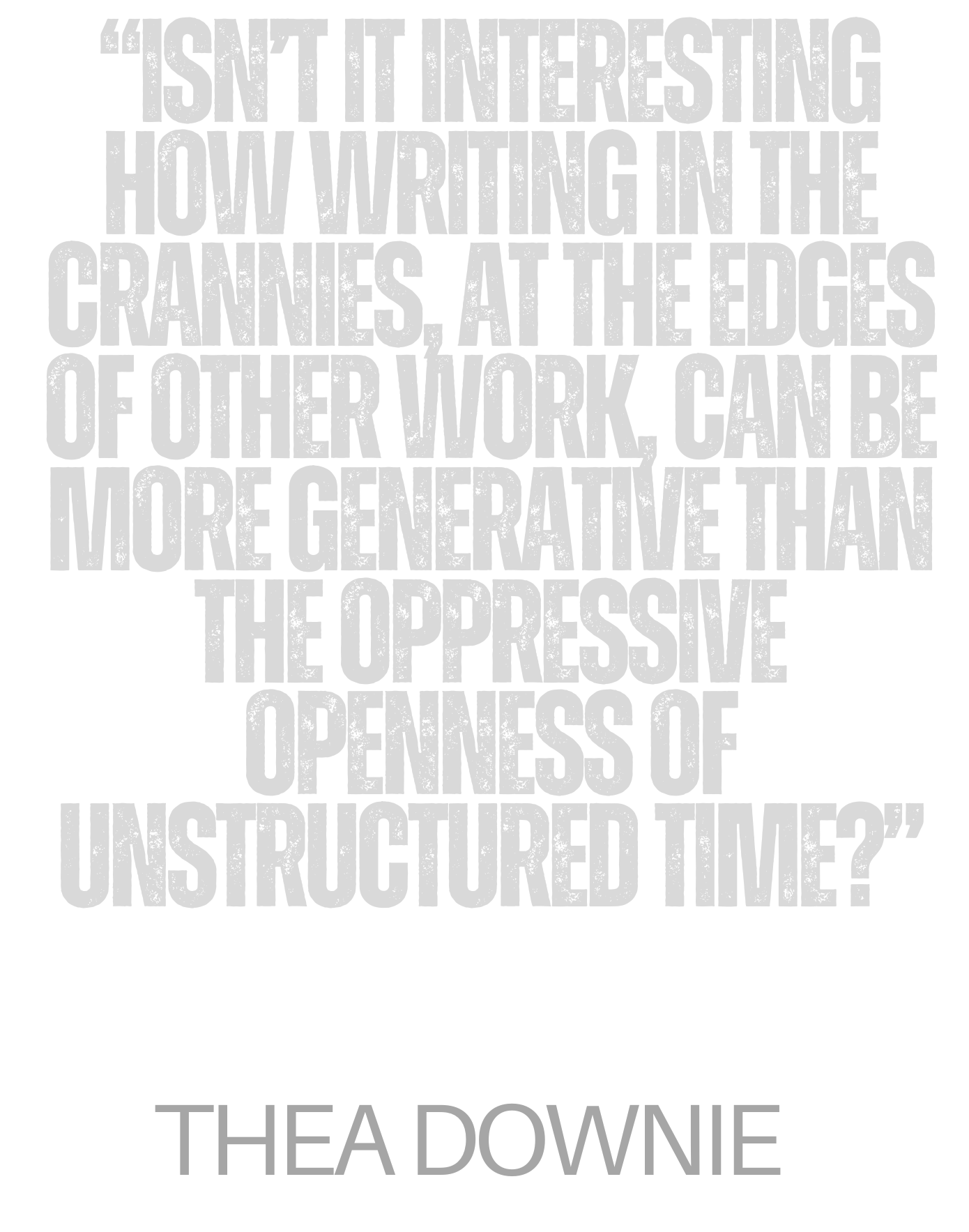
And this all connects to something else I’ve been thinking about. When I turned four years old, my siblings were homeschooled, but I insisted on going to school. I pushed for it, argued for it. Intuitively I knew I needed to be out in the world. It’s where life seemed most inventive, dynamic, un-orchestrated. This erratic, disordered world — this place where anything could happen. This inner child intuition is completely at odds with the solitary, introspective world I’ve built for myself as a writer, which is what you need to get stuff done.
A worrying feeling announces itself: what if I don’t need writing like I think I did? Or what if I do, but only under conditions that I wish to escape?
Like the blank page, without constraint or stimulus, very little happens. For a while, I thought constraint might be the answer. Henry Miller wrote about wandering museums, cafés, trains, the street, but even those people watching activities feel isolating to me. I don’t want to be an observer, living on the fringes. And when I meet friends for coffee, nothing is achieved, (though there is other value attached to that activity, of course).
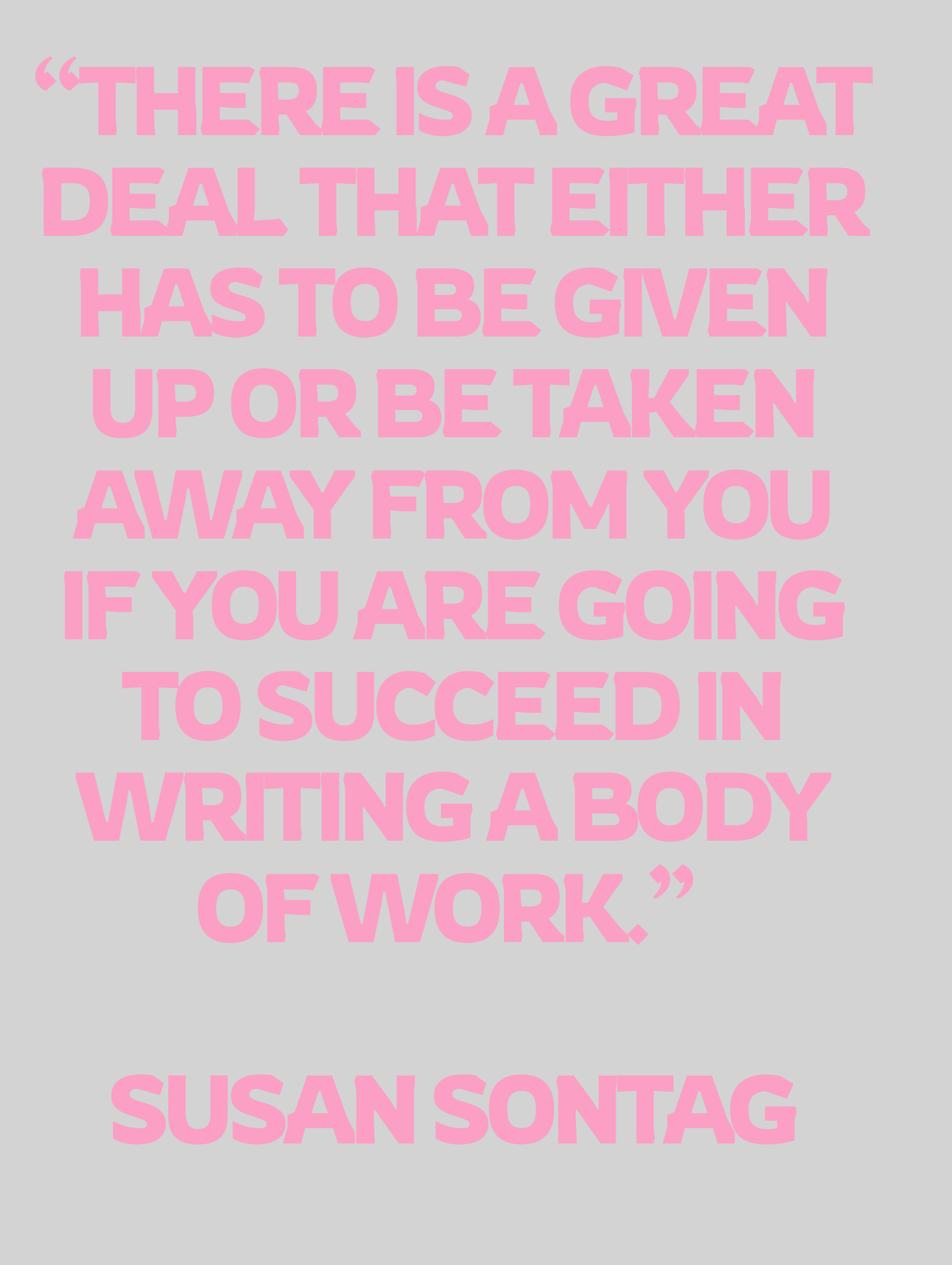
And recently I saw a clip of a Richard Gadd interview which reiterated this. Writing is the first thing he does and the last thing at night, giving up pretty much everything else to pursue it.
But the life of a writer is incredibly lonely life. I miss the culture of exchange, the shared intellectual life lecturing for all those years at university. Or the conversations when I was eighteen or nineteen working behind the bar of a nightclub or pub. With building managers when I was temping as a receptionist in Westminster and Moorgate. The conversations in the smoking room, when I was a Training Officer for Kentish Town Job Centre. Without company, I am feeling increasingly untethered—dissocialised, adrift, rudderless, inert. I’ve made an island of myself. I should be careful here, since perhaps it isn’t just the constraint of having a job that worked but meaningful, structured constraints in relation to others.
I would be remiss not to connect these ideas to philosophers who have wrestled with freedom and constraint: building on Jean-Jacques Rousseau, Isaiah Berlin shows how freedom as mere absence of constraint can feel empty without what he calls “positive freedom,” the capacity to direct one’s life; this also echoes Jean-Paul Sartre’s account of paralysis in the face of limitless choice, while aligning with Michel Foucault’s sense that freedom is shaped through structures, and Hannah Arendt’s claim that it emerges in the shared, friction-filled world of others rather than in isolation.
What I’ve been describing, I appreciate, is a luxurious problem few (including me) can afford. Anyway, I hope this is helpful to others rather than just a way of writing myself into self knowledge. I’m certain now about one thing: that writing needs resistance, some kind of external structure to push against, it doesn’t emerge from unlimited freedom but from friction, constraint, interruptions, and negotiation with all the other demands on our time.
Parkinson’s Law, (Cyril Northcote Parkinson) is a time management principle that indicates that if a task is given a generous deadline, it will take that long to complete due to procrastination and inefficiency, even though it might have been done sooner.
Comments
Nothing yet. Say the first thing.
Sign in to join the conversation.