

Elizabeth Brandeis, Director of government, Labour & Public Relations at the Association of Ontario Midwives Credit: Meaghan Eady
Welcome to Small Change. Today, I’m in conversation with Elizabeth Brandeis, a Registered Midwife and the Director of Government, Labour & Public Relations at the Association of Ontario Midwives (AOM).
Elizabeth graduated from the Toronto Metropolitan University (TMU) Midwifery Education Program in 2003 and received her masters in Community Health at University of Toronto in 2013.
She was a practicing midwife for 19 years and worked as a sessional instructor in the Midwifery Education Programs at Toronto Metropolitan and McMaster universities. She served as the AOM President from 2016 to 2020.
Elizabeth has played a key role in the landmark victory for midwives from the Human Rights Tribunal of Ontario to remedy systemic gender discrimination on midwives’ compensation. As part of the AOM’s senior staff leadership team, she oversees the association’s contract negotiations with the Ministry of Health and the ongoing implementation of the remedial orders from the Human Rights Tribunal decision as well as the association’s communications.
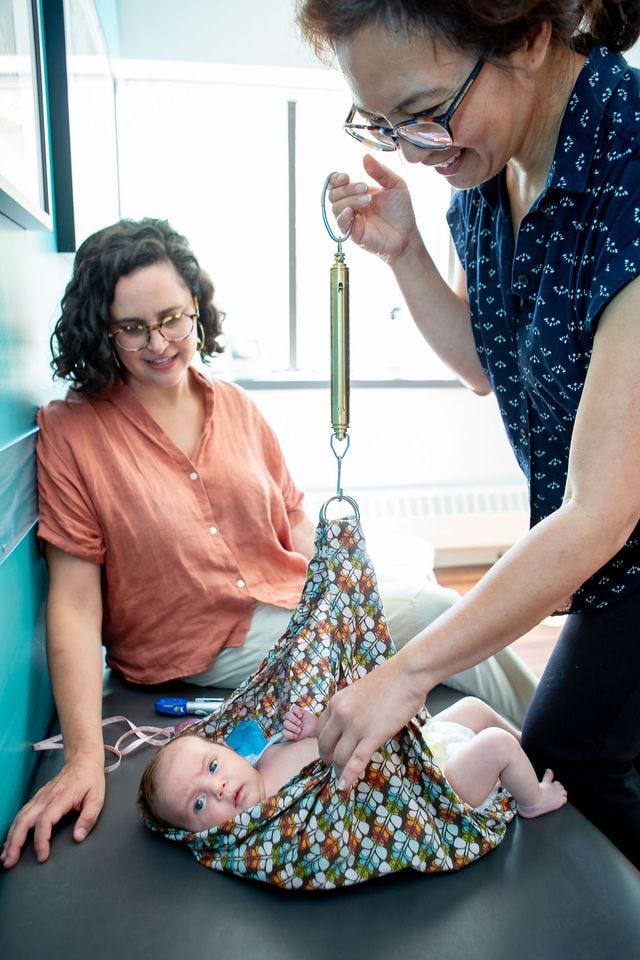
Midwife, Jasmin weighing baby Ruth while mom, Lauren, looks on Credit: Marina Dempster
I’m very familiar with the exceptional work that midwives perform – after all, midwives delivered all five of my children. The first three were delivered in a family birth centre while the remaining two were home births delivered in the house I still live in. We begin our conversation with an overview of midwifery education, training and scope of practice.
Ontario enacted the Pay Equity Act (PEA) in 1987, a proactive law designed to redress systemic gender discrimination in compensation. In1994, when midwifery became a regulated profession, using the pay equity principles outlined in the PEA, compensation was set in proportion to the male comparator, Community Health Centre (CHC) physicians who are salaried employees.
As it turned out, the PEA did not apply to midwives because they are considered self-employed, independent contractors and the PEA only applies to employees.
In the decades following regulation, the wage gap for midwives has widened far beyond the standards set out in the PEA.
Elizabeth explains why not being covered by the PEA forced midwives to file a complaint with the Human Rights Tribunal of Ontario.
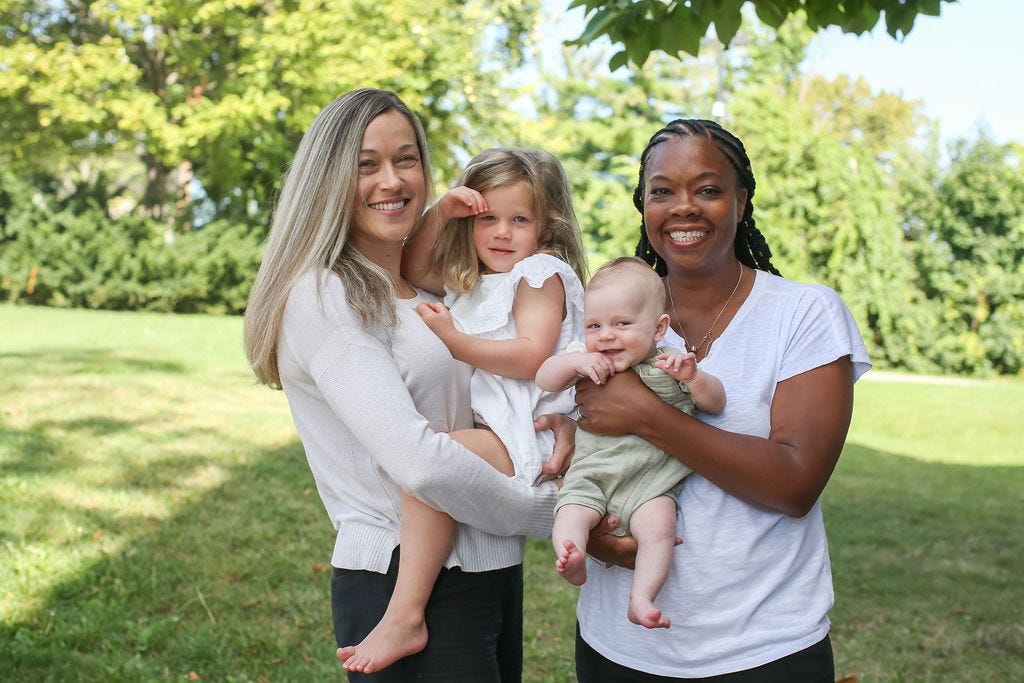
Midwife, Natasha (right) holding Luca while mom, Stephanie, holds Amelia Credit: Marina Dempster
In 2025, the AOM was negotiating a new contract and requested binding arbitration. Instead, Health Minister Sylvia Jones invoked non-binding mediation.
In her January 6, 2026 report and recommendations, mediator, Beverly Mathers stated Ontario is in the midst of a crisis in retention and recruitment of midwives. Mathers also stated that midwives are entitled to a compensation catch up from the years they were restricted to one per cent increases under Bill 124 between 2019 and 2023. It’s important for listeners to remember that three of those years fall squarely within the COVID pandemic and that Bill 124 was eventually deemed unconstitutional.
Ultimately, Jones rejected all of the mediator’s recommendations. The existing contract expired in March 2026.
Elizabeth explains why Jones not only rejected the report, but said no to all of the mediator’s recommendations before pivoting to how the current round of bargaining concluded.
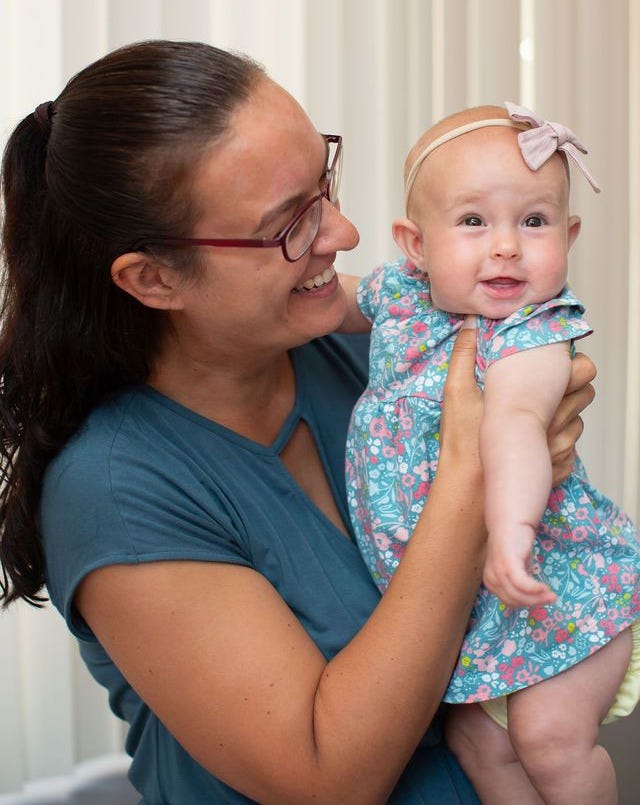
Midwife Kristen holding baby Rachel Credit: Marina Dempster
The central issue continues to be the absence of a fair dispute resolution mechanism for midwives. Unlike many other professionals, midwives do not have the practical ability to take strike action without jeopardizing the health and safety of their clients during pregnancy, birth and the postpartum period. During previous round of negotiations, the Ministry agreed to include mediation in the process if the parties reached an impasse in negotiations. However, this round demonstrated that non-binding mediation is ineffective when the government can simply disregard the mediator’s recommendations without consequence.
Midwives say the current negotiations framework is fundamentally unbalanced, so we explore what this round of negotiations has revealed about the limitations of non-binding mediation as well as the broader impacts of these negotiations on recruitment, retention and the sustainability of maternity care in Ontario.
Midwives continue to advocate for access to binding arbitration as a fair and balanced mechanism that would help address the significant power imbalance in negotiations.
Let’s face it, a gender trifecta impacts midwives — the fact that it’s a female dominated field; the job involves caring for women and trans folks; and it’s a healthcare experience. That means that foundationally, it is grounded in the care economy and that has become a Trojan horse for the Ford government.
It’s time to not only make family planning and prenatal, birth and postnatal care a priority, but to properly fund these essential services. And, if you’re over 40 years of age, consider the fact that today’s infants are going to be the folks who will be employed and paying taxes during your so-called “golden years” and could very well be your care providers. To that end, you should want all children to have the best possible start in life, not to mention the best childcare; elementary, secondary and post-secondary education possible; and ongoing universal healthcare to ensure they are at their peak performance at every stage of life.
Find more information about the Association of Ontario Midwives on their website Facebook Instagram Bluesky
Thanks to everyone who read today’s article and listened to my podcast. With your financial support, a little Nicoll can make a lot of change.
You can also find my work in Public Parking Publication, herizons, rabble.ca and on my Wix site. Follow me on Instagram, X @doreennicoll61, Bluesky @nicollneedschange and Facebook.
Music: Real Estate by UNIVERSFIELD is licensed under a Attribution 4.0 International License. freemusicarchive.org.
*Be sure to download the Substack app to get the most from your podcast experience.
Comments
Nothing yet. Say the first thing.
Sign in to join the conversation.