
The essay, posted 20 August 2026, argues that America sends young men into “hell,” demands they become intimate with killing and chaos, and later subjects their “ugly years” to drinking, broken relationships, moral struggle as a forensic public scrutiny when they seek further service (I know first hand this struggle). Accountability is not rejected; redemption is. The country, the author contends, now prefers “warriors without scars.”
This critique maps directly onto the intellectual architecture of maneuver warfare, Mission Command, and the generations-of-war framework developed by William S. Lind and his collaborators. Those doctrines are not merely tactical or organizational; they are cultural. They presuppose a particular kind of human being and a particular relationship between the fighting force and the society that fields it. Dort’s essay describes the erosion of that relationship.
William S. Lind’s generations schema distinguishes first-generation linear tactics of order, second-generation attrition (“the artillery conquers, the infantry occupies”), and third-generation maneuver warfare. The last was pioneered by the German army in 1917–1918: nonlinear infiltration, surfaces and gaps, tempo as a weapon, and the goal of shattering cohesion rather than grinding down numbers.
U.S. Marine Corps doctrine formalized this in FMFM 1 / MCDP 1 Warfighting: maneuver warfare “seeks to shatter the enemy’s cohesion through a series of rapid, violent, and unexpected actions which create a turbulent and rapidly deteriorating situation with which he cannot cope.” It operates in the moral and mental domains as much as the physical. It therefore demands decentralized command, initiative, and self-discipline rather than imposed process.
Those qualities are not produced by clean, risk-averse, careerist personnel. They are forged in the “arena.” The psychological residue Dort describes—the smoke, the mud, the wrecked personal lives—is the predictable byproduct of operating inside the OODA loop under conditions of fear, moral injury, and isolation. A society that recoils from that residue is, in effect, rejecting the human capital required for third-generation methods. It prefers the more industrial, process-heavy second-generation model in which soldiers are closer to interchangeable fire-support assets.
Lind repeatedly noted that American forces often remained culturally second-generation even after formally adopting maneuver language: inward-focused, checklist-driven, and uncomfortable with the disorder that true maneuver exploits. Dort’s complaint about elites who have never been “in the dirt” yet sit in judgment is a civilian analogue of that same cultural mismatch.
Mission Command (the American rendering of Auftragstaktik) is the command philosophy that makes maneuver possible. ADP 6-0 lists its principles: mutual trust, shared understanding, commander’s intent, disciplined initiative, mission orders, and acceptance of prudent risk. The entire system rests on the commander trusting subordinates to act in the absence of orders when the situation changes, and on subordinates trusting that their seniors will back them.
Dort’s essay is an argument that this trust has broken down at the societal level. Confirmation hearings and media “forensics” treat a veteran’s post-combat struggles as disqualifying rather than as evidence of having paid the price the nation asked. If the political class and commentariat will not extend grace or recognize redemption, they signal that they do not trust the warrior class. That signal travels downward. It becomes harder to sustain the high-trust, high-initiative culture Mission Command requires inside the force when the larger society treats the same men as morally suspect.
The essay’s linkage to “merit” is therefore not incidental. Mission Command and maneuver warfare are meritocratic in a harsh sense: they reward those who can think, decide, and act under stress. Ideological filters that subordinate demonstrated competence and character to other criteria undermine the selection and retention of the very people the doctrine needs.
Lind’s 1989 article with Schmitt, Wilson, and others introduced fourth-generation warfare: the state’s loss of its monopoly on war, the return of cultural rather than purely state-on-state conflict, and the blurring of battlefields so that the enemy’s society itself becomes a target. In 4GW the home front is not a rear area; it is contested space. Legitimacy, will, and social cohesion are decisive.
Dort’s “balcony” metaphor—journalists and lawmakers whose greatest danger is a hostile headline pointing down at the scarred man in the dirt—is a 4GW observation. The attack is not kinetic; it is moral and informational. By denying redemption and demanding warriors without residue, the cultural elite weakens the martial legitimacy of the state and the willingness of the next generation to enter the arena. Recruitment, retention, and the intangible cohesion that 3GW and 4GW both require suffer.
In 4GW terms, a society that wants the violence performed “neatly packaged, then returned to us without residue” is attempting to have the benefits of a warrior class while refusing the costs. That is a form of strategic self-disarmament.
The essay is not a scholarly treatise. The phrase “gay race communism” is a crude, dismissive shorthand for identity-politics frameworks that, in the author’s view, invert merit and treat certain veterans’ redemption as politically inconvenient. It will alienate readers who might otherwise accept the core claim about scars and hypocrisy. Accountability is acknowledged—“some things cannot be excused by war”—but the piece does not dwell on specific cases or draw lines between recoverable human failure and disqualifying crime.
Its value as analysis lies in the clarity with which it names a cultural contradiction. Maneuver warfare and Mission Command are not merely techniques; they are bets on a particular kind of man operating in a high-trust environment. Fourth-generation conflict makes the moral and psychological health of the society that fields that man a center of gravity. Dort’s argument is that America is currently trying to field third- and fourth-generation capabilities with second-generation social attitudes toward the people who must fight.
History, as the essay concludes, is unlikely to remember the names of those who stayed in the balcony.
Notes
InfantryDort (@infantrydort), “THE COST OF THE ARENA,” X, August 20, 2026,

InfantryDort@infantrydort
THE COST OF THE ARENA There is something obscene about a country asking a man to walk into hell, then recoiling because he comes home smelling like smoke. This is all tied to our recent discussions about “merit”. We take young Americans, hand them rifles, send them across
9:55 AM · Aug 20, 2026 · 41.7K Views
122 Replies · 491 Reposts · 2.24K Likes
William S. Lind, Maneuver Warfare Handbook (Boulder, CO: Westview Press, 1985).
William S. Lind, “The Four Generations of Modern War,” LewRockwell.com, December 28, 2021 (reprint of earlier essays).
William S. Lind, Keith Nightengale, John F. Schmitt, Joseph W. Sutton, and Gary I. Wilson, “The Changing Face of War: Into the Fourth Generation,” Marine Corps Gazette 73, no. 10 (October 1989): 22–26.
Headquarters, U.S. Marine Corps, MCDP 1 Warfighting (Washington, DC: Department of the Navy, 1997).
Headquarters, Department of the Army, ADP 6-0 Mission Command: Command and Control of Army Forces (Washington, DC: HQDA, July 2019).
Aug 20
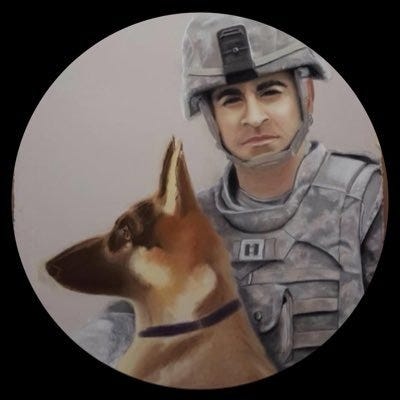
There is something obscene about a country asking a man to walk into hell, then recoiling because he comes home smelling like smoke. This is all tied to our recent discussions about “merit”.
We take young Americans, hand them rifles, send them across oceans, and ask them to become intimate with things most lawmakers, journalists, and professional moralists will spend their entire lives safely avoiding. Then years later, some of those veterans are called to serve for something important and suddenly the people in the balcony become forensic experts on every ugly year of their lives.
Maybe they drank too much after the war. Perhaps their relationships were a wreck. They behaved badly and struggled. Look at him! Look how dirty he is!
No. Fucking. Shit. You sent him into the arena.
Accountability matters. Some things cannot be excused by war. But neither can redemption be erased because it complicates a confirmation hearing. If a warrior broke, fought his way back, made amends, rebuilt his life and became useful to his country again, that story should count for something more than another line of attack. But it doesn’t, unless you’re lined with gay race communism.
Instead, America increasingly wants warriors without scars. We want the violence performed somewhere far away, neatly packaged, then returned to us without residue. And we want men willing to enter the arena, but God help them if they bleed on the carpet afterward.
The ugliest part is watching people whose greatest professional danger is a hostile headline point down from the marble seats at the scarred man below and laugh at the mud on his face.
You may be physically cleaner than him because you were never in the dirt. But your soul is filthy.
And history will not remember your name.
No posts
Comments
Nothing yet. Say the first thing.
Sign in to join the conversation.