
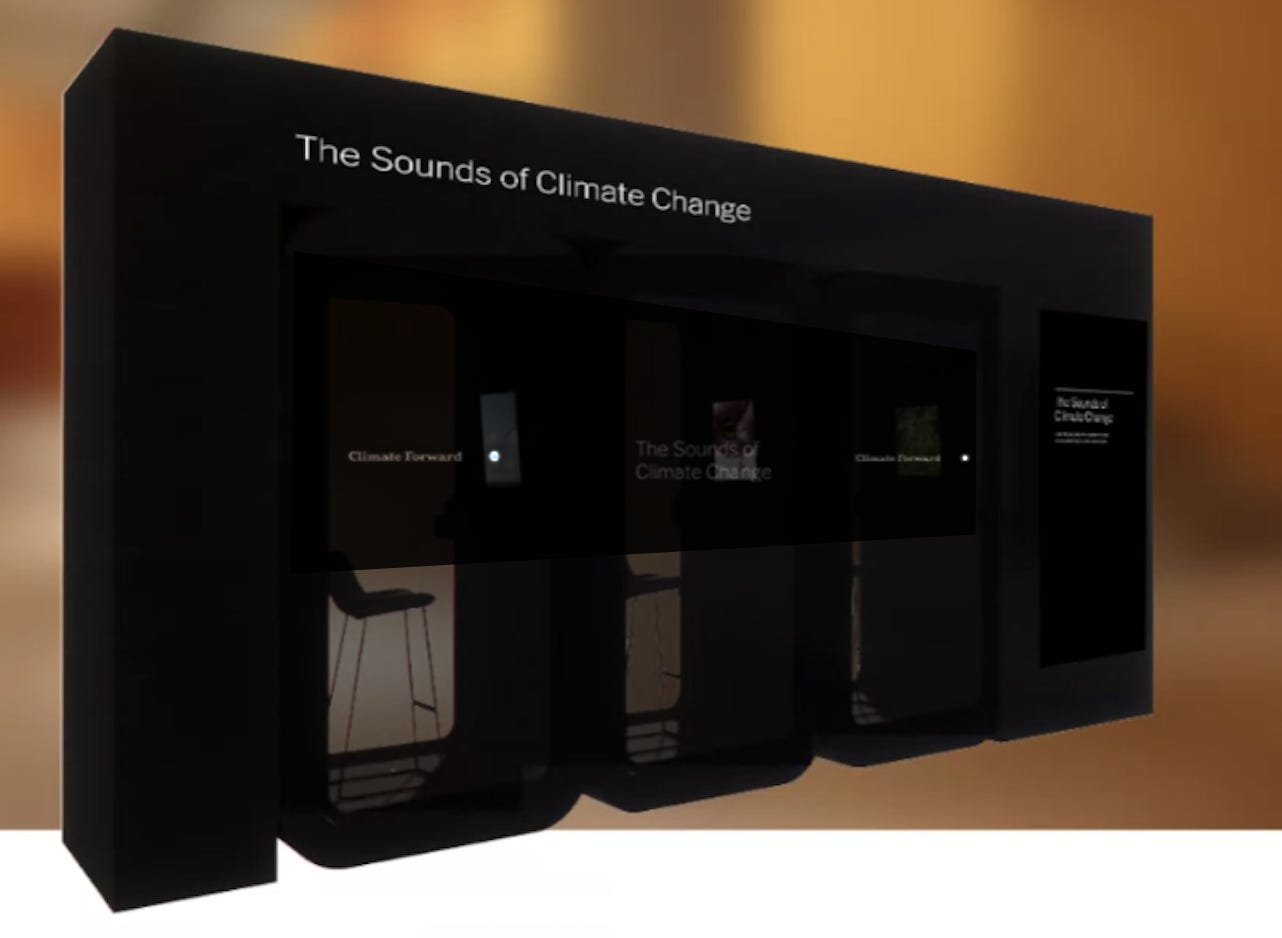
For the New York Time’s Climate Forward Event last fall, I helped produce audio for an installation called “The Sounds of Climate Change.”1
We set out to create an audio-first experience designed to transport listeners to far away locations, and use sound as evidence of how climate change is reshaping the world.
Along with sound mixer Alyssa Moxely, I spoke with three field recordists about their recordings of the underwater Arctic, a glacier in the Alps, and the Amazon rainforest, respectively:
Kate Stafford, a bioacoustician at the Marine Mammal Institue at Oregon State University
Ludwig Berger, a German sound artist from Alsace in France
Izabela Dluzyk, a field recordist from Poland
Below are excerpts from our conversations that were not used in the installation.
0:00
-3:27
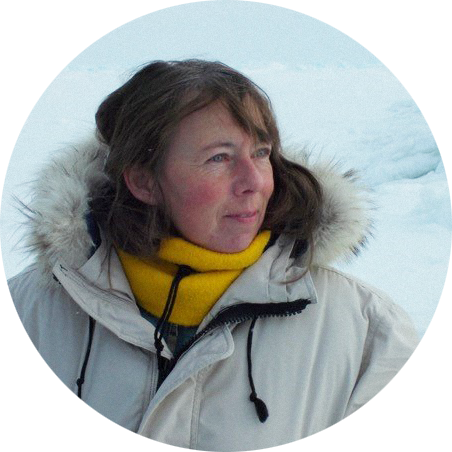
My name’s Dr. Kate Stafford. I am a bio acoustician at the Marine Mammal Institute at Oregon State University.
I study underwater sounds, particularly of marine mammals, and I travel to the Arctic to record these underwater soundscapes. I listen to climate change.
My first trip to the arctic got me hooked. Like, seeing the sea ice in the spring when the Arctic is waking up and tens of thousands of animals are migrating either in the air or in the water, and it can be so quiet and white and blue.
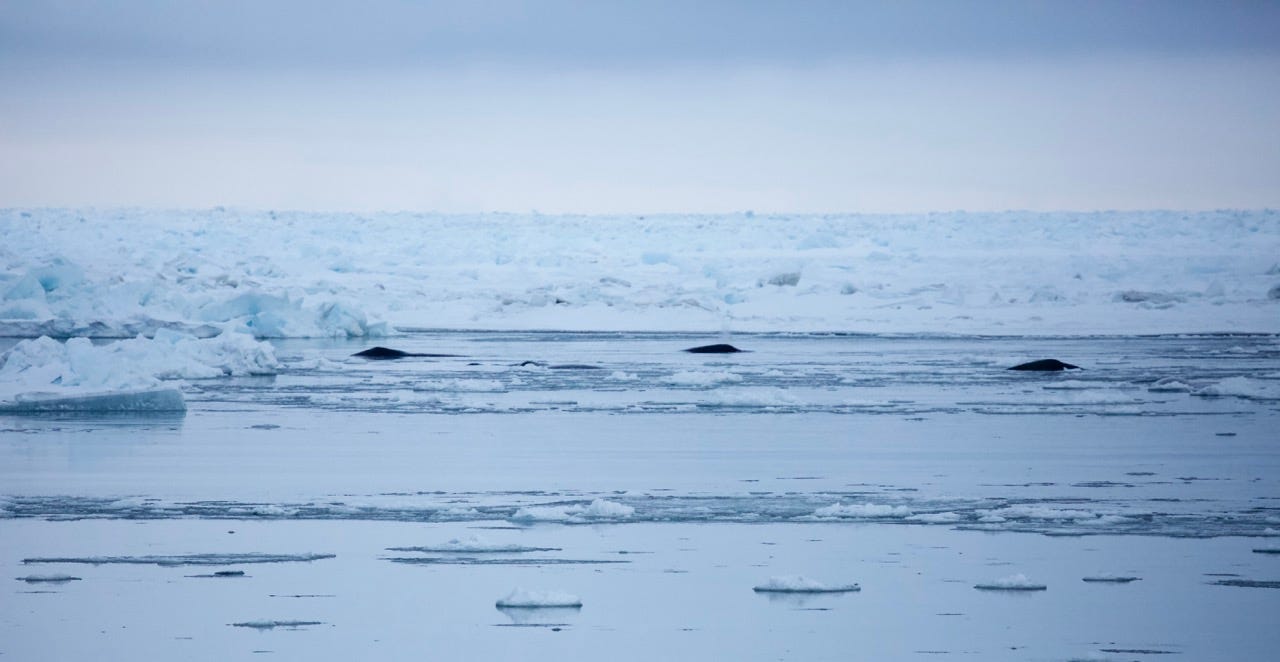
It’s just you and the ice and the water … and your gun ‘cause there’s also bears. Because of course, when you do research on the ice in the Arctic, you’re putting yourself back in the food chain.
When I’m ready to go out and get recordings from the sea ice edge, I will bundle up in my arctic gear and my bunny boots. I’ll have a backpack with my dipping hydrophone —which is an underwater microphone on a long cable that I lower into the sea ice from the ice edge— all of my recording gear. And I always go with a buddy ‘cause you never go on the ice alone and snow machine out to the ice edge and find a good, safe spot to put the hydrophone in. I put headphones on, hit record, and then sit or lay on the ice if somebody’s with me. I often can’t stand around and enjoy it because my head’s always on a swivel looking for polar bears.
But if you can just lie down and be still and close your eyes, and you’re listening to this underwater cacophony— there’s nothing like hearing the first bearded seal of the season or the first singing Bowhead whale or belugas coming by.
And often I’ll be listening and I’ll say, “Oh, belugas,” and people will be looking and you don’t see anything. But then in the distance you might see some belugas coming close.
In the fall, I go on large oceanographic vessels and we deploy giant moorings that have lots of instruments that measure temperature, salinity currents, as well as acoustics. I put a hydrophone underwater for a year to listen to the underwater soundscape. Even when it’s stormy, even when there’s sea ice, and even when we can’t get there to see or listen to the animals.
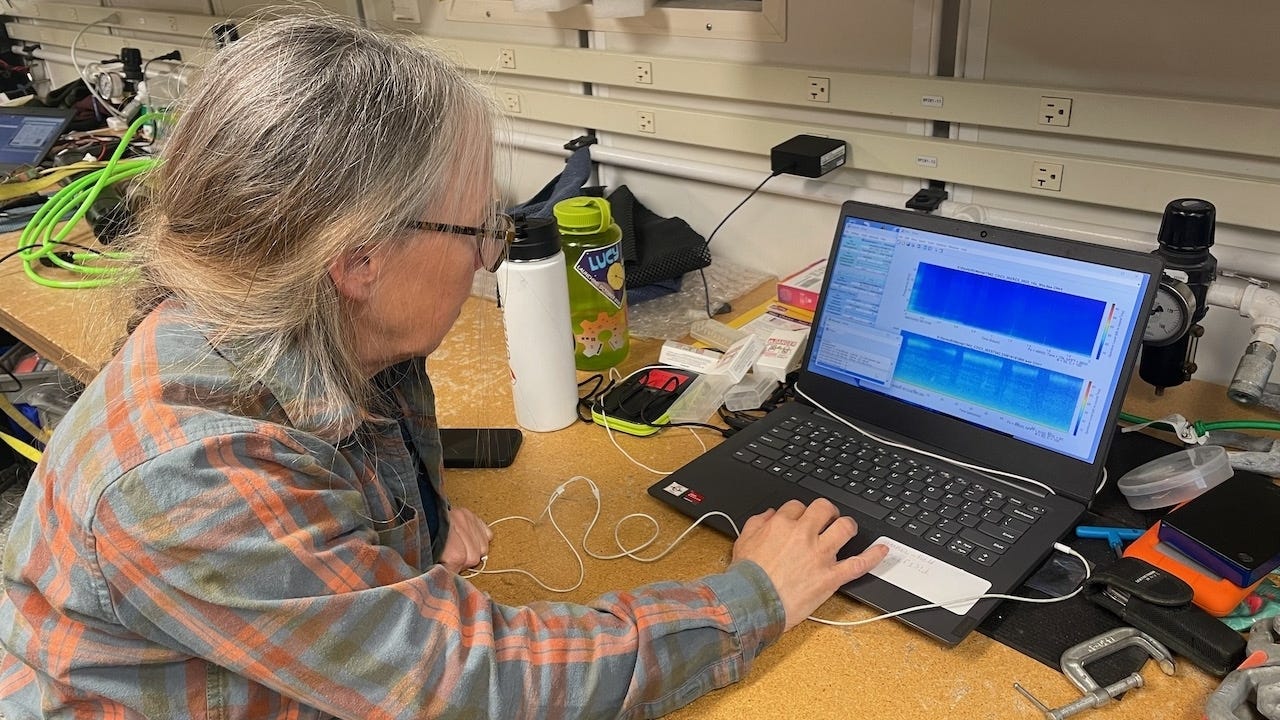
The Arctic’s a special, cold remote area that most people will probably never get to see, but the discoveries we can make by listening underwater, documenting around the calendar year, changes in the animals that are going to the Arctic… We are hearing things that nobody else gets to hear.
When I started going up to the Arctic and listening to the Arctic, I thought I would be spending my career listening to singing bowhead whales. But what I’ve ended up doing is listening to climate change.
We’re hearing increases in ambient noise with changes in the sea ice and increases in storminess. We’re hearing things like humpback whales and killer whales and fin whales. It’s providing clear documentation about how the Arctic is changing just using these keystone species as an indicator of that change.
The Arctic is really a preview for what we’re going to get at lower latitudes. We should look to what’s happening in the Arctic as a harbinger of our future.
0:00
-4:15
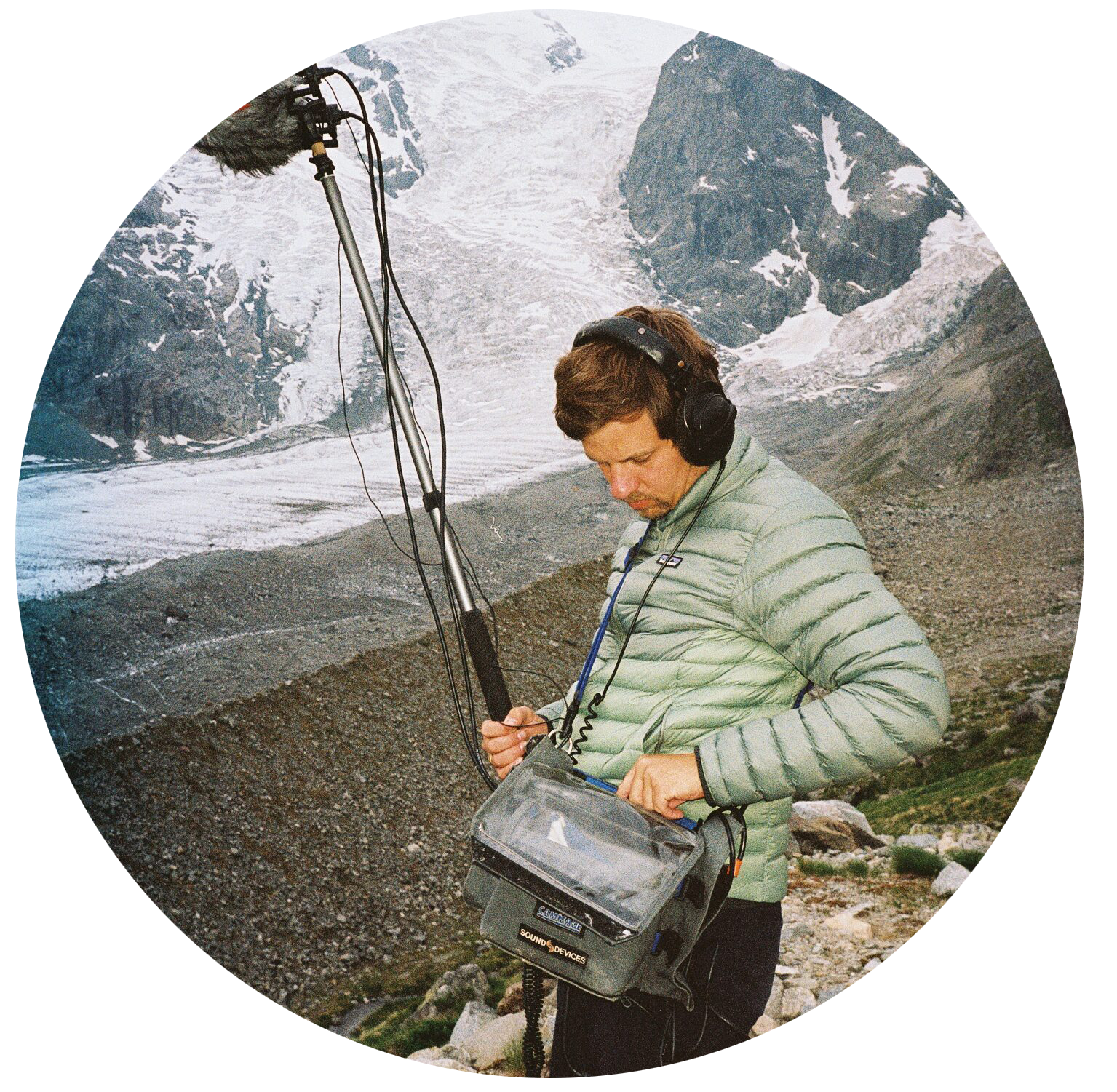
My name is Ludwig Berger. I’m a German sound artist from Alsace in France, and I work on the sonic dimensions of landscapes with a particular focus on microscopic sounds.
I grew up in a very small village, in an old house. So there were already in the house many, like squeaky little sounds and insects that live in between the house and the roof. And I also remember catching little bumblebees and putting them into jars and feeling their vibration in the jar and that sort translation of scale— that there’s something very tiny that you feel vibrating in your whole hand— I think is maybe a starting point for my explorations of these very small scales.
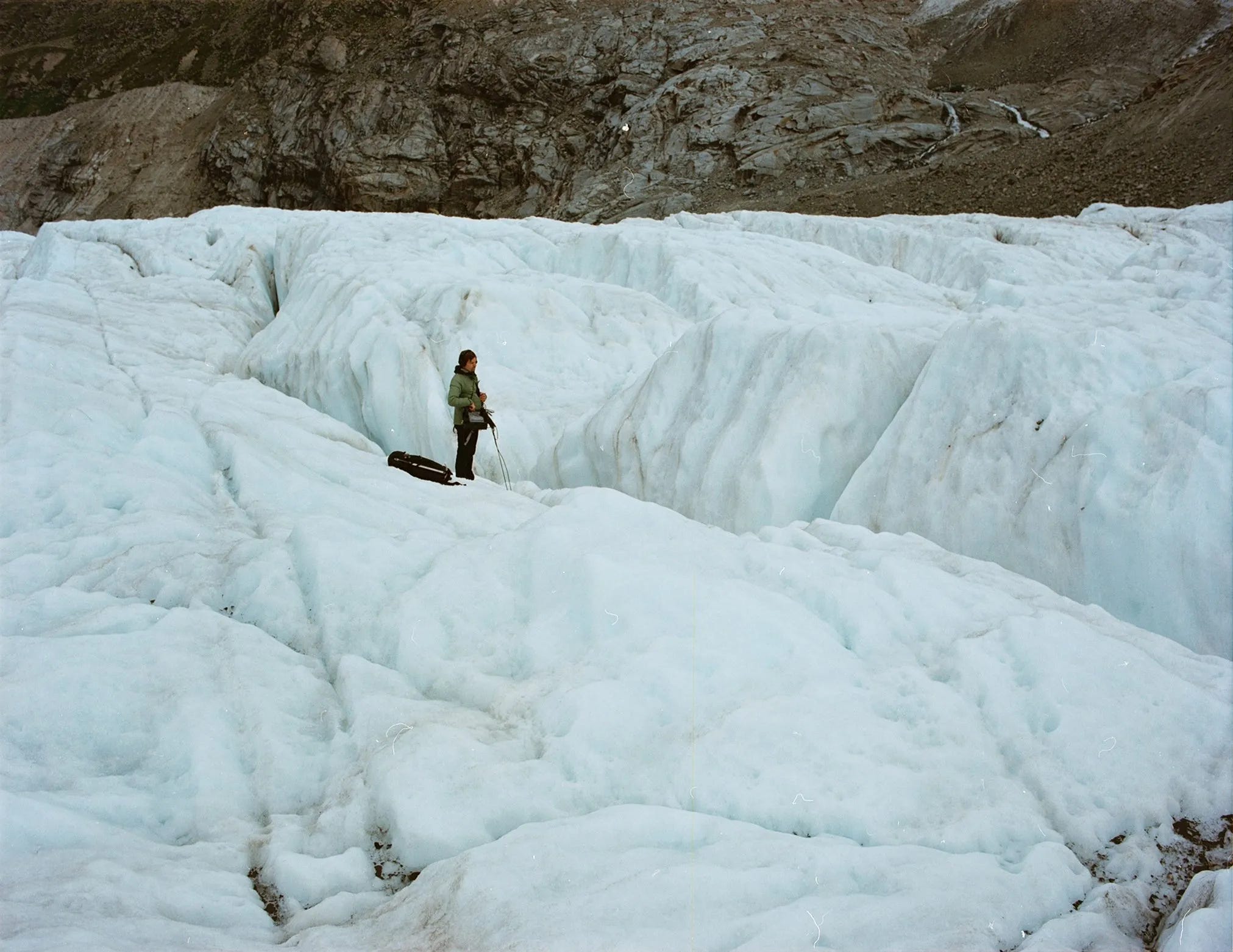
I was working at the Institute of Landscape Architecture and my colleagues and I, we started a course with students where we would go up to the glacier that was not so far from our institute. And I was just wondering if I could also record sounds there. It was the first time that was ever on a glacier.
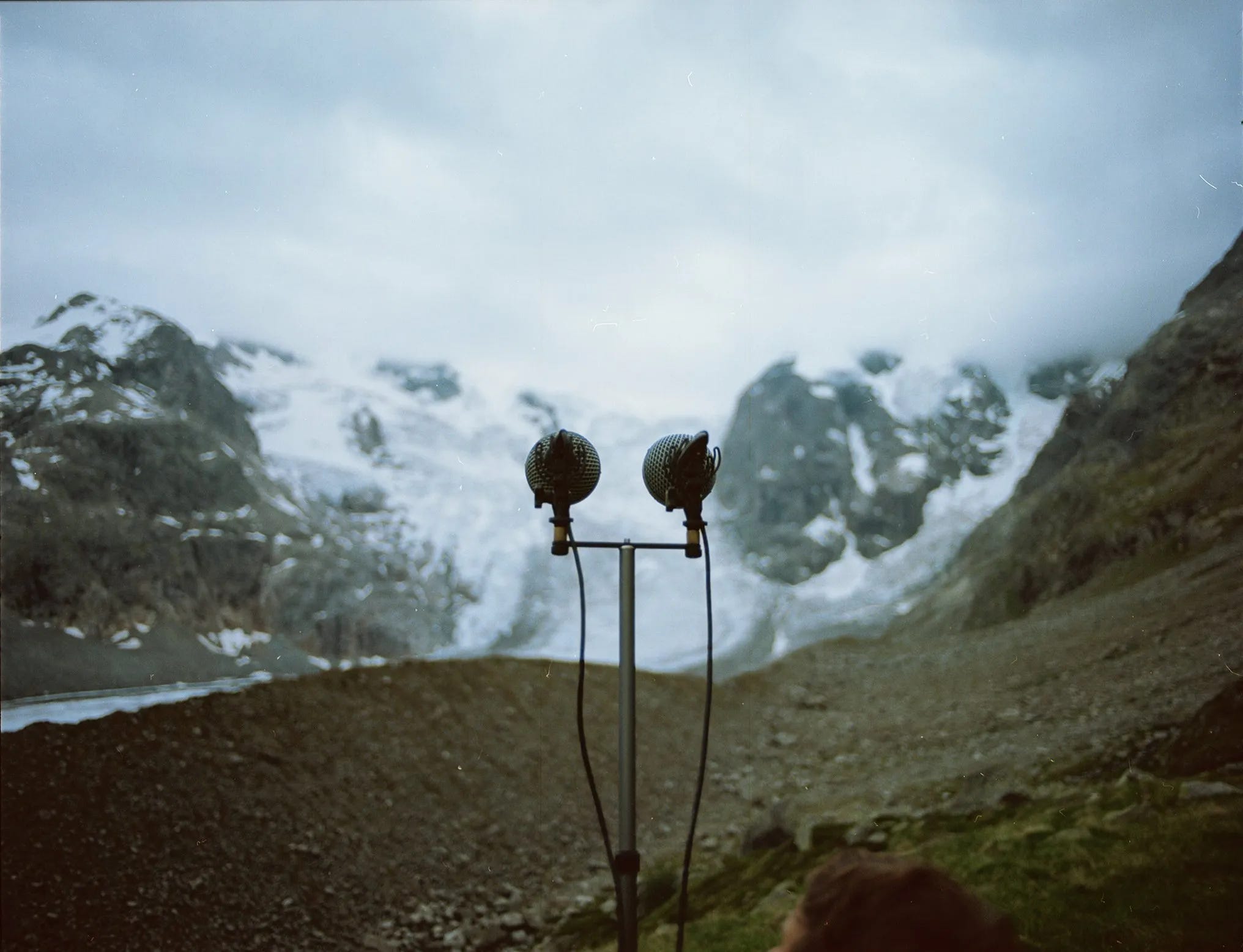
I took my hydrophone and embedded it on the ice of the glacier and suddenly I could hear these like deep resonances, but also some very hard shifts of ice that were happening inside the glacier. And then it just became an ongoing project where I start visiting this glacier. It’s almost like a friendship that I have with that place where I always come back and check how the glacier is doing. Unfortunately, it’s not doing very well each year. It’s retrieving massively.
In the beginning, I still only needed 40 minutes to get to the start of the glacier. Now it’s one hour and a half to climb up the mountain to still reach it because it’s just melting so quickly.
To record the sounds in the glacier, I use hydrophones- so underwater microphones- that I embed in water-filled crevices on top of the glacier. And as soon as I dip these hydrophones into the water, I connect to the sounds that are happening inside the crevice. So it’s really like a stethoscope that connects to the whole glacier, both the smallest and the largest sound that it’s emitting.
What you can hear inside the glacier is completely unpredictable, because these air bubbles, they have so many different sonic shapes. They’re almost like characters or different species that all have their individual sound, and you never know which character will appear where and when.
So some of the sounds are like very deep roars. Others are almost like little birds. Other sounds like synthesizers.
Wah, wah, wah, wah, wah, wah, wah.
Others sound very percussive and they just appear in one moment and then they’re gone again because it’s old air that is trapped in the ice being released. The older the ice is usually the more compressed it is, and so the smaller the bubbles are. So in a way it’s the history of the ice that is embedded in these sounds.
There are many things in our world that are being affected by us, but that are outside of our field of perception. Many of us live in cities and we don’t realize what is actually happening in the larger scale— and at the same time, we have an impact on even very remote places, such as glaciers. And, for me, sound is really a tool to bring these distant places, but also this intangible object into our field of perception.
Thanks for reading Don't Be Precious, Darling! This post is public so feel free to share it.
0:00
-3:57
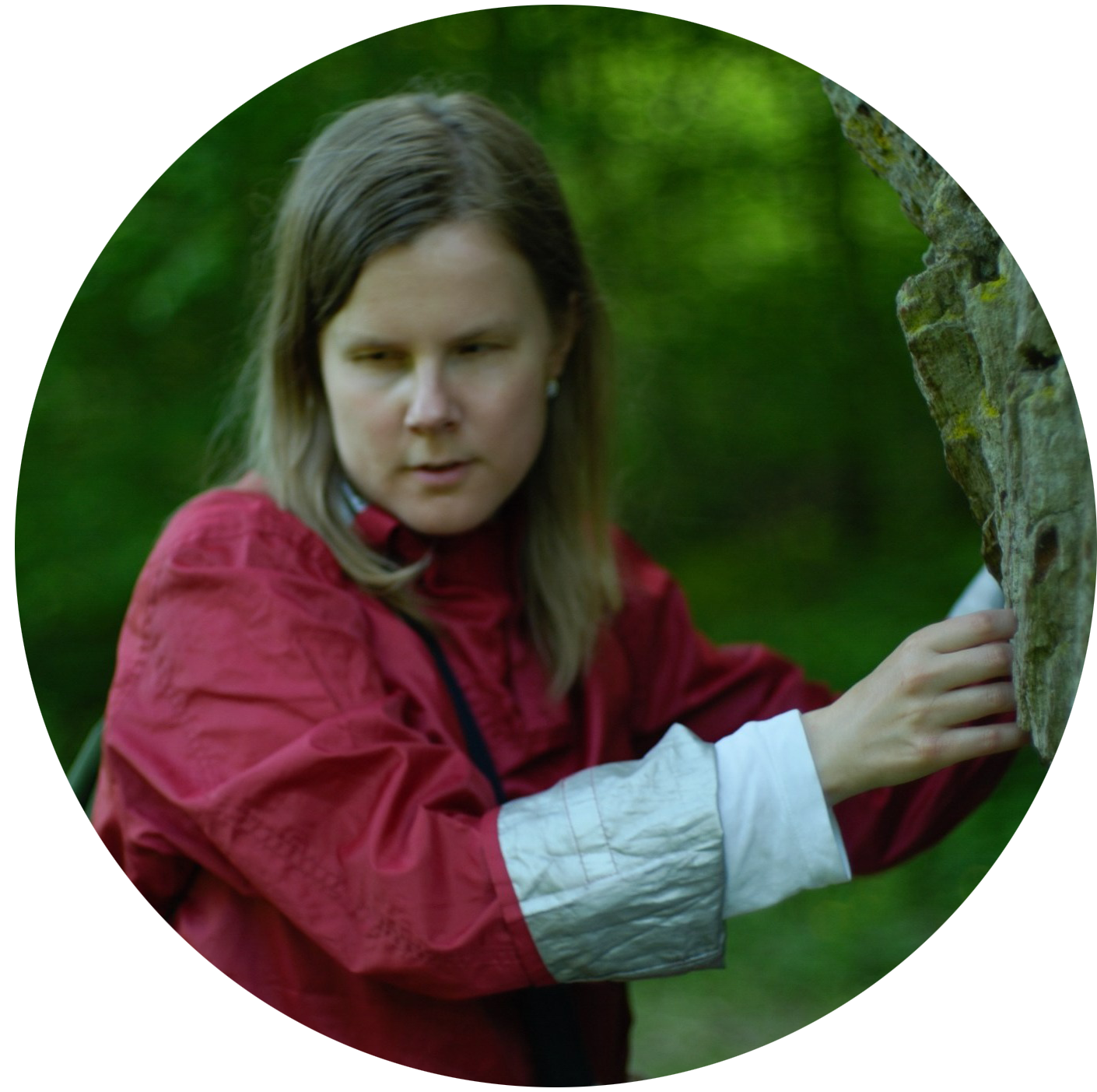
My name is Izabela Dłużyk. Currently I’m working as an academic teacher at the University of Gdańsk. I am becoming more and more involved in professional field recording.
I remember that when I was a child, my aunt showed me some kind of encyclopedia which contained bird voices. I started memorizing those bird sounds. And this was, I might say, the very beginning, but the sensitivity that is required, for listening to nature was with me always.
Several years after I became interested in birds, I discovered one specific group of birds, which were parrots. I became fascinated with them due to their intelligence, their sociability, but also their voices.
The idea of going to the Tambopata Reserve started because I found out that there are the so-called clay licks in the Tambopata Reserve in Peru, where parrots gather in large numbers, almost daily to eat the clay. And this is something that is very spectacular when it comes to the soundscape.
I decided to create a crowdfunding campaign to get to the Tambopata Reserve and this campaign proved to be successful.
I trained my ears before going to Tambopata because I wanted to be acquainted with at least some species that I may hear there, so I bought some cassettes with voices of Peruvian birds, tropical rainforest mammals. And this was something that worked because when I was there, I already knew the majority of the species that I could hear.I spent nine days in the forest, which was really short for a tropical rainforest, which is so biodiverse.
When I’m recording, I cannot do it alone because as a blind person, of course, I need some assistance. But this is just more a technical thing to help me reach a certain destination. But when I’m just standing and recording already a certain sounds, I tend to stand in a certain spot alone because it might be really difficult for people who accompany me, not to make any sound.
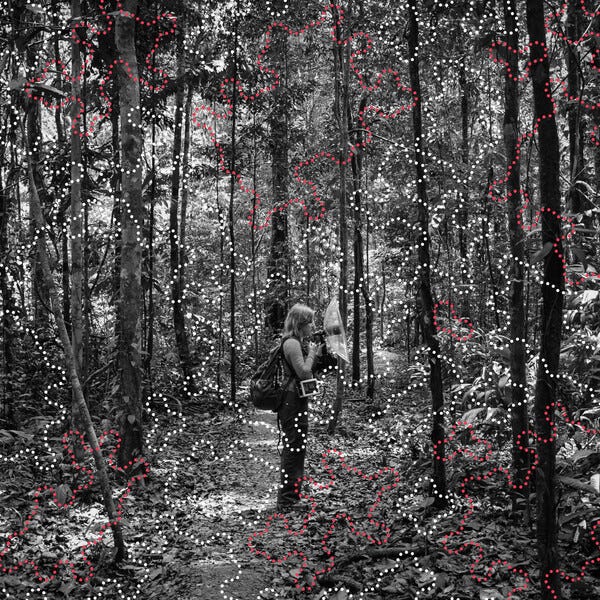
In the Peruvian rainforest, whenever I wanted to record something, I just told my brother and the guide that I wanted to just now record it. So they tried to walk away and just wait for me from some distance.
I decided to use a stereophonic microphone, which could be enhanced with a parabolic dish that is used to grasp sounds which are really, really distant.
When recording in a new place, I always try to focus on dawns and dusks because these are the moments during the day when the vocal activity of animals is the greatest. Night recordings were really interesting, because this was the time of insects and frogs and those soundscapes were so incredibly intense.
I had some ideas regarding species that I wanted to record, but mainly I was open to whatever nature offers me. Because nature has its own rhythm, has its own course, and we are there to adapt to that and not the other way around.
If you want to appreciate certain sounds, you need to really find this kind of childlike fascination with sounds. I think that the most important thing is just to listen.
Kate Stafford’s Ted Talk: How human noise affects ocean habitats
Ludwig’s Website / Watch “Crying Glacier”
Alyssa Moxley, sound mixer
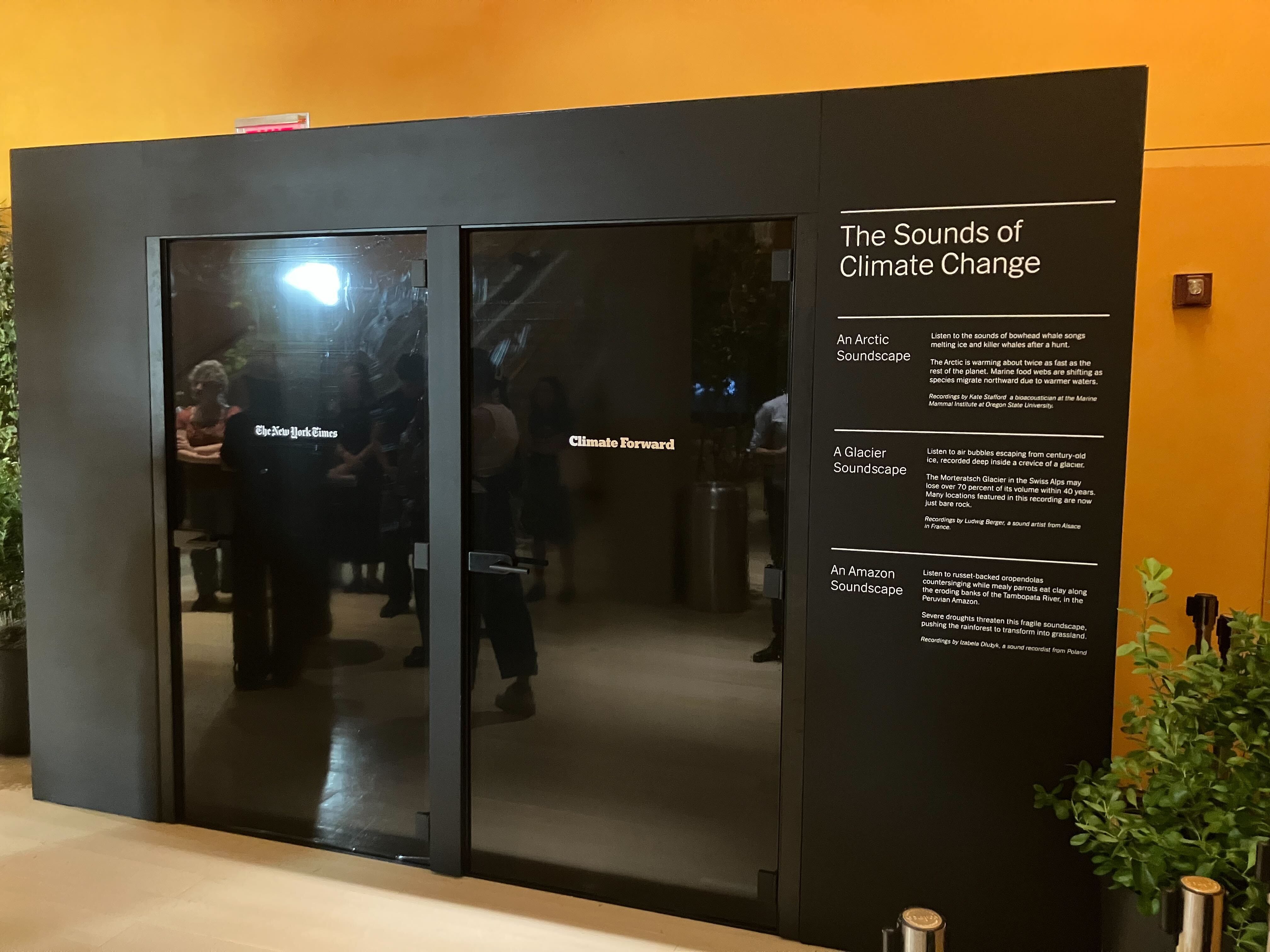
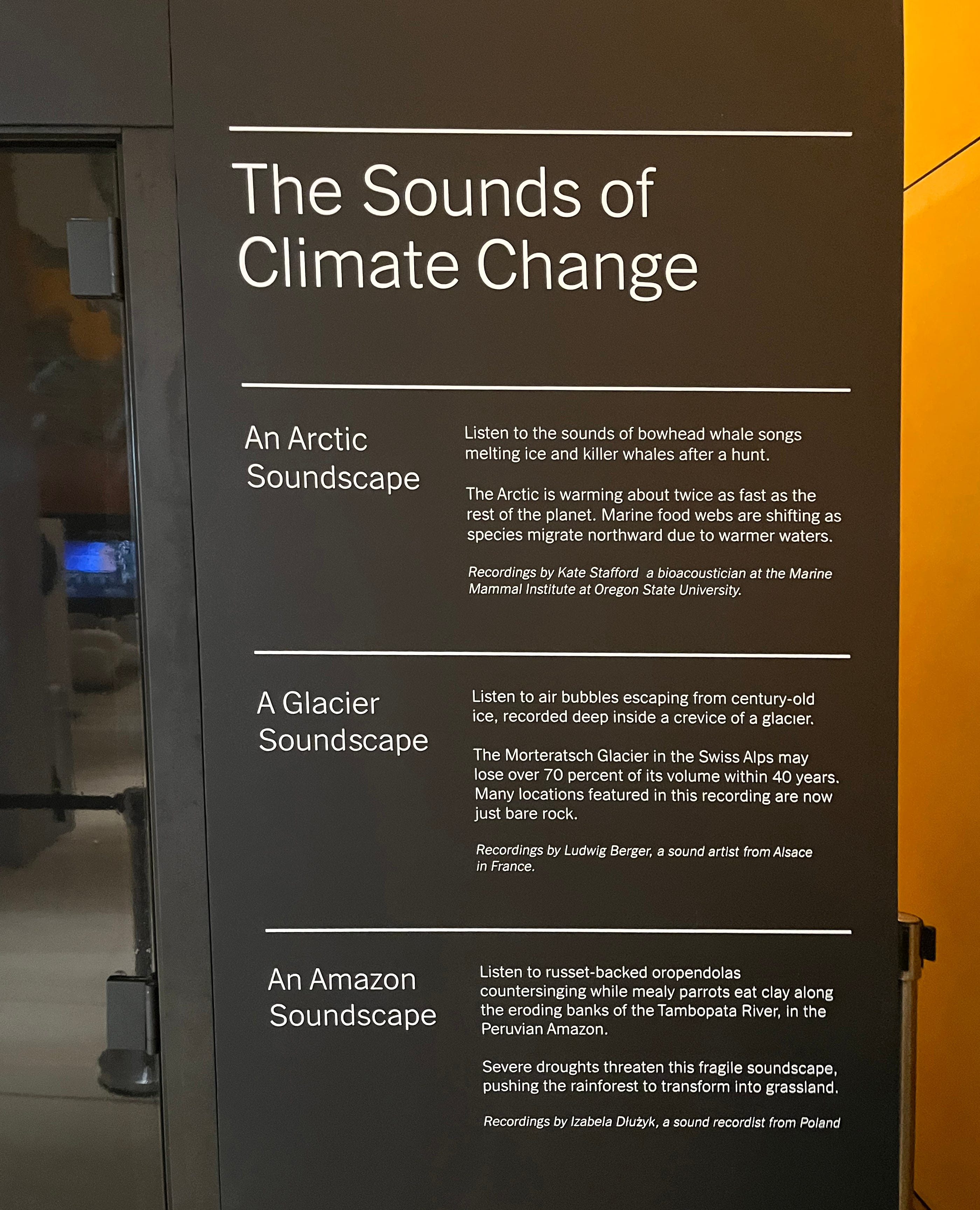
Thank you to Kate, Ludwig and Izabela for their time! And to my talented collaborator, Alyssa.
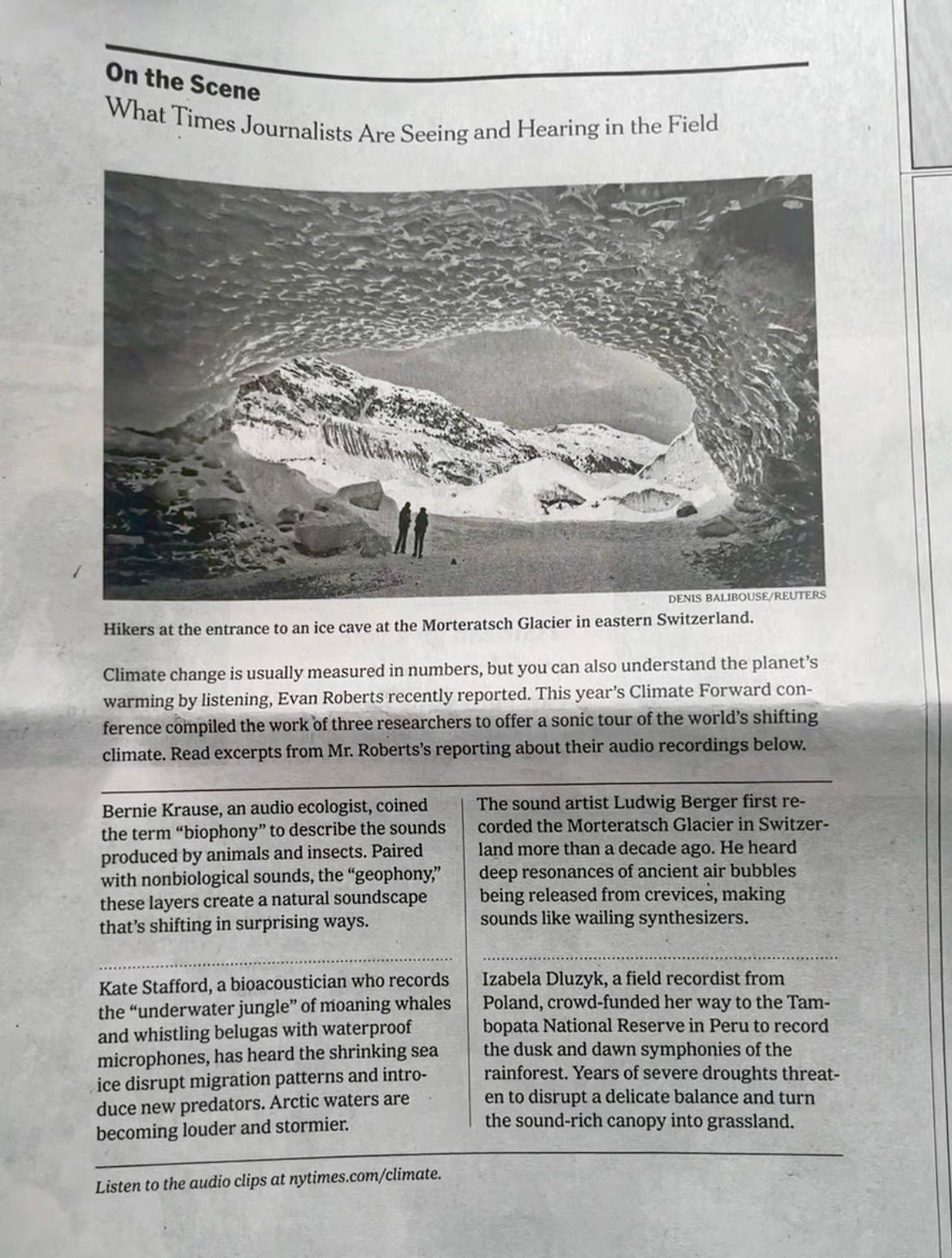
A short blurb about the project was also published in the newspaper, on A3 — the third page.
It was right above a recipe for Cheesy Baked Pumpkin Pasta with Kale.
It was my first time in print.
Comments
Nothing yet. Say the first thing.
Sign in to join the conversation.