
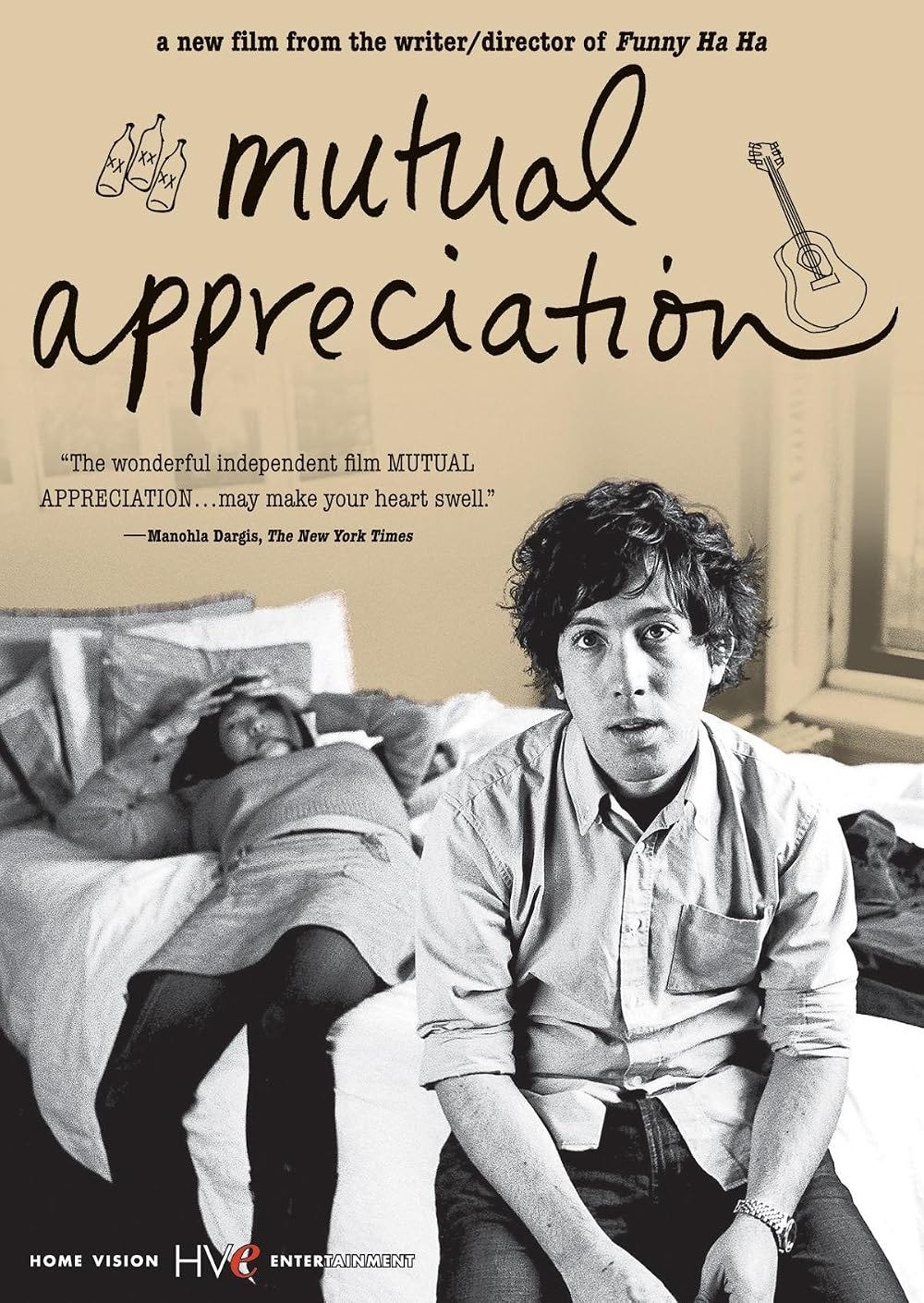
Andrew Bujalski is a key figure in the mumblecore movement, and Mutual Appreciation is often credited as the first mumblecore film. I’m a huge fan of Bujalski’s work and the movement he helped create. Mutual Appreciation was the beginning of a new wave of filmmaking. Movies made for very little money by Hollywood standards, using mostly non-professional actors, friends as crew, and focusing on intimate, often emotionally complex relationships. Bujalski shot Mutual Appreciation on 16mm film and used mostly friends in place of professional actors, unknowingly starting a movement that changed independent cinema.

Mutual Appreciation is one of the defining micro-budget films of the early 2000s, and it influenced other filmmakers like Joe Swanberg and the Duplass Brothers. Unlike other successful independent films that are difficult to imitate on little-to-no budget, this film is refreshingly transparent about how it was made. Bujalski wasn’t afraid of his limitations. He used them to his advantage and used them to amplify his unique voice. He wasn’t just a pioneer of the mumblecore movement; he was a filmmaker with something to say.
Unfortunately, I wasn’t able to find a definitive account of what Mutual Appreciation’s budget was, but many cite it as being somewhere between $200,000 and $300,000. However, Bujalski did say that grant money helped to get the production started, and that additional financing came from private investments. He also stated that the camera and lighting equipment were borrowed, most locations were donated, and most of the crew worked without pay.
Mutual Appreciation follows Alan as he arrives in New York after leaving his band. He meets up with his college friend Lawrence, then develops feelings for Lawrence’s girlfriend. It’s a relatively simple plot, but the awkward conversational pauses and focus on emotional realism make the film feel familiar. It plays like a memory that could belong to anyone.
The movie got its start at small regional festivals before expanding into the international circuit. It played at the International Film Festival Rotterdam, AFI FEST, Melbourne International Film Festival, and many others. This festival run helped Bujalski build community and connect with future mumlecore filmmakers. The movement formed in festival lobbies, after-parties, and through late-night conversations.
Bujalski had a hard time finding distribution for the film. Despite good reviews, most distributors didn’t understand the movie. They were looking for stars and traditional narrative structure. Eventually, the film was picked up by Goodbye Cruel Releasing and given a tiny theatrical release. Mutual Appreciation never struck box office gold, but it built an audience over time, and soon its influence exceeded its box office failure.
While Bujalski never set out to start a new genre, he did want to make movies on his own terms without pushback from outside forces. He wanted to explore themes he was interested in, and that authenticity became contagious. More than twenty years later, Mutual Appreciation is a perfect example of filmmaking with vision, using limitations as strengths. While Bujalski never set out to change independent cinema, I believe that his honesty and voice influenced other filmmakers looking for a way to penetrate the walls put up by the industry. So, they scaled the walls by helping one another make films they could make right now instead of waiting for permission to make them later. They focused on intimate stories and realistic interactions. Without Mutual Appreciation leading the way, who knows how long mumblecore would have taken to emerge. I am very thankful for Bujalski and his dedication to his vision.
NOTE: There wasn’t as much about financing and other details as I’d have liked, but it’s such an important film for the mumblecore movement and micro-budget cinema that I didn’t want to skip it.
Comments
Nothing yet. Say the first thing.
Sign in to join the conversation.