
Ever since special features became a part of physical media, or now YouTube, I watched my favorite filmmakers do table reads with their cast. However, I didn’t start doing them myself for many years. I’m not sure why. Maybe I didn’t want to put any more stress on the actors or maybe I didn’t see the value in it. Either way, a table read can help to expose problems with the script that may not have been apparent, reveal scenes that aren’t working, shine a light on repetitive dialogue and confusing character motivations. It can also highlight pacing problems and jokes that don’t land. It’s where you knock the dust off the script.
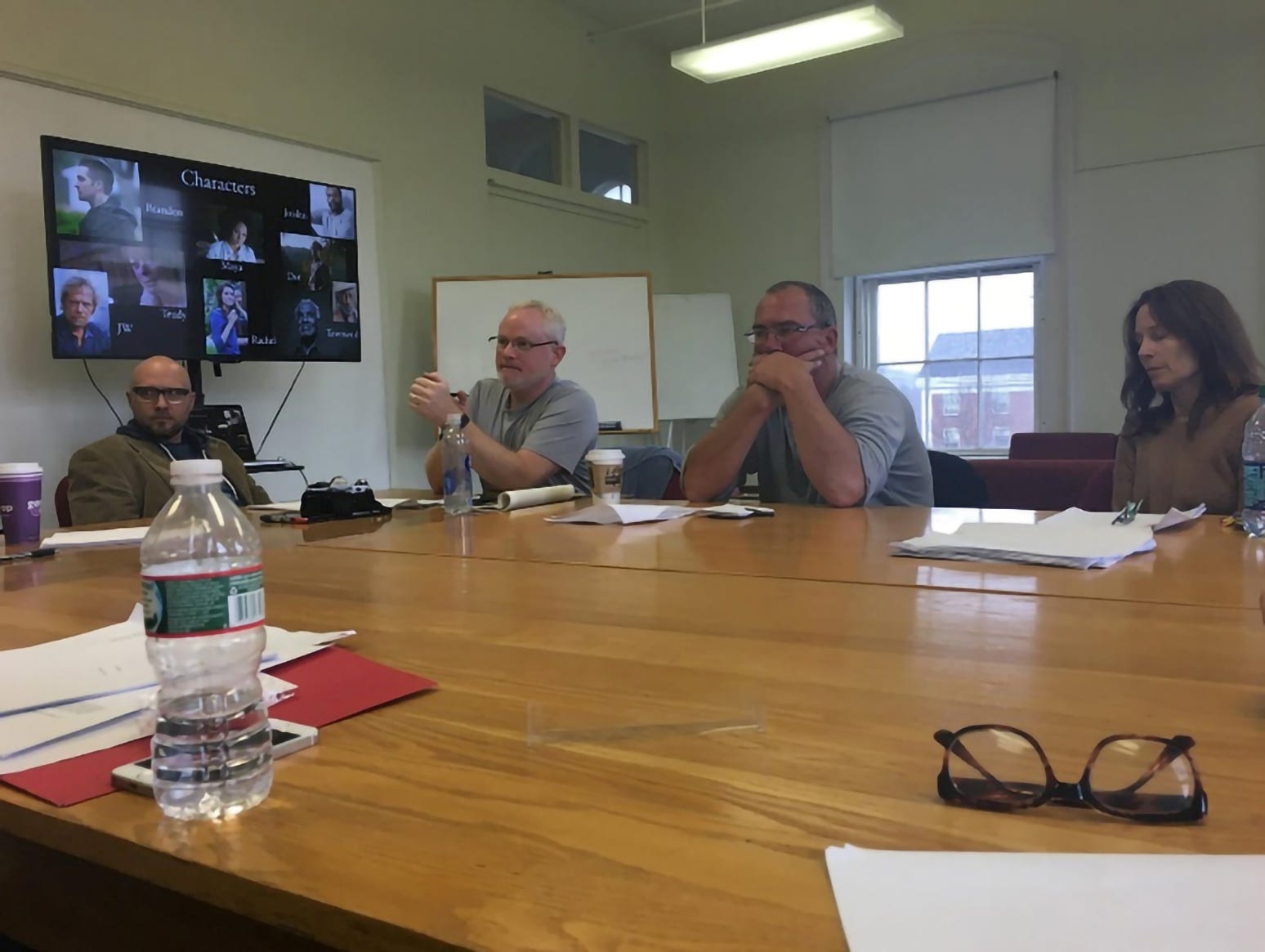
One issue I’ve noticed being a participant in table reads for friends and colleagues is that some filmmakers treat a table read as a soft premiere. They invite people, order food, and print scripts. I’ve even been to reads with microphones, and cameras. The lines get read and everyone applauds. I’m not a fan of this method. A table read isn’t proof that your screenplay is good. If you’ve made it to the table read portion of development/pre-production, then you should already know the script is good. A table read is supposed to bring technical problems, pacing issues, and other things to light so that you can find solutions that work before you get to set. You’re supposed to be looking for cracks, so you can patch them up.
When I’m ready to do a table read I don’t like to give my actors a lot of time to prepare for it. I’m going for something closer to a cold read. I want to see how well the script flows before everyone has had time to work on it and familiarize themselves with the beats. On the first read I like to go in blind and ready to take notes. Sometimes I’ll set up a cheap camera so that I can review the read to make sure there wasn’t something I missed in my notes. I find a cold first read to be very valuable.
I also don’t like to direct the actors during the first read. If the actors have questions I tell them to do what feels right and we’ll address any issues later. If you spend the entire read directing the actors for the movie in your head, then you’re not testing the screenplay. Take this time to see what’s working and not working. Watch the readers, and pay attention to when they shift in their seats, or check their phones. If they aren’t engaged enough that could signal a part of the script that isn’t working. Don’t stop reading and address the issue. Just mark the moment, so you can diagnose it later.
Pay attention to the laughs you didn’t expect, or the silence that happens after a powerful moment. I’ve been in table reads where an actor reads a completely innocuous line and the entire room explodes in laughter. Those unexpected moments provide valuable information. Maybe a tiny exchange packs more of an emotional wallop than expected or maybe a character you thought everyone would love suddenly becomes a surprise villain. All of this information provides you with information that will make your script better.
If you’re reading a feature film make sure to give everyone a break. People need to stretch their legs. I like to provide coffee and snacks as well. During the break, pay attention to what people naturally start talking about. If a handful of people are talking about a certain character or moment, take notes. These moments tend to provide as much value as the actual read.
Another thing I had to learn the hard way is to never defend the script during a read. If someone misunderstands something, or doesn’t get the emotional beats, that’s okay. Maybe the certain scenes aren’t working, or maybe they’re wrong about it. It doesn’t matter. If you take time to argue you’ll lose access to honest feedback by teaching everyone that feedback results in a rebuttal. Just take it all in.
Don’t ask for notes, ask questions that provide usable data. If you just ask everyone what they think, you’ll get complements, random opinions, and pitches on how to rewrite the script. Don’t solicit that type of response. Ask specific questions. Did any scenes confuse you? Were there any scenes where you got bored? Is there a scene you wouldn’t miss if it was cut? These are the types of questions that will provide useful information that you can work into the rewrite.
Sometimes people will suggest things that won’t work for the film you’re trying to make. Listen to them politely, take notes if you feel like it, but remember that you’re trying to identify problems, not write a different movie. I’ve had people suggest an action chase scene that I know I can’t afford, but maybe they are suggesting that because the script drags a bit during that scene. If so, then that’s useful information. Mine every suggestion for what is truly helpful.
Remember that this is the first read. Don’t stress too much. Take notes, record it so you can dive deeper later. I like to have 3 table reads for any feature I’m working on. I find that it helps to point out script issues and gets the cast comfortable with each other. Mostly though it allows me to fix script issues before I get to set. Fixing problems on set is inevitable, but limiting the amount of problems you have to fix will help you make your days.
Comments
Nothing yet. Say the first thing.
Sign in to join the conversation.