
The Saints We Choose
They turned a criminal into a saint, and the country followed.
George Floyd had a long record — drugs, theft, an armed home invasion where he held a gun to a woman’s abdomen. He had fentanyl and meth in his system when the knee went on. The restraint that killed him was wrong. A jury said so. That still does not make him a moral exemplar. It makes him a complicated, flawed man who died under police force that crossed the line. The media, activists, corporations and politicians erased every complication. They turned him into pure racial martyrdom. In Britain, Starmer and Rayner took the knee. Parliament observed a silence. Critical race theory concepts flooded schools, the civil service and HR departments. Institutions “decolonised.” All of it over a career criminal who died three thousand miles away.
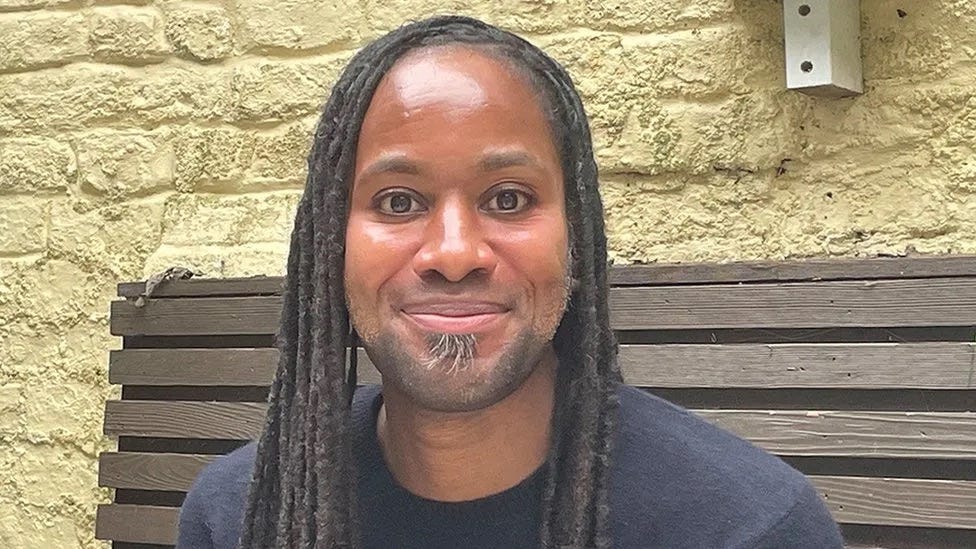
The same machinery is now running for Jason Arday.
He rose as Cambridge’s youngest Black professor on a story of almost mythic proportions. Diagnosed at three with autism, global developmental delay and Asperger’s syndrome — a diagnosis that did not even formally exist in that form at the time, and which by definition rules out severe language delay. Unable to speak until eleven. Unable to read or write until eighteen. A doctor allegedly called him “no better than a vegetable.” Hit by a car as a teenager and left in a three-month coma with locked-in syndrome while doctors urged his parents to switch off life support as an act of mercy; he claimed he was conscious throughout and later had to relearn how to walk and talk. Multiple brain tumours — one during his PhD that wiped his short-term memory so thoroughly he had to relearn his own thesis, later returning or multiplying. Testicular cancer. Epilepsy from a gang beating; years later two of his attackers became his students, had turned their lives around thanks to his forgiveness, hugged him, and one asked him to be godfather to his child. Thirty marathons in thirty-five days, including after an epileptic fit and a fractured leg on the twenty-first. Six hundred miles from Edinburgh to London in six days. More than five million pounds raised for charity. Water points installed in South America and West Africa. A severed pig’s head delivered to his parents’ door, bullets in the post, a masked knifeman at work. A Brazilian shaman who prophesied his destiny. Crystal Palace youth team, then years as a semi-professional footballer. Almost a professional snooker player. Advisor roles, including to Parliament. BBC appearances, ITV cultural advisory council, five honorary doctorates.
Nobody checked any of it properly. The institutions were only too happy to have their perfect poster boy — proof of how kind, inclusive and virtuous they were. The fantastical story was the point. It made them look good. He took the roles, the plaudits, the money, the fame and the glory without complaint. As a Cambridge professor he was on a high six-figure salary. He claimed a 1.4 million advance for the memoir that packaged the story. After his death a GoFundMe for funeral costs rapidly approached £200,000.
Then the questions arrived. Large sections of his doctoral thesis matched another thesis almost word for word. Research papers contained impossible data and plagiarised quotes. The marathon and fundraising numbers did not stand up. WaterAid said they do not send volunteers abroad. No evidence for the pig’s head or the knifeman. Former classmates disputed the non-verbal childhood. The car-crash coma vanished between book proposal and finished memoir. Crystal Palace had no records. CueTracker showed almost nothing.
He did not simply answer. He reported an academic who raised plagiarism concerns to the police for harassment. When journalist Jack Grove of Times Higher Education emailed legitimate questions, Arday instructed Carter-Ruck, whose letter suggested the scrutiny “may be racially motivated.” He then complained to the Metropolitan Police of harassment. Officers investigated Grove for four months without even interviewing him, closed the case, and still told the journalist not to contact Arday again because it was affecting his mental health. The Met Commissioner later admitted they “dropped the ball.” The Good Law Project framed the entire episode as a right-wing smear campaign against a Black academic. Cambridge initially called it a “vile campaign.” MPs and academics signed solidarity letters. Arday insisted he was not a liar and doubled down.
He was 41. The “vulnerable autistic young man” framing only appeared once the questions could no longer be suppressed. He was happy to enjoy every privilege the story brought him until the facts started catching up.
He resigned. Then he died. His death is tragic. Nobody wanted that. The cause has not been officially confirmed, but the narrative was immediate: a “lynching.” Vigils. “Rest in power.” Comparisons to Floyd. The media and those who reported the facts were blamed for hounding him to death. The same people who spent weeks calling legitimate scrutiny “harassment” and “racism” now send death threats, rape threats and intimidation to the reporters and academics who simply laid out what could be proven.
Contrast that with the reaction when Ann Widdecombe was murdered in her own home. Elements of the left celebrated. Some wished her a painful death. One university employee hoped she had been “handcuffed to the bed as she screamed in agony.” There was no equivalent restraint on the right when Arday died. No mass gloating. No public hopes for suffering. Yet the left continues to claim moral superiority while treating its political opponents and those who report inconvenient facts as fair game for the most vicious abuse.
Now look at Henry Nowak. An eighteen-year-old student stabbed to death in Southampton by a Sikh man carrying a large blade. The killer lied to police on the spot, claiming racial abuse. Officers believed the killer, handcuffed the actual victim while he bled out, and ignored him saying “I’ve been stabbed” and “I can’t breathe.” The bodycam is damning. Digwa was convicted of murder and given life.
It took days for Prime Minister Keir Starmer even to mention him. Only after mounting pressure — including, by some accounts, from Speaker Lindsay Hoyle — did a short statement appear. There were no tens of thousands on the streets. No White Lives Matter marches dominating the news. No statues pulled down. No ministers taking the knee. No sudden institutional overhaul. Because a white victim murdered by a non-white perpetrator, with police prioritising the killer’s race claim, does not fit the preferred story.
The same people who turned Floyd into a secular saint and now try to do the same with Arday will never build a statue for Henry Nowak. The difference is not the suffering. It is whose death can be made to serve the story.
I write about policing, justice and the things institutions would rather we did not say – drawing on 21 years of police service. If this reached you, share it. Subscribe for upcoming articles directly to your inbox.
This piece is free to read, but let me be honest with you, as I always try to be. I have severe M.E. – a chronic illness that limits my energy, my concentration and what I can do in a day. The job I loved broke my health. Writing something like this costs me: it means crashes, days lost, exhaustion that’s hard to describe. I take days, sometimes weeks, on each article. It would be the sensible thing not to do it at all. I do it anyway, in the small way I can, because the truth and justice matters.
If this work means something to you, a paid subscription at £5 a month helps me keep writing. So does a one-off through Buy Me A Coffee. Neither is expected. Both are genuinely appreciated – and if you can’t, sharing this costs nothing and matters just as much. Thank you for not looking away.
Comments
Nothing yet. Say the first thing.
Sign in to join the conversation.