
From Don: Molly Hardy was the Employee of the Year at the National Endowment for the Humanities in 2024. She was fired as a result of DOGE cuts in 2025. I asked her to write about her experiences in government and why, when given a chance to return to the NEH, she chose not to do so. For me, the essay speaks to how powerful public service remains as a motivator, even when people have left government.
This job interview was unlike any I had ever had. Not only had I not brushed my hair before I opened the Teams link, but I was interviewing for a job I had already held. After five and a half years as a senior program officer at the National Endowment for the Humanities (NEH), I was terminated in June of 2025 when Department of Government Efficiency (DOGE)-driven cuts eliminated roughly two-thirds of NEH’s staff. Now, less than a year later, I was being interviewed for that same position.
“I’m a scholar of the humanities and of libraries. No, I don’t have any experience building sculptures,” I replied to a question that I had not seen coming. Then I hesitated, thought for a moment, and went for it: “Or no, wait. I built some pretty great sand castles at the beach as a kid. I mean, we’re talking drip castles and moats, the whole nine yards. Does that count?”

In this interview, I was behaving as I never would have in a professional situation. My mother would have said that I was being “fresh,” and she would not have been wrong. Mixed emotions–my love for the NEH, my commitment to public service, my frustration at how federal workers had been treated, my memories of NEH grantees’ desperation–came together in that moment, showing me not at my best. My most sarcastic, perhaps, but certainly not my professional best.
When I joined NEH (just before COVID hit), I felt it was a great honor, the culmination of decades benefiting from its programs. As a young high school teacher in San Francisco in the early aughts, I learned about Chicano Literature through an NEH Summer Institute for K-12 Educators and then, in my first post-PhD job at the American Antiquarian Society, I joined a team that had been working for decades on the North American Imprints Program, one of NEH’s longest-running preservation and access projects. I came to the NEH with a specialized knowledge in historical newspapers and their digitization, and as manager of the National Digital Newspaper Program, I put that knowledge to immediate work.
That work meant so much to me. I grew up in DC, where my father served in government for 30 years, first at the Federal Communications Commission and then as senior counsel for Senator Inouye. My parents met on the Hill. Government service was what “we did,” and my time “in the field” of classrooms, academia, libraries, and archives prepared me for what I thought would be decades of service at the NEH. Months after I joined, our work became remote, but the staff worked assiduously to distribute first CARES Act Recovery and then American Rescue Plan funds. Within a year at my new job, despite the challenges of a global pandemic and remote work, I knew that I had some of the best possible colleagues, and that we were doing work more meaningful than I could have imagined.
My commitment to NEH only strengthened as we began to prepare for the 250th anniversary of our country. As an eighteenth-century literary historian and as NEH’s leading supporter of historical newspapers, I participated in many of the conversations and that laid the groundwork for the semiquincentennial.
And my efforts were recognized: in December 2024, I was named an employee of the year in recognition of my contributions to the agency.
Less than two months later, I feared for my job.
Thanks for reading Can We Still Govern? This post is public so feel free to share it.
DOGE was comparatively slow to appear at NEH, but, in some ways, the waiting was the hardest part. Rumors spread throughout the federal workforce of sudden and massive layoffs, of reductions in force that left those remaining stranded, and of senseless budget cuts that would negatively affect the lives of thousands, and, in some cases, even millions of Americans.
The naive belief that we at NEH, with our tiny little staff and our tiny little budget, might be spared proved to be just that: naive.. Once DOGE appeared, cuts to both staff and to awarded grants came fast. Deposition testimony about their role at NEH would soon make headlines.
On Friday, April 11, 2025, I learned that my position would be terminated; by June 10, I no longer had a job. The “employee of the year” plaque that hung on my wall seemed like an apparition, or worse, a taunt.
When almost a year later, I was asked if I would like to be considered for re-employment with the NEH, I was conflicted. I love the NEH, I love the work I did there, and I love the colleagues whom I had there. Some of my colleagues had remained at the agency and some have returned, but most have left. We remain unusually close, even though now scattered. But I could not help build statues, despite my aforementioned qualifications in sculptural construction. The expanded use of noncompetitive grant-making troubled me. Now a shadow of its former self, the NEH National Council, our “council of elders,” would no longer be able to support and guide each division’s work.
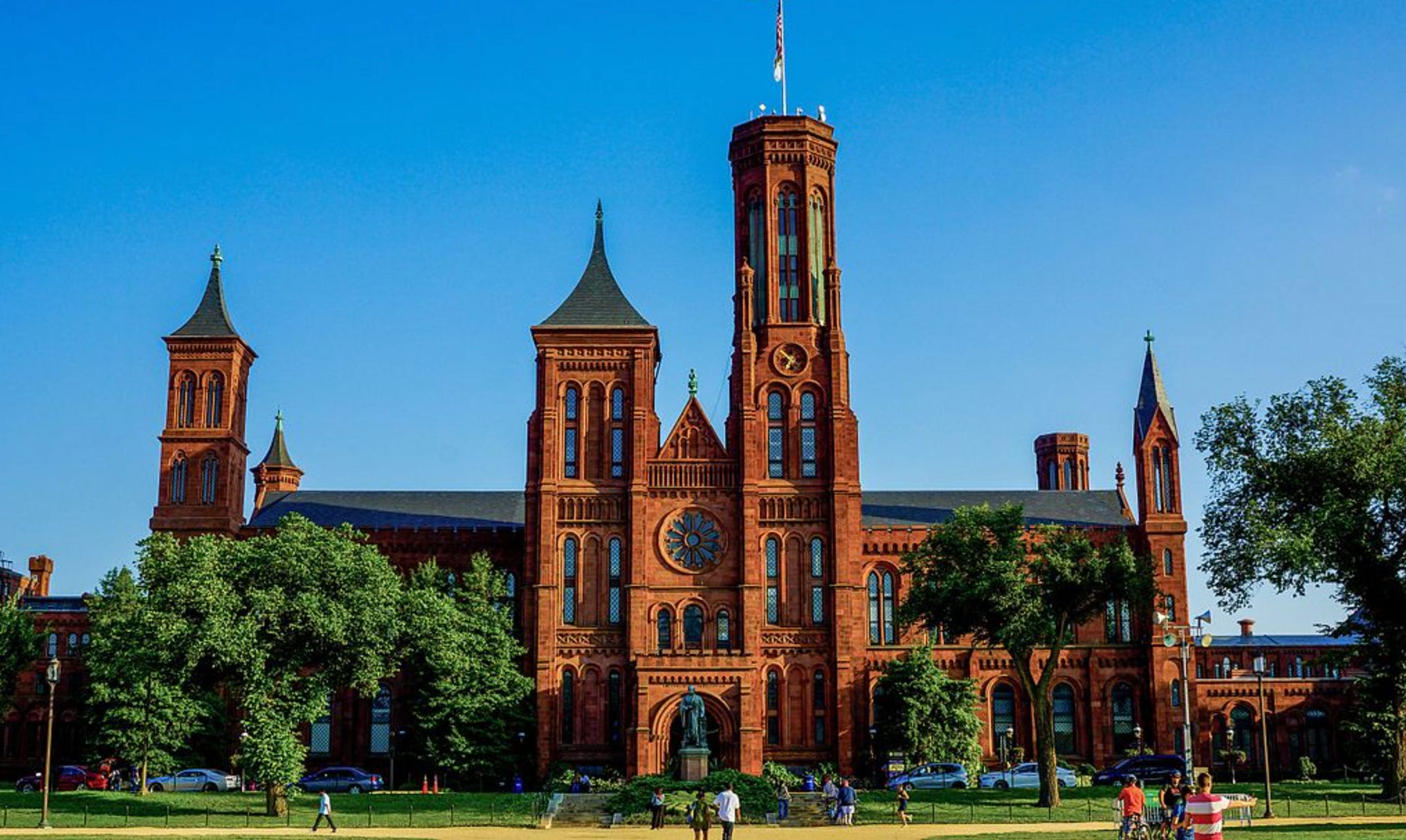
Above all, I did not want to leave my current position leading Harvard Law School Library’s Public Data Project. Here I have been fortunate to find a way, outside of government, to continue serving civil society. And my experience with castles, in this case the Smithsonian Castle and its archives, has not gone to waste. In fact, I think that for now, I am building on more solid ground, rather than building castles made of sand that will fall into the sea…eventually.
Federal government employees are not ok
·
Mar 23

Imagine you inherited a large, complex business. You don’t have time to run it yourself, but you recognize its importance. So you hire a management team. They promise to cut costs and boost productivity. A year later, costs are higher than ever, services look worse, and employees are leaving in droves. Those who remain say morale has never been lower.
The Weaponization of Trauma
·
February 21, 2025
From Don: We are witnessing an incredible and thoughtless degradation of state capacity right now. That is bad for us all as citizens who depend upon government services. But we can’t forget the human toll being imposed on public employees. Trump officials have repeatedly denigrated those that work from them, even promising to put them “in trauma.” This…
No posts
Comments
Nothing yet. Say the first thing.
Sign in to join the conversation.