
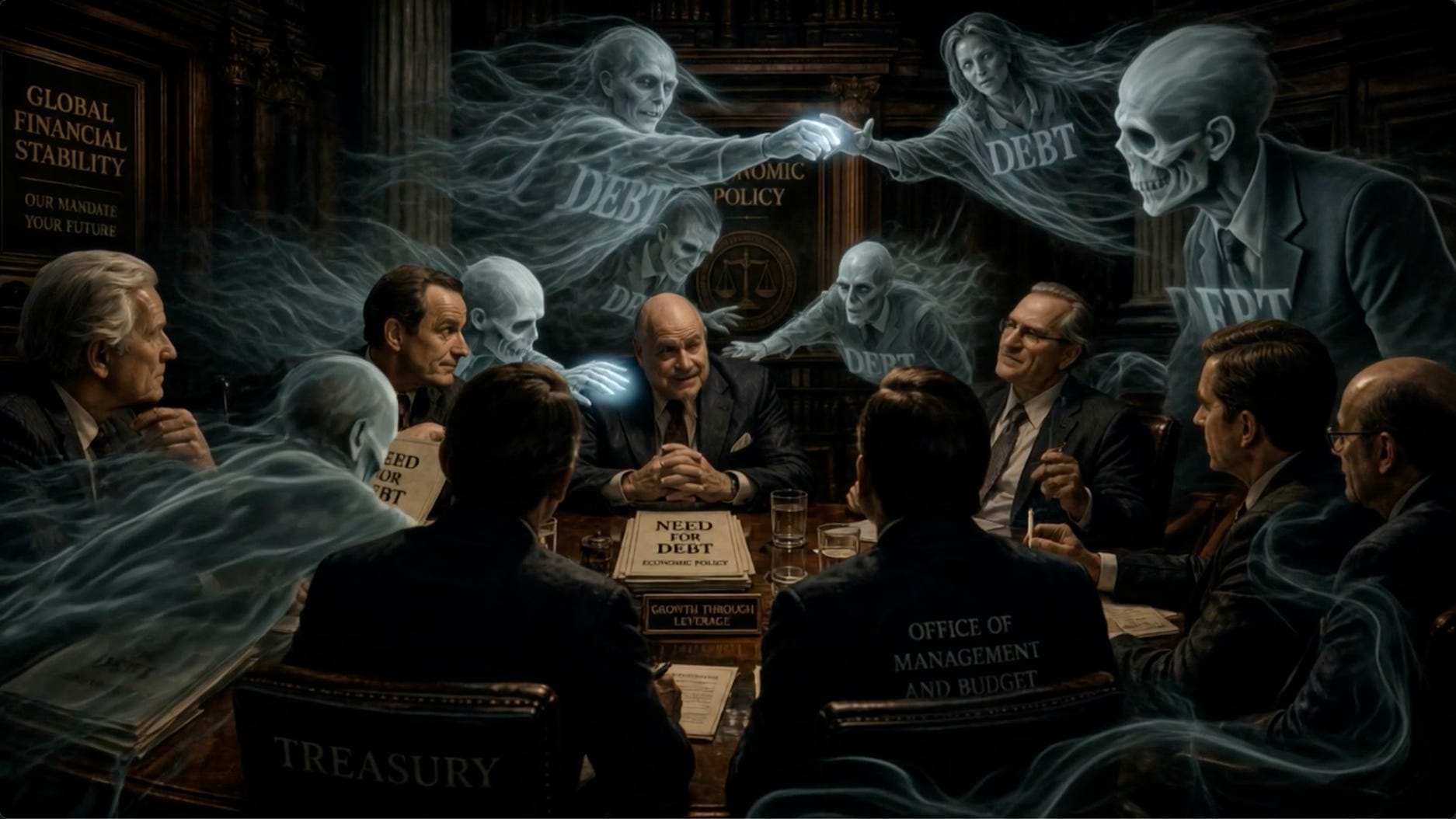
If you prefer videos over reading text, just click on the photo
The most important reform needed to improve our economic system is never discussed. Without looking at the need for debt, a debt-based monetary system can’t be improved. What creates the need for debt in our economy? What alternatives could be used to replace it?
The idea that you must finance 100% of a major asset’s value upfront, before you can produce it, creates a massive need for debt. For example, few builders have enough in savings to pay the full cost of producing a new house. To acquire the necessary raw materials, services and labour of others they must borrow imaginary “promise-to-pay-back” credit from a lender who compounds the cost with interest.
But ask yourself. Instead of creating new imaginary upfront money using debt, why not have workers and suppliers create the money needed to drive production themselves, directly through productive contributions. Worker incomes should be created automatically by their labour contributions. Supplier transfers of raw materials and components should simply reassign existing values stored on lines-of-credit to different producers. No new debt would be necessary for producers at all. Businesses should be the custodians of worker created assets, not the owners of those assets. As assets move along a production chain, the custodians would change with each transfer. Without debt and interest costs, when assets finally move into retail markets, worker incomes would match prices exactly.
The idea that you must pay 100% of a major asset’s value upfront, before you can “own” it, creates another need for debt. For example, few people have enough in savings to pay the full price of a new house. To register a “Deed” of ownership most people must borrow imaginary “promise-to-pay-back” credit from a lender who compounds the cost with interest. This process repeats every time that major assets change hands, enriching lenders all over again.
But ask yourself, if money is created to represent the underlying value of assets, why should it be paid back to lenders and be extinguished any faster than at the actual asset depreciation rate. If a house is built to last 100 years, then repayment of the money created to represent that value should last 100 years. This of course doesn’t work when interest is charged on all money creation and loans. If 5% annual interest was charged on a 1 million dollar loan, amortized over 100 years, the total interest cost would be over 4 million dollars and the scam would be obvious. Setting maximum loan repayment periods to 20 years reduces total interest cost to under 600 thousand dollars, concealing the visibility of the extortion.
The more important question is why should the upfront payment of 100% of a major asset’s value be required at all. If the producers of the asset were all fully credited for their contributions to the asset’s production, then no money is owed to anyone, so there is no need to borrow at all. End users simply pay for the portion of the asset that they use and wear out. Depreciation and consumption rates are equal.
Society has been conned into believing an economic timing trick. The true purpose of the requirement to pay 100% of a major asset’s value upfront is to replenish a never ending need for the debt ghosts, that follow asset transfers from one “owner” to another. The real asset owners however, always remain, the debt holders.
.
No posts
Comments
Nothing yet. Say the first thing.
Sign in to join the conversation.