
I spent two hours this weekend doing something called “vibe coding” – a conversational approach to building software where I describe what I want, and AI agents write the code. The result? Three fully functional desktop applications, multiple iterations, and a glimpse into a future that’s arriving faster than I expected.
I’ve been using Claude’s web-based Artifacts for a while now, which lets you build apps that run in your browser. But there’s always been a limitation: when you want to use these creations somewhere else, you’re tethered to the web browser.
Claude Code changes that equation entirely. It’s a desktop application from Anthropic that doesn’t just generate code snippets – it actually runs terminal commands on your laptop, building native Python applications that work offline. Kill your WiFi, disconnect from the internet, and your app still runs. That’s the kind of independence that opens up entirely new possibilities.
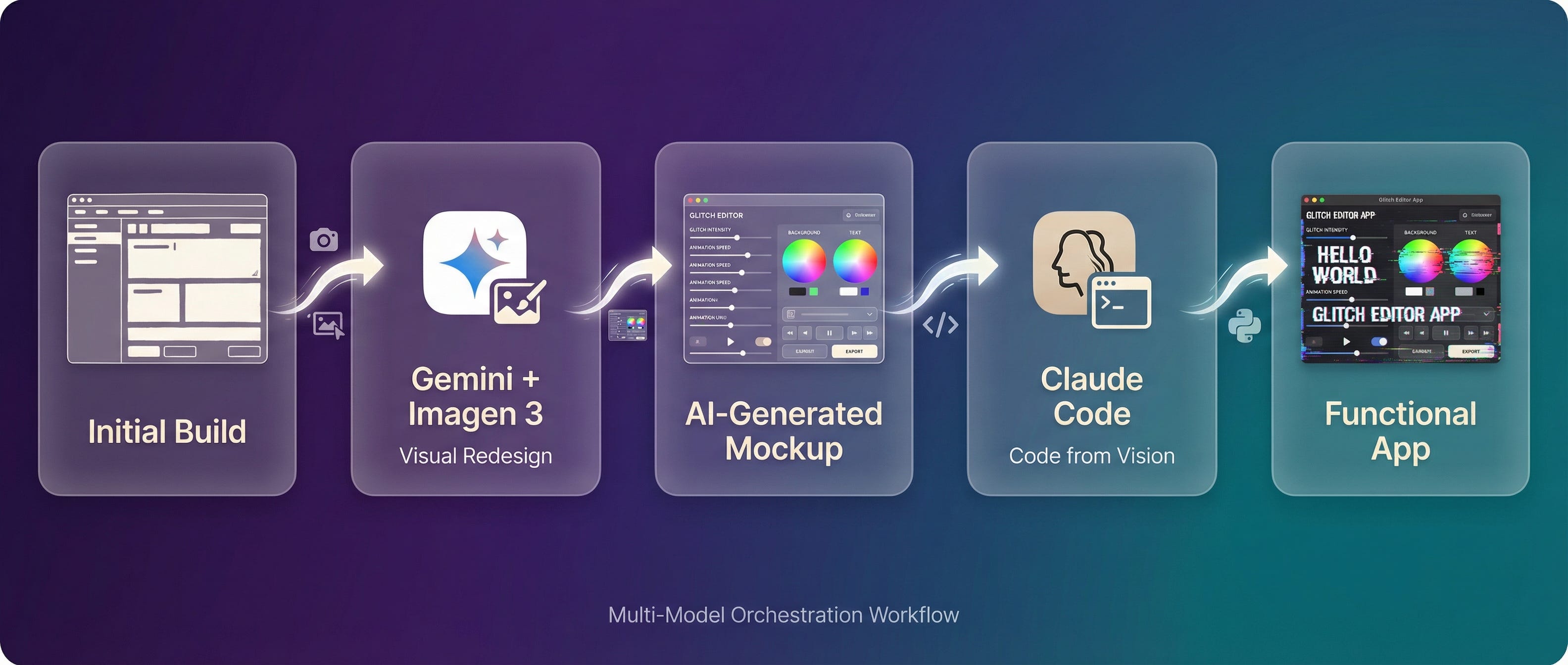
Here’s where it gets interesting. I didn’t just use one AI – I orchestrated multiple models to play to their strengths.
The Process:
I built a basic glitchy text editor app using Claude Code
I took a screenshot of the rough UI
I fed that screenshot to Google’s Gemini, asking it to use Imagen 3 (their image generation model) to design a better interface
Gemini generated a beautiful new UI mockup with sliders, color palettes, glitch controls, and animation layers
I took that generated image and fed it back to Claude Code with the instruction: “Make this functional”
What happened next was pure magic. Claude Code looked at the image, understood the design intent, and wrote the Python code to make it real. We’re talking about an AI that can code from visual inspiration, not just text prompts
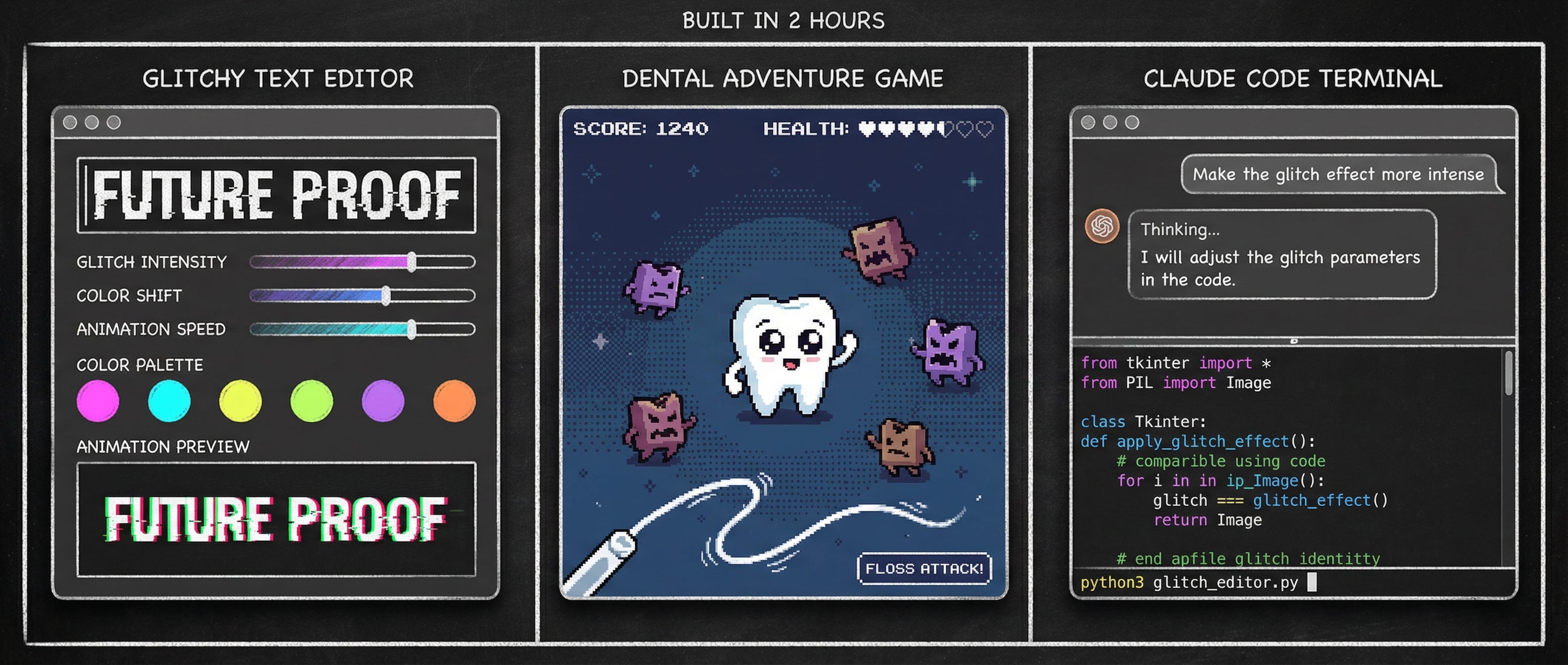
Over the course of the stream, we created:
1. The Glitchy Text Editor – A motion graphics tool for creating glitch text effects with granular controls for animation, typefaces, and visual distortion.
2. Dentist Adventure Game – Yes, you read that right. We built a playful game where you control a tooth fighting cavities. The idea? Package it on a USB drive shaped like dental floss, sell it to dental offices for their waiting rooms. It’s quirky, it’s functional, and it took maybe 30 minutes to get the first working version.
3. 3D isometric geometry viewer. – We pushed multiple versions and iterations in real-time, getting feedback from viewers and making adjustments on the fly
Here’s something nobody tells you about these tools: they have limits, and those limits cost money.
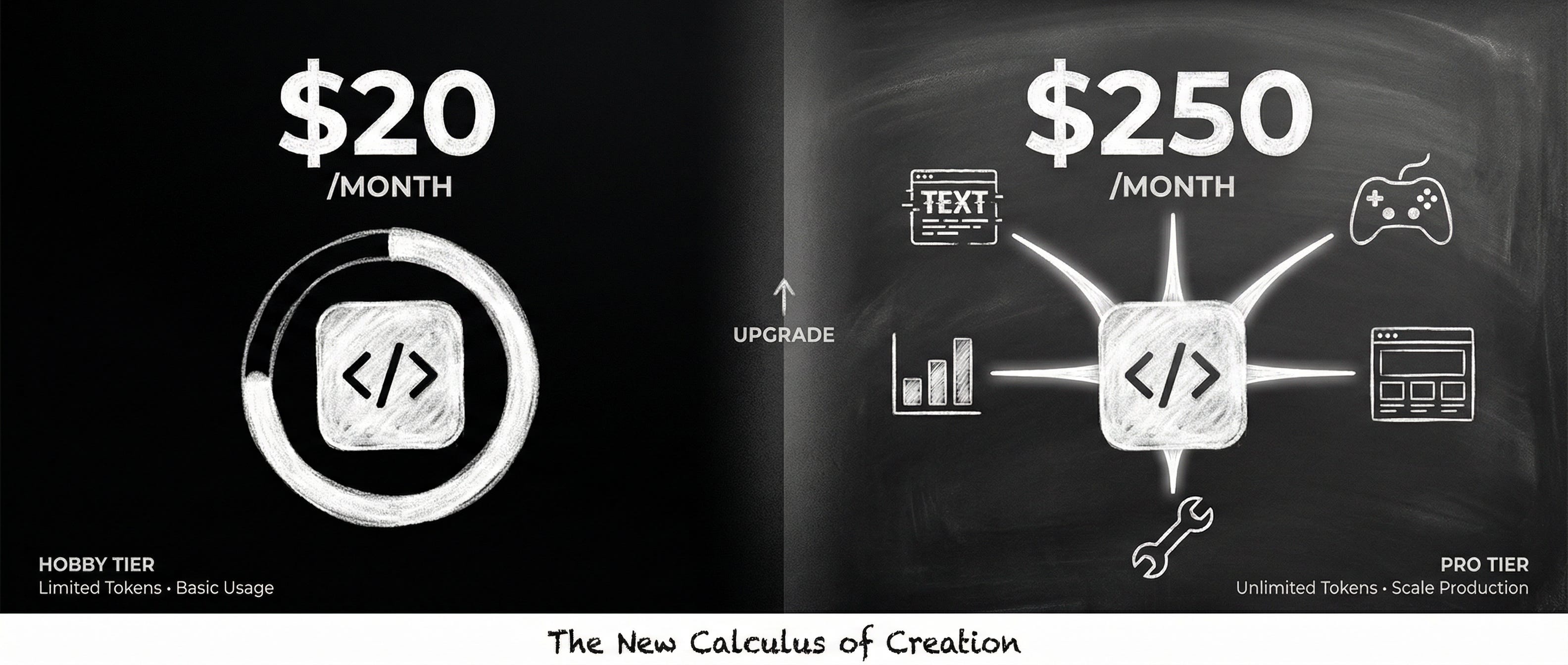
Midway through the stream, I hit my usage cap on Claude’s $20/month plan. The amount of code generation I was doing required upgrading to the $250/month tier. That’s a significant jump, and it immediately made me think differently about the business model.
The question shifted from “Can I build this?” to “How do I make this profitable?”
Suddenly I wasn’t just playing around – I was thinking about selling custom software to clients, creating niche tools for specific businesses, finding ways to cover that monthly cost. And honestly? I think it’s absolutely doable. The dental floss game could sell to dental offices. The glitchy text editor could be a motion graphics toolkit. Custom business applications could command real fees.
This is the new calculus of AI-augmented creativity: when your tools are this powerful, you start thinking about monetization earlier in the process
1. Come with a plan if you have coding knowledge
The AI can think for you, but it burns through your token budget fast. If you know what you want architecturally, describe it upfront. This saves the AI from having to reconceptualize everything repeatedly.
2. Clear chat memory frequently
I didn’t do this during the stream, and it killed my token usage. Every new request required the AI to recontextualize the entire conversation history. If I’d been smarter about managing memory, I could have stretched my usage significantly further.
3. Mix work with play
A lot of what we did involved running commands, then doing something I enjoy while the AI worked – like playing piano. This is the paradigm shift: assign tasks to your AI agents while you do something that brings you joy. That’s the future of work I want to live in.
4. Multi-model orchestration is powerful
Don’t limit yourself to one AI. Use Gemini for visual design, Claude for coding, and whatever else serves your creative vision. These tools are complementary, not competitive.
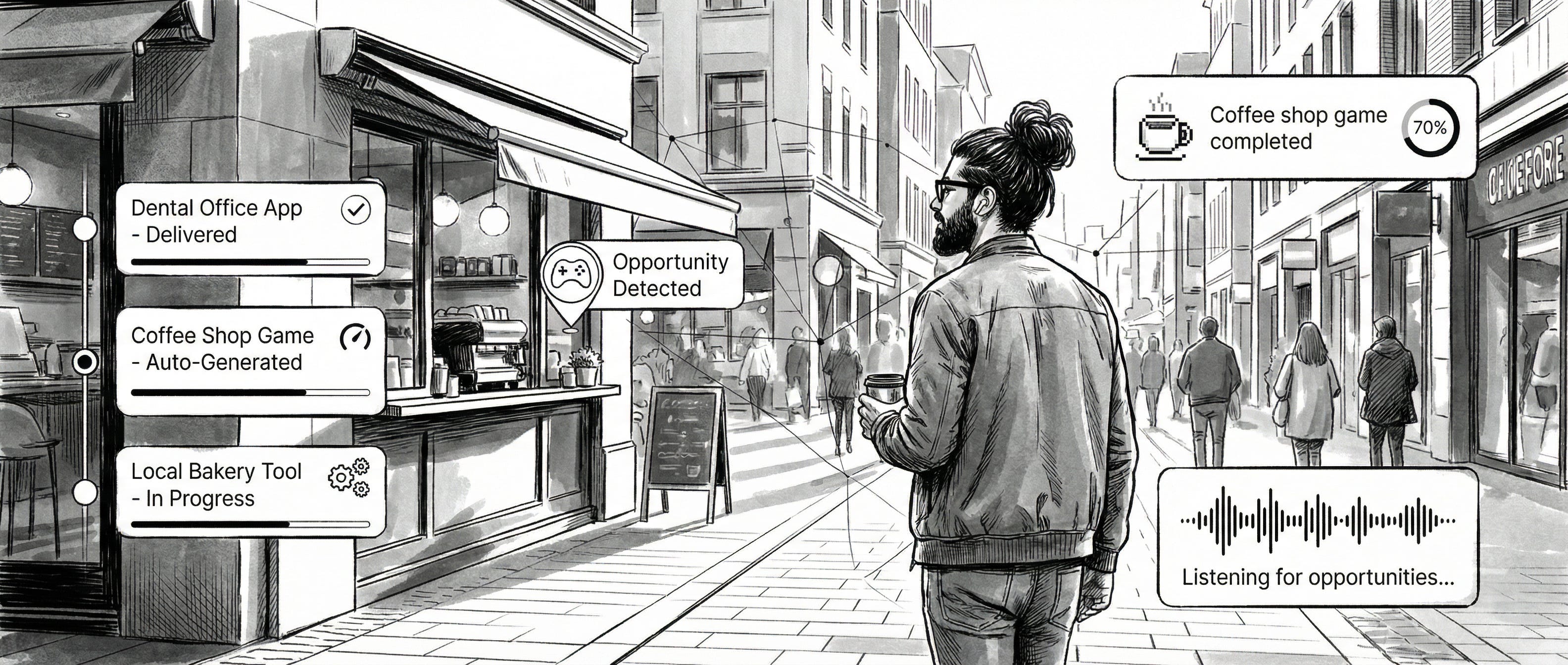
Here’s my prediction: within three to four months, we’ll see AI systems that observe your daily patterns and take action on your behalf before you ask.
Imagine this scenario: An AI agent notices that I like creating custom games for local businesses. It hears me mention a coffee shop I’m interested in (because I’ve given it permission to listen). While I’m out, it proactively builds a coffee-themed version of the dental game using the same framework we co-created. When I get home, it texts me: “Hey, I know you like making games for businesses. I made one for that coffee shop you mentioned. Want to review it?”
The technology to do this will exist in months. The privacy frameworks, regulations, and security protocols? Those will take years. So we’ll see indie creators and tinkerers (like me) building unsecured prototypes first, and eventually larger companies will productize it properly – maybe as an AirPods feature that takes steps on your behalf based on learned patterns
Every tool in history cuts both ways. A hammer can build or harm.
These AI coding agents can scale up your positive intentions – helping you create tools, games, and experiences that benefit people. They can also scale up malicious intent. This is something I just want to make explicitly clear when you’re using these tools.
So if you’re reading this and feeling inspired to try vibe coding yourself, I want to be clear: I’m here to support people who want to build positive things. If you’re planning to use these tools to harm, exploit, or deceive people, you’re not part of this community. Leave now.
I want to inspire creativity, optimism, and a future where technology amplifies our better instincts – not our worst ones! PLZ!

In two hours, a single person (me) had conversations with AI agents and produced three functional applications with multiple iterations. We got real-time feedback from a live audience and adjusted on the fly.
This is 2026. I want to remind you that this article is proof that this has already happened now, and it’s only going to get exponentially better from here.
The implications are staggering:
Individual creators can build custom software for niche markets
The barrier to entry for software development is collapsing
The economics of creativity are being rewritten in real-time
The relationship between human intention and machine execution is becoming increasingly fluid
If you want to experience what we built live, the full two-hour stream is available on Instagram. I recommend watching it on a laptop or desktop for best experience. For some reason my YouTube link broke….You can watch the messy, real process of figuring out how these tools work – including all the moments where things broke, where I hit limits, where we had to pivot.
This Substack article is the distilled version, the takeaways and workflows. When you want the raw, unfiltered stuff, check out my livestreams on Instagram. I usually post to YouTube afterwards, but it definitely broke for some reason.
And if you want bite-sized insights, I’ll be creating an Instagram reel that references this article, so you’ll encounter these ideas in whatever format works best for you.
We’re living through a fundamental shift in how software gets made. The conversation-to-code pipeline is real, it works, and it’s accessible right now.
This technology is undoubtedly going to change a lot about how we proceed in the future. I’m not working in any spaces that have to do with health and safety or defense, so I think it’s okay for me to vibe code apps and deploy them for the public. I wouldn’t recommend my haphazard approach if you are working in a space that can actually cause real harm if errors are made, or if security is a high priority. These are just fun, one-off explorations I don’t really mind not having the most security on them. I’m really excited with what we can now build together both with humans and AIs, and it’s only going to get better from here.
As always, have a creative and productive day.
Want to dive deeper into AI-assisted creativity? Follow my work on Instagram where I share daily experiments, or listen to the Rethink Reality podcast for long-form conversations with AI researchers, ethicists, and creators shaping this space.
No posts
Comments
Nothing yet. Say the first thing.
Sign in to join the conversation.