
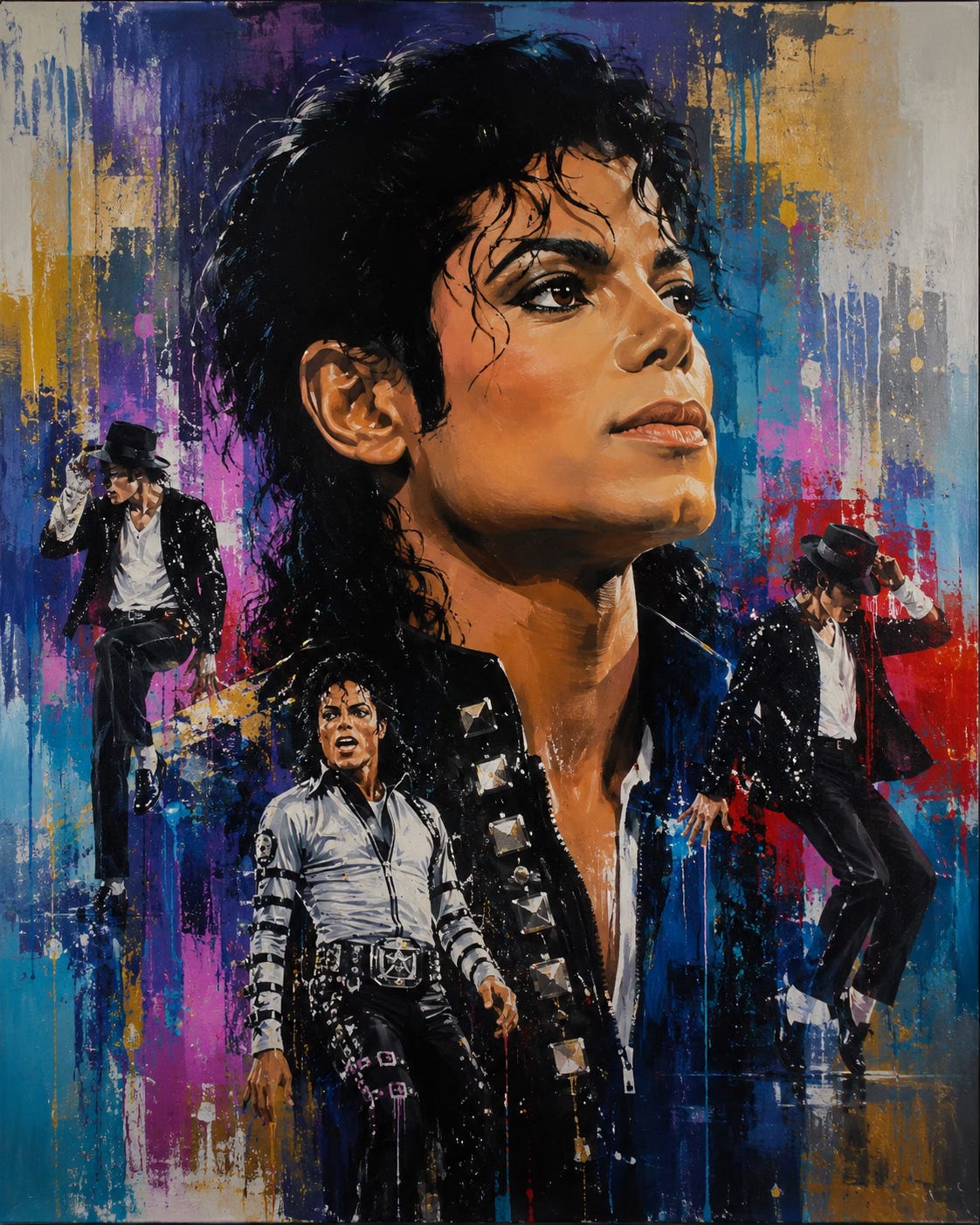
The Michael biopic is a moving and illuminating coming-of-age story that chronicles the life of a gifted child recording artist and his brothers, who together formed the legendary Motown group, the Jackson 5. The film traces the rise and development of Michael Jackson’s extraordinary talent, a brilliance that was evident from the time he was a young child. Yet beyond being a fascinating portrait of America’s future “King of Pop,” the movie also reflects the growing acceptance and incorporation of African Americans into mainstream American society during the transformative decades of the 1960s through the 1980s. Without question, Michael and his brothers were instrumental in helping facilitate a greater cultural integration between African Americans and broader American society through the universal power of music.
From the very beginning of the film, Joe Jackson—Michael’s overbearing father—plays a significant role in shaping and developing his children’s talents. Joe is portrayed as a harsh and often abusive figure, a man driven by the desire to lift his family out of generations of poverty in Gary, Indiana. His children increasingly become a carefully managed family brand that brings fame and financial prosperity, though often at the expense of their childhood innocence and emotional well-being. Tragically, the film suggests that Joe at times viewed his children less as sons and daughters and more as commodities within a profitable enterprise.
In many ways, it is truly astounding that Michael and his brothers survived the immense pressures and abusive management of their father. The family experiences tremendous financial success as the Jackson 5 signs with Motown and quickly becomes one of the most celebrated musical groups in America. Yet that success comes at a profound cost, particularly for young Michael, whose innocence and childhood were gradually overshadowed by the relentless demands of fame and perfection.
In many respects, the phenomenal success of Michael Jackson as a solo artist demonstrates the profound power of music to move beyond superficial distinctions and speak directly to the human soul. His artistry was so compelling, so emotionally rich and creatively innovative, that audiences encountered not merely a performer, but a deeply human presence. In those moments, many listeners did not primarily see race; they encountered genius, vulnerability, humanity, and emotional truth.
This idea of shared humanity—of personhood—is not merely a cultural insight; it is also a deeply theological one. Scripture declares:
“So God created mankind in his own image,
in the image of God he created them;
male and female he created them.”
— Genesis 1:27
The book of Genesis teaches that every human being bears the imago Dei—the image of God. Humanity is endowed with rational capacity, moral awareness, creativity, and spiritual depth. Each person reflects, in some mysterious yet meaningful way, the character of the Creator. This divine imprint forms the foundation of human dignity, worth, and our capacity for beauty and virtue.
In this sense, Michael Jackson’s global appeal can be understood as a reflection—however imperfect—of this deeper truth. His music awakened something universal within humanity. It spoke to the shared human experience that transcends ethnicity, nationality, and social division. For fleeting but powerful moments, his artistry reminded the world that beneath our differences lies a common identity rooted in something greater than ourselves.
Thus, the biopic becomes more than a cinematic retelling of an extraordinary career. It serves as a meditation on influence, artistry, suffering, and cultural transformation. Certainly, the film chronicles the rise of a man who became internationally known as the “King of Pop.” It highlights record-breaking achievements, unforgettable performances, and unparalleled artistic innovation. Yet beyond the spectacle of celebrity, the story invites viewers to consider how one life, one voice, and one creative vision helped challenge long-standing barriers and move society—however incrementally—toward a broader vision of equality and shared humanity.
Perhaps this is among Michael Jackson’s most enduring contributions: not merely that he entertained the world, but that he helped reshape how the world understood itself.
And yet, as powerful as cultural transformation may be, lasting renewal ultimately begins at a deeply personal level. Michael Jackson himself captured this truth poignantly in his song Man in the Mirror:
“I’m starting with the man in the mirror
I’m asking him to change his ways…”
These words echo a timeless principle: societal renewal begins with individual reflection. If we desire a more just, compassionate, and unified world, the work must first begin within each of us. We are called to examine our own hearts, confront our own assumptions, and commit ourselves to becoming the kind of people capable of bringing healing and reconciliation to the world around us.
That is why I took my daughter to see this film.
Not simply to remember the music.
Not merely to celebrate a legendary career.
But to reflect upon the deeper currents of cultural transformation, human dignity, and personal responsibility that Michael Jackson’s life and work continue to evoke.
In the end, the story of Michael Jackson is not merely about fame or celebrity. It is about what becomes possible when art touches the soul, transcends division, and inspires individuals to change the world by first changing themselves.
Donald E. Williams is a United Methodist pastor and Duke University graduate. He completed his doctorate at Duke University in 2022 and is the author of An Investigation Into the Relationship Between Aristotelian Eudaimonia and Christian Discipleship: A Thomistic Perspective, Wipf and Stock Publishers and other books.
No posts
Comments
Nothing yet. Say the first thing.
Sign in to join the conversation.