
I turned up at the altar with bruises still colouring in.
Not metaphorical ones. Actual ones. A few days before my second wedding, a small stag do, a handful of mates from work, one pub in Hull, and a man who had decided, somewhere between his fourth pint and closing time, that he was the reincarnation of some kung fu deity sent specifically to deal with us. He waited until we were leaving. Mayhem broke out with bodies littering the pavement. Police turned up. So did an ambulance. So did I, a few days later, in a suit, with the evidence still fading on my face while I said: “I do.”
I tell you that not because it’s a story about Hull being a violent place, because it isn’t; one idiot in a pub doesn’t make a city, but because it’s the story people reach for when they want to explain why Hull has the reputation it has. “The place at the end of the M62.” “Somewhere you don’t want to end up.” I lived there for twenty-six of my sixty-six years. I know what actually happens in Hull, which is mostly people getting on with things, being proud of where they’re from, and being about as defensive of it as anyone from anywhere would be if a stranger turned up and told them their home town was a punchline.
I’m a bit of a mongrel when it comes to belonging anywhere cleanly. Born in Colchester, Essex, into a military family, which meant that not long after, we were off, Germany first, then Oslo. Dad’s postings decided the map, and we children just went where the map went. But the centre of gravity, the place that actually shaped me, my education, my early jobs, before I went into the RAF Police, was Hull. So when people write it off in a sentence, I take it a bit personally. Not because Hull needs defending by me specifically. Because I’ve watched what happens to a place once enough outsiders have decided, collectively and lazily, that it isn’t worth the visit.
Which brings me to Orce.
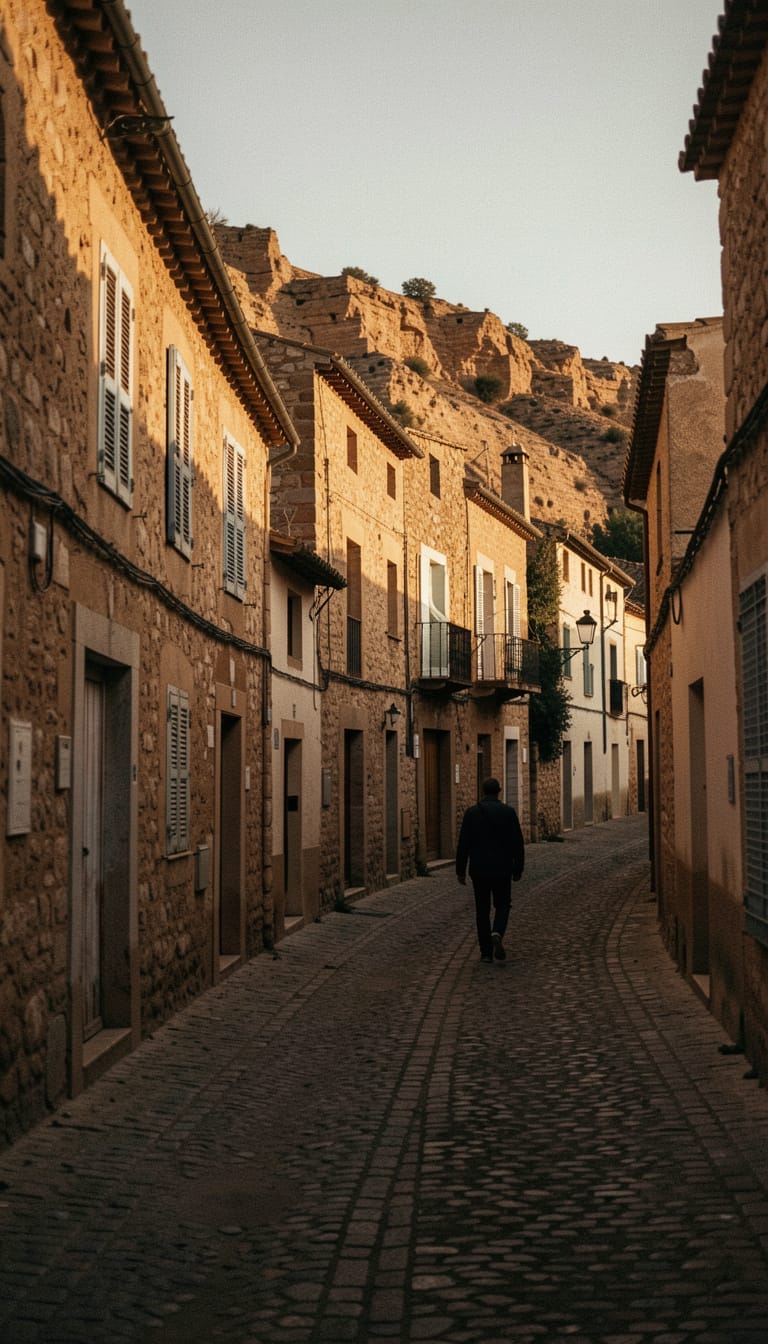
I doubt you’ve heard of it. Go on, open a map, search for it; I’ll wait. It’s a village of roughly 850 people in rural Andalucía, as far as I understand (2018, when me moved to the Fuente Nueva settlement, 9km from the village, apparently more like 1400 residents), and I’ve lived alongside it for nearly nine years now, in a cave, off-grid, with a small handful of friends who took me in when they retired out here and needed someone to keep their online business running. It is, by any reasonable measure, a fantastic community. And it is also, I think, dying by inches, and almost nobody outside it seems to have noticed or particularly cared.
Here’s the bit that ought to embarrass everyone involved in tourism strategy anywhere near here. Orce sits on archaeological finds that matter, not just locally, not just nationally, but on a European scale, arguably a global one. This is not a village trading on a nice church and a decent tapas bar. This is a place with a genuine claim to a chapter in human history. And yet the effort put into telling anyone that story, into giving a passing tourist or a prospective resident a reason to turn off the main road, is close to nothing. A few low-key local events. A shrug where a pitch should be. Meanwhile, the population figures have been sliding for five or six years running, and I see remarkably little appetite anywhere to actually turn that around.
That’s the bit that gets me. Not the decline itself; decline happens, villages have been emptying into cities since cities were invented, that’s not news. What gets me is the passivity around it. Nobody’s fighting for Orce. There’s no sense that anyone with the power to change the story has decided it’s worth changing. It’s just being allowed to happen, quietly, the way things are allowed to happen when everyone assumes someone else is dealing with it.
I feel that loss more than I expected to, if I’m honest. I buy my bread here. My neighbours know my face, know roughly that I am a scribbler, put up with my Spanish, which is earnest if not elegant. This isn’t an abstraction to me, some village on a map I’ve adopted as a metaphor. If Orce keeps shrinking, I lose the woman at the shop who always knows what I will be buying. I lose the particular texture of a place that still, just about, knows itself as a community rather than a postcode. And I don’t think I’m owed the right to keep that. I think somebody has to actively fight to keep it, and at the moment, nobody much is.
That’s the throughline, if you want one, between a rough pub in Hull and a fading village in Andalucía that most people couldn’t place on a map. Both have been quietly written off by people who never bothered to look closely. Both have far more to offer than their reputation, or their lack of one, suggests. And in both cases, the thing that actually protects a community, that keeps it alive rather than just present, isn’t pride. Pride is cheap. Everyone’s proud of where they’re from; that’s not an achievement, that’s just belonging. What protects a community is effort. Somebody, or a lot of somebodies, doing the unglamorous work of making the case for the place, over and over, to people who have no particular reason to care unless they’re given one.
I’ve spent time inside three kinds of community now that count, really, the forces which manufacture belonging out of shared discomfort and shared purpose, whether you like the people next to you or not. Hull, which generates it the old way, out of geography and generations and a shared sense of being underestimated. And Orce, which had it, has some of it still, but is losing it to nobody’s malice, just to drift, to the absence of anyone insisting it matters.
Technology hasn’t helped, whatever the app store would like you to believe. It’s given us the appearance of connection while quietly hollowing out the version that used to require turning up, in person, to a place, and doing something for it. You can “support” a village from your sofa in another country now, in the sense of liking a photo of it. That is not the same as fighting for its future, and I think we’ve let ourselves confuse the two.
So here’s the actual argument, since I promised you one rather than just a couple of nice anecdotes stitched together. Community isn’t ambient. It doesn’t just happen because people live near each other and feel warmly about it. It survives because somebody keeps making the case for it, loudly and repeatedly, to people who’d otherwise never think to look. The moment that stops, in a pub reputation, in a tourism budget, in a village council’s appetite for a fight, the place doesn’t collapse dramatically. It just quietly empties, one family, one shop, one chance encounter at a time, until the thing that made it a community rather than a location is gone, and nobody can quite say when it left.
Tell me I’m wrong. I’d genuinely like to hear it. But I’d start, if I were you, by opening that map and finding Orce first.
Until Next Time

Comments
Nothing yet. Say the first thing.
Sign in to join the conversation.