
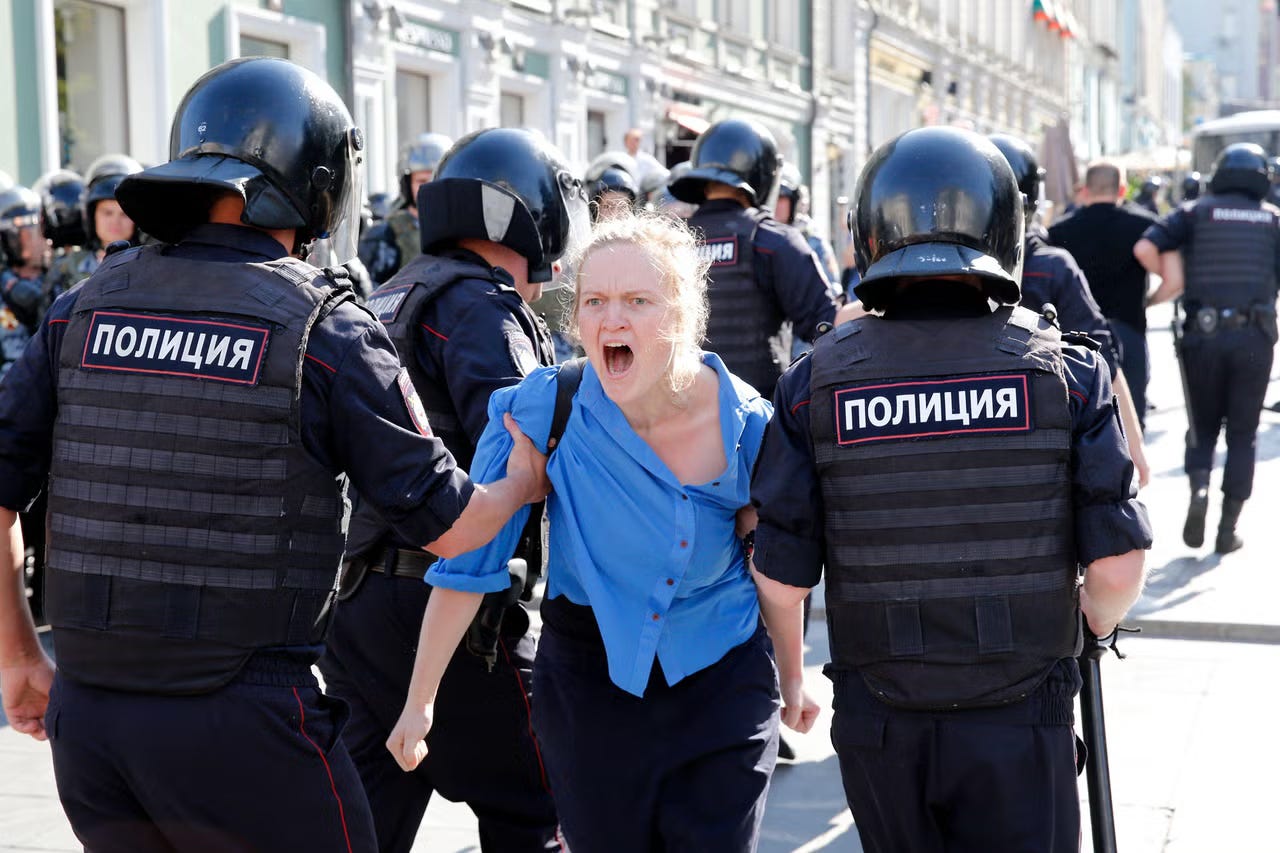
Summer, 2026: Chiswick police officers telling a local she can’t sit outside her local pub.
LOB - “Load of Bollocks”. Police acronym for an onerous task.
This article was originally intended to mock this silly-season story from leafy Chiswick. Instead, as I began writing, it became more of a discussion around risk, trust and proportionality.
Chiswick, if you weren’t aware, is a chi-chi and slightly wanky west London enclave. Largely populated by celebrities and people who can afford to hold silly views, it unsurprisingly returned a Green Party councillor. Said councillor lives near a row of riverside pubs in Strand-on-the-Green, a pretty spot overlooking Kew Bridge. Enter an ornery and opinionated local photographer, a man who lives on a riverboat and is passionate about pubs.
When local hostelries were ordered to remove tables from outside their establishments, by killjoys from Hounslow borough council, the photographer suspected the councillor might be involved. Presumably, the councillor didn’t want noisy revellers disturbing his karmic yoga, plant-based cake-making, drag-queens-for-Gaza story hour or whatever else it is Green councillors do with their evenings.
I don’t know how the photographer drew the conclusion the tables were turned (aha!) by the councillor, as frankly the rabbit hole this affair presents proved too deep for even I to excavate. Suffice it to say, the councillor hotly denies the allegation, offering a statement supporting local licensed premises - which of course he would, wouldn’t he? Now, the plot thickens, like an inciting moment in a Richard Osman novel.
The photographer is reported to the police, presumably by the councillor, for harassment. This appears to have been due to (sigh) the photographer’s online activities: social media comments, “doxxing” (i.e. revealing online, by default, where the councillor lives) and filming nearby. The police also seemed to have formed the opinion (again, I don’t know how) the photographer might’ve been planning some sort of spontaneous public event, outside a pub, very near the councillor’s home. This too, might have been LOB.
So…
Two police officers arrive at one of the pubs in question, where the photographer is enjoying a pint with a friend. They ask him outside for a chat. Depending on your point of view, this is:
A friendly, old-school, “word in his shell-like” in an attempt to de-escalate the situation
An example of arse-covering police supervisors disproportionately risk-managing a potential flashpoint
An appropriate use of police time to ensure the safety of democratically-elected political representatives who, on occasion, attract the ire of fixated people
LOB
The actions of a Stasi-like police state
The last, incidentally, was the orgasmically-offended reaction of many on ‘X’, which led me to post:
Sorry, online right, some are aping worst excesses of online left willfully misunderstanding policing.And, generally, I'm loitering at edge of your political grid square. Feedback's a gift, do with it what you will: a few of you are fucking Owen Jones level embarrassing.
Back to leafy Chiswick, W4. The police speak to the photographer. The photographer pointed out he’d steered clear of “the line” of revealing the councillor’s address. In my view, though, he was standing on it: he’s clearly an articulate, intelligent person with an axe I can imagine myself grinding in similar circumstances. Then he begins making not-particularly-relevant comparisons with an incident on his narrow boat which the police apparently failed to investigate properly.
The photographer was, I would say, being disputatious and a bit of a knob. However, the last time I checked my “Big Book of Criminal Law”, there’s no offence of being disputatious and a bit of a knob. Indeed, I will happily admit to being both disputatious and a bit of a knob myself. If they were offences, I’d be writing from HMP Belmarsh.
On the other hand, the police are entitled to speak to anyone they like, whenever they like. The officer made it clear this was a conversation about the photographer’s future conduct - the photographer’s protestations sounded, to me, like those of a chippy student leftist. The officer reiterated no offences had been committed. At this point, the photographer would’ve been well within his rights to say, “no offences? OK officer, go away, I’m not talking to you / contact my lawyer” (etc). And that would have been that.
Instead, he posted the incident online, thus boarding the fast train to outrage city. A train many, including even the Free Speech Union (disclaimer: I am an FSU member) chose to jump aboard. Strange, because I didn’t see this primarily as a free speech issue - something I’m usually passionate about. Was I suffering from pro-police carpal tunnel syndrome? Or did I simply establish the circumstances before pontificating?
This is why, I suspect, I don’t have many followers on ‘X’.
Let’s delve deeper into why the police get are often disproportionately exercised by stuff like this. Here, for example, is an excerpt from The Daily Telegraph’s coverage of the incident, one which illustrates the sort of pressures police forces face. Enter, “Operation Ford.”
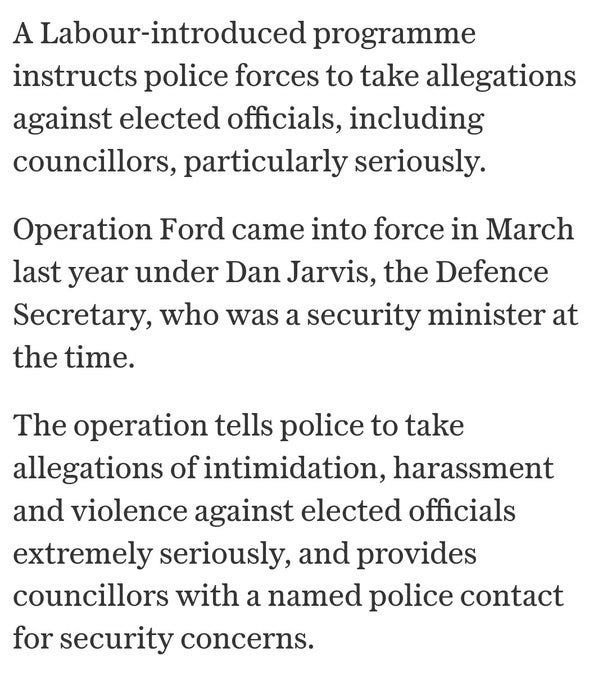
We’ve seen this before, on other occasions where social media disputes with local politicians have led to half-witted police actions. This one, involving a radio producer called Maxie Allen, was genuinely outrageous.
This is partly due to risk management strategies gone wild, an overreaction made by people who know they’re damned if they do and damned if they don’t. Such mechanisms were inspired by the murders of the MPs Jo Cox and David Amess by lone-wolf killers. MPs receive vile threats daily on social media from trolls, stalkers and potential offenders.
Yes, it might seem strange - offensive, even - to compare a genteel, cosy-crime example of Chiswickian intrigue to such horrible crimes. Yet serious offences often begin life as mundane grudges. How many times have you seen a murder or a stabbing on the news, followed by the line, “police previously had contact with the arrested man…”? Why didn’t they do anything?
I can assure you concerns such as Operation Ford would form part of the police decision-making process. Does this, though, invite the risk that protecting politicians and other elected officials can be misused to stifle free speech? To, say, harass pub-crusading photographers in desirable parts of London? And how did we get to the point where police officers asking members of the public simple questions is viewed as authoritarian overreach? This, to me, was one of the most striking features of this affair.
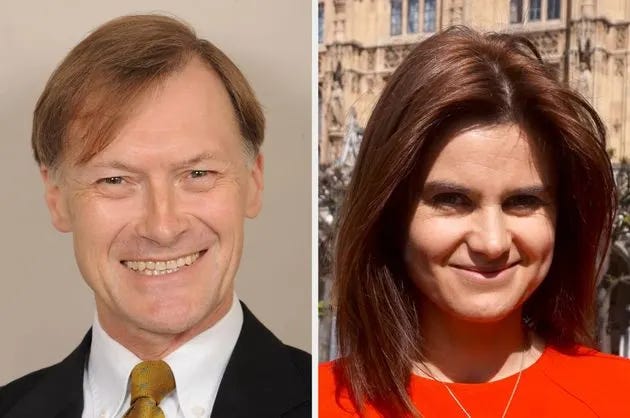
David Amess MP and Jo Cox MP, both murdered for doing their jobs.
Back in the day, of course, this was much simpler. “The Pubs of Chiswick” saga would have been classed as a civil dispute. The “White Notes” at Hendon on civil disputes, short and sweet, went something like this:
If members of the public are in dispute and no criminal offences have been committed, it’s not our business. Unless, of course, there’s likely to be a Breach of the Peace. All parties should be suitably advised of appropriate civil remedies.
What did this mean in practice? Imagine neighbours were threatening to kick off over, say, car parking. Police were called. We’d rock up and point out that, although no criminal offences might have occurred, if there were any dramas we’d take appropriate action - which meant someone might get their collar felt. In the meantime? Behave yourselves and contact the council / a solicitor / whoever. Of course, back then, we didn’t have social media.
Nonetheless, to me, this is more or less the approach the Chiswick officers took. It’s refreshingly old-school, intended to head off any dramas before they occur. After all, it seems clear the police received an allegation about the photographer’s behaviour. The police, especially nowadays, couldn’t simply say, “that’s LOB.” We’ve moved well away from a traditional law enforcement model (politically right-coded) to one of harm reduction and social intervention (politically left-coded). That’s a subject, though, for another time.
Now, police are expected to use intelligence to predict events and, thereby, prevent them. They’re expected to learn the lessons from public inquiries, to identify potential Axel Rudakubanas or Valdo Calocanes. To save the next “Baby P” or Victoria Climbie. There are reams of consistently ineffective guidance, processes, oversight mechanisms and blame-dispersal and attribution tools for law enforcement elites to use to escape the realities of what is, at the end of the day, an exercise in judgement, discretion and resources - and luck. Oh, and (whisper it) prison spaces and / or residential mental healthcare capacity.
Which is why this odd, Potemkin, version of a precautionary principle now rules supreme. Better to be bashed up by angry middle-aged conservatives on social media than fail to apply the nationally-mandated decision-making model. Which brings me to perhaps the most damaging aspect of this affair: legitimacy and trust.
As a police-watcher and commentator, the Chiswick melodrama illustrates a number of issues. Here they are, in no particular order:
In a less crazy world, a community police officer (well-trained, led and remunerated) would have worked in Chiswick for long enough to know the community of narrow boat dwellers along the Thames, as well as the pub landlords and local councillors. This officer would have been asked his opinion about this dispute - and quite possibly informally resolved it, too. Now, coppers work from remote patrol bases. they’re issued tasks like drones at a fulfillment centre. Neighbourhood policing used to be seen as the baseline. Now, though? It’s more of a luxury.
The police scrapped local intelligence units, for the usual cost reasons, years ago. Most Basic Command Units have a fraction of the local knowledge they should have.
Risk management models and decision-making processes attempt to impose order onto chaos. They instill a belief cats can be herded. Jellies can be nailed to walls. Follow the model and you’ll be fine at the public inquiry. They also encourage senior officers to occasionally micromanage, leading to what I call “X-Box Policing.”
There’s a process map for everything, and for everything there’s a process map. The officers sent to speak with our curmudgeonly photographer were simply the end result of a byzantine web of procedures, SOPs and accredited professional practice. The officers, quite literally, ticked a box.
As we have seen with Operation Ford, police are obliged to comply with yet another procedure, one tailored to address fears around threats to elected officials. It would take a brave, or even insane, police superintendent to tell the councillor in this case to take a chill pill / get a grip. Or, for lower-ranking officers to approach the problem differently, perhaps?
The outrage express has already moved on, ‘X’ salivating over fresh footage of hapless, poorly-trained and badly-led coppers. Some criticism is valid, but a lot is LOB too. All I’d ask people to remember is this: outrage might scratch an itch, but it doesn’t apply any balm to the rash. As such, look to the politicians, policy-makers and elites who caused these problems in the first place. I say it frequently because it’s true - a society gets the police it deserves.
No posts
Comments
Nothing yet. Say the first thing.
Sign in to join the conversation.