

Hermer and Starmer. The trouble with lawyers made flesh.
An ex-policeman writing about lawyers? As the hard-boiled crime author Reed Farrel Coleman wrote, “When cops are on the job they love lawyers like lions love hyenas, only minus the mutual respect.”
Nonetheless, I remain of the view a functioning legal system is a piece of civilizational genius. I also believe we often take the rule of law - slippery and capricious as it occasionally is - for granted. Until it begins to unravel, whereupon lawyers (like police officers) become performative. Surplus to requirement. Like technicians, pretending to run a power station long after the reactor core’s melted.
Which is where we are now. A Juristocracy, or government by lawyers, led by a Prime Minister whose legal credentials were sold as an ideal qualification for high office. Starmer might have been dull. Pedantic, even. On the other hand he was principled. Honest. The UK was merely a poorly-prepared brief, written a dozy blonde legal clerk called Boris. All it needed was tidying-up and hey presto! The country’s ills would be solved by Starmer’s sheer Will to Power. Like Gregory Peck as Atticus Finch, the Toolmaker’s Son could humbly leave the courtroom, having persuaded twelve angry men of his competence and moral turpitude.
Of course, in reality, Starmer is a prize tit. A ‘shitweasel.’ His only remaining political ally is Richard Hermer, the Attorney General with a seemingly pathological - but profitable - hatred of the country he allegedly serves. These are the last of Labour’s lawyer-politicians standing. Evidence, were it required, of what happens when a juristocracy collides with immovable objects. Which, in this instance are (1) reality and (2) the British civil service.
I decided to consider Starmer’s woes through a copper’s eyes. What conclusions can I draw from a quarter-century of doing a job involving law, procedure and - yes - lawyers? I appreciate criminal law is very different from (say) commercial or family law, but the principles are similar. As Franz Kafka wrote, A lawyer is a person who writes a 10,000-word document and calls it a "brief."
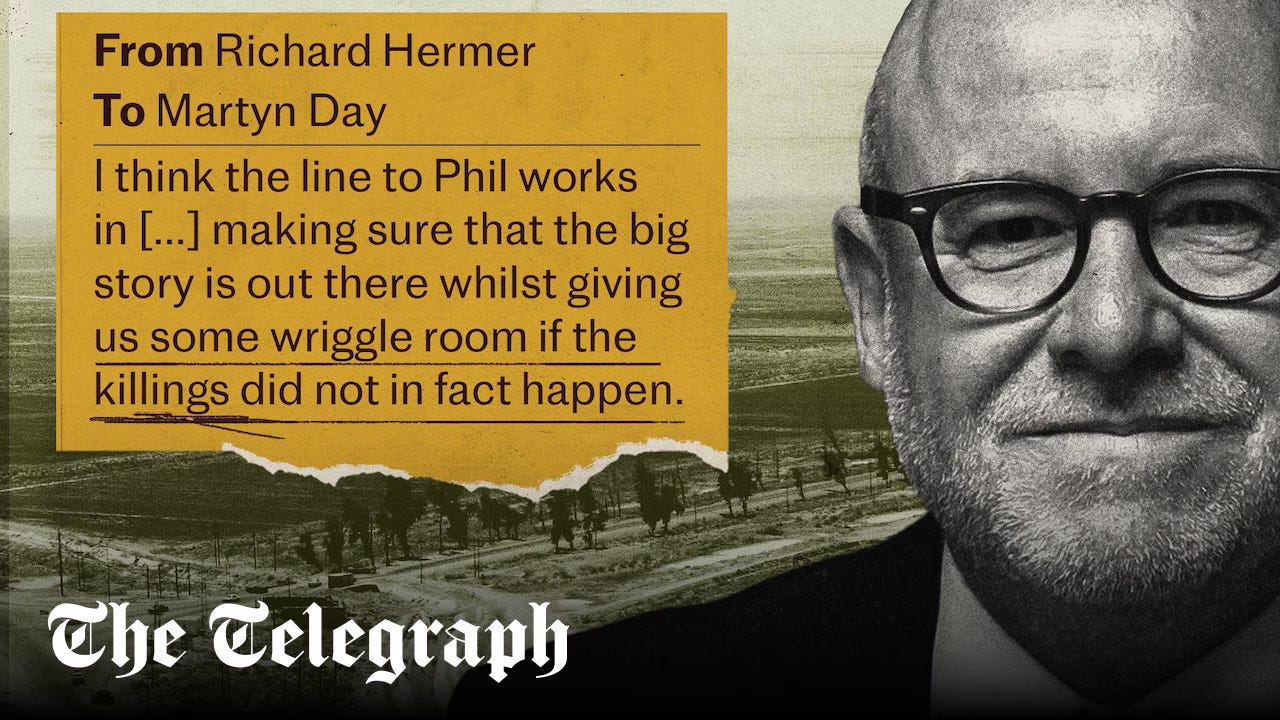
Yes, all of today’s images are about Richard ‘Wriggle Room’ Hermer.
(With apologies to JK Rowling)
Police officers most commonly encounter the following specimens:
Solicitor’s Reps: the poor bloody infantry of the criminal defence industry, reps are paralegals who represent suspects at police stations. Some of the best are wily ex-coppers who left the Job under a cloud. Reps are (usually) pragmatists, looking to square the circle of suspect interest and law firm income. A government run by solicitor’s reps would, I imagine, resemble Berlusconi-era Italy. Slightly seedy, but strangely functional. And a fair bit of fun.
Defence solicitors: as with any walk of life, you’ll find the good, the bad and the ugly. The good ones are basically formally-qualified reps. They’re often socially conscious, but in a way even a flinty-hearted cop can wrap his or her head around. Dealing with grubby realities, they see the world as it is. Starmer, a human rights idealist, strikes me as the polar opposite.
The bad are the shiny-suited spivs from the local practice who represent your manor’s most prolific villains. These people really do exist, and a few are as bad as their clients. I’ll never forget witnessing footage, from a phone seized during a search, of a defence solicitor engaged in a sweaty threesome with two local drug dealers.
Then there’s The Ugly - committed social justice / activist types who walk into every interview looking to (a) virtue-signal (b) do a spot of Rosa Luxemburg LARPing and (c) make vexatious complaints against police (any favourable outcome for their clients coming a poor second). Richard Hermer would, I would imagine, be their patron saint. We had one who was subsequently mugged by her clients. Yes, we chuckled when she attended the police station to report it.
CPS Prosecutors: Younger officers might be surprised how often cops of my vintage gave evidence. Back then, after all, we had a semi-functional courts service. This would involve court liaison with CPS solicitors, usually burdened with ridiculous workloads. We often viewed them with derision - most treated our work as an administrative convenience. A CPS solicitor once dropped an assault on police charge against me because, “it’s Friday.” I’m not making this up. This is the CPS, it will be noted, once led by Keir Starmer.
Barristers: Very occasionally, I’d find myself at Crown Court. The “Big House”, with judges and juries and wigs and gowns. Barristers were usually posh, self-assured and either businesslike and pleasant (prosecution) or condescending, supercilious bastards (defence). The important thing to remember is a British courtroom, for students of Class, is like a goldfish bowl. One where the barristers devour the other - more oikish - fish.
It should be remembered how barristers exist in a tightly-controlled environment, one they arbitrate among themselves. You can also see how easily this might translate into politics. Like law, it’s a world where the “rules” have questionable grounding in reality as understood by muggles like you and me. At court, it would amaze cops how defence and prosecution barristers were so chummy with each other - like it’s all a game. They’d sit in the canteen, laughing, at lunch. They were, of course, too learned and professional to be accused of conflicts of interest. Unsurprisingly, cops at Southwark CC don’t eat sandwiches with the accused. Nor barristers either, of course.

Hermer, eh? He’s our best interests at heart, he really has.
At Hendon Police Training College (RIP) there was a mock-courtroom where sprog coppers were trained in preparing and giving evidence. Instructors usually played defence lawyer, but occasionally a real barrister would be wheeled in. Perry Mason would explain “boiling the frog” and other legal sorcery.
Over the years, I’ve been bashed up by more than a few defence briefs. I’ve only ever made one look silly. It was at the Old Bailey, too, but before I perform a victory lap I’d add two caveats. First of all, the defendant was clearly guilty as sin and running what they call a “Kamikaze Defence” strategy. Secondly, in cross-examination, the defence chose to hone her attack on an area of law I’ve a near-obsessive interest in. She underestimated me. Her client disadvantaged her. I never underestimated her. My single dogeared ‘victory’ simply demonstrates how, most of the time, court cases are carefully managed. Does such control breed arrogance? The sort whereby the Keir Starmers of the world convince themselves they’re able to defy political gravity using the power of their minds?
Remember, barristers play a game where, more often than not, the rules are agreed before kick-off. This is via a process called Case Management Hearings, although in my day it was referred to by the much more satisfying name of “Pleas and Directions.” Which leads me to…
Two of the criticisms leveled against Starmer seem contradictory. On the one hand, the Prime Minister’s accused of being too procedure-driven. A maximalist - as per his mulish position on the Chagos Islands fiasco. On the other, say for example in the Mandelson case, he’s criticized for a lack of “professional curiosity.” This means an eye for detail beyond his immediate brief, an intellectual version of situational awareness.
Which one is it, then? How can this be, setting aside the obvious allegation Starmer’s dissembling, as politicians are wont to do?
This is where my earlier point about Case Management culture comes into play. Lawyers seek to control cases from as early a stage as possible. Disclosure / discovery processes, witness eligibility, evidential admissibility and a host of other considerations are weighed and measured for the tiniest sliver of advantage. Lawyers spend hours haggling, debating, pontificating and negotiating over what material a court might consider. Both sides give and take, finally agreeing what evidence enters the mix. As a police officer, this can be extremely galling. Hard-won material might be excluded, seemingly due to lawyerly horse-trading.
Eventually, done properly, case management means a case might not even go to court - the preferred outcome for legal professionals. Whether the burden of proof is civil or criminal, the other side accepting defeat prior to proceedings is the optimal outcome.
How, then, does this breed complacency?
Imagine you’re a top-end human rights barrister like Sir Keir Starmer KC. You’re presented a case - “a brief” - prepared by a team of solicitors who’ve done the hard yards already. You cast your eye over the bundle and pick out the parts you believe require polish, then consider your strategy. You’re a striker. A fighter pilot. A knight. Midfielders, ground crews and squires prepare your tools - you deliver the killing blow. This means star barristers become familiar with the law firms they work with. They trust their case preparation and god help them if they screw up. Then, the higher into the stratosphere a barrister ascends, the busier they become. The busier they become, the more they’re required to rely on their team. Until, like a celebrity chef who can only visit their restaurant once a month, they begin dropping the ball.
A Prime Minister is juggling more balls than the average circus performer, not to mention managing more clowns. Does Starmer’s legal background mean, as a busy man, he’s more likely to trust processes and procedures? Trust that leads, ironically, to a “lack of curiosity.” I mean, it worked in chambers, right? Does his barrister’s confidence invite complacency or even hubris? Could there also be a human rights lawyer’s belief he’s on the side of the angels? That his errors are in good faith? Such an attitude can easily slip into self-righteousness. Watching Starmer’s PMQ performances, one can see how easily he’s riled when accused of being anything other than a man of utmost integrity. Then, under pressure, you’ll see his hands shaking. Starmer’s only used to asking questions.
If doctors make the worst patients, do barristers make the worst witnesses?

Does standing in front of that flag hurt, Richard? Are your fingers crossed?
I’m suggesting that all of a lawyer’s strengths can, in the right circumstances, become weaknesses. Other lawyer-politicians, from Attlee to Thatcher to Blair, seemed to understand this. They saw their legal experience as part of a hinterland, not the sum total of their identity. And herein, I suspect, is Starmer (and Hermer’s) weakness. They have no hinterland. They’re lawyers to the bone, and quite possibly the marrow too. Furthermore, they’re both human rights lawyers, adding sanctimony to a baked-in tendency towards arrogance. In their minds, politics is law.
Now Starmer’s trapped in his bunker, blaming everyone else for bungling his brief. Sir Olly. Morgan. Sir Chris. That bastard Peter. Under the bus, the lot of them! The next lot of juniors and clerks will do better. Except there won’t be a next lot, Keir. And, outside your office door, there’s a grinding noise.
Hear it?
It’s knives being sharpened.
No posts
Comments
Nothing yet. Say the first thing.
Sign in to join the conversation.