
The Trump administration is a study in split screens. Starting wars, and building ballrooms. Economic disruption, and familial grift. Clockwork operations, and bombing schoolgirls. Hegseth’s puerility, and Caine’s sobriety. But this Easter weekend must be the starkest yet: a heroic rescue, and a depraved rant.
On Good Friday, Iran shot down a US F-15E near Isfahan. Combat search and rescue (CSAR) forces recovered the pilot quickly. After a desperate search, the weapons system officer (WSO) was rescued early Easter morning.
The initial reporting on the special operations mission to recover the airman is quite dramatic. As US and Iranian forces raced to find the downed WSO, he escaped and evaded on foot, climbing a 7,000-foot ridge and hiding in a crevice. The IRGC offered rewards for local tips and posted images of jet wreckage. The CIA located the WSO with some technical means and conducted a deception operation to mislead Iranian troops. There was extensive contact between US and Iranian forces, with multiple aircraft hit or destroyed. All US personnel made it back alive, several wounded.
UPDATE 4/6/26: “Mr. Trump gave a laudatory depiction of the rescue of a missing American airman shot down over Iran. The mission involved 155 aircraft [on par with the Maduro raid] and hundreds of people, he said, though “a lot of it was subterfuge” designed to lead Iranian forces away from the aviator. He also revealed that the plane, a U.S. Air Force F-15E, had been downed by a single shoulder-fired missile.”
The rescue is a testament to the skill and bravery of the US military, a bright point in a very dark war. US special operations is looking particularly impressive after pulling off both the Maduro raid in Venezuela and the WSO recovery in Iran, even as both of them could have gone wrong in so many ways. This CSAR mission will be one for the books, up there with the rescue of Bat-21 in Vietnam and of Marcus Luttrell after the Red Wings disaster in Afghanistan. It is a safe bet we will see this episode, too, on the big screen soon. Hollywood loves a hero story.
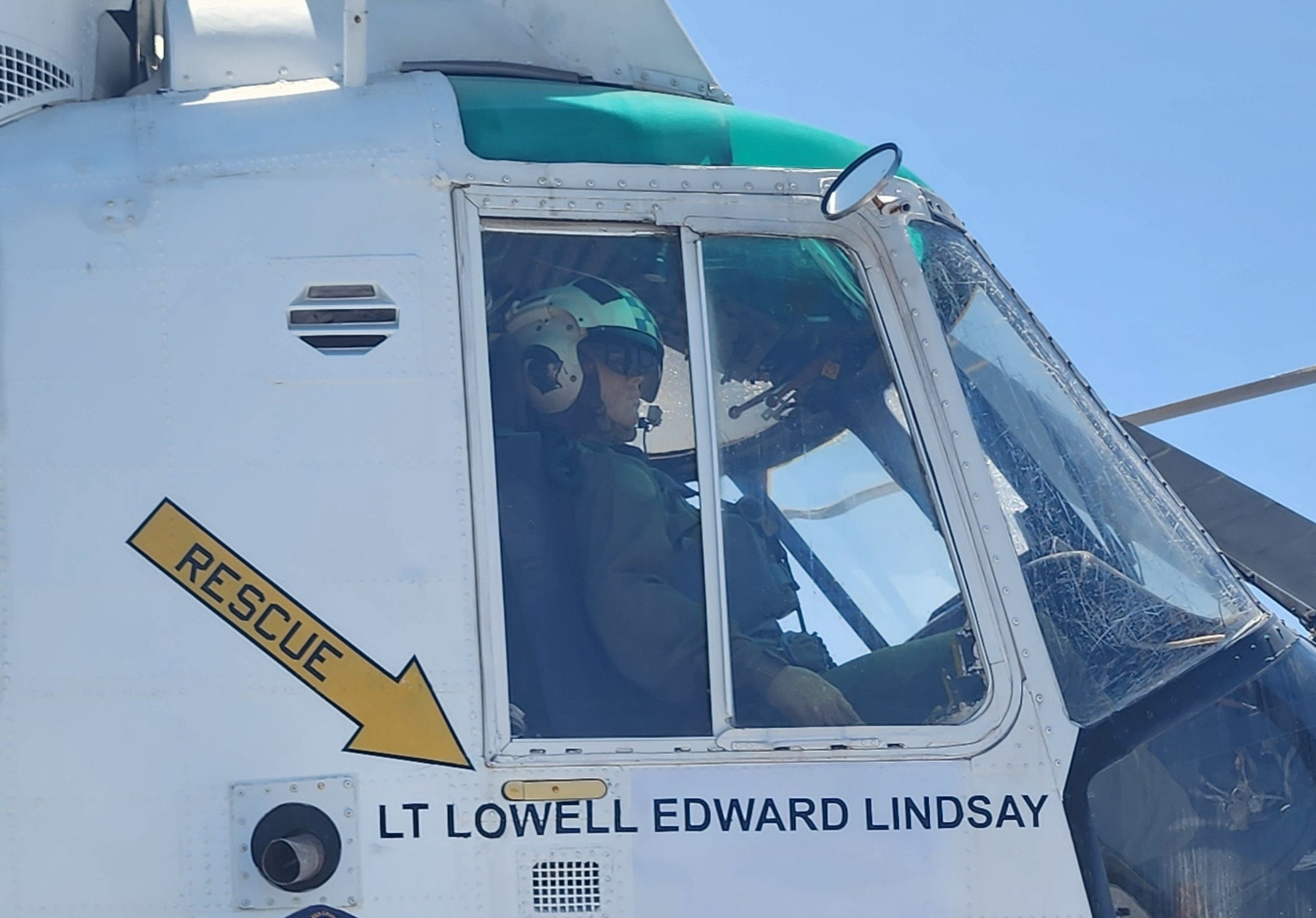
My father was a Navy SH-3 pilot who flew CSAR missions in Vietnam and helped to develop the Navy’s SERE curriculum. His name is on the side of this SH-3 on the USS Midway museum ship in San Diego.
CSAR is highly risky and uncertain since by definition something has gone badly wrong. Time is of the essence since the downed crew may be injured and enemy forces may attempt to capture them, giving them a propaganda victory and bargaining chip. Fog and friction is at its highest in this situation. CSAR forces must rush in without fully knowing what to expect.
Compensating for all this confusion, however, is the fact that the CSAR mission objective is crystal clear: recover the crew. Everybody know exactly why they are taking risks, and what they need to do. Whatever strategic ambiguities or misgivings may attend the war itself, a CSAR mission tends to create high unity of purpose. This same unity is good for morale in the first place: Aircrew can fly dangerous missions with the knowledge that the entire theater has their back.
But the inherent riskiness of CSAR, combined with the military’s firm commitment to carry it out, means that there is high potential for cascading losses. In this case, the initial shootdown of the F-15E — we still don’t know exactly how that happened since we’ve been told that the US enjoys air supremacy in Iran — triggered events that resulted in the losses of additional aircraft. During the rescue of the pilot on Friday, two HH-60 CSAR helicopters were hit by enemy fire, along with an A-10 providing fire support. The helicopters limped back to a base in Iraq while the A-10 crashed in Kuwaiti airspace; the pilot ejected and was recovered.
During the rescue of the WSO on Sunday, which had extensive air support including MQ-9 Reaper drones firing on Iranian forces within three km of the WSO, more aircraft were hit and some permanently lost. The details are hazy at this point, so a lot of this might be misleading, but it seems that two more HH-60s were hit and able to egress, and two MC-130s were unable to leave an austere airfield (i.e., landing on the ground) in Iran. They were destroyed by US forces, along with at least two and maybe four MH-6 Little Birds, to prevent them from falling into enemy hands. These aircrew were recovered by two more aircraft, probably MC-130s.
While I celebrate the safe recovery of US service members and the tremendous honor, courage, and commitment of everyone involved in this mission, I also can’t help but reflect on what it says about the risk we are all carrying with this war. To appreciate just how risky CSAR is, compare the aircraft lost or damaged in this one particular CSAR episode to all of the US aircraft lost in the war so far (in my fallible mental database):
CSAR after 1x F-15E shot down
1x A-10 shot down
4x HH-60 damaged
2x MC-130 destroyed
2-4x MH-6 destroyed
Rest of war
3x F-15Es lost to friendly fire by Kuwait forces
4x KC-135 Stratotankers to midair collision and Iranian strikes
1+ E-3 AWACS to Iranian strikes
1+ CH-47 Chinook to Iranian strike
17+ MQ-9 Reaper drones lost/shot down
Ignoring the drones, more than half the aircraft lost so far were lost during the CSAR mission to pick up two aircrew from one downed jet. The price tag for just the lost aircraft is perhaps upwards of $450 million (estimate compliments of Gemini 3 Pro), and the whole operation may come close to $1 billion. But a successful CSAR, as the old MasterCard commercials have it, is priceless.
This will probably not be the last CSAR mission in this war, and the next one might not go as well. An opposed CSAR is a possibility as long as the war goes on, which is why the US military has well-trained CSAR forces on standby all the time. But this successful yet costly CSAR demonstrates the potential for costs and risks to snowball: one lost aircraft leads to many more, one downed airman can lead to many more casualties. This mission could easily have been a disaster had more planes been shot down or had IRGC forces found the WSO or other Americans first. SOF successes run right up to the wire of SOF failure. And the longer this goes on, the more we play Russian roulette with the worst outcomes in the chamber.
This risk loading naturally raises the question of whether it’s worth it. And this is on top of all the Iranian civilians killed, global supplies of oil, gas, and fertilizer choked off, a brutal regime more resolved than ever to acquire a nuclear bomb, irrevocable damage to US alliances around the world, and no end in sight. The heroism of the CSAR mission stands in stark contrast to the horrific miscalculation of the war.
And this brings me to the other events of Easter Day. I was at a loss for words to describe Trump’s truth today. In just four lines—a marvel of concision by Trumpian standards—our president managed to combine illegal threats, grotesque humor, cheap talk, strategic escalation, vulgarity unbecoming, dehumanizing insults, religious sarcasm, and Easter profanity. I asked Gemini to suggest words that combine vulgar, profane, immoral, reckless, dangerous, and unhinged. It suggested vile, nefarious, licentious, depraved, and reprobate, but the best one by far was flagitious.
Flagitious (adj): This term means extremely wicked, criminal, or morally outrageous. It is used to describe behaviors that are not only immoral but also dangerous and, in a social context, “out of control”…. It ultimately traces back to the Latin noun flagitium, meaning a “shameful thing” or “disgraceful act”
Thanks robot, I’ve learned something new today. Yet it seems that our president has learned nothing. After the Iranian regime did not fold on week one, he has continued to double down on the war. The high point of the war for the United States and Israel was the very first day, when the elder Ayatollah Khamenei was assassinated. It could only go downhill after that, as the regime learned that it could not only survive the onslaught but also inflict costly punishment on the rest of the world.
The reason that I say cheap talk and strategic escalation in the same breath is that Trump has threatened to bomb civilian infrastructure before, to send Iran “back to the Stone Ages, where they belong.” Trump often makes over-the-top threats and then back down, or TACO as they say. Yet he also made the decision to launch this war and stay in it, and he seems to be backing himself into a corner. The threat is not very credible, yet he just might do it anyway. The official name of this operation, after all is Operation Epic Fury, or OEFU (to distinguish it from Operation Enduring Freedom, or OEF, in Afghanistan). FU indeed.
And the worst part is, I almost think Tehran would welcome it. This is a regime that savages its own population and only stands to gain by having the Great Satan hurt it even more. It’s hard to think of a more reassuring signal to Tehran than that tweet, or truth, or trutheet? It’s a message that says to IRGC elite: hold fast, you are winning the battle of resolve. You are right to chant death to America, because the President of America wants your death as well, if he knows what he wants at all.
Both his threats and his offers to negotiate alike are not credible, so the wiser strategy for Tehran is to keep inflicting punishment until Trump gives up, as he inevitably will, but probably not before inflicting a lot more pain on a lot more people. At this rate, deterrence will be restored, but on Iran’s terms. Iran’s political position is only getting stronger as the war goes on, for its military is clearly able to keep fighting and dishing out pain for the global economy, despite being up against the magnificent American military. Something, something, something about winning every battle and losing the war.
Thus, on a single Easter Sunday in April, we see the highest demonstration of military competence and the basest example of political incompetence. American CSAR may be able to rescue a downed pilot, but it cannot rescue Trump’s flailing policy.
No posts
Comments
Nothing yet. Say the first thing.
Sign in to join the conversation.