
Paid subscribers can listen to an audio version of this essay by clicking the player at the bottom of the page! Thanks for your support. xoxo
I woke before the boys, stepping into the dark and cold kitchen for what felt like the millionth cold morning this winter. I still had panettone in the pantry, sealed and wrapped in its Christmas-season packaging, and decided to start a panettone french toast casserole the night before, feeling brilliant that I’d thought of it, sure it would delight and surprise my kids in the morning. I’d been trying different things, different configurations, in an attempt to make our mornings more enjoyable; the rockiness of our mornings was confounding, doubly so because we’re homeschooling and so devoid of the stressors most families face trying to get themselves out the door by seven a.m. No matter what I tried, someone always ended up in tears, frustrated, including me, and the images of idyllic homeschool families sitting quietly in the mornings, the children knitting or watercoloring while mom read books aloud, evaded me at every turn. What was I doing wrong? How could I fix it?
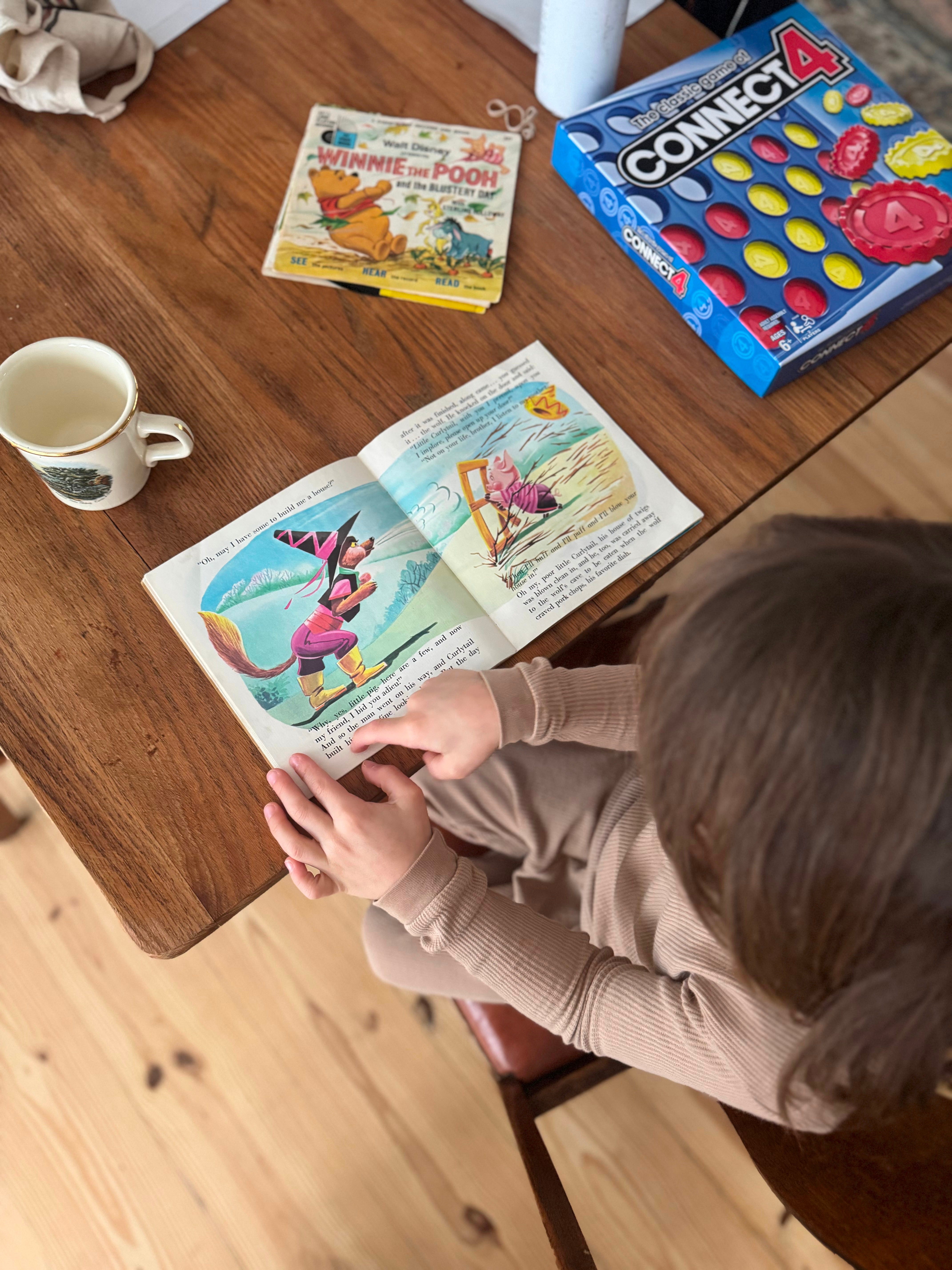
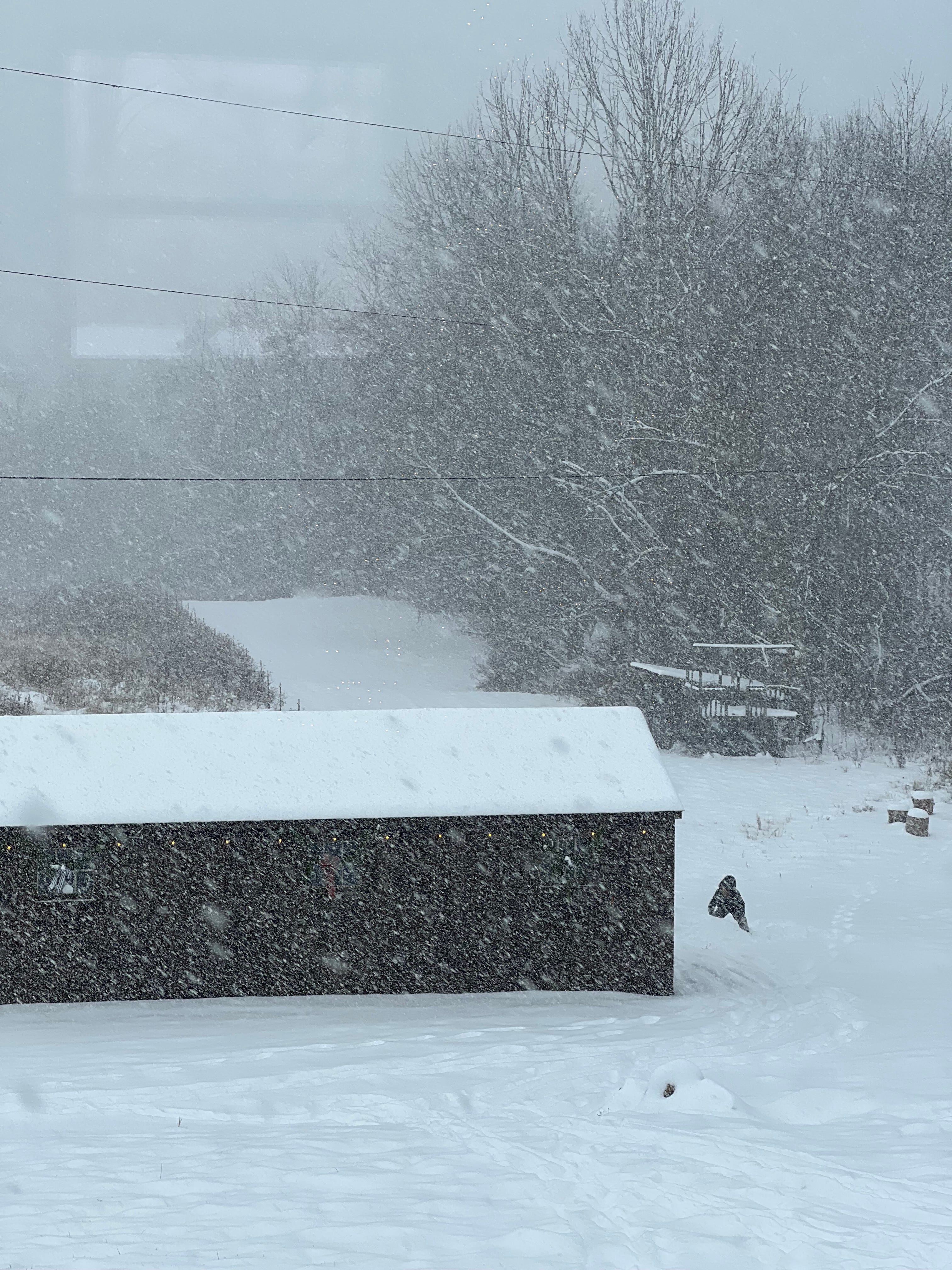
The panettone french toast would surely help, as lately eating a full breakfast while we sat at the faded wooden table with a blanket on our laps, comfy cozy, as we like to say in our house, reading Little House on the Prairie books, seemed to be doing the trick. The house was frigid throughout the coldest and snowiest winter in recent memory because, amidst a house remodel that’s costing more than we wanted to spend and taking longer than we wanted to take (which is always the case, isn’t it?), getting two particular things installed before the cold settled in escaped us—new siding on the exterior and a wood-burning stove in the interior. Now winter was upon us, thick and blustery, the snow relentless, and we were in wool socks from morning until night and flannel pajamas with Irish-knit sweaters on top and turning on side heaters to break the chill on the worst days.
The boys were excited at the sight of the panettone, and my heart lifted, feeling a small victory. When I set it on their plates, and set the plates before them, they wouldn’t really eat it. The two-year-old didn’t want to sit, not for the supposed-to-be-magnificent panettone and not for reading books, either. He kept climbing out of his booster seat, side glancing at me, almost daring me to stop him. The six-year-old was having a moment, too, he seemed bored with it all. The thing I’d found that was working, I could sense, was maybe no longer working, which started to make me feel shaky. I don’t want to read books, he said. We do the same thing every morning. Which was precisely the right thing to say to break me into pieces.
As the boys slithered away from me like octopuses, screeching and rebelling in different directions, the panettone a sign of failure staring at me from their full plates, all the world crashed over me.
I got my first book deal about a year and a half ago. Signed the contract and all and could hang up the phone and say things to my husband like, I just had a call with my editor, and the words strung together felt miraculous. In trying to calm our mornings, I’d sliced off one more piece of myself, my morning routine that I coveted the most—drinking coffee and reading before starting to write. It was hard to let that go, although in truth it’d been difficult to wake up that way for months, but seemed worth it if it meant calmer, smoother mornings for my family.
But I should’ve already sent the edits back to my editor. I was working on them, but for weeks at a time I couldn’t get to the manuscript, what with the kids and the house and the other things that don’t stop just because you moved to another state and have a half-finished house and two small boys to raise. With each week that passed the publication date might be pushed back. I’d been working on this manuscript on and off, here and there, for some fifteen years. Was that even normal? Why had we moved here, anyway, in the dead of the most frigid winter in years? When would I get the right curtains up? Why are other mothers so much more effortless at this job? Why wasn’t I doing more crafts with the boys? How many hours were their supposed to be in a day anyhow? I’m just a girl, just some Italian-American kid pretending to be an adult who grew up in a crazy house where everyone screamed and slammed things and here I was, trying to gentle parent, but really my DNA is full of little boiling cauldrons, little fires of intensity and loud ancestors and bombastic personalities, and what kind of saint-buddha were you were supposed to be as a mother, after all? What was I doing, by the way, with my life?
I began to cry. I walked into the bedroom, leaving the kids to legos and magna-tiles and whatever else they’d gotten themselves into, uneaten breakfast plates callously left on the table, and I locked myself in the cold adjoining bathroom and began to sob. It was only eight a.m., which seemed impossible. I called my friend Katie, whom I’ve known since elementary school and who is a mother of two as well and with whom I have a serious text chain going about motherhood as well as getting older, hormones, perimenopause, wrinkles, the acceptance of the end of maidenhood and the entrance into matronhood and the various intimate, painful, embarrassing things you can only talk about with a best girlfriend, but she didn’t answer. I called my husband at work and sobbed so hard he kept asking if everyone was okay, are the kids okay, are you okay and I couldn’t get the words out that yes, everyone’s okay, but also, maybe not….
I basically stopped posting on Instagram a year or so ago, and a few months back logged out altogether, tired of the cyclic eruptions, the yelling of opinions whenever a certain, very specific, eerily tailored, it seemed, political event gets the influencers going. For months everyone’s talking about their posh vacations, saying hiya! from the Hamptons and revealing their new clothing lines and then suddenly everyone’s a U.N. ambassador or a political pundit, but I’m still scrubbing toilets and vainly trying to please kids with panettone. The world is loud enough; the chaos thick enough. Take it from me, you’ll know the shitshow the world is even if you’re not on Instagram. You cannot avoid it. But when you’re off the scroll-banner of opinions, the noise gets a little muzzle put over its mouth, so that maybe you can sleep a bit at night.
Also, I grew tired of the posting of perfect lives when everything is usually, almost always, far from perfect. A woman recently fell overboard in the Bahamas while on a boat with her husband. It sounded skeptical from the get-go. The cops picked up her husband and held him for questioning but released him. Turns out there’s supposedly allegedly a history of abuse and turbulence between them, but you wouldn’t have known that by the posts she was sharing of their marvelous travels in the Bahamas and other places. If you followed her, you would’ve been staring at your phone thinking, Me and my husband never go anywhere, let alone to beautiful tropical places. We barely go out to dinner, and here they are snorkeling and sailing living their best life. You wouldn’t have known that behind the scenes their marriage was allegedly troubled and volatile enough to make her family think her husband had killed her. I no longer want to be part of this mass delusion.
We’re deluded everywhere we look. All the world’s a stage. All the news produced. All the strings pulled. Why take it upon myself to consume more of it. Here I was in my own imperfect life, sobbing to my husband before the day had even begun in our unfinished bathroom, staring at the farmhouse sink I had to have, which took him forever to install because plumbing is designed for sinks you buy today, not ones made one-hundred years ago, and he had to find and then special order various parts until a combination fit, reminding me that I still haven’t made a skirt for it. Why can’t we do things normal like buy regular sinks and put our kids in school like normal people do and not write books the way the vast majority of people do? Why do we have to do everything the hard way?
When I was in my twenties I went through a serious Bruce Springsteen phase. I fell for him like a teenager falling for her first heartthrob. His lyrics, his music, the images of him in a white t-shirt and black leather jacket and an old vintage hot rod…I was inspired and lit up by his work. I remember telling my friend at the time that I wanted to be Bruce, but not a Bruce song. Meaning—I wanted to be the famous successful artist who beautifully rendered stories about ordinary people and their ordinary lives, but I did not want to be ordinary myself. Springsteen only really lived a regular life for about twenty-something years, then he catapulted into fame and has been in the stratosphere of the uber everything ever since. So when he writes, he’s not really writing from experience about trying to pay the bills and watching your dreams evaporate under the weight of adulthood, because that never happened to him. He’s writing as an observer of others who are living that experience. He’s like a shaman, channeling the lives of the rest of us into art, but he isn’t us. In my youth I thought I’d be writing about darkness on the edge of town as I saw it in the lives of others who were not so gifted nor fortunate as I was destined to be, not in my own.
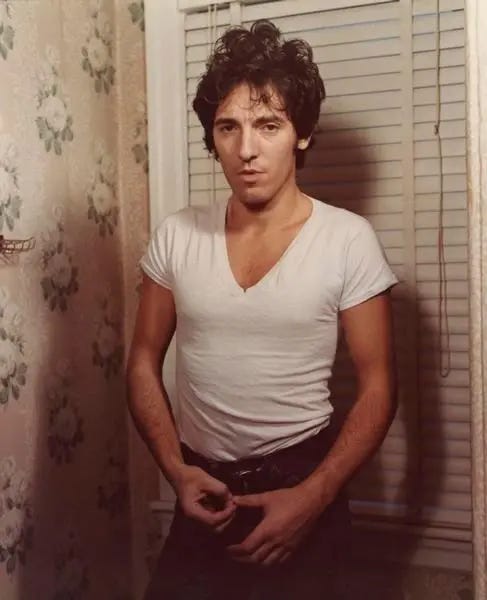
But I am a Springsteen song. So are you. The vast, undulating majority of us are. Bruce wouldn’t be in the uber-everything sphere if he didn’t have our chaotic, ordinary, messy, heartbreakingly beautiful, sometimes stunningly dark, sometimes wondrously illuminated, rich, complex lives to write about. We frown upon ordinary lives nowadays especially; hence social media and its highlight reels. We’re trying to make our lives seems more exceptional than they are, more famous than we are, instead of appreciating how epic our lives are as is. The oscillating emotion, the sacrifice of parenthood, the love of parents for their children and even children for their parents, the loyalty, the bond, the hard work of creating a home and an income to support it, the way my husband gives of himself, working round the clock it seems, to make us happy and comfortable and safe. There’s glory in that life. Springsteen saw that. That’s why he wrote about us. He’s not writing about diamonds and jet planes. He knew there was more than enough dramatic tension and surging peaks and valleys for a whole lifetime of art in the lives of ordinary people.
Some people’s lives are indeed exceptional, but nobody’s life is perfect. You know that intellectually but you doubt it digitally. The internet shows you something better, something curated, less messy, and you wonder what you’re doing wrong. I don’t blame people for only showing the best of their best. Who wants to photograph their dirty laundry, literally and figuratively, and share it with thousands of people? For a while I thought there could be a way around it, a way to tell some truth even when the stage is built for fiction, but I’m not sure there is. Social media is designed to be a mirage. Even when people post themselves crying in an attempt to be “real” it’s a performance. Who films themselves crying, anyhow, you know?
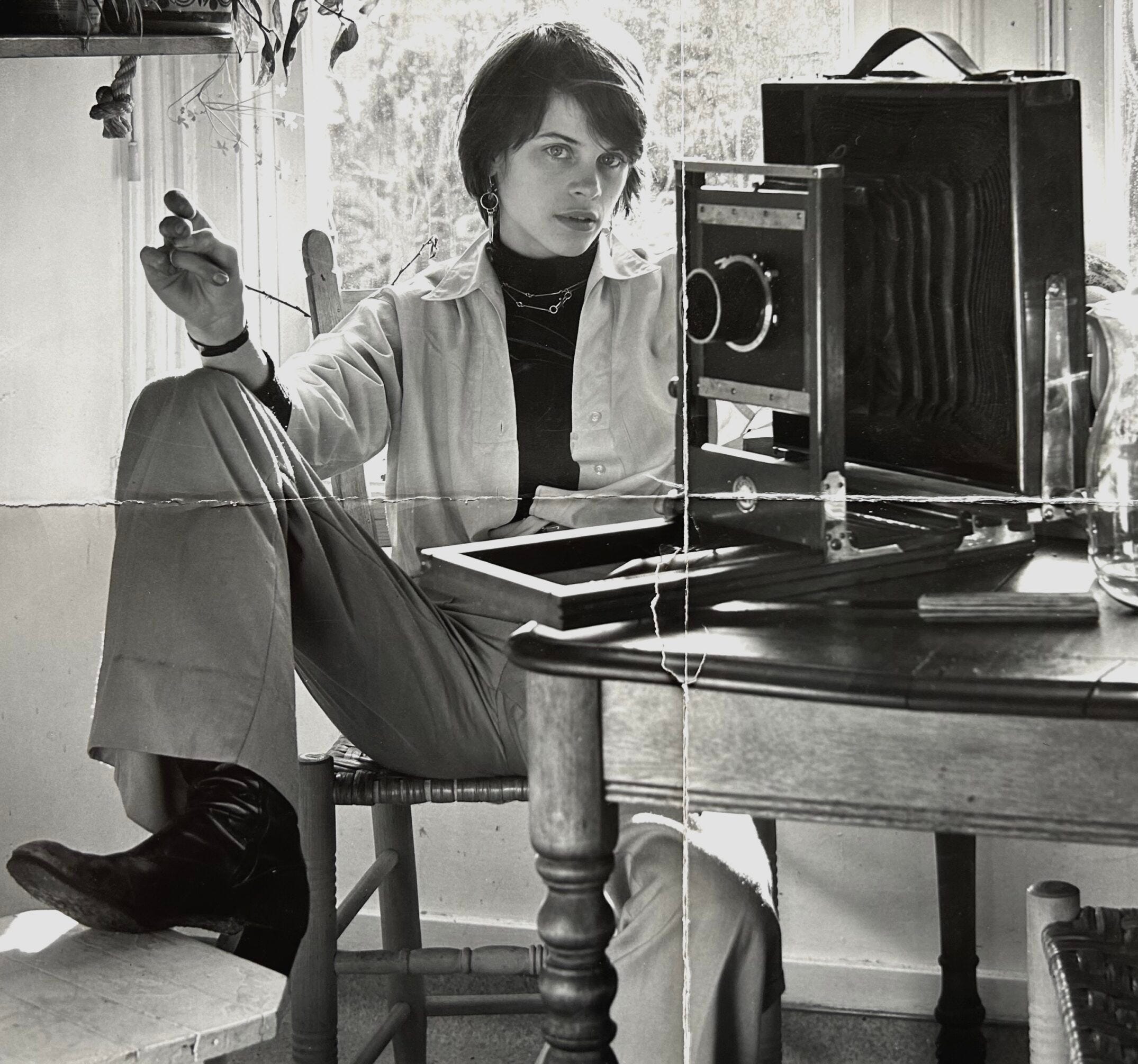
In photographer Sally Mann’s latest book, Art Work: On the Creative Life, there’s a scene that I cherish. She’s out in the woods with her husband, riding horses, when he injures himself and she has to trudge, in the dark, without her phone or any other navigational device, back to the house in the West Virginia countryside to find help. She’s mucking through swampy water, wet leaves and branches, trying to keep the horse from spooking, leaving her immobilized husband behind in the dark forest. She’s muddy and alone and has no choice but to do it, while noting that at the same time she’d just received a prestigious photography award, and all the fancy people back in New York would never imagine that a renowned artist would be in such a predicament, but here she was, human, living an ordinary life, in the muck. Even with accolades and awards, she shoulders ordinary aspects of living. When I read that scene I felt lighter. I think about it all the time. If Sally Mann can be in the muck, why shouldn’t I be?
I’ll be home as soon as I can, my husband said. I’ll take the boys the rest of the day and you can just relax. Which is what I did. Feeling a bit guilty for relaxing, of course, as most mothers do, feeling an uncomfortable mix of headache from crying and hormones that are shifting and dipping as I’m aging, but trying to take care of myself, something I don’t get to do very often anymore. Katie called back just a little bit after I hung up with my husband, but I had cried it all out, and I didn’t answer. I didn’t want to talk anymore. I just wanted to be quiet. Quiet and a little sad and also grateful for the very life that had just sent me into a tailspin. Maybe I should see a doctor and get my hormones checked, I thought, maybe I need to stop trying to calm chaos and just accept its reality. Maybe I need to lay down more often, to let it all fall more often, instead of trying to piece and hold it together like a puzzle in orbit.
There are no solutions, only trade offs, I once heard someone say, a quote I later tracked down to the American economist Thomas Sowell, and a phrase that fits like a skeleton key into most if not all of the choices we’re faced with. We’re looking for the pin that perfectly fills the hole of our problem. The answer that takes nothing from anything and sticks forever, but every solution is a slice sacrificed off the body of somewhere else. There are no solutions, only trade offs. School wasn’t a solution. You got less time and influence with your kids but more of your own time. A trade. Moving to the country wasn’t a solution. We got more land and gentler people but were further from our families. A trade. The kids will like something for a while and then they won’t, just like me I guess, who doesn’t listen to Springsteen as much as I used to. I loved him for a while and now he’s just someone I used to know. If you kept playing him for me every morning when I woke up because at one point he was the fixed star of my universe I’d tell you to stop. Maybe it isn’t so much about finding solutions but living gracefully with the lack of them, living in the trade off, and accepting that’s the most honest place most of us live in nearly all of the time. Despite our wanting it to be predictable and satiating and always sunny, living is like this. A thundering road, epic and glorious and infuriating and wildly beautiful and sometimes more than we can bear.
Thanks for being here with me, truly.
Comments
Nothing yet. Say the first thing.
Sign in to join the conversation.