
Silksong released last month after a remarkably long stretch of anticipation. It's no surprise that it crashed Steam on the day of launch. Its draw to players around the world is evident, but this particular title caught the attention of those outside the gamer crowd. Musicians delighted in the gorgeous soundtrack. Visual artists drew beautiful work for a game that never played. People in my life who have no experience with gaming have asked me if it's the right place to start (it's absolutely not, but I have full confidence they can work up to it.) While I haven’t had much time to play games that aren’t my own lately—my demo is featured in this fall’s Steam Next Fest, and even with the positive reception from players we’re still discovering new things to fix!—I’m always keeping up with the latest in new releases, and Silksong was impossible to miss.
Silksong is the kind of game I would call “gourmet”. From the amuse-bouche of the Mossy Grotto to the grand Roman banquet of The Citadel, it spares absolutely no details. Every rock is turned over, the bugs hiding beneath given personalities and/or unique attack patterns that add hearty richness to an already lush visual world. It’s become one of my favorite examples of “games as art”.
Likewise, today I want to discuss Silksong alongside a few other titles in the context of a bigger theme: the fact that games are indeed art, and my belief we have long moved past the question of it.
The Background
I was very fortunate as a kid to have lax parents when it came to my love of gaming. I was allowed to play so long as I finished my homework first and was off before 9. My first game series is also one of my all-time favorites due to it being my gateway drug into the medium: Spryo the Dragon. If I'm having a low day, just sit me in front of a controller with Spyro 3's skateboarding minigame booted up on screen, and I will brighten up as instantly as I did when I first played it twenty years ago.
Other childhood highlights include Pokemon (we’ll get to that), Sly Cooper and the Thievius Raccoonus, and the obscure Blinx: The Time Sweeper; I have yet to meet anyone else who’s heard of or played the latter, but my cousin and I put in a silly amount of hours towards it, and had a blast.
This will be no surprise, considering I went on to become a game developer as an adult, but I love games. They’re so important to me that my first post on this blog was dedicated to the TTRPG podcast that has my heart. Story games in particular are where I spend the most mental time as an adult, but anything from a nostalgic platformer to a cozy game can pull me in.
I'm nearly 30 and have no idea if this is the case with kids today, but being a girl who played video games in elementary school in the early 2000s made me a tomboy. It was a title I held with enthusiastic pride rather than shame and happily leaned into: I loved to climb trees, draw comics, wear pants instead of skirts at my uniform-wearing elementary school (I was the only girl in my whole class who did), and sit with the boys at lunch. I even gave a speech at our 5th grade graduation about how elementary school is like the levels of a video game. But in my experience, other girls who played games back then were a rare breed. When I started making close girl friends in middle school, many of them had been labeled by their peers as "bookworms" or "nerds". They loved stories as much as I did, but they weren't experienced with games. Oftentimes it turned out symbiotic: they made sure I got back into a reading habit, and I gently pushed them to explore the more active medium of games that was too often considered boyish.
“Are games art?” was a question constantly being thrown around during that time, but I’d like to settle that today with a resounding yes, they are. They are one of the most versatile modern art forms we have, and I feel incredibly lucky to have been born at a time when we can make and play so many.
The Deep Dive:
Let's start with a classic move—defining art as written in the dictionary:
The expression or application of human creative skill and imagination, typically in a visual form such as painting or sculpture, producing works to be appreciated primarily for their beauty or emotional power.
This definition slots very well into story-rich or ambient games. It’s fair to say that some games don’t particularly want to be “art” or skew heavier on the “entertainment” side, but plenty of titles blend these two words beautifully. In fact, games themselves are a mix of many different artistic elements woven together and presented as an experience rather than a performance. The game developer doesn’t put on a show for you—they take your hand, pull you into the world they built, and cast you as their main actor: the player character. I’ll go over these individual elements below using examples from games I love.
Music:
A friend of mine once joked that I know more video game OSTs than actual artist albums. I often find myself playing them to accompany me in the car or during work. Game music is amazing because of how evocative it is in and out of context. When listening to it on its own, it conjures the faintest call of a foreign world that you could enter yourself, should you choose to pick up the game. And once you do, the music brings the world to life as you explore at your own pace, uncovering the mysteries and story beats that are waiting for you. There is no question that music is art on its own, and in games it’s enriched by the opportunity of immersion.
It’s tricky to select tracks for this section, given such a wide range of OSTs to choose from. But I’ll go with a personal highlight, an obligatory Toby Fox nod, and for the most topical pick, a track from Silksong.
I’m going to go into this more in the Writing section, but the Pokemon Mystery Dungeon series has made a huge impact on me, so it’s no surprise it has one of my favorite OSTs. This track, "Time Gear”, is especially wonderful. There was another track I wanted to put here, but it’s hard to explain why I love it so much without a big spoiler. So instead, soak in this lovely piece about mysterious mechanical artifacts that keep the flow of time stable. I especially love the slow build to 1:06, where the game’s main leitmotif kicks in:
I can’t talk about game music in 2025 without mentioning Toby Fox. His work is heavily influenced by existing RPG soundtracks, but its the synthesis of his influences’ catchiest melodies that makes his music shine. He’s not in the sound design kitchen going wild with unusual ingredients, but he serves up a damn good auditory grilled cheese, and that consistency and versatility within what’s familiar is why he’s an awesome composer. As far as the Undertale soundtrack, it has the titular bitchular (phrasing credit once more to Athena P) “Undertale”. It’s the track I listen to the most. It plays as the tragic story of the game’s antagonist unfolds, and the main character feels the weight of what they must do to go home. Even without the context, though, the track carries the feel of a story that is both sweet and heartbreaking, and ends on a hopeful note—the last note you hear before facing the “final” boss of the game.
Christopher Larkin is the composer for Silksong. His sound has a diaphanous quality that compliments the gorgeous visuals. “Choral Chambers” is my favorite piece of music in the game. When players finally reach the citadel after a long and grueling climb and final test of admission, they get to explore its various areas. This track softly floats in carrying with it the narrative weight of a once-heavenly city sunken into corruption under a twisted deity. It begins to play right after the protagonist states her conviction (and your conviction as the player guiding her) to liberate the city—“by my experience, even a god can be defeated”:
This is the kind of music that sounds so ethereal it's slightly baffling it was made by a person in a studio for a game about bugs and not discovered in the archives of an ancient temple.
(This isn't even the first time that a bug game has had weirdly addictive music. I played Bugdom ad nauseam as a kid because it was on all the computers in my elementary school's library. I loved going to each computer and climbing the levels while a small gaggle of kindergarteners crowded around behind me watching. The "Level 8 Night" track did not need to sound that good.)
I could talk about this for so long that there’s a nonzero chance I return to this post in the future with more music. But for now, enjoy listening to the above examples.
Combat:
Even a battle can be artistic. Games with fighting were at first synonymous with shooters to non-gamers, but engaging and beautiful combat quietly emerged in games that steered away from warlike settings. My favorite recent example of this is is the battle against the Cogwork Dancers in Silksong. Two bug automatons attack in perfect sync, forcing you to time your own attacks with their rhythm. Their attack dance is art on its own, especially when they briefly pause together in the center for a bladeless moment of unity.
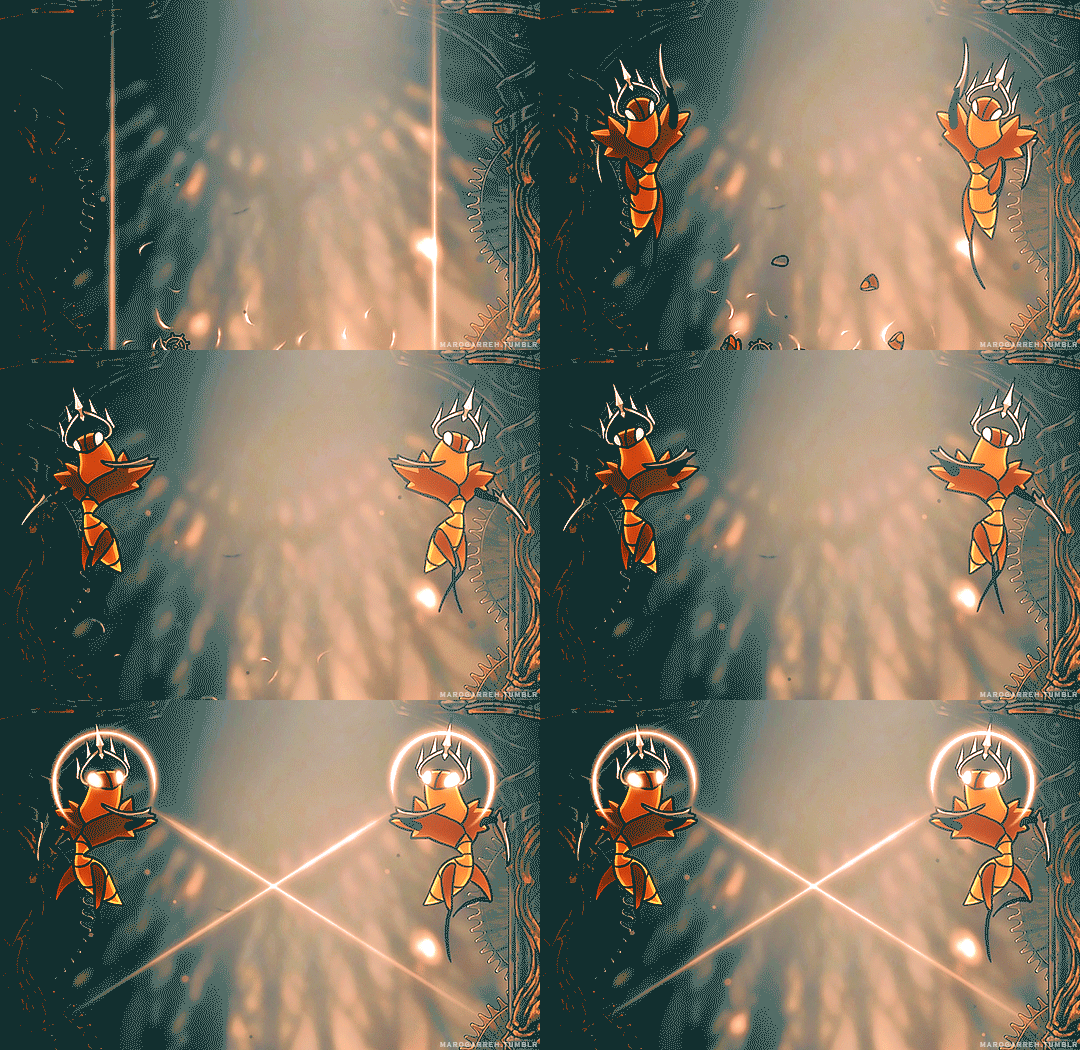
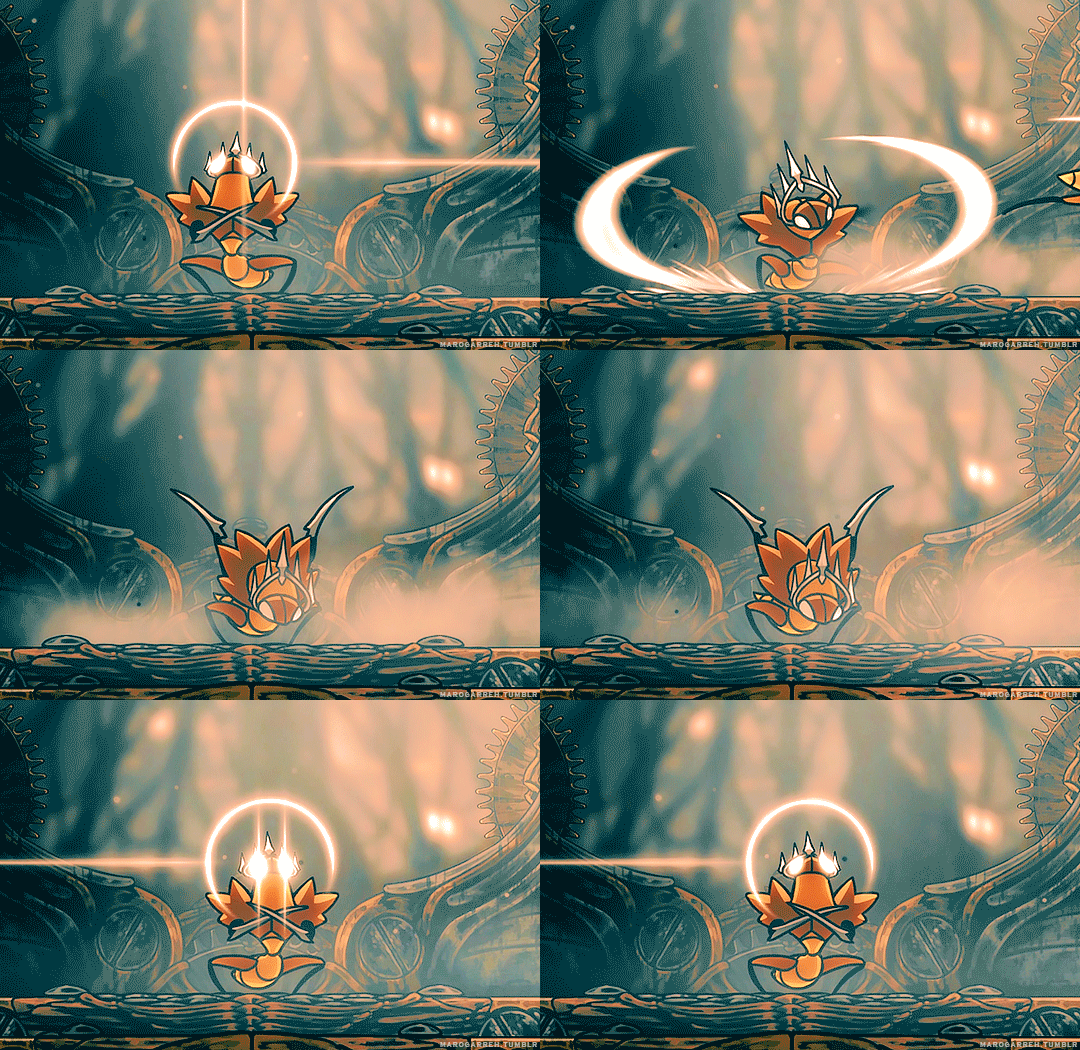
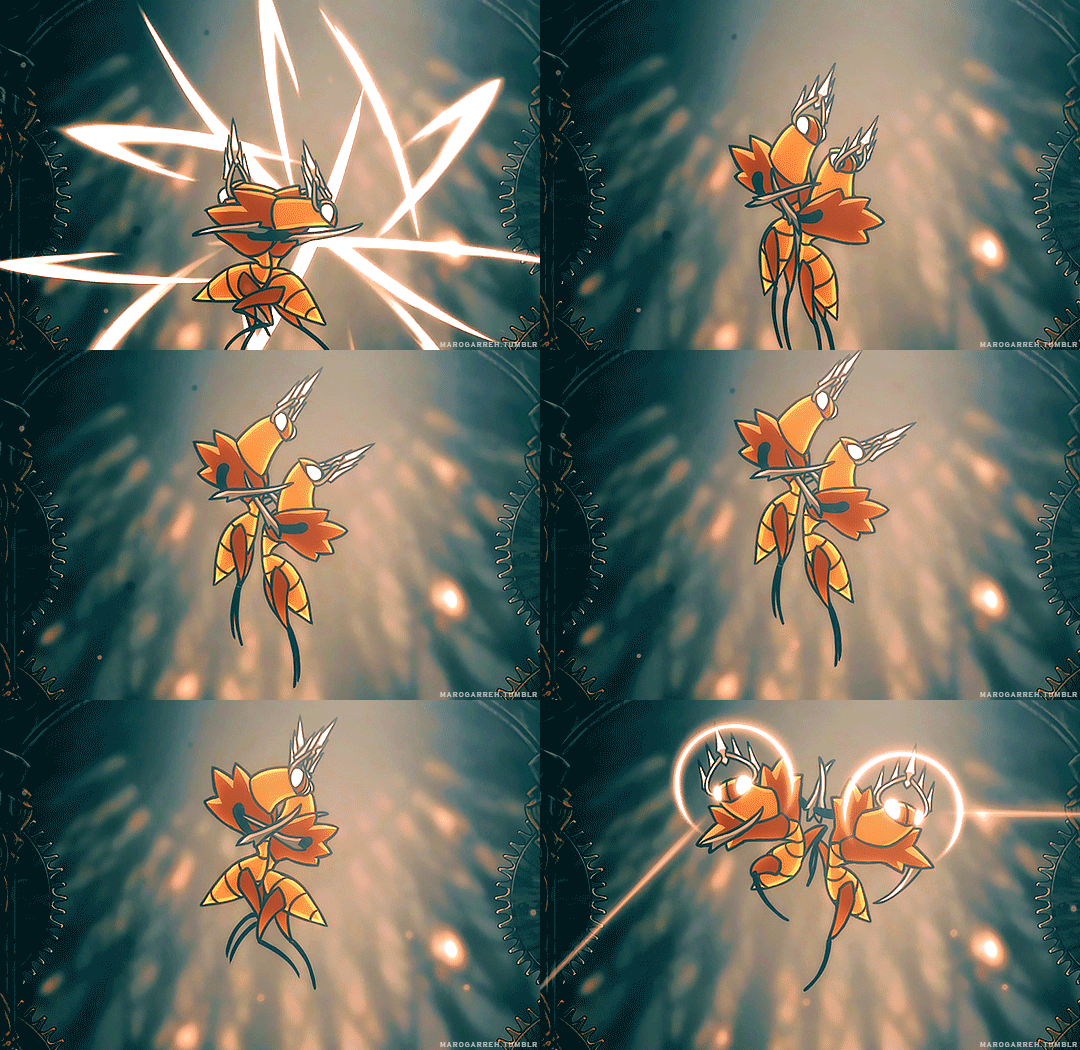
If you’ve ever heard of fencing referred to as a dance, this kind of combat in games can have a very similar feel. And beyond visual beauty, you can also wrap narrative goodness into your fights: such as a character doing less damage to a foe they don’t want to hurt, the option to try and speak with your enemy and negotiate a way out of the fight, or having lukewarm allies step in to protect you when you need it most.
Writing:
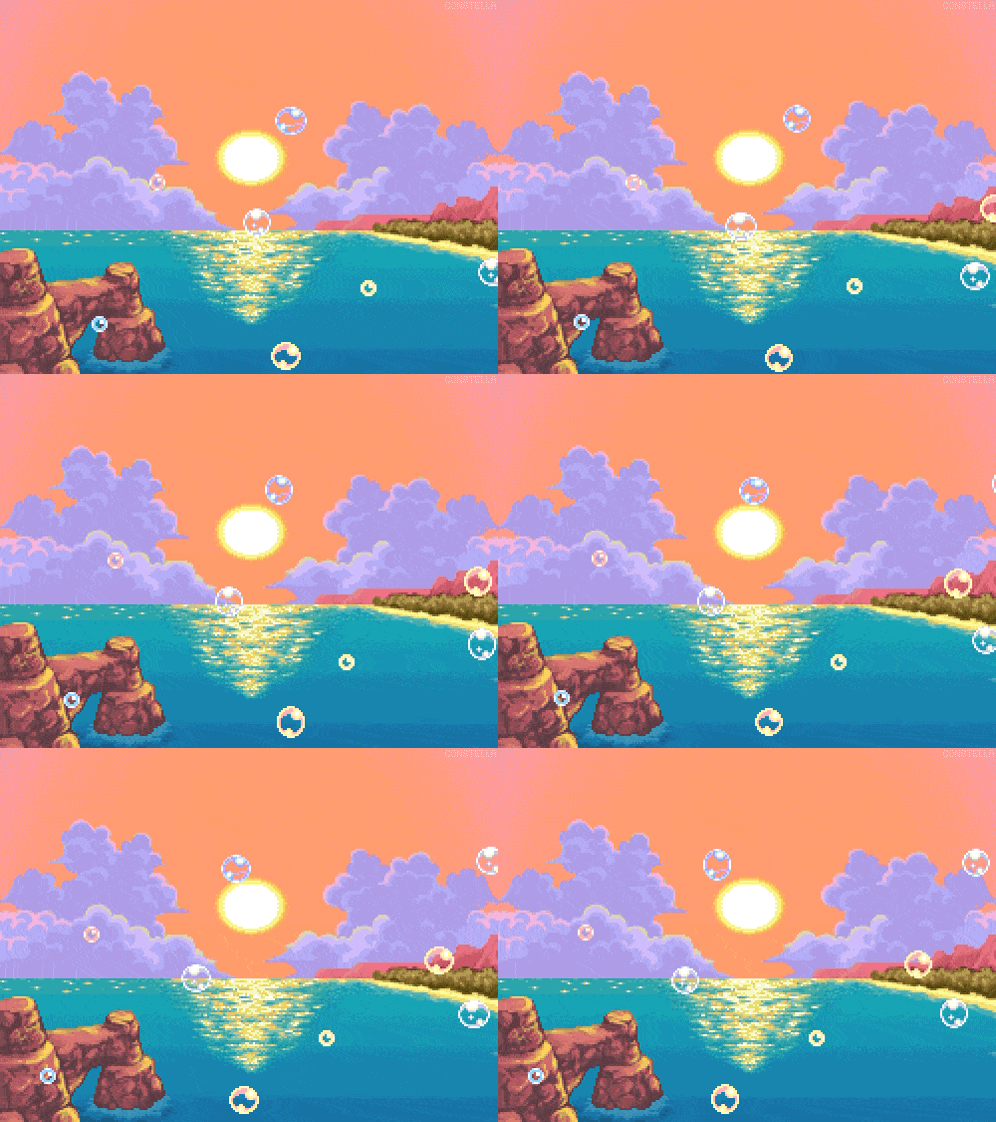
I would need multiple posts to get into all of the narrative games I’ve loved over the years. But for specifically discussing games as art, I had to decide whether to reference lots of examples or focus on one that was more deep and personal, and went with the latter. So I want to talk about a childhood treasure that you wouldn’t necessarily expect to be so profound from the title—Pokemon Mystery Dungeon: Explorers of Time.
I love the mainline Pokemon games, but I love the PMD series even more. The aforementioned title is forever in my top five favorite games. The warm pixel art, the gorgeous music, and the incredibly thoughtful story work together to create a world you always want to spend time in. The Explorers Guild of PMD is the place I personally pined to live in when kids talked about getting their Hogwarts letters or finding Narnia. It’s not all fun and games—the mornings are early (Loudred helpfully makes sure you wake up on time), the “taxes” are brutal, and the repercussions of a failed job harsh, and yet I still found the sense of purpose, humor, and camaraderie of the Guild appealing in a way I couldn’t get out of my head.
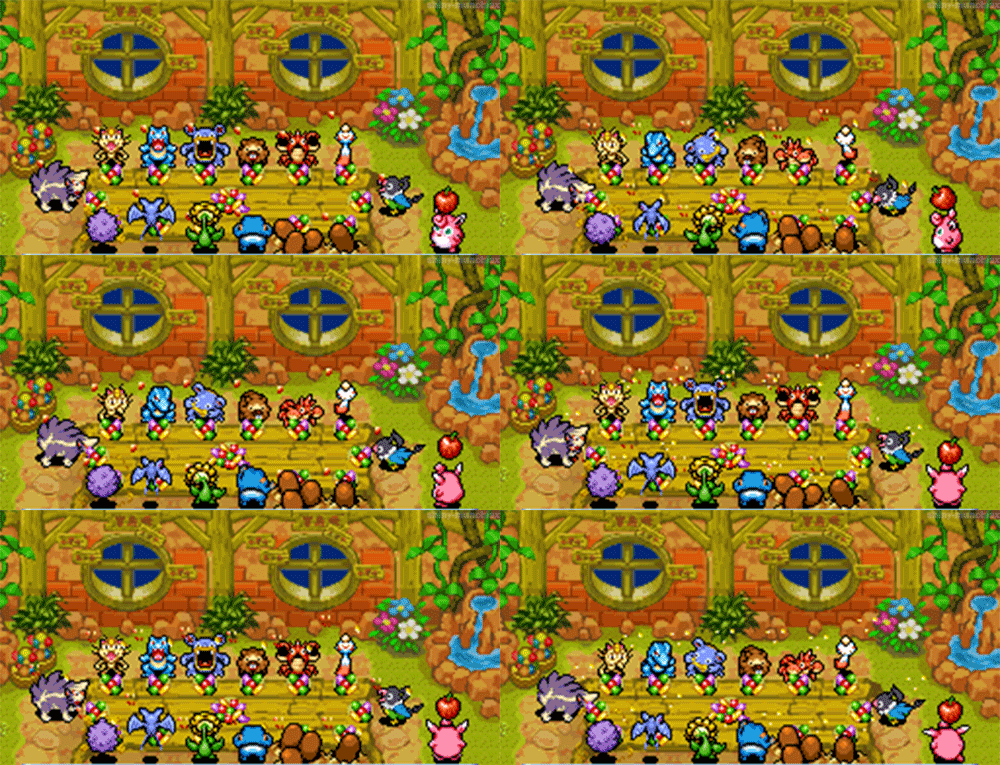
The PMD Explorers series takes place in a world where all Pokemon have a humanlike sentience. It has you take the role of a human who has been turned into a Pokemon for reasons unknown to you. You befriend a timid Pokemon with a deep curiosity about the world’s mysteries but an inability to move past their own fear to go explore it, and embolden them to join the Explorers Guild. They pursue their dream as you travel by their side hoping to recover the key to your memories in some corner of this strange world. What starts as a simple and sweet friendship story builds to an emotional epic about the sacrifices people make for those they care about, and how our bonds with our loved ones strengthen us to become better than we ever could have been on our own…even if those who inspired such positive change don’t stay in our lives forever.
This game made me a softer and stronger person at once. I grew up in a family that was very loving in an unspoken way, but seldom discussed emotions nor showed outward displays of affection (two things I’ve since come to learn I highly appreciate and desire in my relationships with others.) Likewise, as a kid, I adored my friends but balked at anything that turned too “mushy”. Fist bumps and high fives were great, but I didn’t know what to do with gentle gestures like hand-holding and hugs. You might assume this wouldn’t be an issue in the company of boys, but my closest and best friend was a very sweet kid who was much more comfortable in his emotions than most. In our dynamic he was the one wearing his feelings on his sleeve and following my lead, while I was the one dragging him on adventures and being protective over him around the kids who were mean. When I reunited with him after summer break the year we titled each other “best friends”, he excitedly shouted my name and ran to me with outstretched arms and the joyful enthusiasm of a puppy. In a panic, I held up the Nintendo DS in my hands to occupy the space in front of me and stop the hug from coming in. If only I had known that my shield would be the very console to host the game that would shatter this wall to tenderness inside me. Meeting the friend character in PMD Explorers, who’s sensitive nature and quiet tenacity reminded me so much of this particular boy, I became deeply attached, and the emotional climax of the story brought me to a lot of tears. Being able to step into the role of the player was an integral part of that experience, as I could so easily imagine myself and my friend in the scenario of the game’s two friends, the tough decisions that were presented, and all I would give to protect him in a fantasy scenario. It was through games like this that reached into my heart and evoked such strong reactions that I was able to further my emotional development beyond what was familiar, a key part of what makes art something so essential to our society. Stories fill in our development gaps and teach us the skills our families could not. (And if I could meet this friend today, I would give him the tightest grateful embrace.)
Atmosphere:
I talked about how much I love the atmosphere of Undertale in an earlier post. In general, games that create a world I want to spend time in will leave the strongest impressions on me. This might be why I avoid games that are grimdark or excessively heavy in tone—when I play a game, I’m looking to mentally expand, not contract. The kind of immersion I can experience when the story, music, mechanics, and art of a game all come together is unlike any other medium and something I find absolutely addictive. And it’s the kind of experience I want people who are new to gaming or have preconceived notions about it to experience.
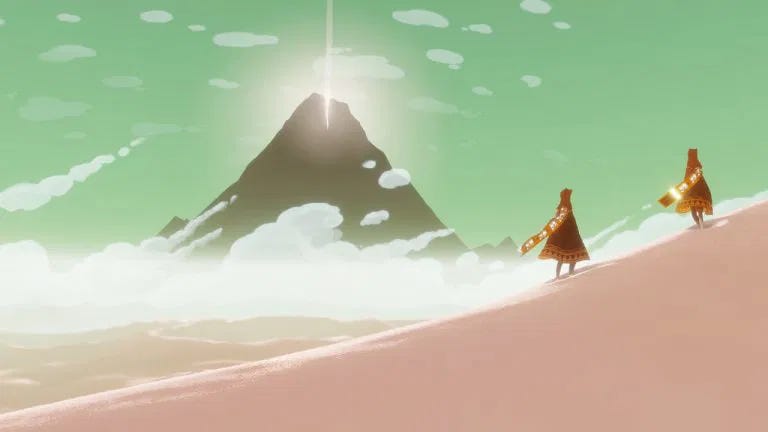
My game of choice to pass the controller to curious but timid new gamers for is Journey. A simple linear quest game with no inventory or save points, and mild peril but no damage, the task of the player in Journey is simple: guide the character towards a distant beacon of light. If you play online (which I encourage everyone to) you will encounter other players with the same task, who you can communicate with using only a little chirp sound. Sometimes these players opt to do their own thing, but other times, they join you in solving puzzles or clearing certain areas; some even start circling you and chirping at you when you both succeed.
The visuals, the music, and the final climax of reaching the light has brought a soft catharsis to every person I’ve introduced this game to. You’re never fully sure what you achieved for the robed character due to the lack of dialogue at any point, but it felt important and meaningful all the same.
(When I lived in London, I paid a visit to the V&A when they had the “Videogames: Design/Play/Disrupt” exhibition on, and got to see the notebook of the Journey dev team. The sketches were beautiful! It also made me think of the jumbled handwriting and eraser-streaked attempts at level design in my trusty Code&Quill. Not sure if I would volunteer that to a museum exhibit, given the chance…)
-
I didn’t get into the visual art direction or character design in this post (which I take particular delight in as someone who loves costumes, but perhaps that can be a future theme). This was a taste of my feelings on this topic, and yet I feel it’s more than sufficient to illustrate my point. Games are a wonderful form of art that I encourage anyone who’s ever felt a curiosity towards to explore. There are so many different kinds, you’re bound to find something that suits you. Of course, in a world where screen time is increasingly dominating the day, I pair this encouragement with a reminder of what the richest games can really offer you: go in to have a moving experience, and when you close your laptop or turn off your console, bring the mental treasure of the experience back to nurture your relationships with others, your own creative pursuits, and the world.
Today’s Tea: A chai latte with oat milk from Coffee and Plants. I make a habit of tasting the chai at every cafe I visit often due to the huge variation in flavor. Plants & Coffee have a rather sweet cup that’s mellow and moreish. Definitely one of my favorites in LA!
Tea Drinking Stats: I got to the bottom/it got cold/I went back for a second cup
No posts
Comments
Nothing yet. Say the first thing.
Sign in to join the conversation.