
Hiya!
My monthly live Q and A is tomorrow (Wednesday the 27th) at 5:30PM ET.
You can signup here, but I’ll also be sending out a link before it starts.
Got a question? Just reply to this email.
One question that already came in touches on something that genuinely puzzles a lot of dog owners:
Why would a trainer tell you to give treats to a dog who is actively behaving in a way you don’t like?
You see, I usually have clients give their dogs lots of treats during training sessions.
Sometimes it’s just the kibble the dog would’ve gotten for dinner anyway, but when someone is handing it over piece by piece — or scattering handfuls of it because a trainer told them to — it suddenly feels very meaningful.
Which is why I so often get asked:
“But if I give my dog treats while they’re barking… aren’t I rewarding the barking?”
Fair question.
And the answer is complicated because it’s… yes.
Or at least maybe.
If you’re paying someone to help stop annoying behavior, and they suggest doing something that might actually encourage the behavior, it can feel like a particularly creative way to waste money.
So why would I ever suggest reinforcing behavior someone explicitly wants to get rid of?
Because I’m often less interested in the immediate consequence of the behavior than I am in changing the associations and emotions driving the behavior in the first place.
So instead of:
Dog sees neighbor → dog barks because person is scary → treats appear
…creating a future where barking increases because barking “worked”…
With enough repetitions, you can instead get:
Dog sees neighbor → scary person now predicts treats
…which can create a future where barking decreases because the neighbor no longer is scary, and therefore there no reason to bark to make the person go away
When I explain this, you would not believe the looks I get.
But then I outline the alternatives.
You could ignore the dog. But something else in the environment may still reinforce the barking. Maybe the neighbor goes inside, for instance, which could make the dog feel like his barking successfully drove the threat away.
Or you could scold the dog. But assuming your dog doesn’t simply experience your yelling as exciting attention, punishment can also create new and potentially worse associations:
Neighbor appears → human yells / jerks leash / shocks me / gets scary
And now you may have even more fear-based behavior.
(Also: punishment only tells the dog what not to do. It doesn’t necessarily teach what to do instead.)
Once I walk through all this, most clients are at least willing to try my approach.
And… it works.
So tomorrow I’m going to talk about the difference between rewarding behavior and changing emotion in order to change behavior.
Bring questions — especially if you have a dog who struggles with barking, visitors, strangers, or reactivity in the home.
À demain!
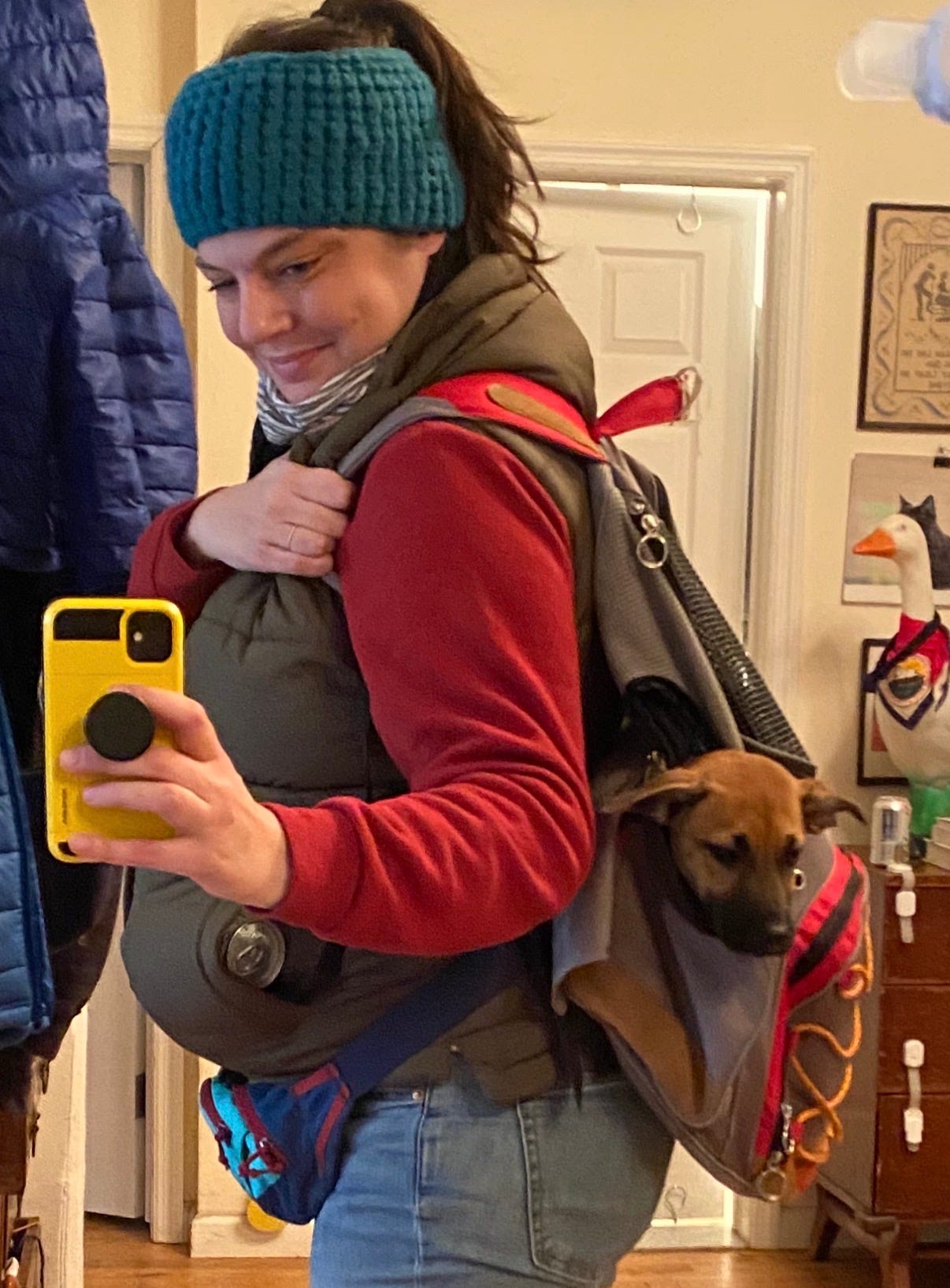
Me and my dog, Poppy, the day we got her ☺️.
Comments
Nothing yet. Say the first thing.
Sign in to join the conversation.