
No, this isn’t just clickbait. A recent study found that your microbiome’s composition can predict your likelihood of dying within the next four years.
If you’re over 80 years old.
Okay, fine, I did clickbait you a little. BUT before you stop reading, ask yourself this: “Where does my 80-year-old microbiome come from?” It comes from your younger self! The choices you make now are shaping the gut microbiome you’ll have in the future.
Microbiome science is still a relatively new field, which is surprising considering Hippocrates said, “All disease begins in the gut” over 2,000 years ago. And yet, only in the last few decades have we started to explore what he might have meant. Honestly, if I had to pick a Hippocrates quote to focus on, I’d choose gut health over the Hippocratic oath. Not that ethics aren’t important, but let’s be real—reciting that oath hasn’t exactly stopped some doctors from being, well, not great. But actually helping people with gut issues? Now that’s something we can all get behind (yes, pun intended).
So far, research has given us a solid understanding of key features of the adult microbiome. We know the gut is linked to various diseases (although correlation doesn’t always mean causation—there’s still a lot to uncover!). More recently, we’ve also gained insight into how the infant microbiome influences immune system development aka the foundation of all disease. Shoutout to my guy Hippocrates!
Curious about your gut health?
But here’s the wild part: only in the past five years have studies been published that use the words “longevity” and “microbiome” in their titles! Maybe the pandemic forced us all to confront our mortality in new ways, but something about 2020 made researchers ask, “Can my poop help me live longer?” Lockdown made us all a little weird, okay?
To be fair, the term “Blue Zone” (areas where people frequently live past 100) wasn’t coined by Michael Pollan until 2004. So, I guess 16 years to connect the gut to longevity isn’t that bad… for science.
So, how exactly is the gut microbiome involved in aging? Truthfully, we’re not entirely sure yet. Researchers are starting to identify microbiome patterns linked to longevity. They’ve also found consistently shifts in gut bacteria correlated with common age-related diseases like osteoporosis and cognitive decline.
Let’s get back to the clickbait that brought you here. Studies show that as we enter our later years, our microbiomes become less stable.
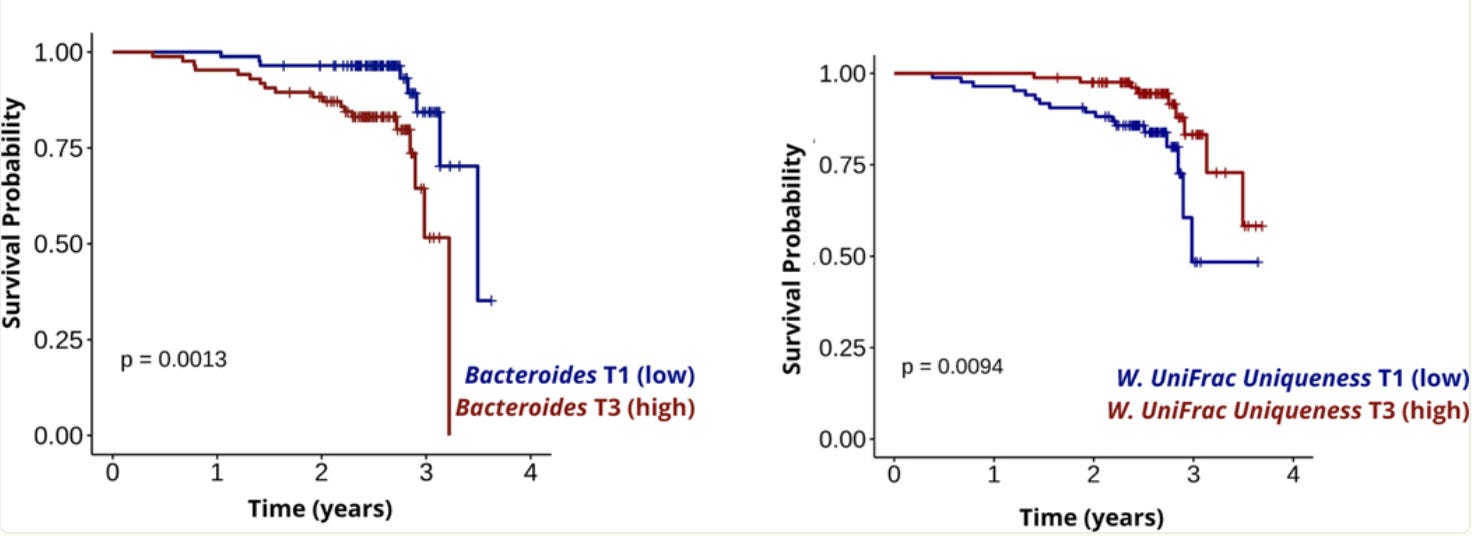
For those over 80, a healthy gut should actually become more unique, with a decrease in one of the most dominant bacterial groups, Bacteroides. Failure to develop this microbial uniqueness is linked to higher mortality rates.
In other words, the cliché advice to “Be yourself because everyone else is taken” might be more literal than we thought. Maybe the sign at HomeGoods should actually say, “Be your most unique microbiome, or else you’ll die.” Wouldn’t that look great next to your Live, Laugh, Love wall art?
Recently, a review article on the aging microbiome analyzed all available research on the topic. The authors created an amazing table summarizing which microbes repeatedly show up in longevity studies and whether they increase or decrease in the oldest-old (which is science’s way of saying "old AF").
Here’s two major findings from that review: Faecalibacterium consistently decreases in the oldest-old, while Akkermansia consistently increases. And since this review only included studies on generally healthy older adults, these patterns likely reflect not just a longer lifespan, but a longer health span too.
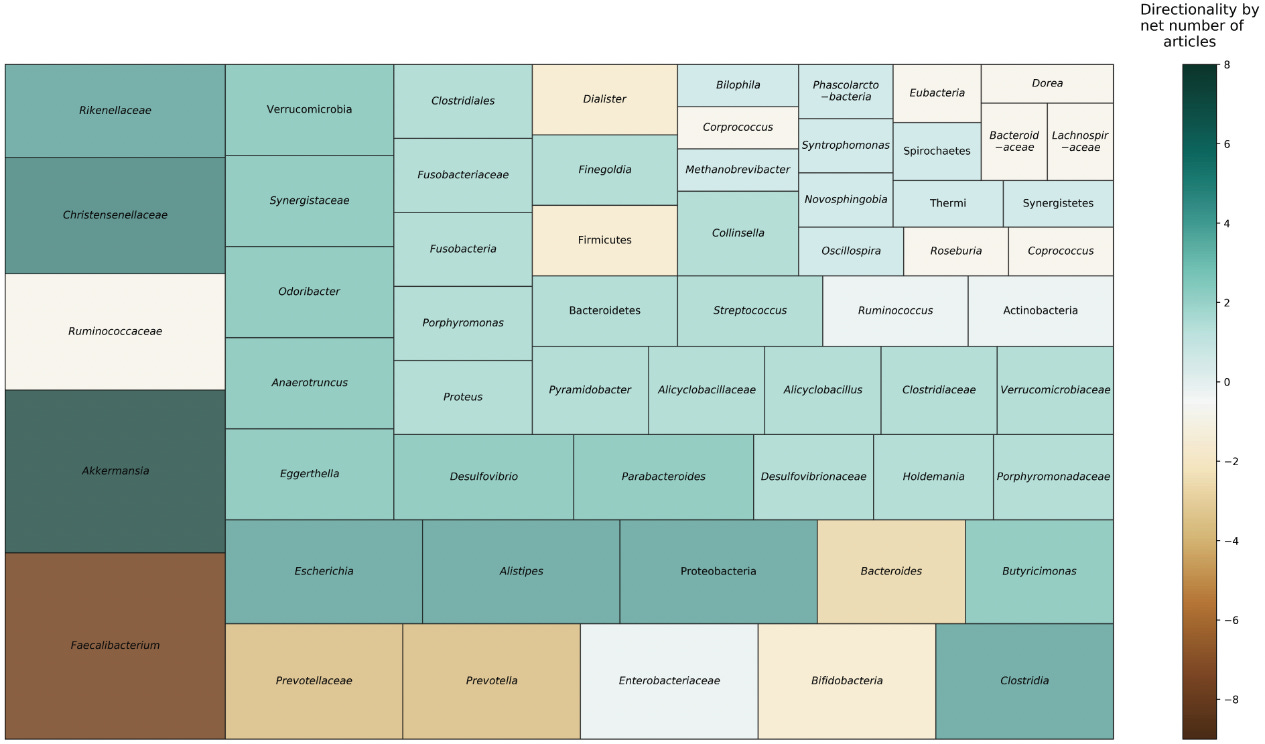
From Badal, et al (2020).
So, what can you do to live not just longer, but healthier? Start addressing your microbiome now. Many people have subclinical (read: not obvious) inflammation coming from their gut. Leaving this unaddressed can have a snowball effect with inflammatory damage accumulating over time. Or you might not have harmful bacteria running rampant in your gut, but you could be missing key beneficial microbes that help you get the most out of your diet and have critical anti-inflammatory properties.
Want personalized advice on improving your gut health? Head over to my website and book a free discovery call. Because optimizing our poops might just help us all live long and prosper!
References
Badal, V. D., Vaccariello, E. D., Murray, E. R., Yu, K. E., Knight, R., Jeste, D. V., & Nguyen, T. T. (2020). The Gut Microbiome, Aging, and Longevity: A Systematic Review. Nutrients, 12(12), 3759. https://doi.org/10.3390/nu12123759
Wilmanski, T., Diener, C., Rappaport, N., Patwardhan, S., Wiedrick, J., Lapidus, J., Earls, J. C., Zimmer, A., Glusman, G., Robinson, M., Yurkovich, J. T., Kado, D. M., Cauley, J. A., Zmuda, J., Lane, N. E., Magis, A. T., Lovejoy, J. C., Hood, L., Gibbons, S. M., Orwoll, E. S., … Price, N. D. (2021). Gut microbiome pattern reflects healthy ageing and predicts survival in humans. Nature Metabolism, 3(2), 274–286.https://doi.org/10.1038/s42255-021-00348-0
No posts
Comments
Nothing yet. Say the first thing.
Sign in to join the conversation.