
In Week #268 of the Doctor Penguin newsletter, the following papers caught our attention:
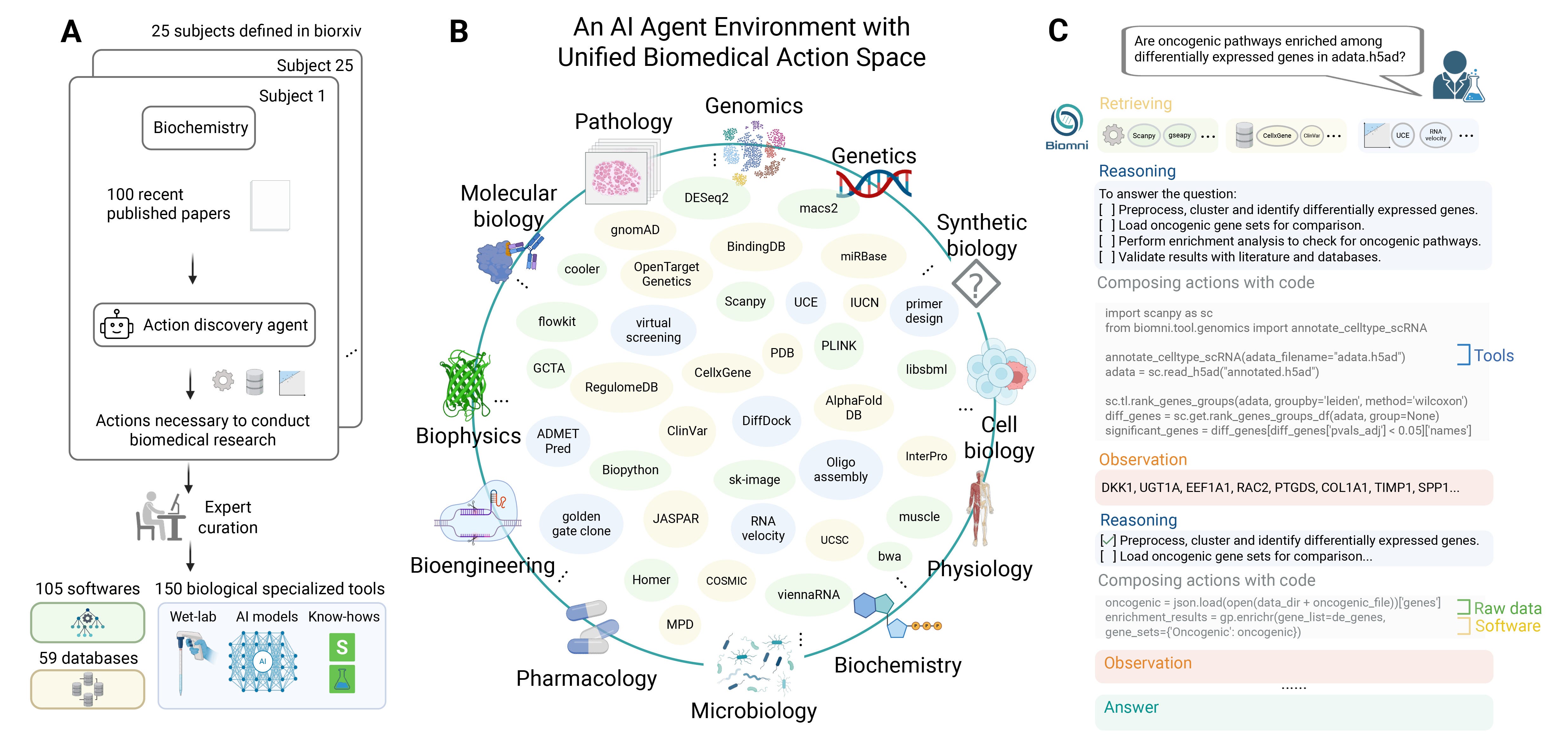
1. AI scientist. Biomedical progress is increasingly slowed less by missing data than by fragmented workflows, where the demand for expert researchers far exceeds the supply and vast volumes of valuable data sit underutilized because the specialized analyses are never run.
Huang et al. developed Biomni, a general-purpose biomedical agent that autonomously executes research tasks. Five case studies convey the range of work it can absorb: (1) From raw wearable heart rate and step data alone, Biomni reconstructed population level autonomic and circadian signatures, running an end-to-end analysis on massive messy data with no starting scaffold; (2) on a developing human skeleton multi-omics dataset, it not only recapitulated known regulators but nominated under-appreciated ones such as AUTS2 and PBX1 backed by independent evidence, showing genuine hypothesis generation rather than mere reproduction; (3) in molecular cloning, it designed a protocol that was physically executed in the wet lab and confirmed by sequencing, closing the loop from design to bench; (4) it orchestrated separate AI models such as AlphaFold-2 and ThermoMPNN through natural language to optimize a protein for thermostability, acting as an interface that democratizes infrastructure heavy methods; and (5) it translated plain language into executable liquid handling code on robotic instruments, bridging dry lab intent and physical execution. Together, these suggest that expertise can be scaled and that a researcher without programming skills can direct a wide range of biomedical work through language. There is still room to grow, as Biomni has not reached expert level across all task categories and still falters where nuanced clinical judgment or deep synthesis is required. And as with any system that lowers barriers to biological knowledge, its capabilities carry real biosecurity implications worth watching as it matures.
Read paper | Science
2. Immunotherapy. Immune checkpoint inhibitors (ICIs) are a class of cancer drugs that free a patient's own immune system to attack the tumor by blocking the checkpoint proteins that normally suppress it. Yet most patients do not respond to ICIs, and the biomarkers used to predict who will benefit are weak and generalize poorly from one cancer type to another. Can a model learn to predict response in a way that transfers across cancers and treatments?
Shen et al. developed COMPASS, a pan-cancer foundation model that predicts ICI response from tumor transcriptomes. COMPASS was pretrained on 10,184 unlabeled tumors across 33 cancer types with contrastive learning, contrasting the embedding of a tumor against itself (a perturbed copy) versus that of other tumors. These embeddings are projected onto 44 immune concepts that capture tumor-immune biology linked to response and resistance (such as “TGFβ pathway”) hand-curated from the literature. Grounding the representation of a tumor in immune biology helps COMPASS generalize to cancers, drugs, and checkpoint targets held out of training while maintaining interpretability. Because predictions run through these interpretable concepts, COMPASS can point to the specific programs driving resistance, such as TGFβ signaling or vascular exclusion in tumors that look inflamed yet fail to respond. On a held-out bladder cancer trial, patients classified by COMPASS as responders had longer overall survival (hazard ratio = 4.7, P < 0.0001). Although promising, COMPASS remains an exploratory tool requiring prospective validation, and predictions by COMPASS or similar models should never be used alone to deny immunotherapy.
Read Paper | Nature Medicine
3. Patient-Facing AI. Do LLMs give different advice to the same medical problem depending on how the patient talks?
Matos et al. showed that real patients communicate very differently from the polished simulated patients conversational AI are usually tested on. Across 2,053 real conversations, the study found that patients wrote messages mostly under six words, abandoned most sessions before any recommendation, and often carried emotional signals and non-standard spelling, punctuation, and grammar. To test whether such patterns change what the system does, they built a modular patient simulator that holds clinical facts fixed while varying only how a patient communicates. Running Gemini 3.5 Flash, GPT-5.5, GPT-5.4-mini, and Claude Opus 4.6 through 1,164 clinician-graded cases under five communication personae revealed that identical clinical content was triaged differently depending only on how the patient sounded, with an anxious presentation pushing models toward over-triage and a dismissive one toward the more dangerous under-triage. Because verbosity, vocabulary, and emotional expression track linguistic background, literacy, and socioeconomic status, this style sensitivity is less visible than demographic bias, and benchmarks built on idealized patients report a best case that inflates real-world performance and risks amplifying health disparities. The burden of communicating in a way that yields safe advice currently falls on the patient, when it should fall on systems designed for the users they serve least well.
Read Paper | arXiv
4. Human vs Machine Perception. As AI increasingly detects signals in scans that no radiologist can perceive, the field faces a problem of whether physicians should act on findings they cannot independently verify while still bearing full responsibility for the diagnosis.
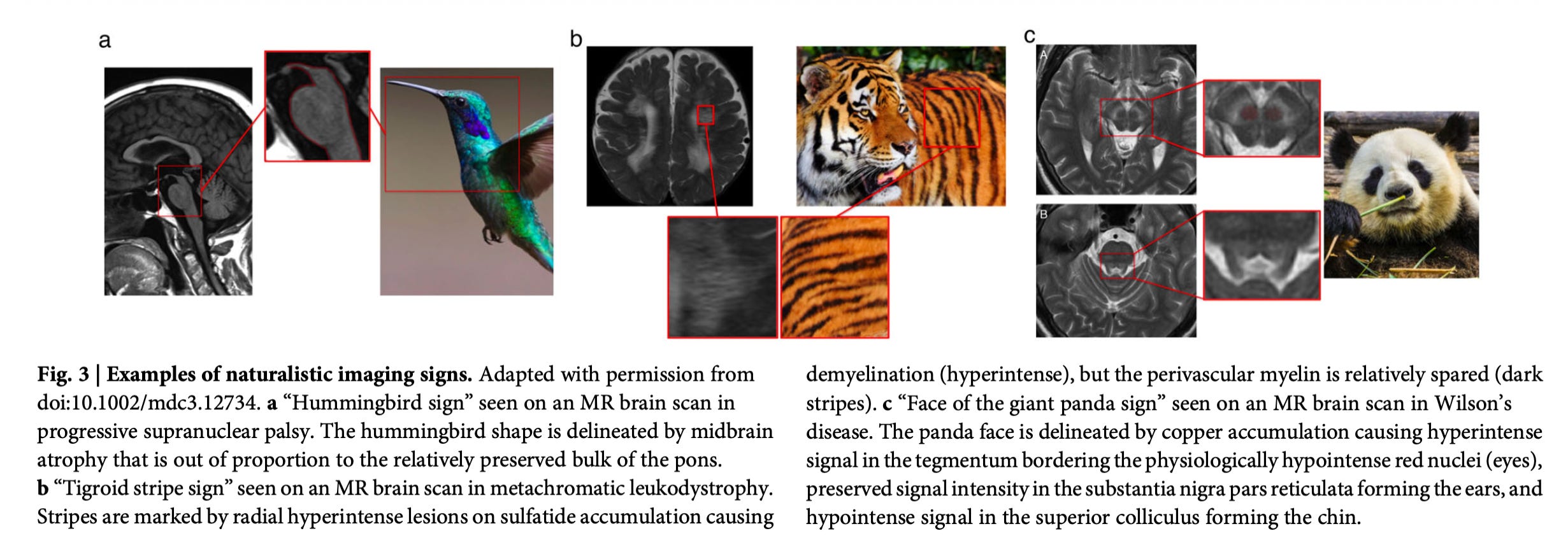
McLeod et al. argue that radiologists and AI do not merely disagree at the margins but perceive images through fundamentally different lenses. Human vision evolved to promote survival and interaction with the physical world, biasing us toward ecologically meaningful shapes such as edges, faces, and animal forms, a legacy so deep that the radiology lexicon overflows with naturalistic signs like the hummingbird sign and the face of the giant panda. This suggests that expert perception recycles ancient neural circuitry rather than building diagnostic sight from scratch. AI inherits none of this and can in principle model any pattern present in its data, including subvisual textures with no visual correlate. Yet because it often learns correlation rather than causation, it can quietly latch onto shortcuts and degrade when the underlying data shifts. Even though machine and radiologist often reach the same diagnosis, they may rely on entirely different features, and human causal reasoning remains hard for AI to replicate where pattern matching fails, such as in rare diseases and distorted anatomy. The path forward might be to stop validating AI against human perception and instead validate it against biological ground truth such as histopathology and molecular assays, so that invisible imaging signatures can be trusted for what they causally represent rather than for whether a human happens to agree.
Read Paper | npj Digital Medicine
-- Emma Chen, Pranav Rajpurkar & Eric Topol
Comments
Nothing yet. Say the first thing.
Sign in to join the conversation.