
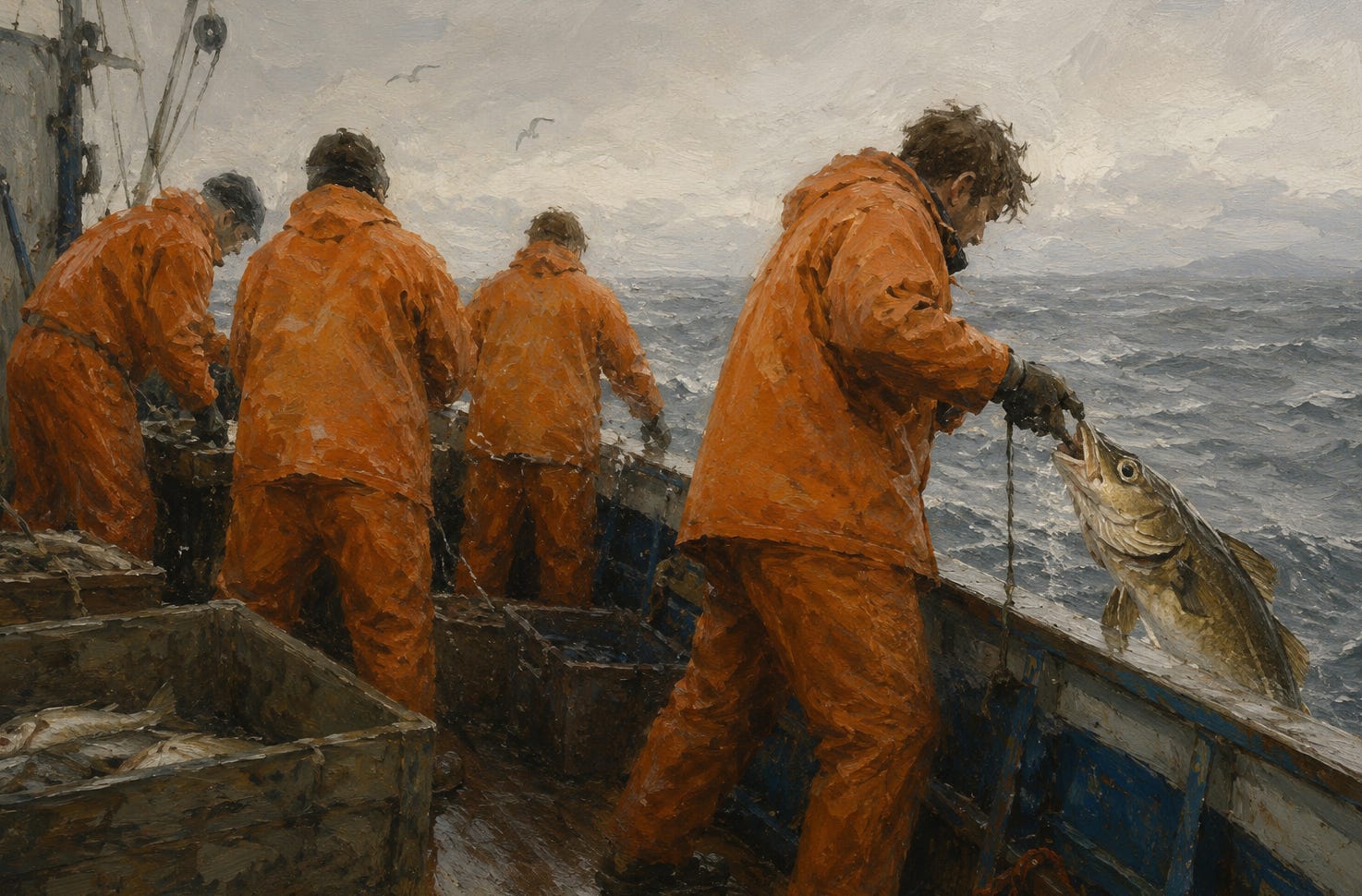
If you walk the streets of Reykjavík, you’ll see Icelandic men. Which, of course, is hardly worth mentioning. But I don’t mean ordinary men. I mean men who have shown genuine masculinity.
Masculinity has followed Icelanders for centuries. The Vikings and the settlers were the very image of it. They weren’t shy about cutting each other down when the occasion called for it.
But what is masculinity, really? Is it a good thing or a bad one? Do men have to prove themselves, both to themselves and to everyone else? Masculinity today is certainly not what it was a few hundred years ago. These days a man can prove his without having to kill anyone.
Some men can even get through an entire life without once showing true masculinity. I wouldn’t say that too loudly, though. Not on the street, and certainly not in the bars of Reykjavík.
Not every man has crossed the highland snowfields in bad weather, climbed a mountain or a glacier, or shot a reindeer or a ptarmigan. Not every man has sailed a rough sea after the catch.
The image of masculinity differs from country to country.
It has no official definition. No courses, no exams. Still, most people know exactly what’s meant, the men themselves most of all. There’s no test for it, no certificate, no ceremony. Just an unwritten stretch of years, somewhere between adolescence and adulthood, where a man is expected to do something he can spend the rest of his life bringing up.
Exactly what he does hardly matters. That was never the point. The point is being able to say, again and again: when I was twenty... And then the story comes, once more, the details and the emphasis taking some slightly new shape each time. For my generation, it’s almost always the sea.
A few times a year I meet old, good friends, and their wives, over a proper dinner. We’ve known each other long enough that nothing at the table surprises anyone. New grandchildren get their toast. Someone’s hip replacement comes up, the retirement years ahead, golf, and handicaps, which mostly seem to be climbing these days.
None of my friends became a fisherman. These are men who ran companies, software people, engineers, doctors, that sort. Men who built something out of nothing. But before any of it, a few of them spent weeks, even months, at sea.
I’ve never worked out exactly how it starts. Usually not before the second or third drink. One moment we’re on politics, or taxes.
Then someone says it: “Back in my days at sea, men didn’t waste time on things like that. It was about keeping the ship on course and riding out the storm.” Silence falls over the table. No one laughs. No one announces that the sea stories have started again, though they have.
“One time we were laying lines east of Langanes...”
Silence falls again. The men listen: something important is being said here. The wives turn to one another, having heard it all before. One or two roll their eyes. They start a conversation of their own, and the old sailor has to raise his voice so the rest of us can hear the stories over it.
I don’t think the wives have ever discussed this habit of theirs. They simply know there’s no competing with the North Atlantic for the next half hour.
One by one the stories come to life. We taste salt in our mouths. The men are no longer in their sixties, no longer easing toward retirement — they’re the young heroes of the sea now, boys who became men in a matter of days.
Even the language changes. Sailor’s talk comes out: the orange oilskins, the net floats, the waves, the cod still thrashing on the line, all of it suddenly vivid.
It was just work, sleep, and food. This, apparently, was true masculinity, alive in front of us.
There’s the captain who could smell bad weather coming, and the deckhand who lived on tobacco and coffee and spoke only when it was strictly necessary. Chatter isn’t for real men.
The stories have shifted over the years, the way memory does. No one seems to doubt them anyway. The men listen quietly to the same story, told again and again.
What fascinates me most is the competition running just under the surface. No one dares interrupt. No one says, my storm was worse. Instead a friend waits patiently for the first story to end, takes a sip of his beer, and says:
“That reminds me...”
He has his own storm too, of course. Maybe just a little bigger.
I’ve become convinced, myself, that I missed something. My friends still ask: Axel, were you never at sea? They know full well I wasn’t, but it matters to them that it gets said, and made completely clear.
After hearing the stories again and again, year after year, I’ve come to believe that one summer at sea would have made me more of a man, perhaps even a true one. But I have to live with the fact that I never got there. While my friends were collecting storms out at sea, I spent seven summers working at a gas station.
At the time it felt like a perfectly respectable job. I learned to check tire pressure. Clean windshields. Pump gas. Top up the washer fluid and the oil. Above all, though, I learned to say good day.
That’s not much to tell my friends today. No one leans forward and puts down knife and fork when I start on the smell of gasoline and the different kinds of car wax.
I ended up becoming a cardiologist. But a stethoscope and a set of oilskins don’t carry the same weight in the eyes of true men.
The dinner finally ends. The storms have stopped. The captain has fallen asleep. The deckhand has put out his last cigarette. The wives have finished whatever they were talking about. We have no idea what it was, though there’s little chance true masculinity ever came up in it.
A few months from now we’ll meet again. We’ll start with golf. Go over the newest grandchildren. Complain about the useless politicians.
Then comes the third drink.
No posts
Comments
Nothing yet. Say the first thing.
Sign in to join the conversation.