
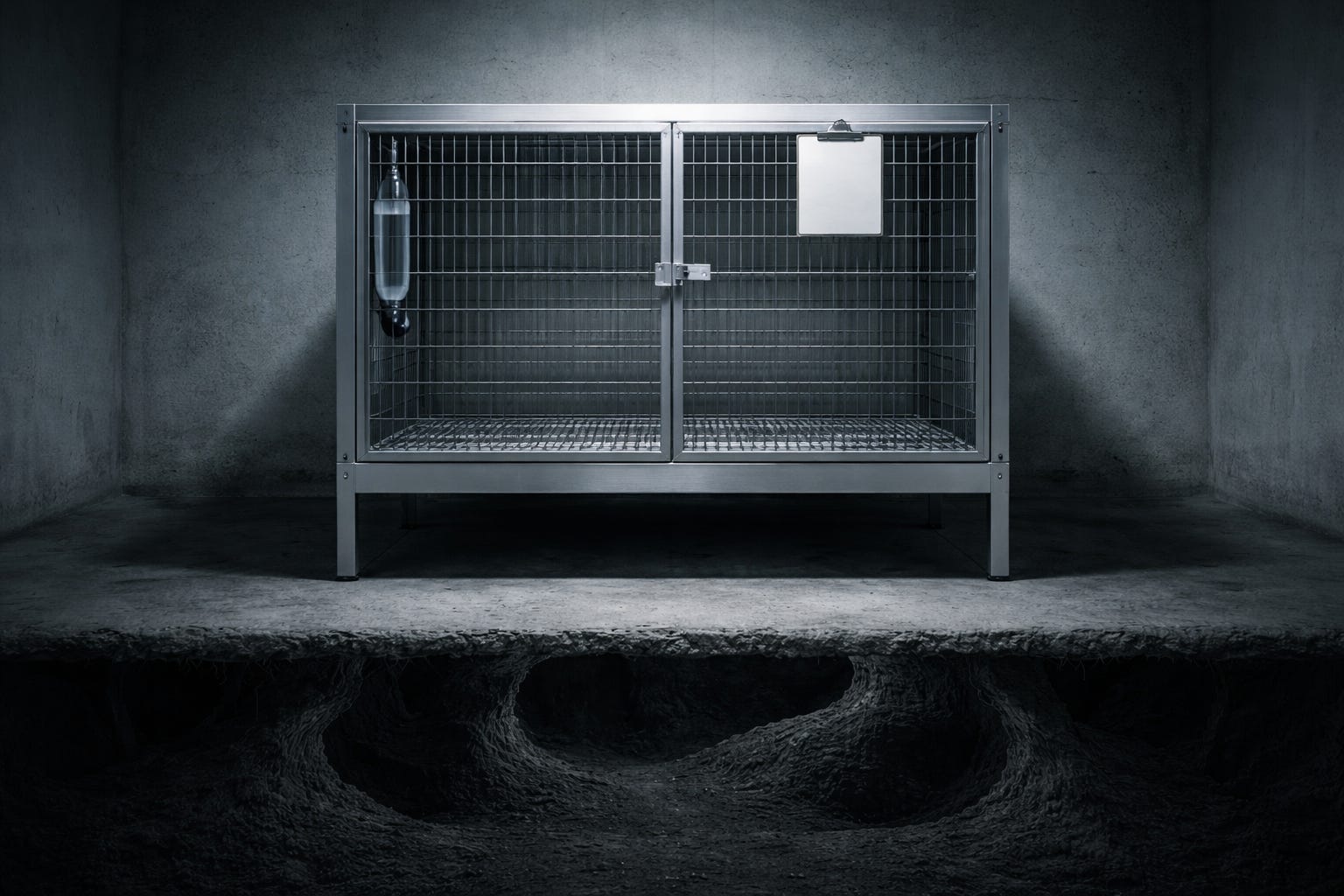
LGB Alliance is like an animal welfare charity that claims it protects rabbits. On the surface, the image looks true. Dramatic rescues, celebrity endorsements, shock campaigns. That’s what gets shown. That’s what people see.
But underneath that image is something else entirely. Extraordinarily high euthanasia rates, including animals taken in as ‘rescues’. All the money goes into fundraising and branding. Rinse and repeat. Success is measured by visibility in the media rather than what actually happens to the animals themselves. Donors think they’re funding direct help. In reality, that’s not what’s happening at all.
From the outside, that’s all most people ever see. Photos, statements, carefully chosen moments. Rabbits being wheeled out and held up as proof of care. Proof that the charity built the warren. Proof that the system works.
But that’s not how warrens actually exist.
Rabbits build them themselves. They dig, they shape the space, they learn the tunnels. They adjust when the ground moves. They make the place liveable through constant effort and attention. A warren isn’t something that gets handed to the rabbits. It’s something they create and then keep going together.
The animal welfare charity didn’t build it. The rabbits did.
The rabbits existed long before they were captured by the charity. The warren didn’t come into being because the charity arrived. The charity arrived because the rabbits were already there and had already built something.
Still, the charity claims ownership. It points to the warren and says, ‘Look what we built’. It points to the handler and says, ‘He helped create this’.
That lie matters more than people realise. Because once you believe the warren belongs to the charity, you start believing the rabbits only exist because they were allowed to. That their safety comes from the charity. That without it, they’d have nothing.
If the charity built the warren, then destroying it can be justified. If the rabbits built the warren themselves, then destroying the rabbits is abuse. And theft. That difference is what makes everything the charity goes on to do feel easier to live with.
The animal welfare charity has a handler who gains access to the rabbits simply by hanging around the warren. He doesn’t build it. He doesn’t do the work to keep it going. He just stays nearby, watches, comments, makes sure he’s seen next to it. Over time, he tells everyone, including the other staff, that he built the warren and protected the rabbits.
He starts to notice things. Which rabbits are strong, which ones build nests. And then he notices one rabbit in particular who keeps the warren running. The one who checks the tunnels. The one who keeps things moving when conditions get difficult.
That’s the rabbit he starts to torment. Not all at once, just small things at first. Food gets moved, the ground is disturbed. He turns the lights on and off. Not enough to kill her, just enough to make it impossible for her to move freely by messing with the conditions around her.
Before any of the abuse starts, the charity has to decide something important. It has to decide that the rabbit was worthless in the first place.
So the rabbit is treated as if she had no past. As if she didn’t build the warren. As if she arrived empty. And she’s treated as if she has no future either. Nothing behind her. Nothing ahead of her. No life that actually carries on.
That way, nothing important is lost. If the rabbit had no past, then nothing has been taken from her. If she has no future, then nothing important is being destroyed. That’s how the charity tells itself it’s managing a situation rather than enabling abuse.
By this point, the animal welfare lead knows what’s happening. She’s seen how the handler behaves and what it’s doing to the rabbit. She understands the pattern well enough to know how this ends if no one steps in. The rabbit will die. This isn’t new to her. She doesn’t need it spelling out to recognise it.
But she doesn’t confront him or shut it down. Instead, she stays on his side. Sometimes openly, sometimes in small public ways that don’t look like much on their own. Standing near him. Speaking positively about his work. Letting it be seen that he’s protected.
What makes that hard to brush off is who she is outside this charity. This isn’t someone learning as she goes. She already works at the highest level elsewhere, in roles that exist precisely because abuse is uncomfortable to face, because it gets minimised, and because reputations are often protected first. Safeguarding exists because harm is uncomfortable to confront, power changes how things get explained away, and without someone whose job it is to act, people won’t.
After that, it stops being about one handler and one rabbit. It becomes about the charity itself. Because stopping him at this point wouldn’t just mean dealing with what he’s done. It would mean admitting it should have been stopped earlier. It would mean people on the outside starting to look. It would mean animal welfare services asking questions no one wants to have to answer.
So the focus changes. No one announces it. It just happens.
The aim becomes keeping everything inside the charity. Making sure nothing leaks out. Making sure no one else gets involved. Protecting the organisation from what it already knows it allowed to happen.
Because at that point, the only outcome that protects the organisation is one that looks like nothing was done to the rabbit at all. If she dies in a way that looks like she simply stopped eating or sleeping, it doesn’t trigger animal welfare services. It doesn’t trigger regulators. No one asks how it happened, who saw what, or why no one stepped in.
The other staff don’t need instructions. They see what’s going on. They know acting could cause problems for them. Slowly, without anyone saying it out loud, people start acting in ways that help keep things as they are.
The way the staff talk changes first. The rabbit isn’t being harmed, she’s difficult. She isn’t reacting to abuse, she’s escalating. She isn’t distressed, she’s dangerous. Each new label they give her makes it easier not to act. Easier to justify what’s happening. Easier not to pick up the phone.
That’s the point where the whole cycle starts feeding itself. Once the language changes, the staff begin repeating the same lines back to each other. After a while, it stops feeling like a choice and starts sounding like fact. Hearing the same phrases from multiple mouths makes it feel real. The story compounds. Inside that bubble, no one thinks they’re doing harm. They think they’re agreeing. And once it feels like agreement, it becomes very hard for anyone to be the one who breaks it.
By the end of it, the harm isn’t coming from one person like it was at the start. It’s coming from the charity itself. Not because the staff think the handler did nothing wrong, but because admitting that he did would mean admitting everything that they did to the rabbit once they knew.
That’s how it stops being about one person and starts being about the institution. And once that happens, just surviving becomes the issue.
Once the decision has been made not to act, what happens next isn’t dramatic. That’s the point.
At first, her nesting spaces keep getting disturbed, so she never really rests. Safety becomes temporary. Each time the rabbit adapts by moving to a different section of the warren, the abuse increases. Adapting doesn’t help. It makes things worse. It just shows the handler where to push next.
Eventually, safety disappears altogether. The handler alters her routes until even moving through the warren becomes impossible. The only way to survive is by constantly staying awake, watching for any sign that the handler is nearby.
When the rabbit starts bolting, freezing, or showing obvious signs of distress, the welfare lead says, ‘Look at how she’s behaving’. But the problem isn’t the rabbit. The problem is that the abuse is invisible to anyone outside the animal welfare charity.
The most damaging part isn’t even the handler. It’s the welfare lead who saw what was happening, understood the danger, knew how to stop it, and chose to protect the handler anyway. Even though she and the other staff already knew he had abused other rabbits before.
At first, the rabbit doesn’t bolt. She does what rabbits do when something is wrong. She tries to show the animal welfare lead, the only one who showed concern for the rabbit. She hesitates before returning to the food. She alters her routes through the warren.
But the welfare lead doesn’t confront the handler. Instead, the other staff start blaming the rabbit. They accuse her of changing her routes to upset the welfare lead.
After that, it doesn’t stay inside the building. The language moves outside. Staff start repeating it to supporters, to friendly media, to anyone listening. A journalist who volunteers for the charity and works closely with the handler starts writing pieces about the rabbit. She has even co-authored an animal rights book with him, claiming to be an authority on abuse and animal welfare.
The book describes how animal abusers work by controlling conditions. Vegetation the rabbits forage for themselves in the warren gets taken away. Rest is disrupted. Movement is blocked by damaging the tunnels. Each thing looks small on its own. Taken together, they wear an animal down.
That’s the danger. The book becomes cover. The same methods it describes get used on the rabbit, while everyone assumes it can’t be abuse because the people doing it are the ones who wrote the book warning about it.
In her pieces about the rabbit, she claims it’s dangerous. She says the rabbit attacked the handler and wants to destroy the animal welfare charity.
In reality, the rabbit bolts when the handler comes near her and just wants to live in her warren in peace. The other staff share the pieces anyway. The story locks in. After that, no one questions it. It just becomes ‘what everyone knows’.
Now it’s not just a ‘difficult’ rabbit inside the charity. It’s a dangerous one. A threat. Something that needs to be dealt with. From that point on, the rabbit doesn’t stand a chance.
Once that version is out there, the public takes over. People show up angry, already convinced. The staff open the doors and tell them where the rabbit is. The mob shakes the cage. They kick it. They throw things into it. They shout. The staff look away, relieved. Because now the abuse doesn’t look like it’s coming from them. It looks like public outrage. And that’s exactly why the door was opened in the first place.
Under a piece where the journalist claims the rabbit bit her and the handler, the founder and leader of the animal welfare charity responds publicly. Not by checking what’s true. Not by asking whether the rabbit ever went near them at all. Instead, she consoles the handler and the journalist. She frames them as victims of the rabbit who have been through something ‘awful’. She thanks them for their courage. She praises their book.
The rabbit’s actual behaviour – bolting, avoiding contact, keeping distance – doesn’t matter. Once the founder publicly validates the accusation that the rabbit bit them, it no longer needs to be true. It only needs to be repeated.
At that point, admitting the rabbit isn’t dangerous would mean admitting she allowed abuse inside her own charity. That’s too much to face. So she accepts the handler’s version instead. And once the institution commits to the story, reality stops mattering. Defending the lie becomes more important than protecting the animal.
The rabbit escapes the cage placed above the warren and survives. If she hadn’t escaped, she wouldn’t have. Not in some dramatic way, not all at once. She would have stopped nesting, stopped eating properly, stopped moving at all. Eventually, she would have moved deeper and deeper into unused tunnels, dying quietly underground.
A rabbit can’t survive that. That’s the system doing the killing quietly.
The most absurd part is this. The staff of the organisation privately hate the handler for what he’s done. But they hate the rabbit more for surviving.
Because her survival proves something they can’t live with. It proves they were wrong to let it happen. It proves intervention was needed and deliberately withheld. And that proof blows a hole in the story they tell about themselves as animal welfare professionals.
So the anger gets redirected. Not at the handler who carried out the abuse, but at the rabbit who didn’t die quietly.
That’s how institutional betrayal works in an animal welfare context. The abused rabbit becomes the problem because her survival exposes the failure.
And privately, they know the truth. The handler was exactly what she said he was.
That’s why they punish the rabbit instead.
No posts
Comments
Nothing yet. Say the first thing.
Sign in to join the conversation.