
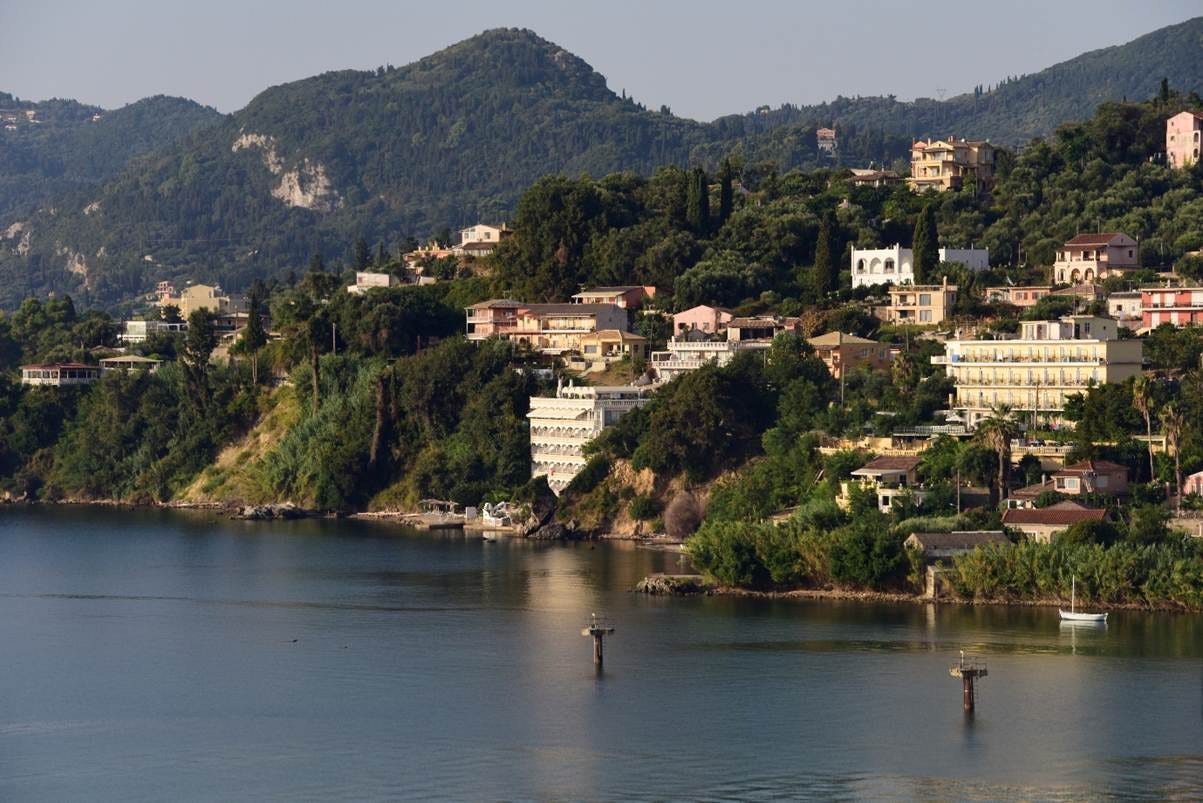
Our travels brought us to Corfu – quite a different place from other parts of the Greek mainland and the Greek Isles. Corfu is lush and green, possessed of forests and bush, rich in history and with a place in myth and in the tale of Odysseus or so they say. And this is what was said - in summary.
Odysseus’ arrival in the land of the Phaeacians marks the turning point at which he finally began his last passage home.
After the raft he built on Calypso’s island was smashed apart by a storm that Poseidon sent against him, Odysseus was left to swim for two days and nights across the open sea.
Battered, naked, and near drowning, he at last dragged himself ashore on the coast of an unknown land, where he buried himself in a heap of dry leaves beneath two olive trees and fell into an exhausted sleep.
This was Scheria, the island of the Phaeacians, a people said to live at the edge of the world, far from other men, beloved of the gods and unmatched as sailors.
He was woken by the laughter of young women. Nausicaa, the daughter of the Phaeacian king, had come down to the river mouth to wash linen with her maids, prompted by a dream sent from Athena. When their ball rolled into the water and the girls cried out, Odysseus emerged from the bushes, covering himself with a leafy branch, filthy and wild in appearance.
The maids fled, but Nausicaa held her ground. Odysseus, choosing his words with great care, flattered and reassured her, and she gave him food, oil to clean himself, and clothing.
Not wishing to be seen entering the town beside a strange man, she directed him to follow at a distance and to make his way to the palace of her parents, instructing him above all to appeal to her mother, Queen Arete.
Odysseus came to the great palace of King Alcinous, gleaming with bronze and gold, its gardens forever in fruit. Wrapped in a mist by Athena so that none would trouble him, he crossed the hall and clasped the knees of Arete in supplication.
The king raised him up, seated him in a place of honour, and promised him safe conveyance home, without yet knowing who he was. In the days that followed the Phaeacians held games and feasts for their guest, and the blind bard Demodocus sang for the company.
When the bard sang of the quarrel of Achilles and Odysseus, and later of the wooden horse and the fall of Troy, Odysseus wept and hid his face in his cloak. Alcinous, noticing his sorrow, at last asked the stranger to name himself and tell his story.
And so Odysseus revealed his identity and unfolded the great tale of his wanderings: the land of the Lotus-eaters; the blinding of the Cyclops Polyphemus, which earned him the lasting hatred of Poseidon; the winds of Aeolus; the cannibal Laestrygonians; the enchantress Circe; his descent to the land of the dead; the song of the Sirens; the passage between Scylla and Charybdis; and the fatal slaughter of the cattle of the Sun, after which he alone survived to drift to Calypso’s island.
These four books of his first-person narration are among the most famous in all of literature.
Moved by his story, the Phaeacians heaped gifts upon him and prepared one of their marvelous ships, vessels said to need neither pilot nor rudder, guided instead by the very thoughts of their crews.
They laid the sleeping Odysseus aboard with his treasures, and the ship carried him swiftly through the night to Ithaca, setting him gently upon his native shore still deep in sleep. But their kindness came at a price.
Poseidon, enraged that the Phaeacians had once again ferried a man safely home against his will, struck the returning ship as it neared its harbor and turned it to stone, and threatened to bury the Phaeacian city beneath a mountain. And with that, the seafarers who had given Odysseus his final passage vanished from his story.
Since antiquity, efforts have been made to establish that the land of the Phaeacians is Corfu, the northernmost of the Ionian islands - a view that has been current from the days of the ancient Greeks themselves.
The green and fertile character of Homer’s Scheria, its position off the western coast of Greece on a natural route home to Ithaca, and long local tradition all seem to point that way.
Corfiots (those who live on Corfu) have even shown visitors a small rocky islet off their shore, said to be the very Phaeacian ship that Poseidon turned to stone. And this is it.
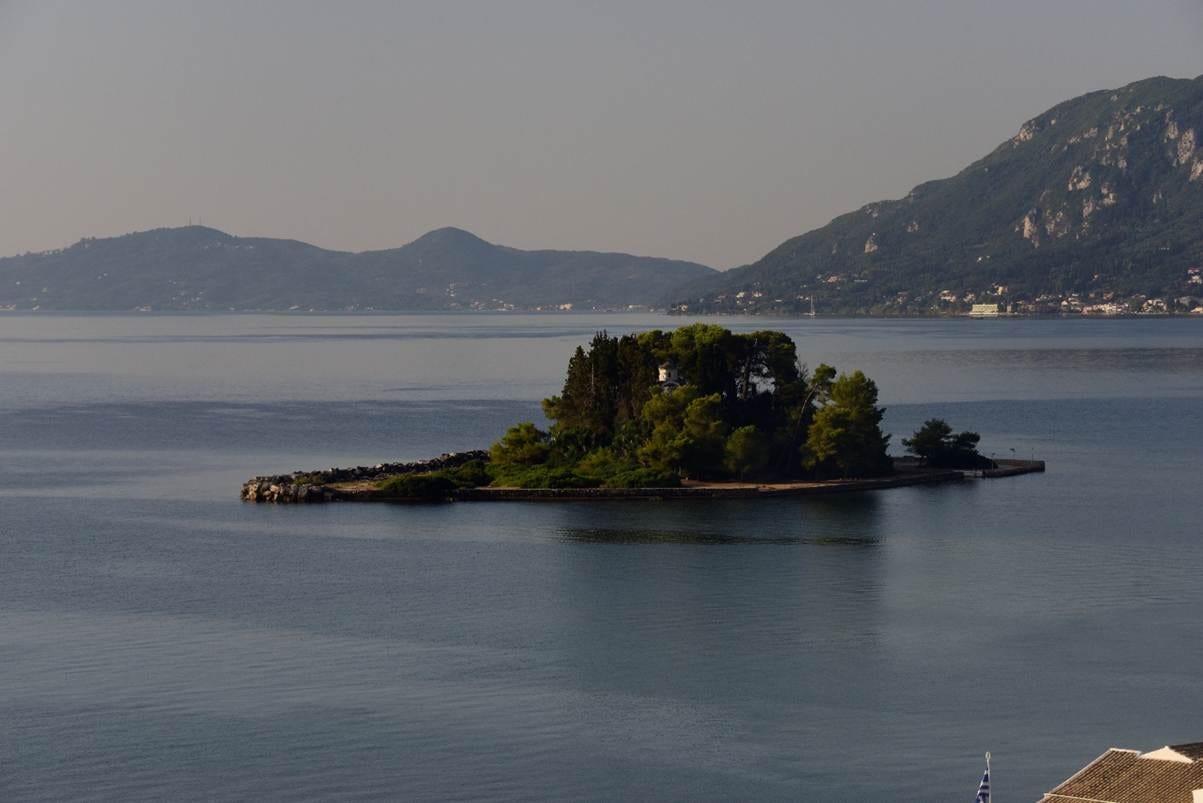
Whether or not Homer had any real place in mind, it is a pleasing thought that the enchanted island where Odysseus told his tale and found his way home may be none other than Corfu and that the island in the photo is the ship Poseidon turned to stone.
No posts
Comments
Nothing yet. Say the first thing.
Sign in to join the conversation.