
For all the media obsession with tariffs and trade theatrics, the Trump administration has stacked up real geopolitical leverage against China.
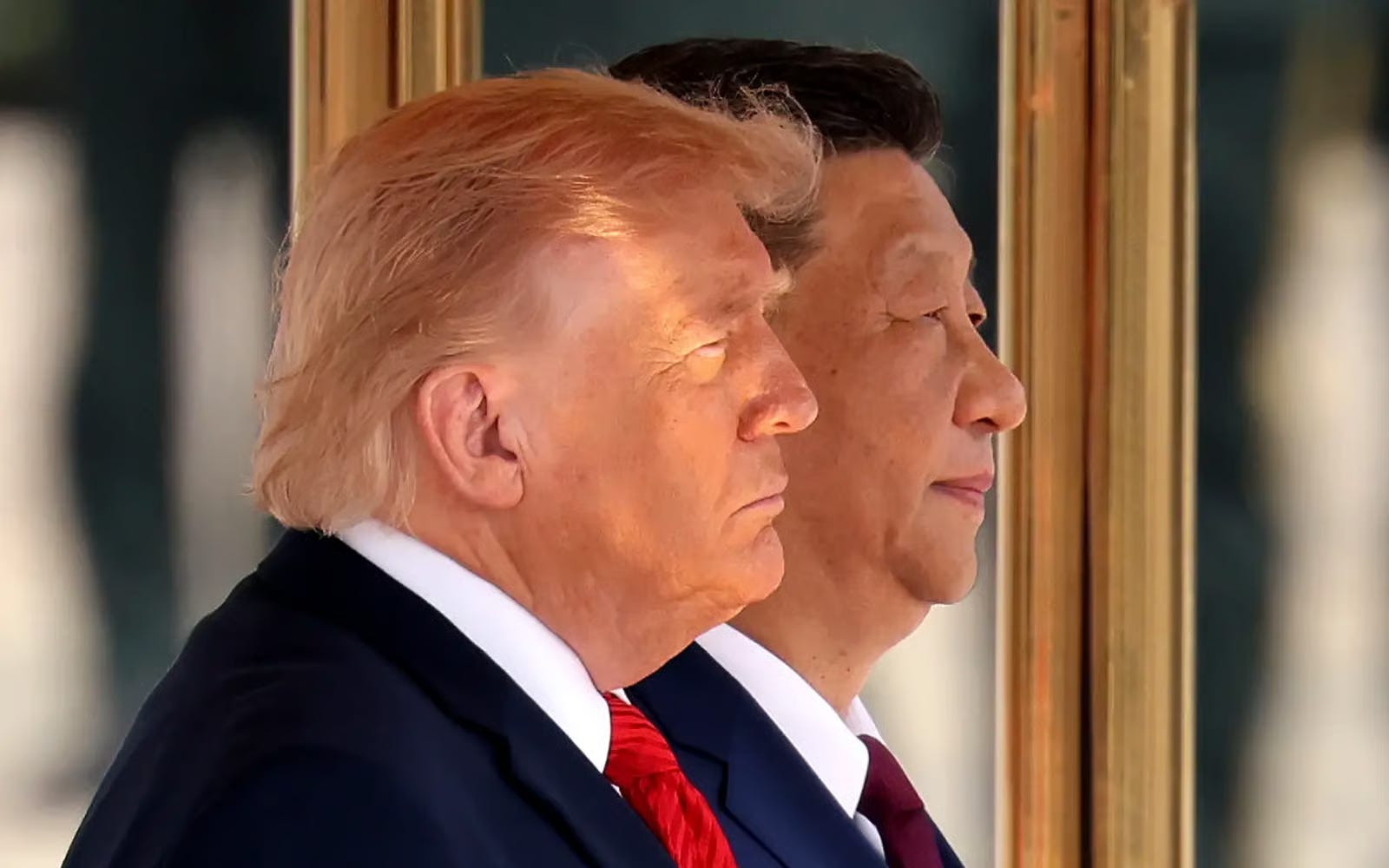
Nicolas Maduro — one of Beijing’s key allies in the Western Hemisphere — has been arrested. Venezuela’s oil sector is slipping out of China’s orbit and Delcy Rodriguez handed over their enriched uranium. Pressure campaigns against Cuba are back on the table to prevent Russia and China from turning the island into a forward operating base 90 miles from Florida. Even Iran, despite remaining a difficult front, is being squeezed in ways that indirectly hit Beijing by disrupting Chinese access to discounted Iranian energy.
Meanwhile, China suddenly sounds a lot more interested in buying American.
Texas oil
American soybeans
Expanded access for U.S. companies operating inside China (we’ll see if that actually comes to fruition)
The administration is already touting “double-digit billions” in future agricultural purchases after the Xi-Trump summit.
That’s the good news.
The bad news is what Trump reportedly said during the summit itself.
Trump argued it was beneficial for the United States to host roughly 500,000 Chinese students (ahem spies) and continue allowing Chinese purchases of American farmland because, in his words, universities and land values would otherwise collapse.

Disclose.tv@disclosetv
NOW - Trump says it's good to have 500,000 foreign Chinese students in the U.S. and for China to purchase U.S. farmland; otherwise, colleges and farm prices would collapse: "I frankly think that it's good that people come from other countries and they learn our culture."
2:01 AM · May 15, 2026 · 1.42M Views
2.38K Replies · 1.84K Reposts · 6.79K Likes
That comment reveals a contradiction at the heart of the administration’s China policy.
If American universities cannot survive without massive dependence on foreign tuition pipelines, then maybe it’s a market correction waiting to happen. The same applies to farmland prices artificially inflated by foreign capital flows. And it’s not as if concerns about Chinese influence are theoretical anymore. Over the past several years, lawmakers across multiple states have introduced legislation targeting Chinese ownership of farmland near sensitive infrastructure and military installations due to national security fears.
The broader concern isn’t simply about students or land purchases in isolation.
It’s about the cumulative pattern:
Illegal biolabs
Smuggling undeclared biological material into the U.S.
Fentanyl money laundering networks
Working with the Mexican cartels to weaponize migration
Unofficial overseas “police stations” to pressure dissidents
Intellectual property theft
Farmland acquisitions near military bases.
You can’t spend years arguing that China is the greatest strategic threat facing the United States then suddenly revert to “globalization is good” logic the moment universities and asset prices feel pressure.
Which raises the obvious question:
Where was Secretary Marco Rubio during these negotiations? What’s the point of having a Cuban anti-communist neocon if he isn’t going to be a China hawk on vital national security issues?
If the administration is serious about confronting the Chinese Communist Party, then someone in the room should be drawing hard lines on issues like strategic land ownership, influence networks, dependency on foreign capital, and importing foreign spies into our universities.
Otherwise, what exactly is the doctrine here?
—DC
Comments
Nothing yet. Say the first thing.
Sign in to join the conversation.