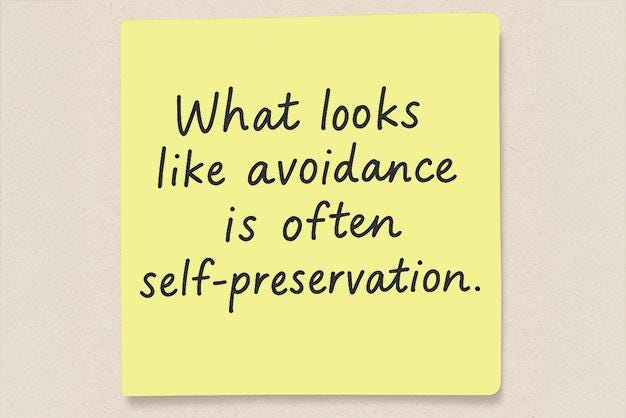
Burnout disguises itself as laziness—but it’s not the same thing. What looks like avoidance is often self-preservation.
So a better way to think about burnout is your brain trying to survive a system that never fit it. A blue screen of death. An overheated Mac.
Some weeks, opening your bank app feels like stepping on a landmine. You know something’s off, but you don’t have the energy to find out what. This is your brain asking for safety before it can process complexity.
And if you’re juggling shift work, caregiving, or chronic stress? That "safety" might feel completely out of reach.
ND Budget Rule #1: No one makes good financial decisions from a threat state.
It’s important to realize being burnt out isn't some sort of personal failure. It's an adaptation, often a response to a system that asks too much and gives too little. Too little support, empathy, and forgiveness.
So while we’re trying to change the system, let’s find ways for our brains to work with it.
Somatic Budgeting for Burnout Brains
Text within this block will maintain its original spacing when published
QUICK WIN: Walk first. Then budget. Your nervous system has to feel safe before your brain can solve money problems.
Neurodivergent brains often process money as a felt sense, not just a logical spreadsheet.
If your nervous system is dysregulated, your “money sense” may shut down too. You might:
Freeze when bills are due
Avoid even looking at your finances
Feel panic—or nothing at all—when you try to “budget”
Instead of forcing yourself to sit down with a spreadsheet when you’re fried, try a somatic entry point.
Budgeting can begin with your body.
Go for a walk (10–20 minutes). Let your mind wander.
When the pressure lifts, ask one small question: “What’s the next easiest thing I could do for Future Me?”
Don’t fix everything. Just take that one step.
Burnout-safe budgeting starts with momentum, not mastery.
Studies show even short walks reduce cortisol and increase executive function by up to 20%. (Harvard Health, 2020)
"When we teach financial planning to ND clients, we always start with nervous system regulation. No numbers until the body feels safe." — Certified Financial Behavior Specialist
“Every time I try to budget, I end up spiraling into shame and then… nothing. But I tracked my spending for 5 minutes while listening to my favorite song and it actually helped.” — @phantompostits, Reddit
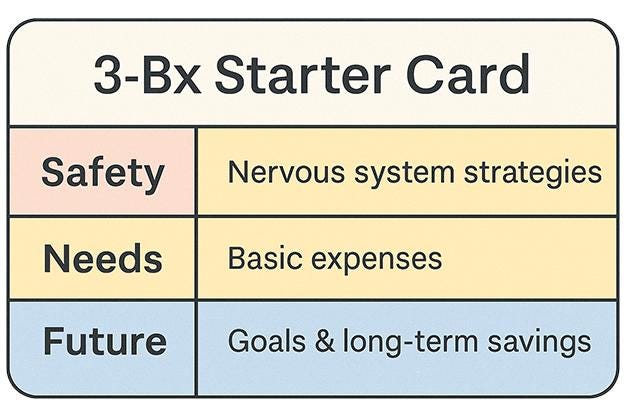
✅ The 3-Bx Sort™ Starter Card Sort your expenses into Baseline (musts), Boost (wants), and Burnout (drop-it-for-now) modes. Keep it in your wallet, pin it to your fridge—let your budget flex with your brain.
What’s the least traditional budgeting method that’s actually worked for you? 📩 Hit reply or tag us on X @divergent_money 📩 Hit reply or tag us on Facebook @divergent_money 📩 Hit reply or tag us on Instagram @divergentmoney
You deserve a financial system that doesn’t punish your energy cycles. Let this be the week you budget with compassion, not control and frustration.
Next week: More tips, insights, tools, and a deep exploration of ADHD time blindness.
Divergent Money Weekly is your inbox safe space for ADHD, Autism, and other beautifully nonstandard brains navigating personal finance.
Want to support the work? Forward this to a friend who gets it. Want more?
Disclaimer: As ALWAYS, this newsletter is for educational and motivational purposes and is not financial advice. Always consider consulting with a financial professional for guidance tailored to your unique situation.







Comments
Nothing yet. Say the first thing.
Sign in to join the conversation.