
Space horror often promises—well, threatens with the unknowable.
Ancient gods sleeping between stars in its impossibly geometric bed. Organisms that don’t acknowledge human biology, let alone morality. We expect the terror to arrive from out there. From the void, the alien, the cosmic.
But before any of that, before the eldritch reveals itself, there is a quieter, more mundane horror that truly defines the genre: Space itself is trying to kill us.
That’s why everything that humans build beyond Earth is designed to deter, and save our frail bodies from this cold, uncaring emptiness.
As a TTRPG player, and a longtime fan of space and sci-fi, I want to explore how this mundane aspect of design and human culture help create stories of terror in fiction.
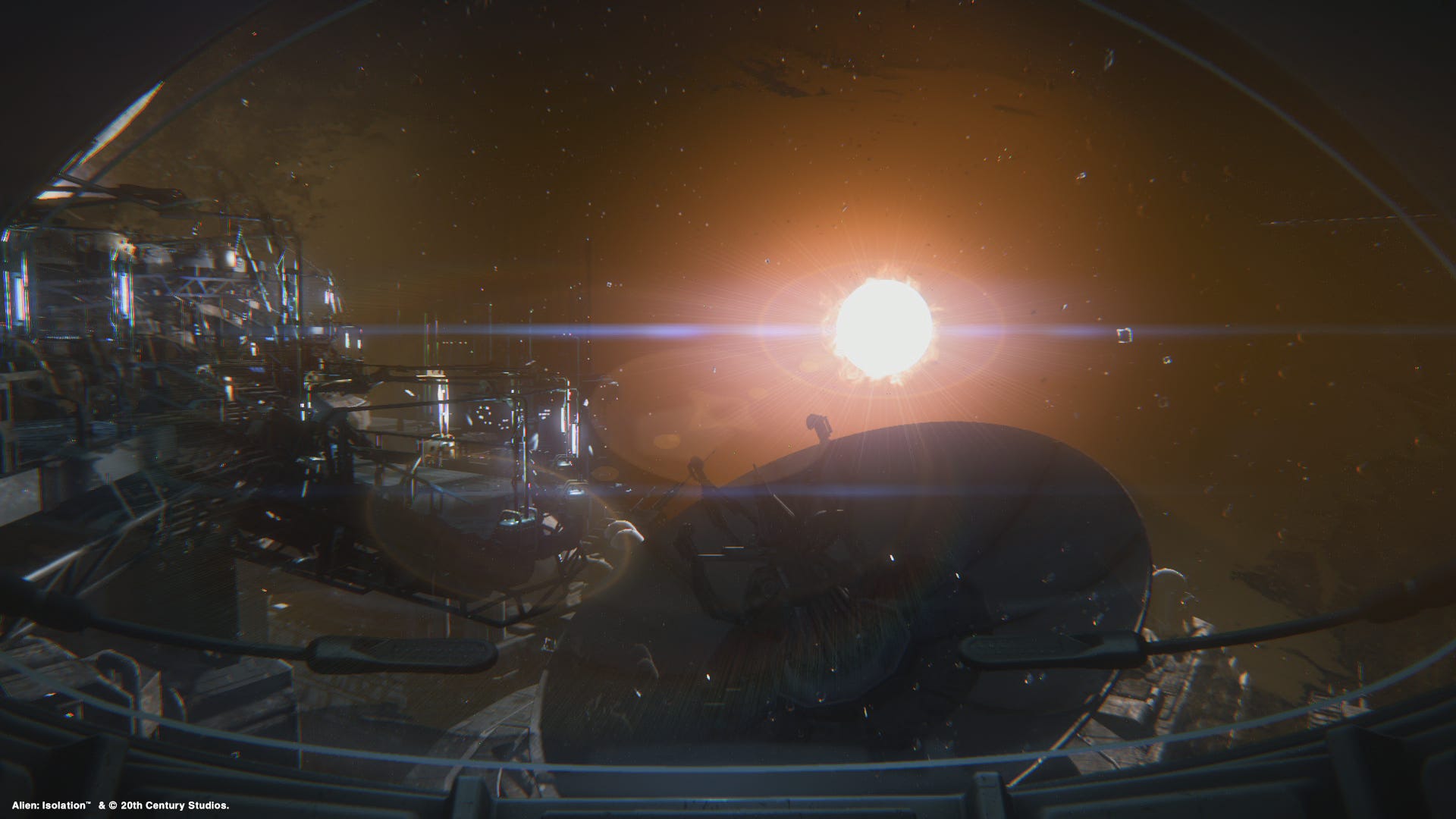
In most space horror stories, the alien is not the first threat encountered. Oftentimes, we are presented with issues
In the TTRPG systems Death in Space & Mothership, the dangers of space are presented as an ever-present threat, despite both systems having each their own “horrors” that are a big part of the game. While in every adventure the monsters change, the hazard of space remains the same.
Here’s the thing. Unlike the monster, space doesn’t hunt us. It doesn’t hate us. It doesn’t want us dead. It’s much worse than that. It simply does not care. Space is not the natural habitat of us humans, but it’s so much worse.
The vacuum will pull the air out of your lungs without malice. Radiation will scramble the heck out of your cells without intent. Temperature will swing from blistering hit to freezing cold with mechanical indifference. As a gamemaster, I don’t get to describe the face of the villain that had killed you, because your character weren’t murdered. They were simply dead.
When I read the book “To be Taught, If Fortunate", by Becky Chambers, I learned a cool new word: Somaforming. This blog I’ve read breaks it down even more, but at its core, Somaforming is the process of changing the body to suit the new environment (as opposed to terraforming, which does things the other way around). This idea is based on a real-world ideas, which shows how much space needs us to change just for us to exist there.
Before aliens, before cultists, before cosmic revelations, humanity’s first adversary is an environment that doesn’t even care whether we live or die. This is the original fear of space horror: existence without accommodation.
Originally, this idea popped into my head when I was watching Gundam Unicorn. Well, as my Substack’s name suggests, I was distracted by the idea of human-installed redundancies in spaceships as I saw Nahel Argama’s emergency shutter closing after Full Frontal shot open the mobile suit hangar door. This caused parts of the hangar to be sealed off, but ultimately ensuring the rest of the hangar remains pressurized. I can’t help but to imagine: how many more layers of shutters does the hangar have?
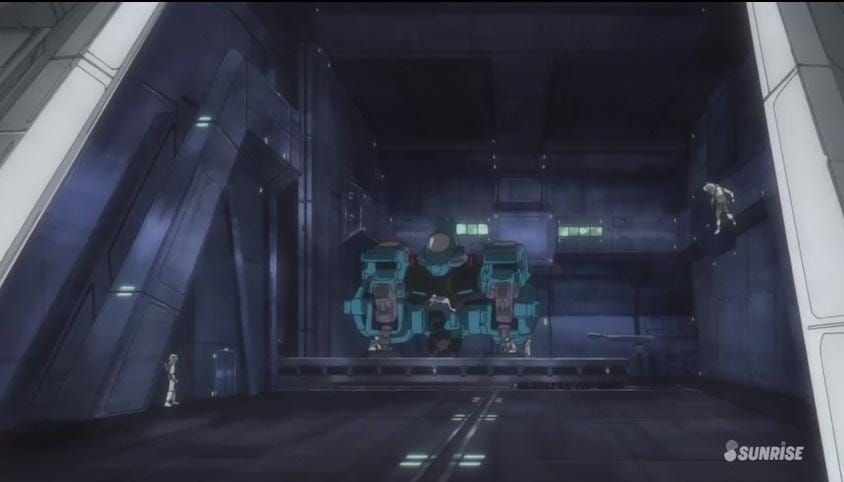
If we take a close look at any believable spacefaring structures (i.e., stations ships, and even suits), one thing becomes immediately obvious. Nothing is trusted to work only once.
There are backup systems for the backups. Manual overrides for automated processes. Physical swithes behind digital interfaces. Heck, there’s even emergency power for emergency power!
The list doesn’t end there. There are doors that seal even when their sensors fail. Valves that can be turned by human hands long after computers go dark. Androids have killswitches, often physically, but sometimes digitally.
This is not inefficiency. This is fear, formalized into engineering.
Redundancy exists because space offers no forgiveness. A single failure in the void of space is not a setback. It is death. There is no air to buy time, no environment to stabilize the wounded. No margin for error, period. Either the system holds, or you don’t.
In this sense, every redundant system is a quiet admission: We do not trust the universe to let us survive.
Space hardware is famously inelegant. Cables are exposed. Pipes snake through corridors, and panels are bolted, not seamless. Labels are large, with symbols made like they’re targeted for children, and are sometimes aggressively ugly. Color coding replaces aesthetics. Sound alarms exist not because they are pleasant, but because it’s made to train us that silence is dangerous.
This is not bad design. This is deeply human design, imagined to have been made after years of deliberation, feedback, and trial and error.
There was an interesting article I read about how we might design a warning for a nuclear waste site that would still be understood 10,000 years from now, long after everyone who built it (and the language they spoke) is gone, while the waste itself remains dangerous. This discourse on nuclear semiotics gave birth to this meme, by the way:
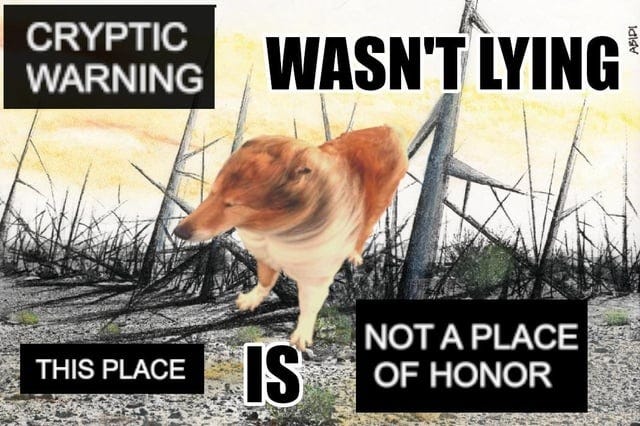
This is a great example of why, when faced with danger, humanity always goes substance over style. Rather than write the same warning in 25 languages, it’s better to just go for colorful symbols.
Redundancies represent the very idea of human survival. Some may get annoyed at how ugly the aesthetics of industrial space is. Many complain about how beaten down things look on the Sevastopol or scoff at Starfield’s self-dubbed NASA punk design style, despite both settings being set in future.. But this, my friends, is what peak space design looks like. This awesome blog article recounts and breaks down the design process behind Alien’s Nostromo, with a lot of insights from the amazing Ron Cobb, who drew up the original concept art for Nostromo and the rest of Alien.
While on earth, we design for comfort, convenience, and optimization, in space, we design for continuity. Systems must fail gracefully. Damage must be isolated. Humans must be able to intervene when logic breaks down.
That’s why so many space horror settings feel industrial rather than futuristic. They show us what happens when all of these redundancies fail. Horror happens in space when the cost of failure is final.
As such, the true celebration of human teamwork in space horror is rarely tangible. It isn’t the rocket launch team hugging and screaming in joy, but the moment a safety net kicks in right before certain death. It’s generations of human failures and deaths coming together to save your character’s life, right there and then.
As a storytelling device, redundancies can work as a pacing tool.
A single system failure would just end the story too quickly. Instead, tension and horror thrive in partial failures. The slow, cascading approach of certain death. Take your story beat by beat. If we were playing Mythic Bastionland, these failures would be the omen, and the monsters would be the myth.
This comes in many forms, if we’re talking about exposition. Maybe one backup holds, while another doesn’t. A manual override works, but only temporarily. Power can be rerouted, but something else must go dark. With every failure, we are given less and less of a choice, taking away the comfort of time and space that we all take for granted when solving problems in our home turf.
Every redundant system introduced creates a question: Which layer fails next?
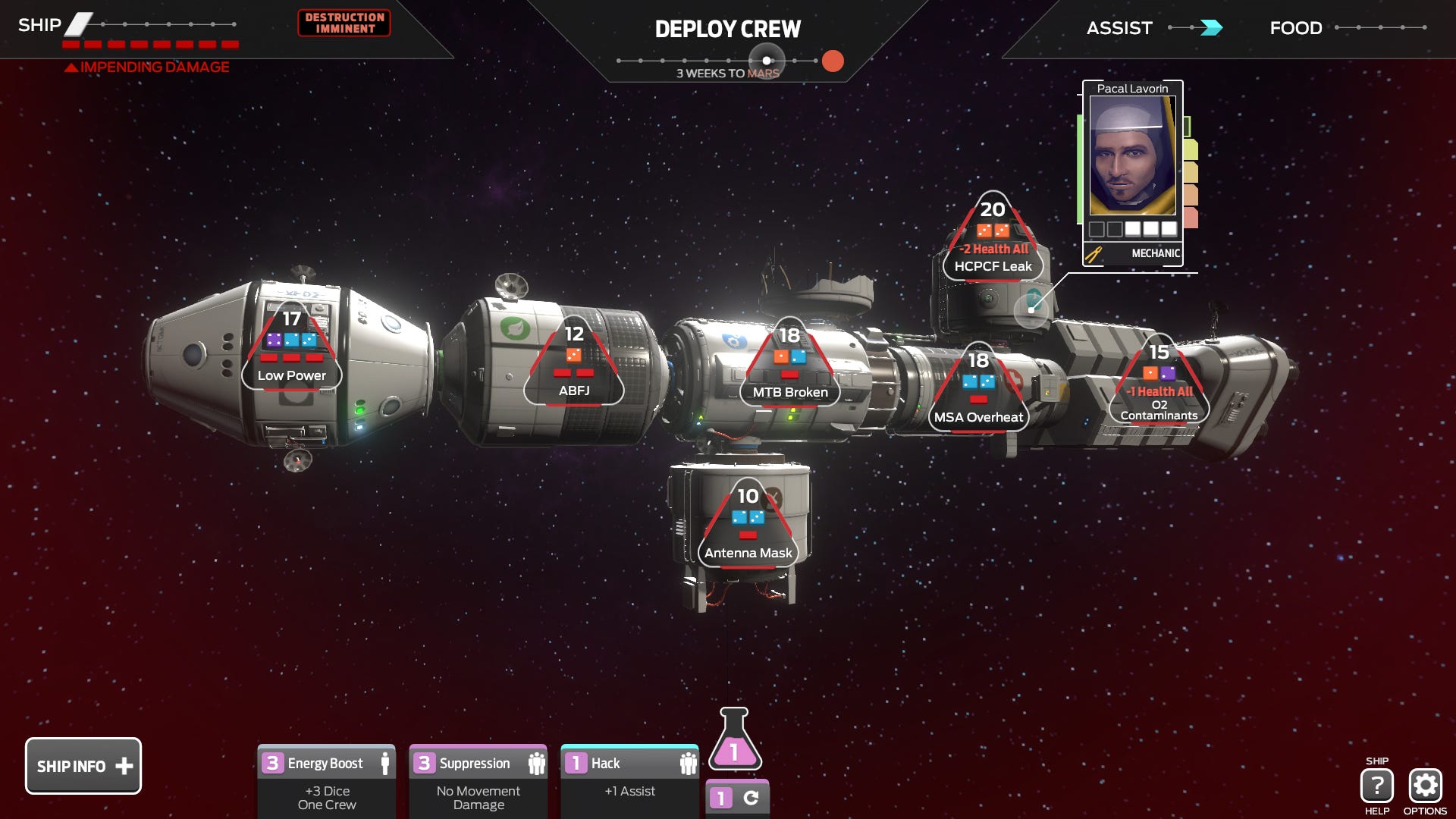
Tharsis showed me what a monster-less space horror story looks like. In this awfully underrated game, terror and fear are born out of the cascading failure of your ship’s systems and safety nets. Tharsis didn’t have any jumpscare or gore (arguably), but I’m pretty sure there are moments where I actually felt scared.
I believe that a great space horror does not rely on sudden death. It relies on cascading compromises. Survival becomes a series of increasingly desperate tradeoffs, with comfort and time as currency.
The monster may stalk the corridors, but the real suspense comes from watching the safety net unravel, thread by thread. Treat every single system failure like a story beat.
When designing a space horror story or experience, you are blessed with an already terrifying environment. If haunted houses have their creaky floors, slamming windows, and broken glass, your space stations would have hissing gas pipes, loud noises in the vents, and blaring alarms. All of them serve as signs that point towards one thing: Something’s not right here.
If you’re running a TTRPG Session, make your players pay attention to the ordinary to uncover the extraordinary. Make the tiny details become part of how you build suspension. Slowly take away what’s familiar to them to make them realize that the comfort and safety they had are slowly disappearing. These are proof that survival is not heroic in the traditional sense, but procedural, repetitve, and deeply collaborative.
To indulge in the mundane, is to understand what space horror is truly about. It is not about the moment the monster strikes, but the long stretch of time before it does. this is the time when humans rely on each other’s foresight, redundancies, and small, unglamorous decisions to stay alive.
No posts
Comments
Nothing yet. Say the first thing.
Sign in to join the conversation.