

My mom tells a story about the first time she met my dad’s uncle—my Great Uncle James. They had just started dating, and she was, I’m sure, nervous to meet my Dad’s family; eager to make a good first impression. My mom is an avid conversationalist, but in this situation, I can imagine her approaching the meeting with shy trepidation. After arriving, my mom took a seat in the living room on a couch amongst the guests. Without any introduction, Uncle James entered the room, approached my mother, and grabbed her by the ankles, swiftly pulling her out of her seat and onto the floor. This bizarre and confounding introduction perplexes me in ways but seems to fit strangely with the character I remember from my time growing up visiting my Levitt relatives, James included.
James was something out of a book. He was single throughout his long life, and made a living as a professional photographer after serving as a captain in WWII. I didn’t know much about him. There exists a picture of him, dancing with Rita Hayworth, smiling. That wasn’t the character I remember from family reunions. By the time I was born, James was an old man. He dressed like one, his impatient, prickly demeanor led me to steer clear of him, but my little sister, braver than I, was rewarded with roughhousing and hijinks when we would visit him at his sister’s house, my beloved Aunt Joanna’s stately Springfield, IL home.
At family reunions, James was of course tasked with taking the group picture, using a timer on his medium format camera, which he placed on a tripod before lumbering back to the group to be included in the frame. The whole scene seemed choreographed to maximize the grumpiness of everyone involved, most of all, James, whose irascible nature set the mood for these disastrous photo sessions. After meticulously arranging the group of 30 odd people, including many uncooperative children, James would press the shutter and begin the journey back to the group. In my earliest memories, it would take him just one or two tries to get back in time, though often, to his displeasure, a child would clearly look away or run out of the frame just as the shutter clicked. As he aged and slowed, it became harder and harder for him to make it back in the frame in time. The simple solution to the problem seems easily evident now, but for reasons I would have to ascribe to pride, James insisted to be the one to activate that timer. My dad was just a few years removed from his days as a high school track star and would have been an obvious choice to fire the hair-trigger shutter, but common-sense was not to prevail!
I believe these afternoons are the likely well-spring for my strong dislike of arranging families in my past-life working as a wedding photographer, just out of college, before I wised up and succumbed to the desire to become a less lucrative art, editorial, and documentary photographer.
When I first became interested in photography, it never occurred to me that I was continuing a legacy started by the strange old man that put us all through the gauntlet. I was first bowled over by the early Magnum photographers, Robert Frank, and later, odd renaissance men like Eugene Meatyard. While I took jobs when I could, photographing weddings and children jumping in fall leaves, I saw myself primarily as some kind of artist, even as my day to day consisted of work that defined me squarely as “not that”.
In 2009, James passed away. I hadn’t seen him for years and in the business of my life (my wife and I were expecting our first child) the news didn’t strike me as personally significant. My dear aunt Joanna’s son, Meredith, was tasked with sorting out James’s belongings, including a basement full of camera equipment. Meredith knew I had a budding interest in photography and invited me to look over the cameras and equipment for anything I might be interested in. I leapt at the chance and acquired a few large rubbermaid bins of cameras, worth little in their dusty, malodorous state. As I cleaned and repaired the cameras I became fascinated by where they had been before me, particularly with the Twin Lens Reflex medium format camera that I later spied hanging around James’s neck in the background of a snapshot from my parent’s wedding. Before I even acquired film for it, looking down at the ground glass took me somewhere else, and began to shape the way I thought about photography.
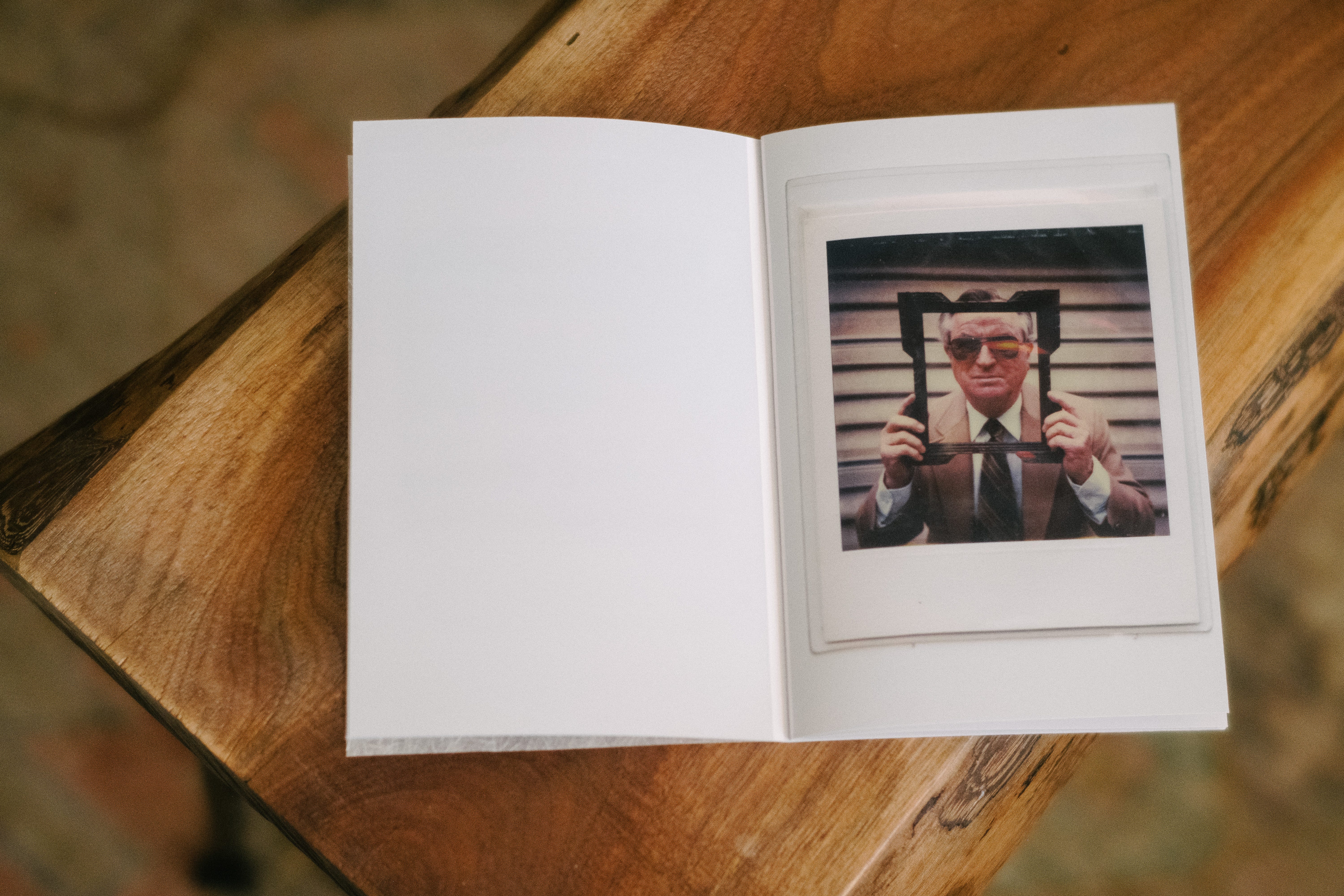
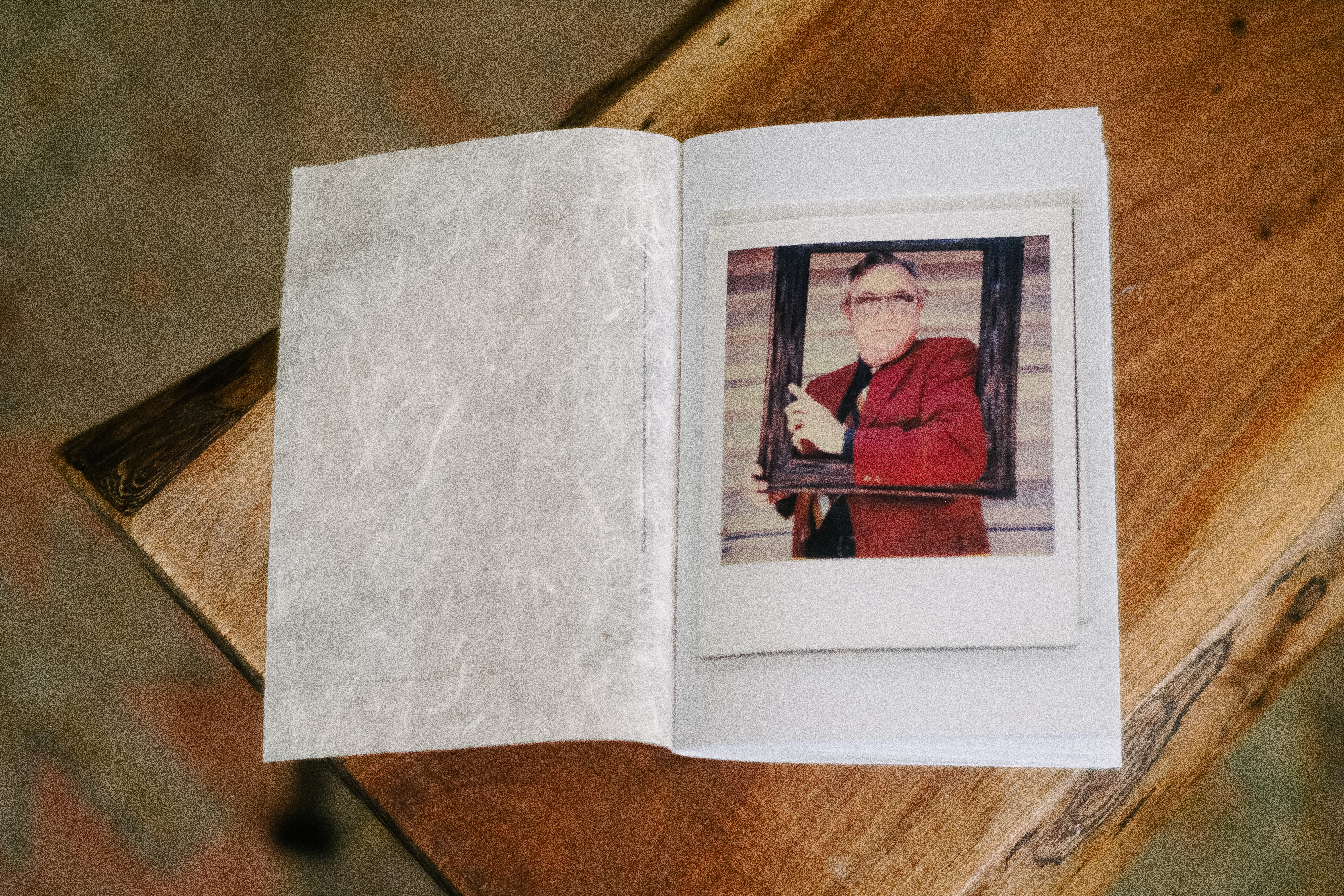
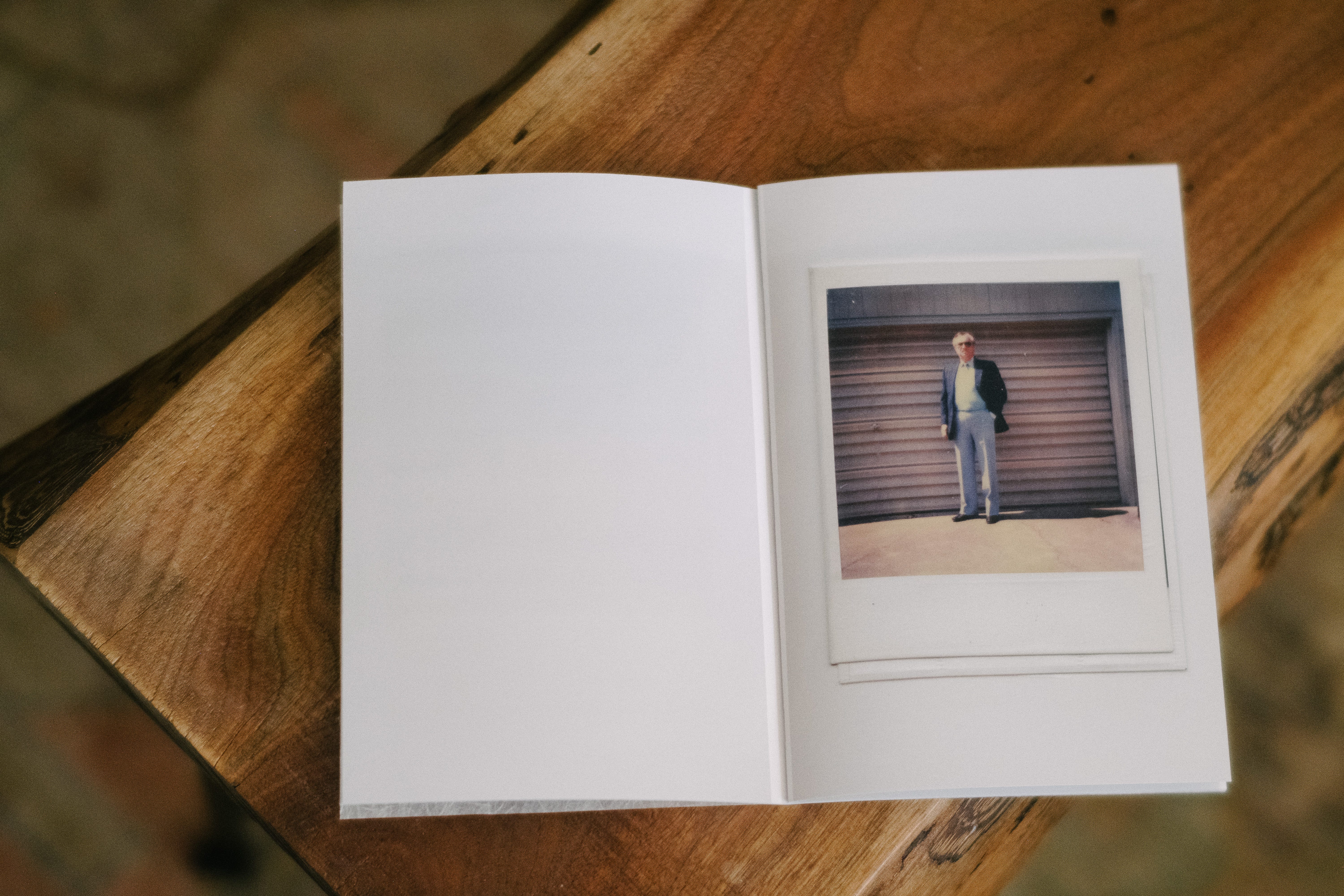
In a later visit with Meredith, I was able to look through a few binders of work made by James. I was most interested in a series of Polaroid self-portraits. In these photos, James peers into the lens, almost always obfuscated by a pair of aviator sunglasses befitting a mid-70’s George Jones. He appears in some photos further back in the frame, never smiling, and in other photos utilizes props, often placing his face in an empty frame. In one photo, a revolver that wouldn’t look out of place in a Peckinpah western, pokes out of his grandfatherly slacks. Meredith allowed me to scan the photos, which were transferred from one hard drive to another as along with my own archives, as I continued my work in photography, in Central Illinois, then Chicago, and finally, in Arkansas where I reside today. In the 15 years since I first saw these photos, I’ve come back to them again and again, increasingly seeing myself in the strange old man that took my childhood family photos. As I’ve increasingly experimented with photography in physical form, I revisited these photos as an exercise in book-making, creating a small zine-like booklet of these Polaroids, followed by a selection of my own instant self-portraits. The form is evolving, but provides me with a reproducible visual representation of my gradual recognition of the link between myself and James.
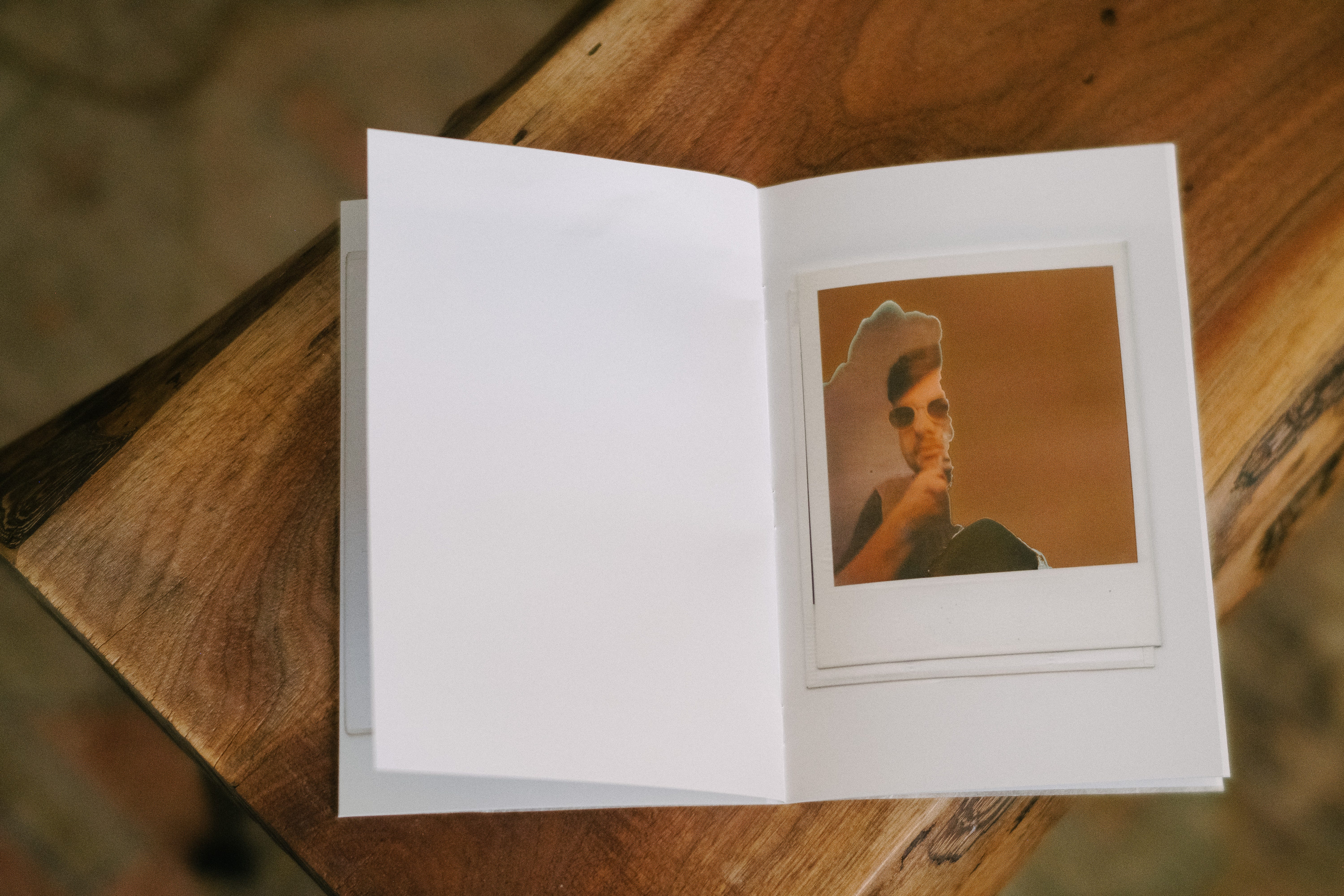
I believe most of us (not all) contain multitudes, and James, as I know him, was no exception. My understanding of him is limited to decades-old memories and old photographs, yet I owe him a great debt. In my family tree, James provided me with a blueprint for living a life in pursuit of odd proclivities and embracing a strangeness that makes life tolerable to the perpetually wayward among us. I don’t know what James aspired to, but I am gratified to work with a bit of raw material provided by his creative mind. Each of these Polaroids represents the power of photography to shape and mold our identities, and its transtemporal ability to broadcast personas across generations.
No posts
Comments
Nothing yet. Say the first thing.
Sign in to join the conversation.