
4 minute read
Hope everyone is disregarding the news and enjoying their summer. But don’t ignore this!
Last week I ran an exclusive blockbuster that exposed failings at Rocky Mountain Laboratories, the National Institutes of Health (NIH) virus lab that made national news when I reported that NIH virologist Vincent Munster was caught smuggling deadly pathogens into the U.S.
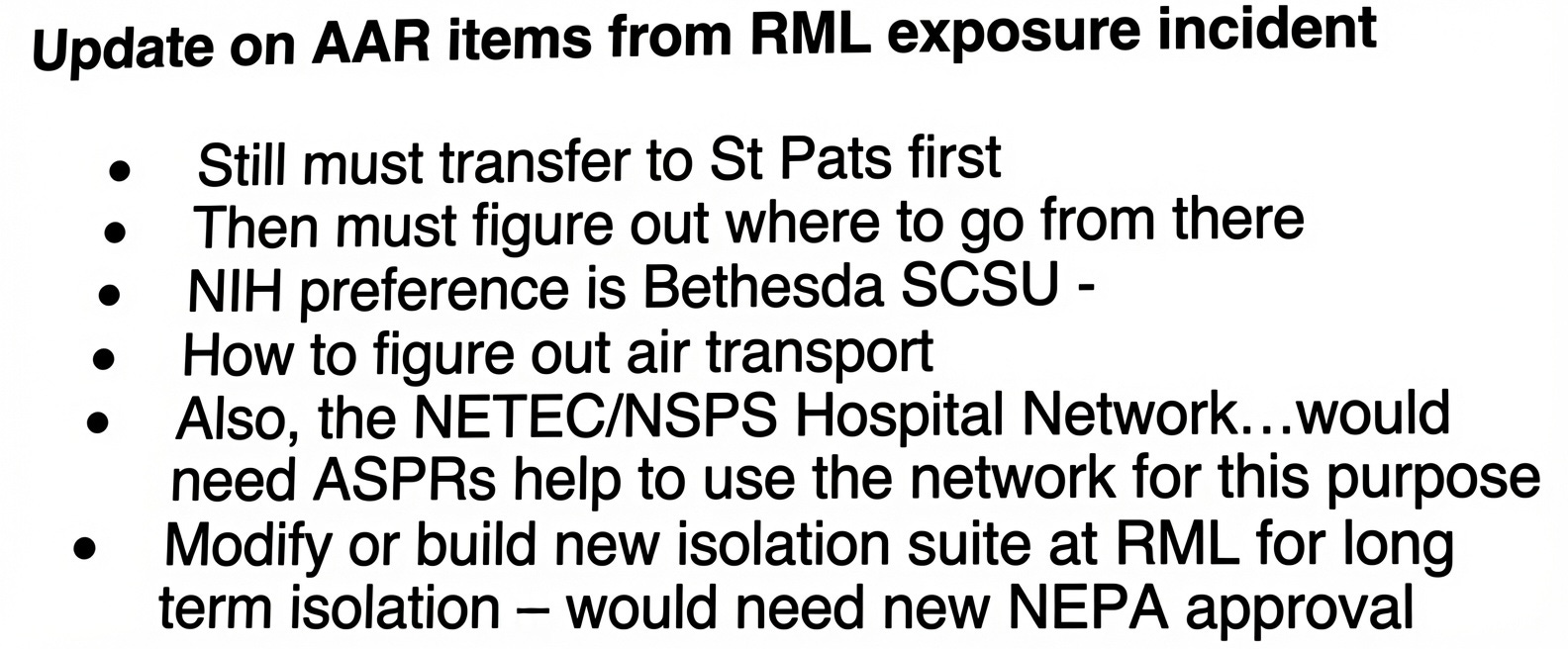
My exclusive last week looked at internal NIH documents provided to me by a whistleblower that show Rocky Mountain Laboratories (RML) still doesn’t have a plan to treat someone exposed to deadly pathogens. If a worker gets bitten by a monkey, which happened last November, that patient is transferred about an hour away to St. Patrick’s hospital in Missoula “then must figure out where to go from there.”
Um, what? And they still don’t have a room suitable to quarantine patients!
I’m not joking. This is how they’re managing things at one of America’s top virus research labs.
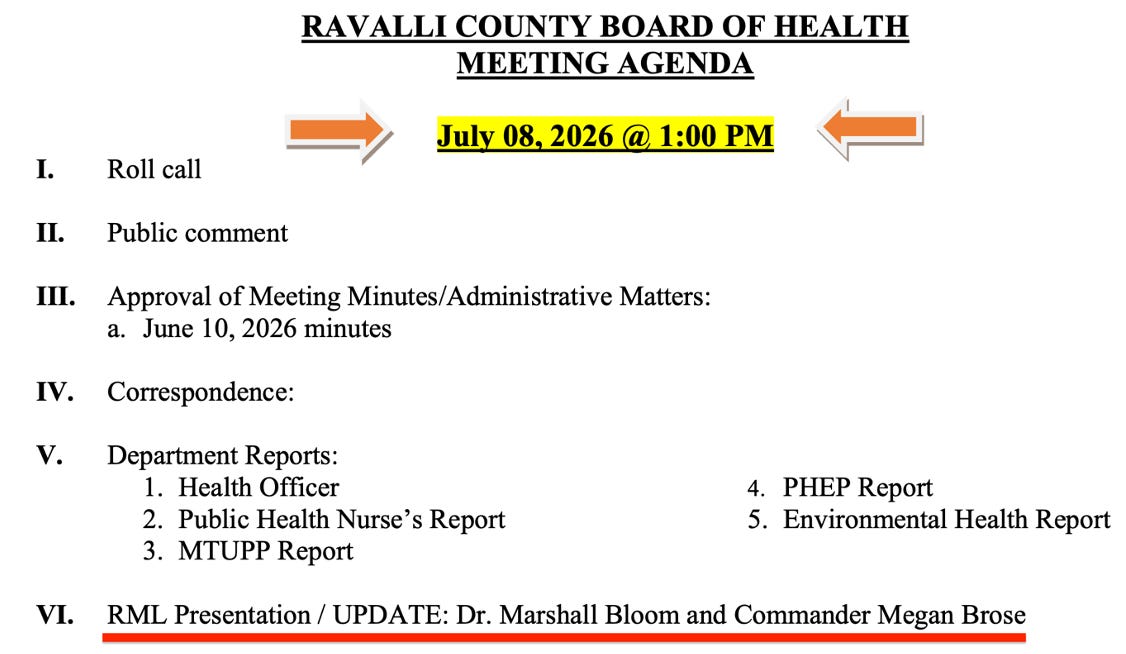
Rocky Mountain Laboratories sits in the small city of Hamilton, Montana, the largest town in Ravalli County. Following my expose last week on troubling biosafety issues at RML, RML leaders are scheduled to give the local health board an update today on the facility’s problems.
NIH has not put out a statement regarding last week’s story, but an NIH employee contacted me to explain that NIH leaders have forced RML to fix some of the flaws I identified. In last week’s story, I explained that the RML’s procedures for bringing new viruses to the Hamilton facility has a gaping hole: their Field Sample room is not secure.
“There is no lock on the door, no prox access card,” a whistleblower told me. “It’s shared space, and the freezers in there also don’t have locks.”
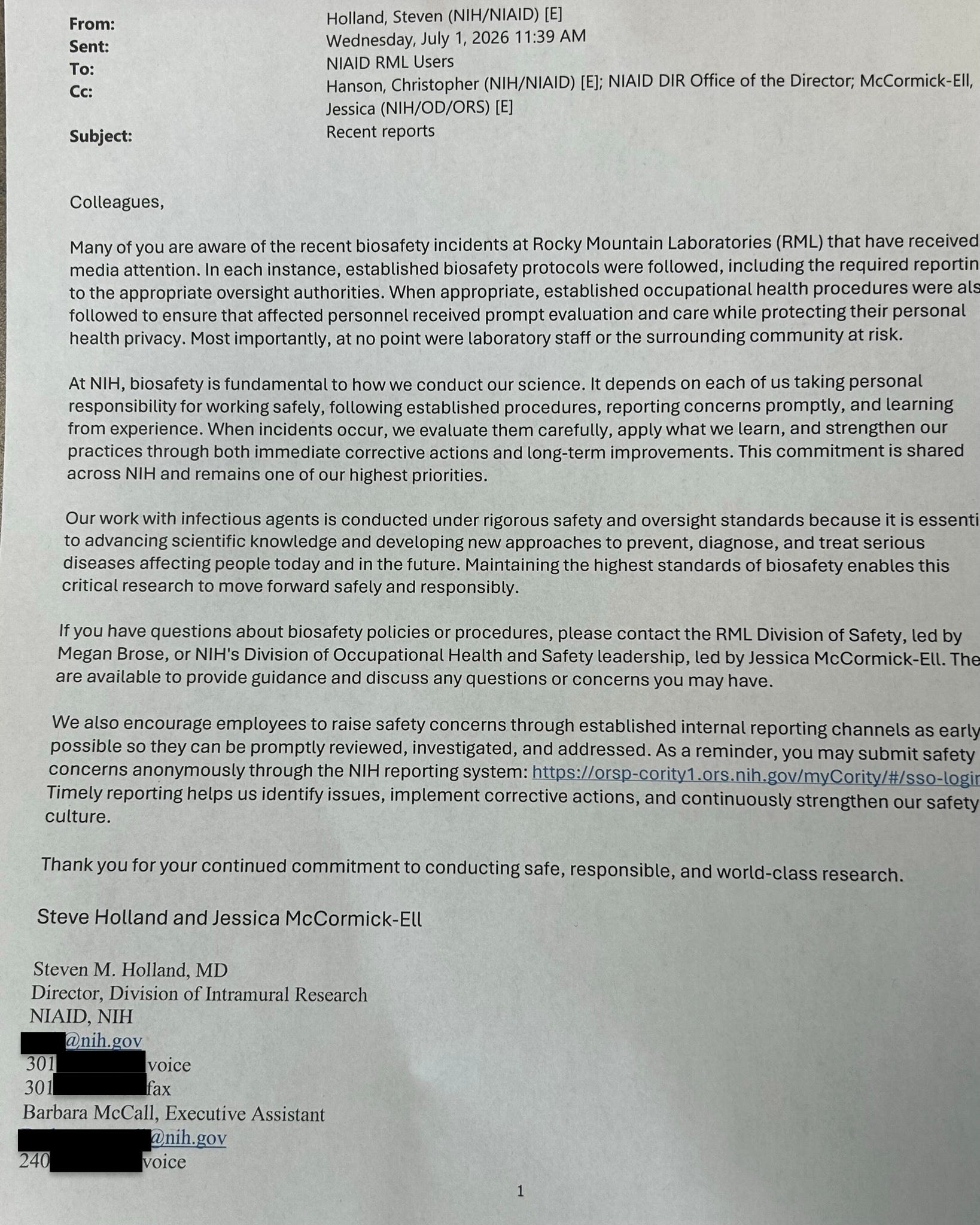
Within 24 hours of my story going live, I was told that the NIH placed a keypad lock on the Field Sample room. NIH’s head of research also sent around an email claiming that, despite all the troubling news about RML, “established biosafety protocols were followed.”
But that just underscores the actual shortcomings: those established biosafety protocols have flaws, and those flaws that haven’t been fixed.
And NIH has yet to explain all the holes identified in RML’s protocols for managing employees exposed to dangerous pathogens. Those concerns first came to light last November, when a sedated monkey bit an RML employee.
Hey, accidents happen, but that’s why you need appropriate protocols to deal with them.
Again, many of the problems with current protocols still haven’t been fixed. You can find those failings detailed here.
If you attend the Ravalli board of health hearing and would like to speak with me about RML’s presentation, please send me an email: thackerpd@gmail.com. I also learned that NIH biosafety experts have flown from DC and are now at RML to inspect the Montana facilities.
If you have any information on what they found, please also contact me.
RML runs a Biosafety Level 4 (BSL-4) lab, one of around a dozen operating in the U.S., to study the world’s most dangerous viruses. The federal government began pouring billions of dollars of funding to create more of these labs following the September 11 World Trade Center attack and the anthrax scare in the early 2000s.
I wrote about the increased funding for these labs in 2003 for the medical journal JAMA and remember that, even back then, researchers warned me that much of this money was likely being misplaced. BSL-4 labs are very expensive to build and operate, and prior to the BSL-4 building boom in the early 2000s, the U.S. had only two of these labs in the entire country. Several researchers told me that the spending spree wasn’t needed because we could get many of the scientific answers we need to protect society without BSL-4 facilities.
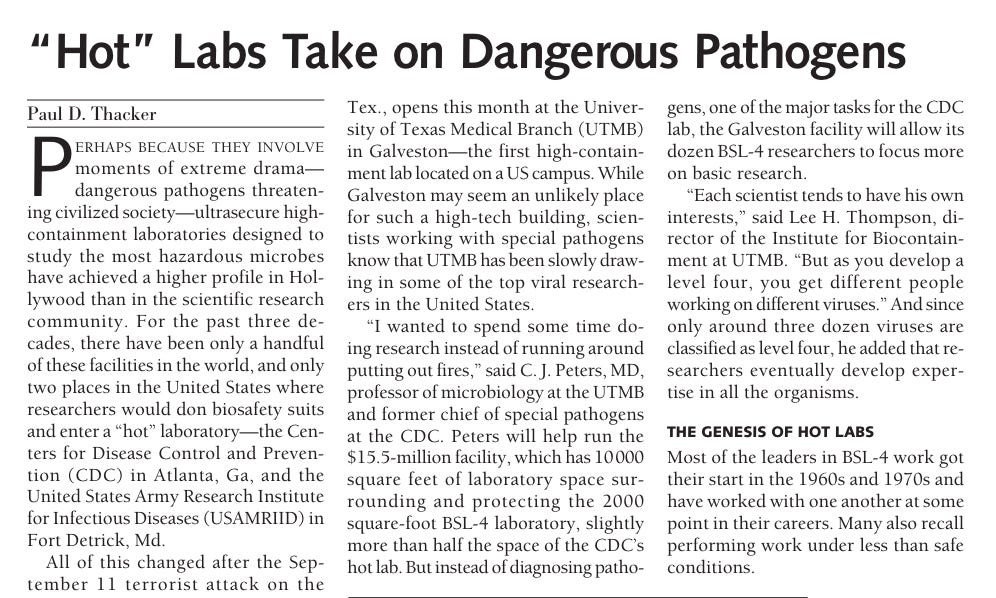
Looking back at this story, I realize that I had interviewed Heinz Feldmann, who is now in charge of Montana’s RML’s BSL-4 and the other NIH BSL-4 lab in Maryland. Feldmann is considered the NIH’s top BSL-4 lab expert. However, it now seems NIH leadership is having to step in to fix safety flaws at the RML lab that Feldmann has been running for decades.
I’ll keep you updated with any further developments. Have a great summer.
No posts
Comments
Nothing yet. Say the first thing.
Sign in to join the conversation.