
There are over 600 castles in Wales, which sounds like an exaggeration until you realise medieval Wales had one for roughly every twelve square miles of land. Most are ruins the size of a village hall. These three are not, they’re the ones that were built to make an army think twice before it even reached the gate.
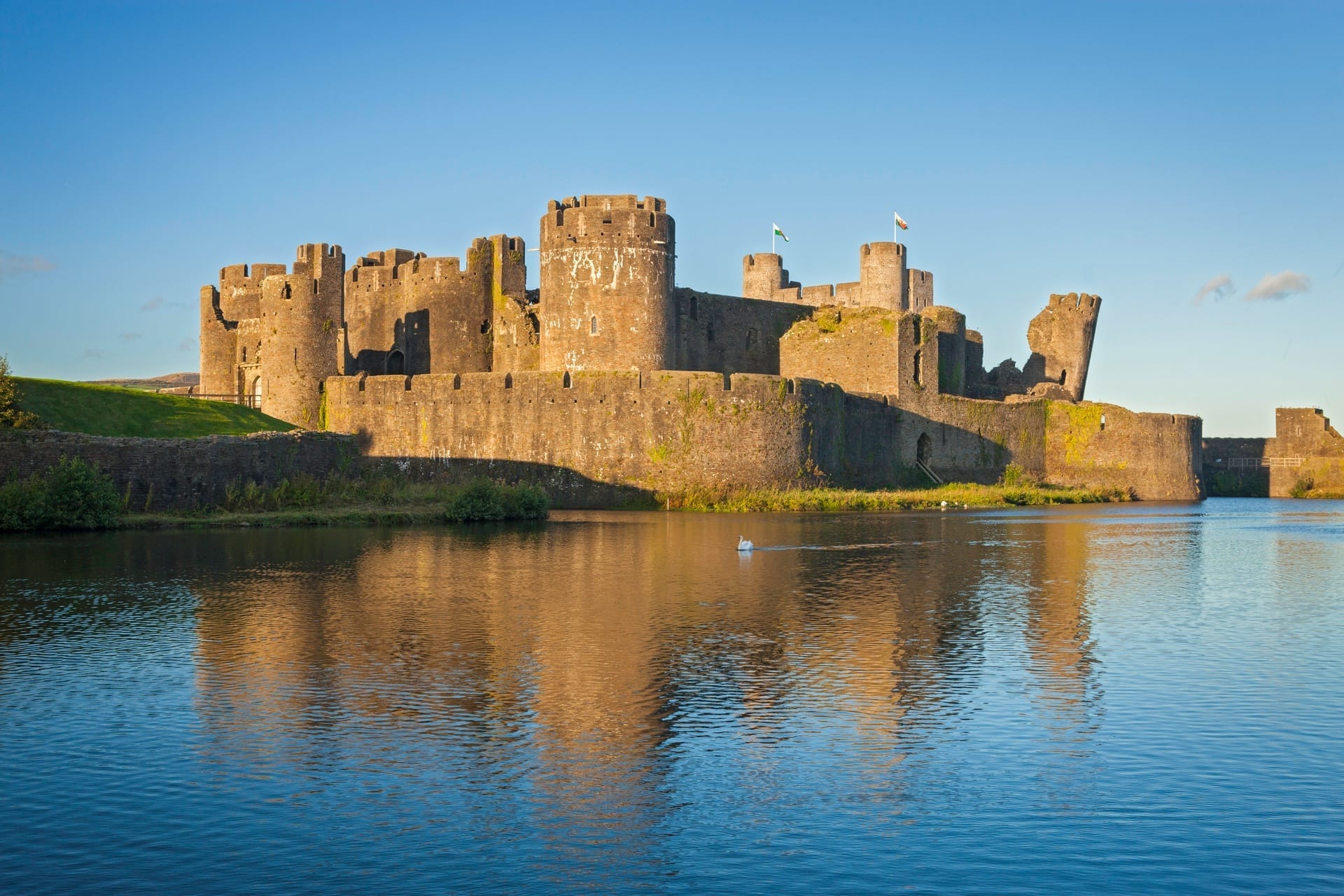
Caerphilly Castle covers thirty acres and is the largest castle in Wales and it’s the second largest in the whole of Britain, only Windsor castle is bigger. It’s three times the size of the Principality Stadium in Cardiff, which is seven and a half miles down the road.
Gilbert de Clare built it from 1268 as he was worried about the rising power of the Welsh prince Llywelyn ap Gruffudd, which meant he needed something truly formidable and what he ended up with was the first fully concentric castle in Britain, with walls within walls and the whole thing ringed by artificial lakes that took as much engineering as the fortress itself.
In 1270, Llywelyn attacked the still unfinished castle and burned its defences to the ground, forcing de Clare to start the work over again from 1271. By the eighteenth century the water defences had dried up and the whole place had slid into disrepair, it took until 1950 for the castle to be gifted to the nation and the lakes to be deliberately re-flooded.
Its best loved feature today is the leaning south east tower which are tilted further than Pisa’s and nobody’s 100% sure why. Ground subsidence from the water defences is the most cited explanation but plenty of historians point instead to Parliamentary forces deliberately undermining it during the Civil War in the 1640s, which was part of a wider effort to “slight” the castle and make it useless to any future royalist garrison.
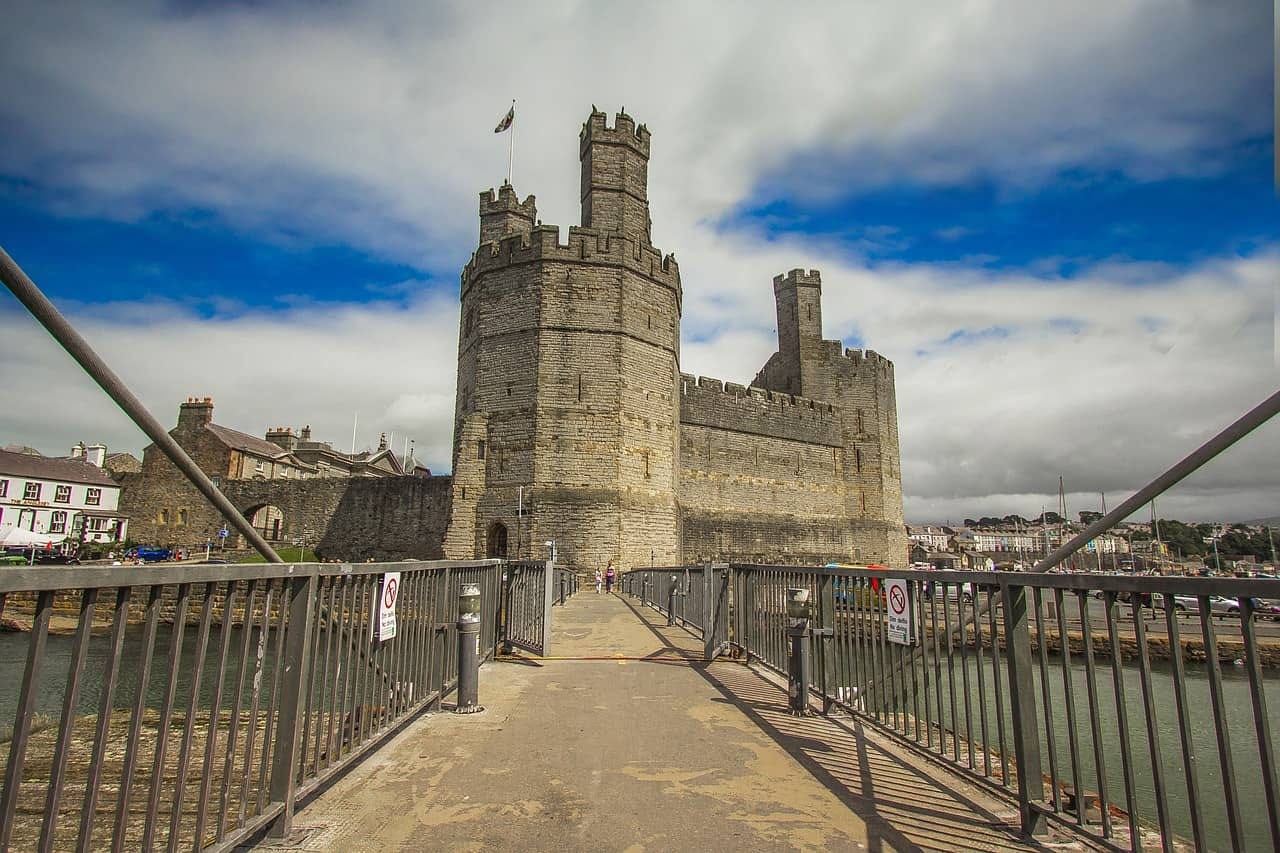
Edward I built Caernarfon when he wanted Wales to know who was in charge and eight hundred years later it still radiates that intention. It was raised on the site of an old Roman fort and modelled on the walls of Constantinople, with it’s banded, polygonal towers unlike anything else in the Edward I “Iron Ring,” it was designed to not just be a fortress but also a seat of government. The Eagle Tower has walls eighteen feet thick and three separate turrets and was built for the royalty who slept there in a level of comfort the rest of the castle was never meant to offer.
The first English Prince of Wales was born here in 1284 and it’s where both the 1911 and 1969 investitures of the Prince of Wales took place, the 1969 ceremony was broadcast to millions of people and is now part of the castle’s own exhibition. It’s part of the same UNESCO World Heritage Site as Conwy, Beaumaris and Harlech and is one of the most recognisable skylines in Wales.
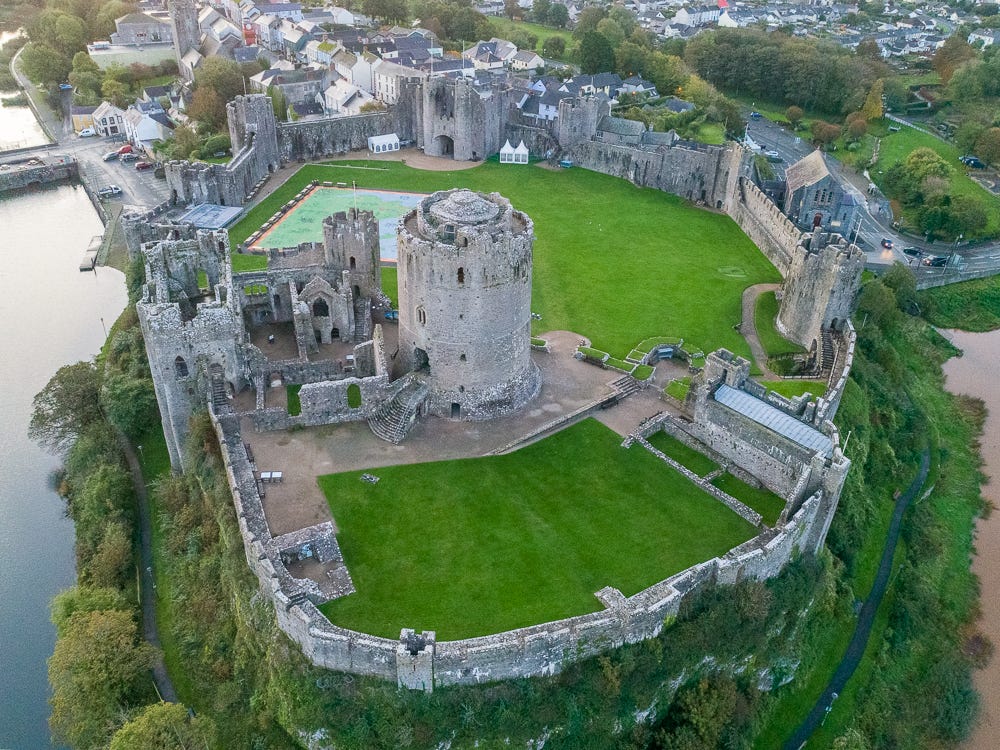
Arnulf de Montgomery built the first fortification here in 1093 and successive builders expanded it into the vast Norman stronghold that survives today, its keep rises seventy five feet with walls up to twenty feet thick at the base. It’s the only castle in Britain built directly over a natural cavern, which is called Wogan’s Cavern and is cut into the limestone beneath the castle and was used for centuries as a boat store and a last line of defence, it’s now home to a small colony of pipistrelle bats and is open to visitors who don’t mind ducking.
Henry VII was born here in 1457 and while Pembroke likes to claim the “birthplace of the Tudor dynasty” title outright, he wasn’t the only English king born on Welsh soil, Edward II arrived at Caernarfon in 1284 and Henry V was born at Monmouth Castle around 1386. What makes Pembroke’s claim to fame stand up is that Henry VII is the only one of the three who founded a royal dynasty. It fell to Oliver Cromwell in 1648 after a seven week siege and was one of the last strongholds in Britain to hold out for the king. It stood in ruins for two and a half centuries before restoration work began in the early 1900s to bring it back from collapse.
Caerphilly is big in area, an engineering feat spread across thirty flooded acres. Caernarfon is big in intent, a castle built to be a statement as much as a stronghold. Pembroke is big in time, nine hundred years of continuous use stacked on top of a cave that’s older than all of it.
Three completely different reasons to feel small standing at the gate.
Hwyl am y tro.
Nick — Discover Wales · wales.org
Comments
Nothing yet. Say the first thing.
Sign in to join the conversation.