
Wales has a coastline that’s wrecked ships for centuries and a string of lighthouses built to stop it doing quite so much of that. Some are still working, one’s been dead for longer than it was ever alive. One stands half a mile out in an estuary and can only be reached by walking across the sand at low tide, which tells you most of what you need to know about why it’s there at all. Below is five of them, spread out right around the coast.
Anglesey
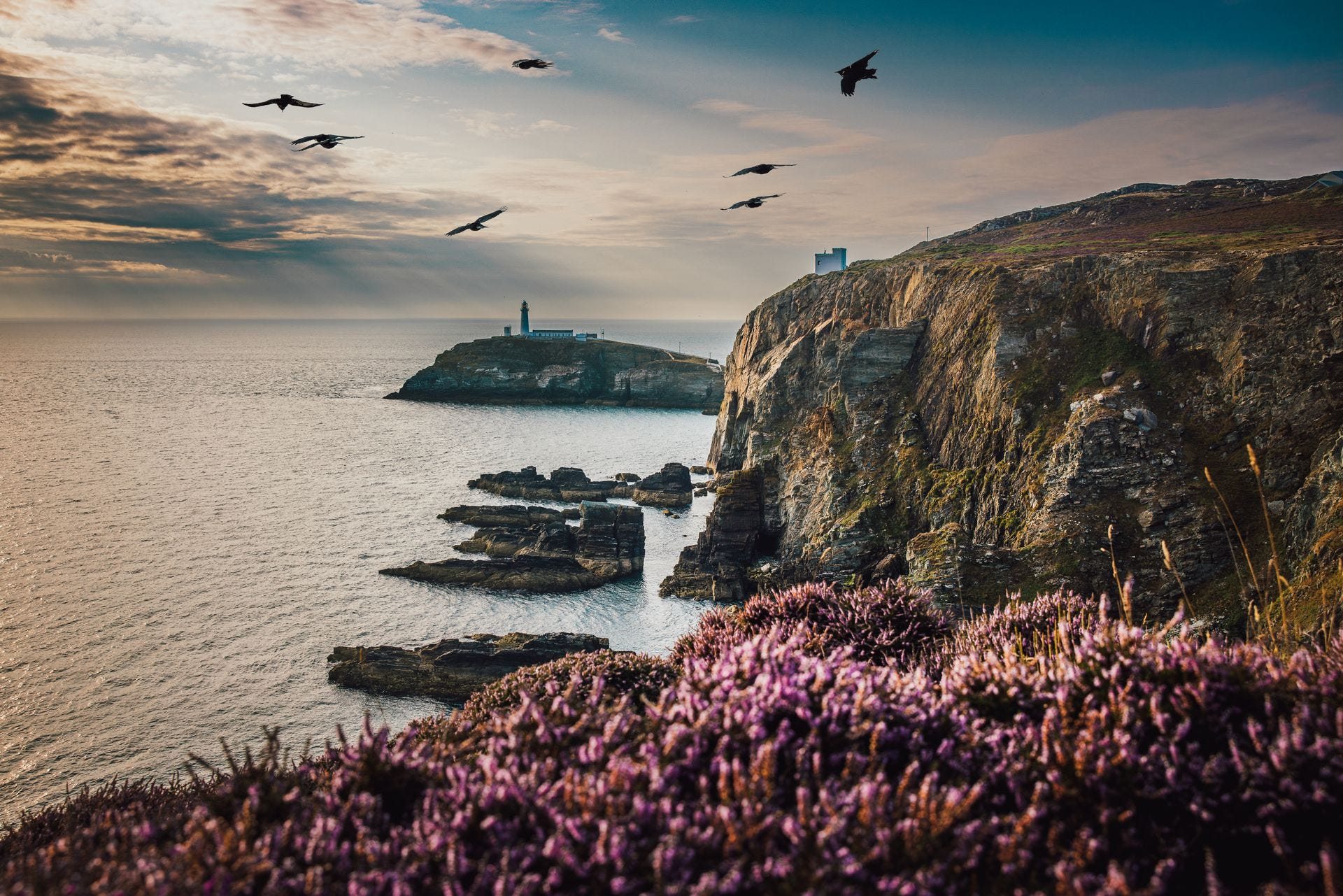
Talk of a lighthouse here goes back to 1665 when a petition for one landed on the desk of Charles II. It actually took until 1809 to actually get built on a tiny islet called Ynys Lawd separated from Holy Island by thirty metres of open water. Before there was a bridge, the only way across was a wooden box on a hemp rope, swung out over the chasm on a pulley. An iron suspension bridge finally arrived in 1828 and what you get today is 400 steps cut straight into the granite cliff face which you have to climb back up afterwards which leads to a crossing that still feels like an event rather than a formality. The light was automated in 1984 and the last keepers, Stanley Booth, Norman Grindle, Dermot Cronin and Peter Halil, left for good that September.
Pembrokeshire
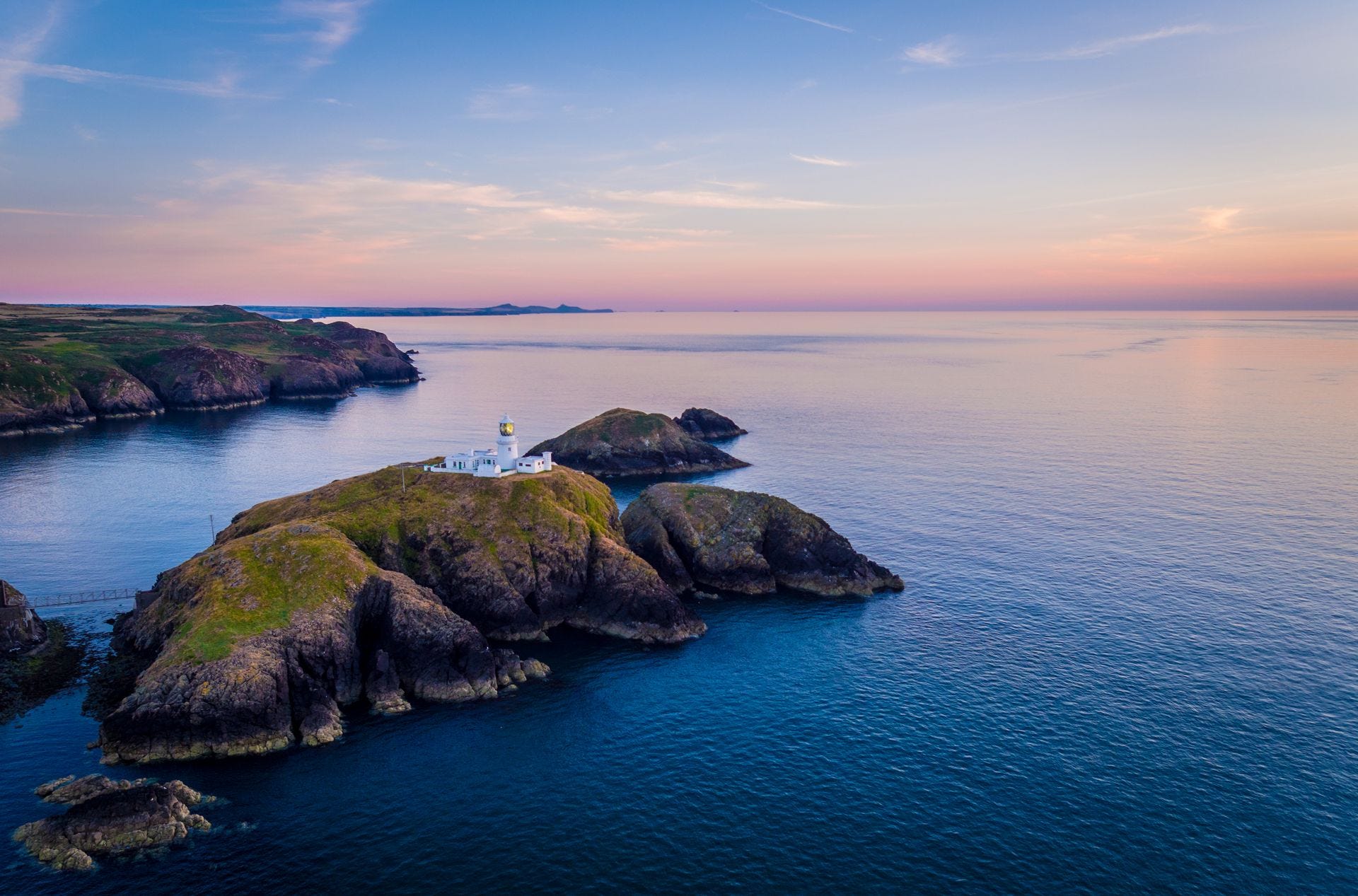
This was one of the last lighthouses built anywhere in Britain, it wasn’t lit until 1908 and is on its own small island called Ynys Meicel. It replaced a full lightship that had been anchored out in Cardigan Bay and it needed to as over sixty vessels went down on this stretch of coast during the nineteenth century alone, the lighthouse could easily have come decades sooner than it did. The original lens weighed four and a half tons and turned in a bath of mercury to cut the friction. Today, the water below is one of the best places in Wales to watch for dolphins, porpoises and grey seals which haul out to pup on the rocks every autumn.
Vale of Glamorgan
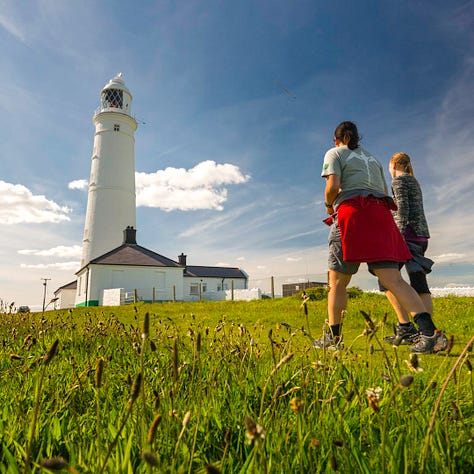
Nash Point isn’t one lighthouse, it’s two built 300 metres apart on the same clifftop in under a year, they were finished in September 1832. If you lined the two towers up then a ship knew it was on the safe course through the Bristol Channel, if you see them side by side instead it needed to change direction fast. It took the wreck of the steam packet Frolic in 1831, when more than fifty people drowned to finally push Trinity House into building them. The shorter tower was decommissioned in the 1920s but the taller one kept working and kept its keepers longer than anywhere else in Wales, the last two left in August 1998. You can still hear the foghorn today, which is a enormous double-horned diaphone and is sounded for visitors at 2pm on the first Saturday and third Sunday of every month.
Talacre, Flintshire
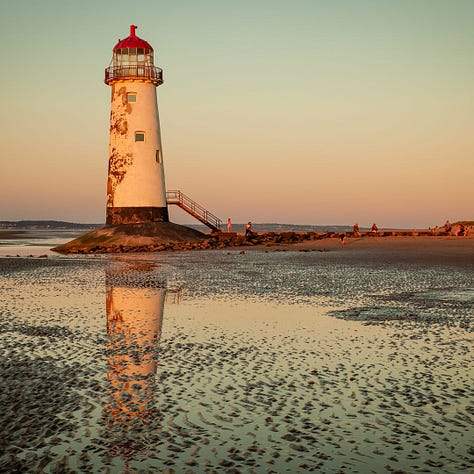
This one’s been out of action for longer than it was ever in it. Built in 1776 to warn ships heading into the mouth of the Dee, it’s the oldest lighthouse in Wales, it was built for a brutal reason. Two Dublin ferries were lost near here with more than 200 people between them. It stopped working as a light in 1844, replaced first by a newer tower and then in 1883 by a lightship anchored out in the estuary instead. What’s left stands on Talacre beach rather than on any rock or headland, leaning slightly from decades of subsidence, privately owned since it sold for £90,000 in 2012. At low tide you can walk right out to its base across the open sand. Locals will tell you it’s haunted by a former keeper named Raymond.
Gower
Save this one for a good low tide, because it’s the only way you’ll ever reach it. Built in 1865 by John Bowen of Llanelli to mark the shifting shoals of the Loughor Estuary, it’s the only large wave swept cast iron lighthouse left standing anywhere in Britain and one of just two left in the world. Eighty eight wooden piles were driven into glacial moraine at low water, which was the only window builders had to work in and the cast iron plates were bolted together on the outside rather than the inside, an unusual choice but it made the construction go faster in a place where the sea only ever gave you a few hours at a time. It went dark in 1920, then local yachtsmen clubbed together in the 1980s to have it relit as they were worried that boats kept finding the shoals the hard way. Getting there today means a walk of several miles across Whiteford Sands, past wild ponies and saltmarsh, timed carefully around the tide.
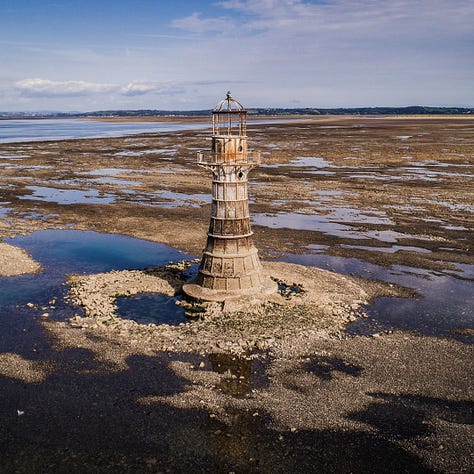
What strikes you going through all five is how differently “danger” got answered each time. South Stack needed cliffs and steps and nerve, while Strumble Head needed sheer size and reach. Nash Point needed two towers instead of one and Point of Ayr got built, then abandoned, then left to lean quietly into the sand. Whiteford just needed to survive being hit by the sea, over and over, for over a century and a half and it has.
Five different problems, five completely different solutions, all still standing on the same coastline.
Hwyl am y tro.
Nick — Discover Wales · wales.org
Comments
Nothing yet. Say the first thing.
Sign in to join the conversation.