
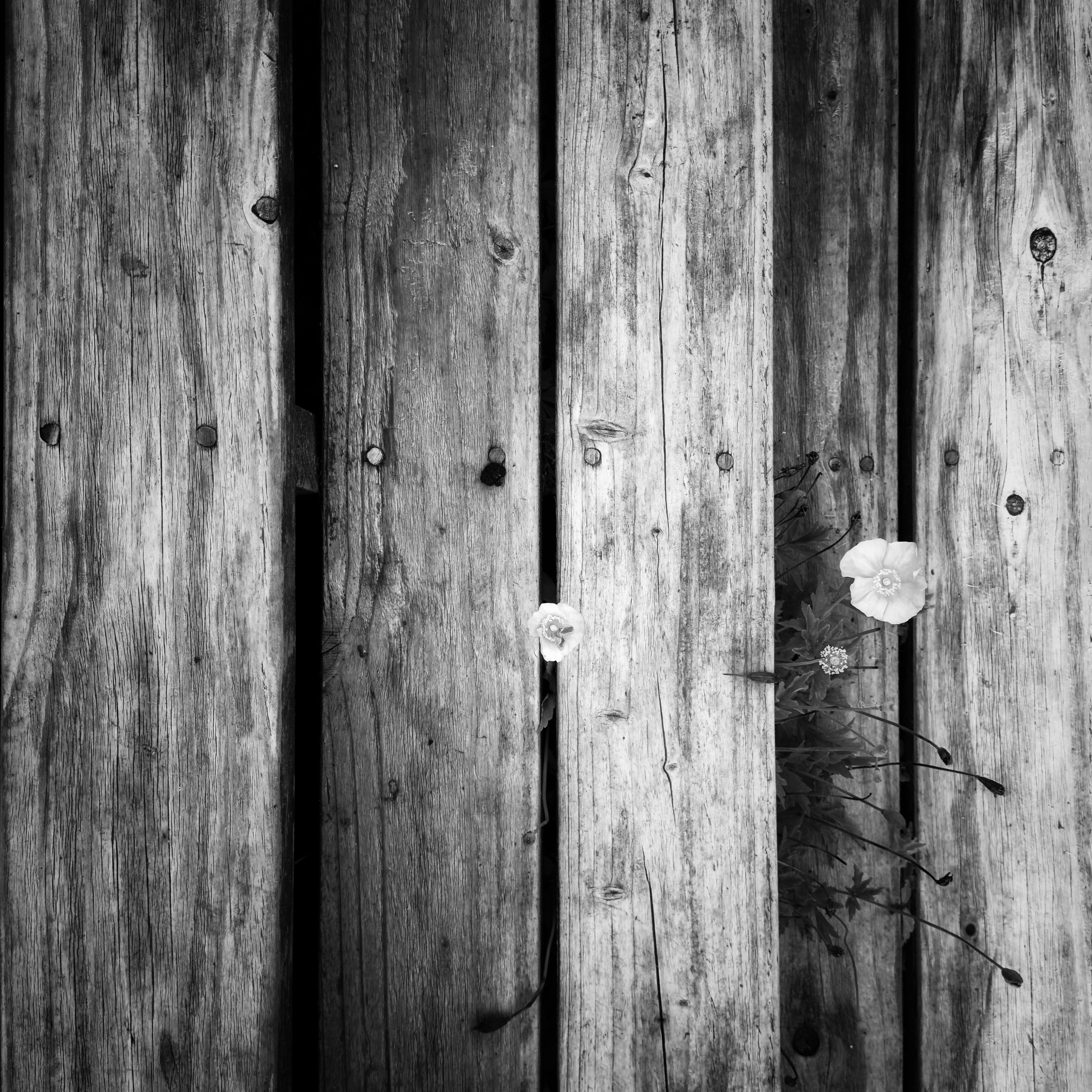
Yellow Poppies. I noticed these beautiful flowers while sitting quietly in the morning with my tea, listening to the birds. I love how they are pushing through despite the barriers in their way.
Hi,
I hope you are well?
I want to suggest something for this weekend that will take about twenty minutes and cost you nothing.
Go to your phone. Not to Instagram, not to TikTok, not to wherever it is you find yourself scrolling when the evening gets quiet and the comparisons start. Go instead to your camera roll, and scroll back twelve months.
Don’t curate. Don’t edit. Don’t stop to wonder whether anything is good enough to share. Just look.
I’ve been thinking about the difference between those two kinds of scrolling recently. One takes you outward, into other people’s carefully arranged lives, their best light, their most considered moments. The further in you go, the smaller you feel. You know this feeling. We all do. You put the phone down vaguely dissatisfied, not quite sure what you were looking for but certain you didn’t find it.
The other kind takes you inward. And what you find there is something the algorithm will never show you: evidence of your own attention.
Because here’s what I’ve noticed about camera rolls. They are not the photographs we planned to make. They are the photographs we couldn’t help making. The slightly blurred picture of light coming through a kitchen window on an ordinary Tuesday. The shadow on a pavement that stopped you mid-stride. Your dog asleep in a particular way. A mug of tea going cold. A tree you pass every day that suddenly looked different.
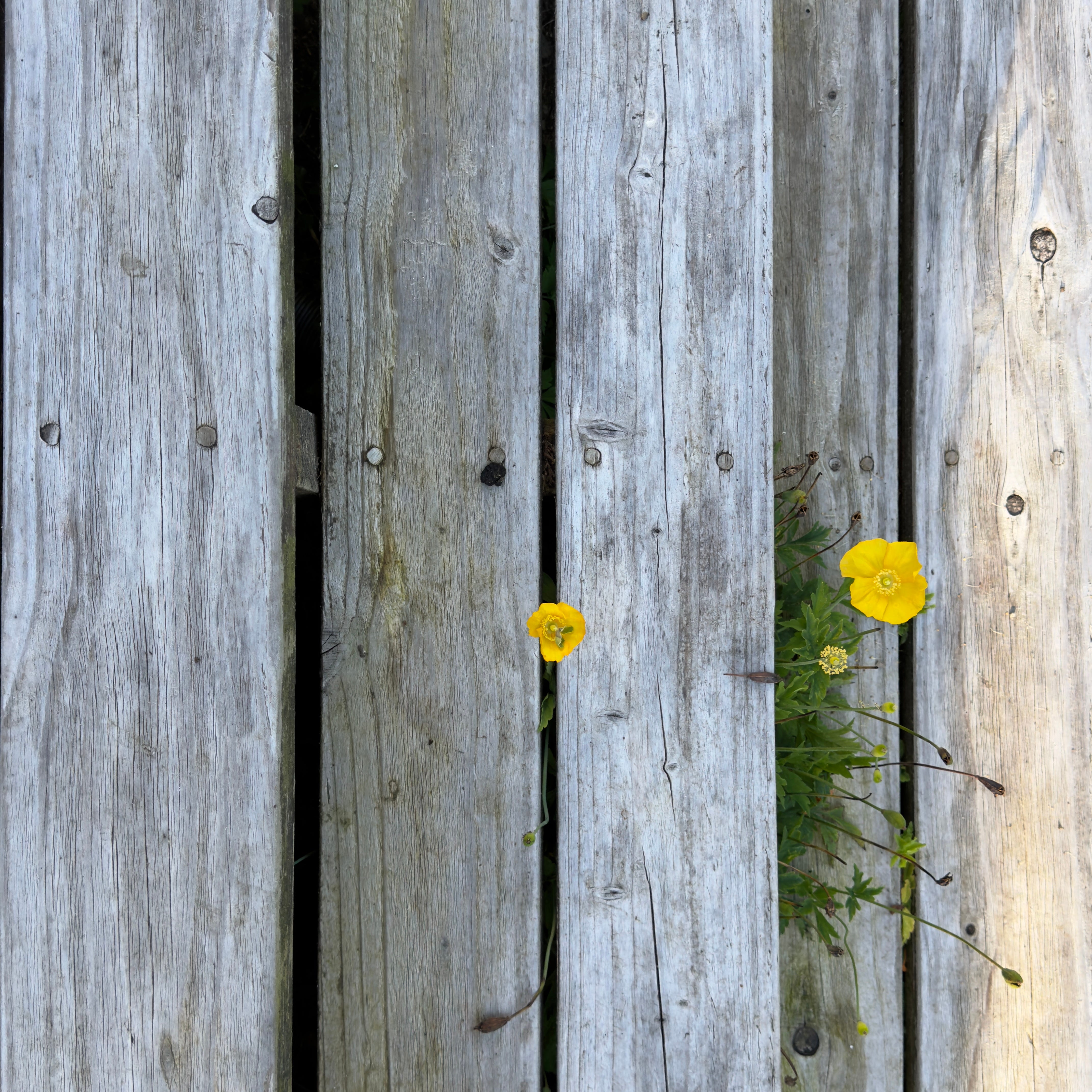
These poppies, pushing through a gap in the wooden steps outside my friend’s home. I nearly stepped over them.
Nobody told you to make those. Nobody liked them. Nobody even saw them. And yet something in you reached for the camera anyway.
That is your eye. That is what you actually notice when no one is watching and nothing is at stake. It is one of the most honest things about you.
Scroll back through twelve months and ask yourself a few quiet questions. What kept catching your attention? Colour, or the absence of it? People, or the spaces between them? The grand and dramatic, or the small and overlooked? Are there patterns you didn’t know were there? Subjects you returned to without realising?
You might find that your camera roll tells a story about your year that no diary could. Not the events, but the texture of how you moved through them. What stilled your attention on a difficult day. What made you stop when everything else was rushing past.
This is not about finding hidden masterpieces. It is about something quieter and more useful: recognising what you are already drawn to, before the noise of other people’s work gets in the way.
The comparison trap of social media is a closed loop. You look at work made by people whose highlights you are seeing, compare it to your own ordinary moments, and find yourself wanting. It is not an honest comparison. It never was.
Your camera roll is the honest version. It is unedited, unperformed and entirely yours. And somewhere in those twelve months of unguarded looking, there is the clearest picture of what kind of photographer you actually are.
That is worth twenty minutes of anyone’s weekend.
Thank you for your time today
Best wishes
Paul
A week or so ago I received an email from Richard Gardner, who had read my piece on the beauty of colour in black and white. He had a question that I’ve been thinking about ever since.
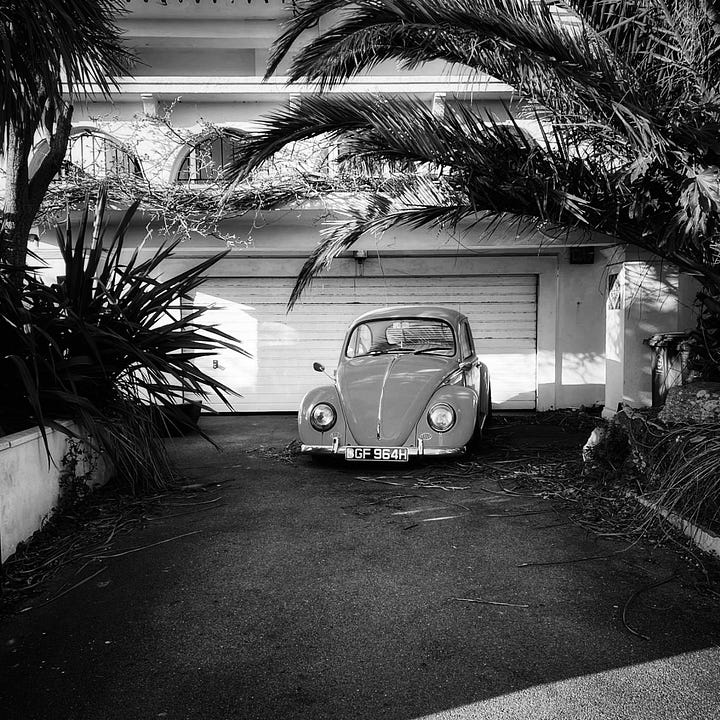
He had seen a blue VW Beetle parked outside a house framed by palm trees, the kind of scene that stops you mid-stride. He wanted to call the image Blue Beetle. But he was wrestling with something: if the colour is the whole point, does the image still work without it?
It’s a genuinely good question, and I think the answer tells us something important.
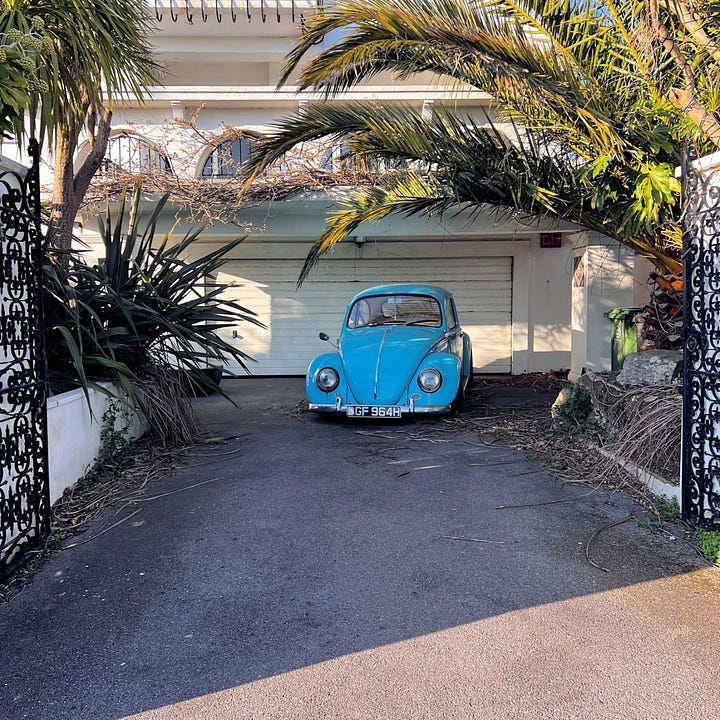
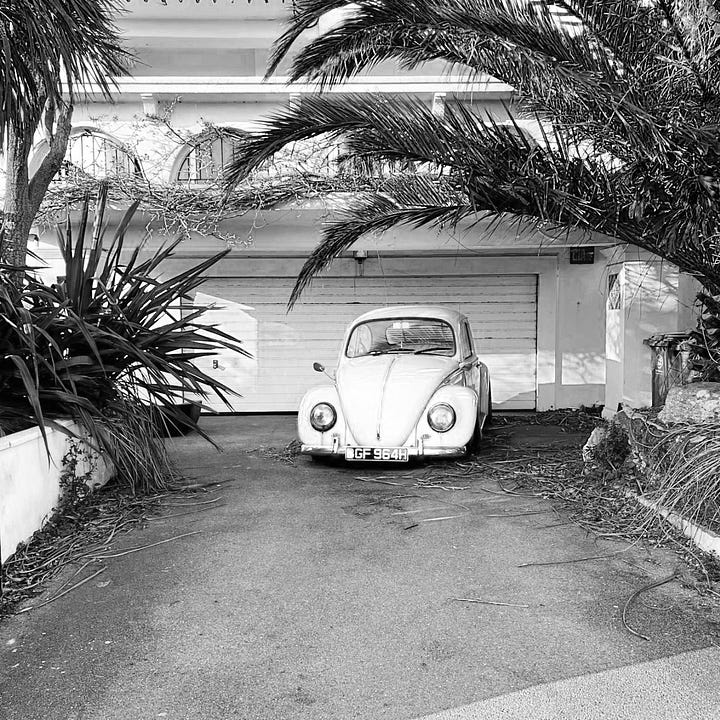
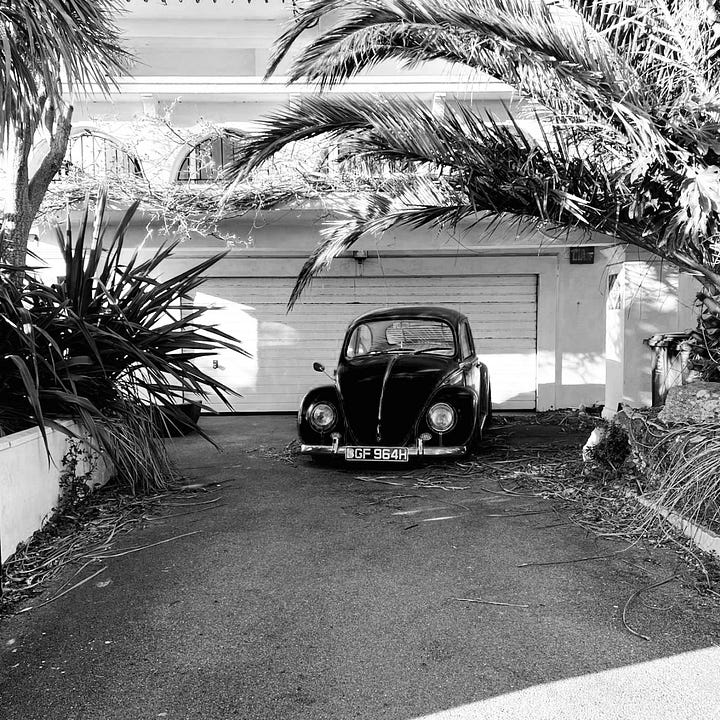
Look at the colour image first. That blue is extraordinary. Vivid, unexpected, slightly surreal against the weathered driveway and the wild palm fronds. The colour does real work here. It gives the Beetle a personality, a presence. You understand immediately why Richard felt compelled to respond to it.
Now look at what happens in monochrome.
This is where it gets interesting. Processing a black and white image through different colour filters changes how each tone in the original scene is rendered. A blue filter lightens blues and deepens reds and yellows. A red filter does the opposite, darkening blues and making them feel heavier, more brooding. A neutral filter sits between the two, rendering tones closer to how our eye perceives them in grey.
In the version processed with a blue filter, the Beetle becomes almost luminous, light and airy against the darker foliage. In the red filter version it darkens considerably, sitting more solidly in the frame, more mysterious. Both are valid. Both are different images, with different feelings, from the same moment.
And here is the thing about the title. Blue Beetle in black and white is not a contradiction. It is an invitation. The viewer knows from the title that colour existed here. Its absence becomes part of the meaning. You are asked to imagine it, to feel its loss or its memory. That is a more active relationship with an image than simply seeing the colour as given.
For me, the power of a black and white image with colour in the title lies precisely in that tension. The colour lives in the mind rather than on the page, and that can be more affecting than showing it directly.
So to answer Richard’s question: make it in colour and in black and white. See what each version asks of you. The colour image is joyful and immediate. The monochrome versions are quieter, more contemplative, and depending on how you process them, carry entirely different emotional weights.
Neither is wrong. Both are true. That’s rather the point.
For me, I will always lean to the black and white though.
To see more of Richard’s work his website has some compelling images.
Be guided through a day of mindful photography & the meditative process of Japanese Stab Binding, taking the handcrafted keepsake away.
An Invitation to Pause: Autumn, Stillness and the Art of Making.
September 30th 2026 0930 - 1700
Take a breath. Feel your body grounded, and let your gaze wander.
Join me for a unique, one-day immersive retreat within the sub-tropical soul of Trebah. This experience is a bridge between the wild, architectural beauty of the gardens and the quiet, grounding joy of creating a handmade book from the photographs you will make
There is a quiet magic that occurs in September. It is a time when the frantic energy of summer starts to fade, and the earth begins its gentle, necessary exhale. Here in Cornwall, as the air grows cooler, Trebah Garden undergoes a breathtaking transformation. Widely cherished as a sub-tropical paradise with a stunning coastal backdrop, this twenty-six acre valley garden offers a deeply immersive experience as the seasons shift. The dramatic canopies of exotic blooms give way to a rich tapestry of amber, rust, and gold. In Hydrangea Valley, late blooms cast clouds of china blue and soft white across Mallard Pond, while the spectacular champion trees begin to dominate the landscape.
We live in a world where we have become slaves to screens and timelines, constantly chasing the next thing. Mindful photography invites us to break free. It whispers, "Stop. Look. Feel." It is a space free of judgment, open to photographers of all abilities, whether you carry a camera bag full of specialized gear or simply an iPhone in your pocket. This day is not about technical perfection or rules; it is about your personal connection to the world around you.
Nature does not rush its transition; it transitions softly, inviting us to do the same.
Spend time looking through your phone photo roll and see what really catches your eye when you’re not overthinking your photography.
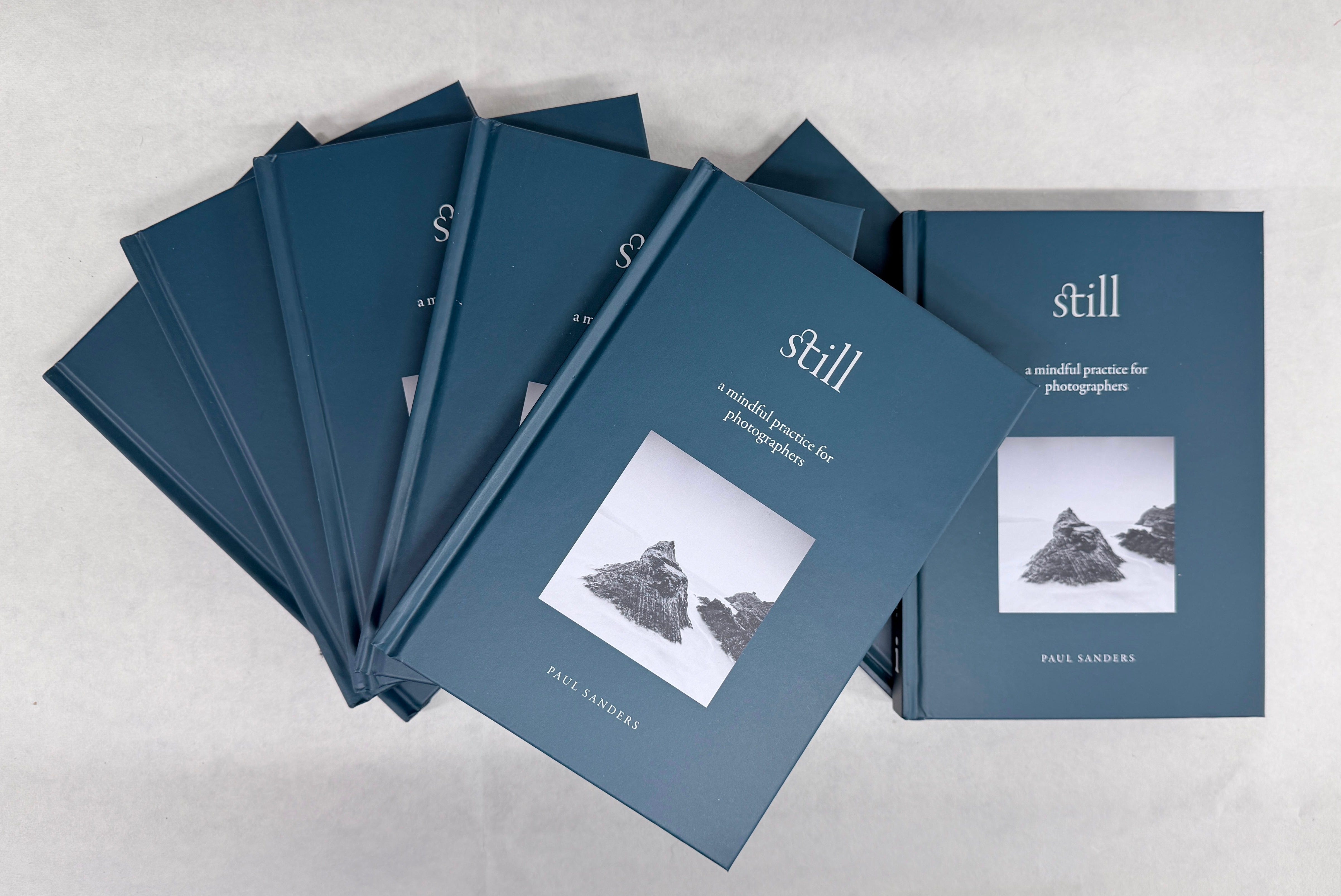
My first book “Still - a mindful practice for photographers” has been on sale for a couple of months now and is listed as a bestseller on Amazon and Waterstones in the UK - which I still can’t believe. The feedback has been incredible, I am so grateful to everyone who has ordered a copy. If you don’t have a copy yet it is on sale in most good bookshops and via numerous online book retailers too.
There is a German version too and in the US it is available from all good bookstores and The Getty Museum
“More than a photography book, Still is a must-have guide for anyone seeking calm and clarity in their creative life.”
Thanks for reading Discover Still! This post is public so feel free to share it.
No posts
Comments
Nothing yet. Say the first thing.
Sign in to join the conversation.