
fellas i’m ready to get up and try to thread the needle. i wanna get into it, man, you know, i want to spin a yarn of abstraction through the needle of protest. like, this might make no sense, but can i count it off? can i try to introduce it to your ear in case something pops?
i’m in your ear making no sense, like playboi carti

from our command stations here in 2025, the Protest Song is a recognizable Form.
a Protest Song will have direct lyrics, an appeal to the people, a singsong melody, us versus them narrative, chant-like refrain, maybe a vaguely inspirational choir in the last chorus. right ?
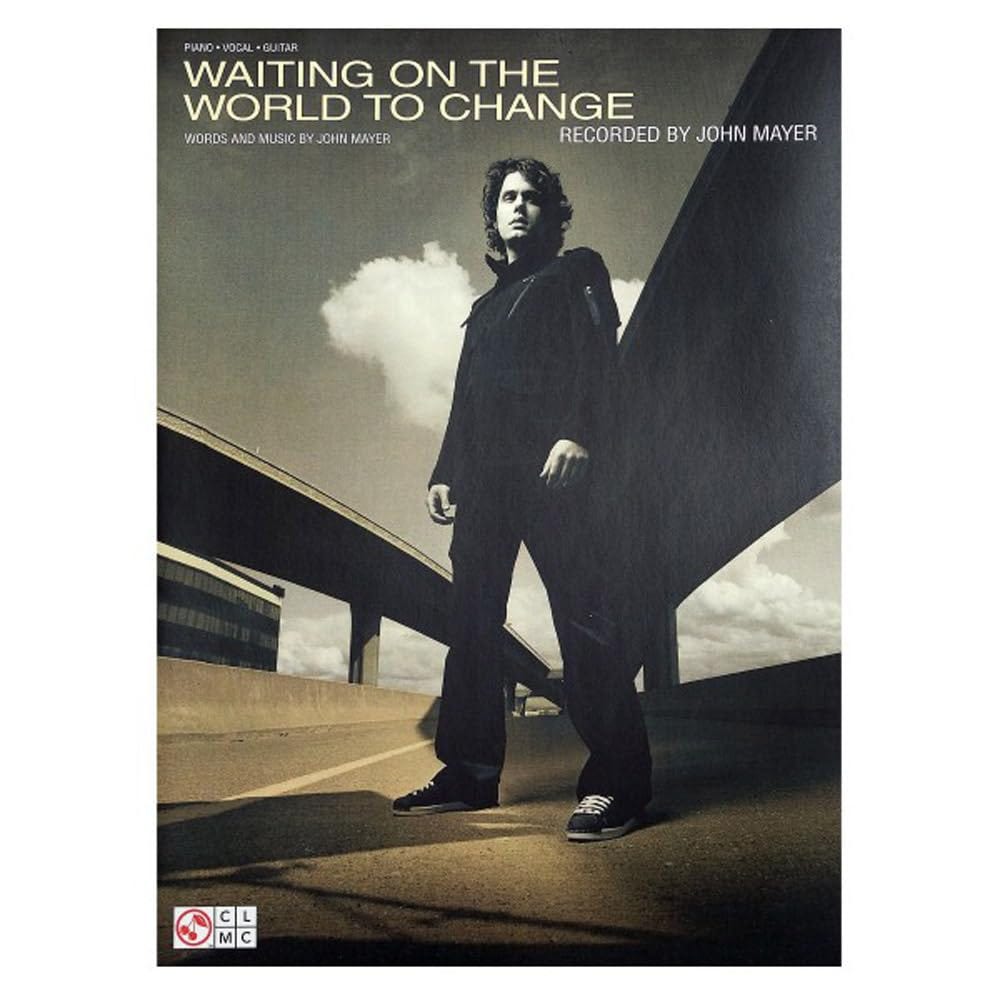
released by john mayer in 2006, at the height of the War On Terror, ‘waiting on the world to change’ is notable in the way it represents the form of a Protest Song — the husk — and none of the … corn? well, no — this song corny as hell. none of the … fruit? seed? none of the heart, i guess (total metaphor collapse, sorry everybody) …
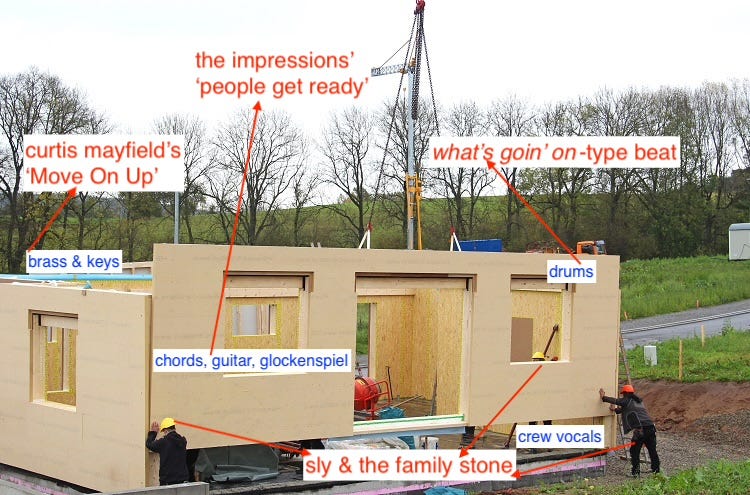
‘waiting on the world to change' is perfect in the way the writing embodies its own confusion, or perhaps self-mystification, at the level of Form. the signifiers of Protest Music, borrowed from a more idealistic age, carry the emotional lift. imagine a song without a single original component; a song, rather, stitched whole cloth from the swatches of five feel-good Protest classics :
chord progression, guitar, glockenspiel : the Impressions’ ‘People Get Ready’
the drums / groove : what’s goin’ on-type beat
brass & keyboards : curtis mayfield’s ‘Move On Up’
‘crew vocals’ backup vocals : sly & the family stone first album
even the guitar solo, where one might expect to find Mayer’s authentic voice, feels just like somebody else. double-tracked, lithe & surprisingly angular, it’s a prayer in the poignant spiritual searching voice of all things must pass-era george harrison.
mayer is a reverent curator, duly trying not to scuff the corners of his borrowed pieces. it’s interesting: which units he lifts wholesale off the palette (john mayer x fred meyer collab when?); which kernels he wants to GMO.
(kernel! goddamn it, that’s the word i was looking for. all husk, no kernel)
because … let’s talk about the lyrics. mayer is not exhorting us, Gandhily, to action and moral courage: ‘be the change you want to see in the world.’ he’s saying something different: ‘guys, maybe … wait on the change you want to see in the world.’
he’s not counseling, Impressionistically, that “all you need is faith.” he’s saying something different: “all you need is … wait.”
musically, mayer is a faithful traditionalist. a monuments man. a colonel in the preservationist corps. but when it comes to language, he’s an open floor plan guy. modernizes by evacuating the specifics, binning the spiritual components of his borrowed language. change is a big empty waiting room.
maybe i’m out here swinging at twenty-year old windmills for no reason. but ‘waiting on the world to change' haunts me. i remember, when it was inescapable on FM radio, the discomfort i felt identifying with the passivity of mayer's sentiment. because, damn:
the structures of power do feel so entrenched.
the threads that tie our private inmost convictions into what we, as a society, enshrine in law and commerce and culture do feel hopelessly knotted and twisted and frayed.
and shit, i kinda do wish it was the 60s, bc those documentaries make a strong case that highly photogenic direct action should add up to something.
maybe there's bravery and honesty in just saying it all out loud. sometimes i’ve felt this way about this song. nonetheless, it seems completely dystopian to deck these feelings of impatient (bored) righteousness (impotence) in the kingly raiment of an age when action and faith were airs that apparently you could still troubadour.
offering himself as heir apparent to this rich protest lineage, mayer is helpless like a rich man’s child (per another song & dance man).
in its internal contradiction and radical (if unintentional) honesty, this song is never too far from my mind. because ‘Waiting on the World to Change’ now feels ahead of its time in the hollow but quite earnest way it invites us to confuse aesthetics with politics.
folks, i’m re-reading these words. and i’m seeing the cynicism and the masklike irony that doesn’t quite hide my own despair and confusion. i want Songs to be different now. i want Music that asks more of us. i want Art that changes our world. every moment, but especially Now.
i think of messiaen and the ‘Quartet for the End of Time.’
written in a nazi prisoner of war camp, this music is the pure soul of protest with none of the form. what messiaen gives us is abstract. the music deals in colors and shapes; swaths and ribbons; vapor, geometry, pith.
it doesn’t tell you what to feel. and yet — i don't think you can listen to the clarinet aria of the third movement, abîme des oiseaux, without hearing a powerful registration of pain & injustice and a yearning for a different world.
like justice potter stewart, we know it when we hear it.
it’s fascinating that the first line of ‘waiting on the world to change’ is me and all my friends — we’re all misunderstood. maybe the fear of being misunderstood is the reason mayer is compelled to perform a bricolage of familiar cliches & prefab phrases, when he’s clearly capable of more.
do you ever feel, as a creative person in the 21st century, that you are afraid of your potential for abstraction? that abstraction is a liability rather than a gift? that the yawning cosmos of a language beyond words is a pop-up you must constantly be x’ing? because who today has the luxury to risk being misunderstood? in this way we have all become john mayer, waiting on the world to change.
but lately i’ve been thinking about how authoritarians fear abstract art too — not because it can be misunderstood, but because it communicates so perfectly.
because we know it when we hear it :)
take care and until next time —
d
No posts
Comments
Nothing yet. Say the first thing.
Sign in to join the conversation.