
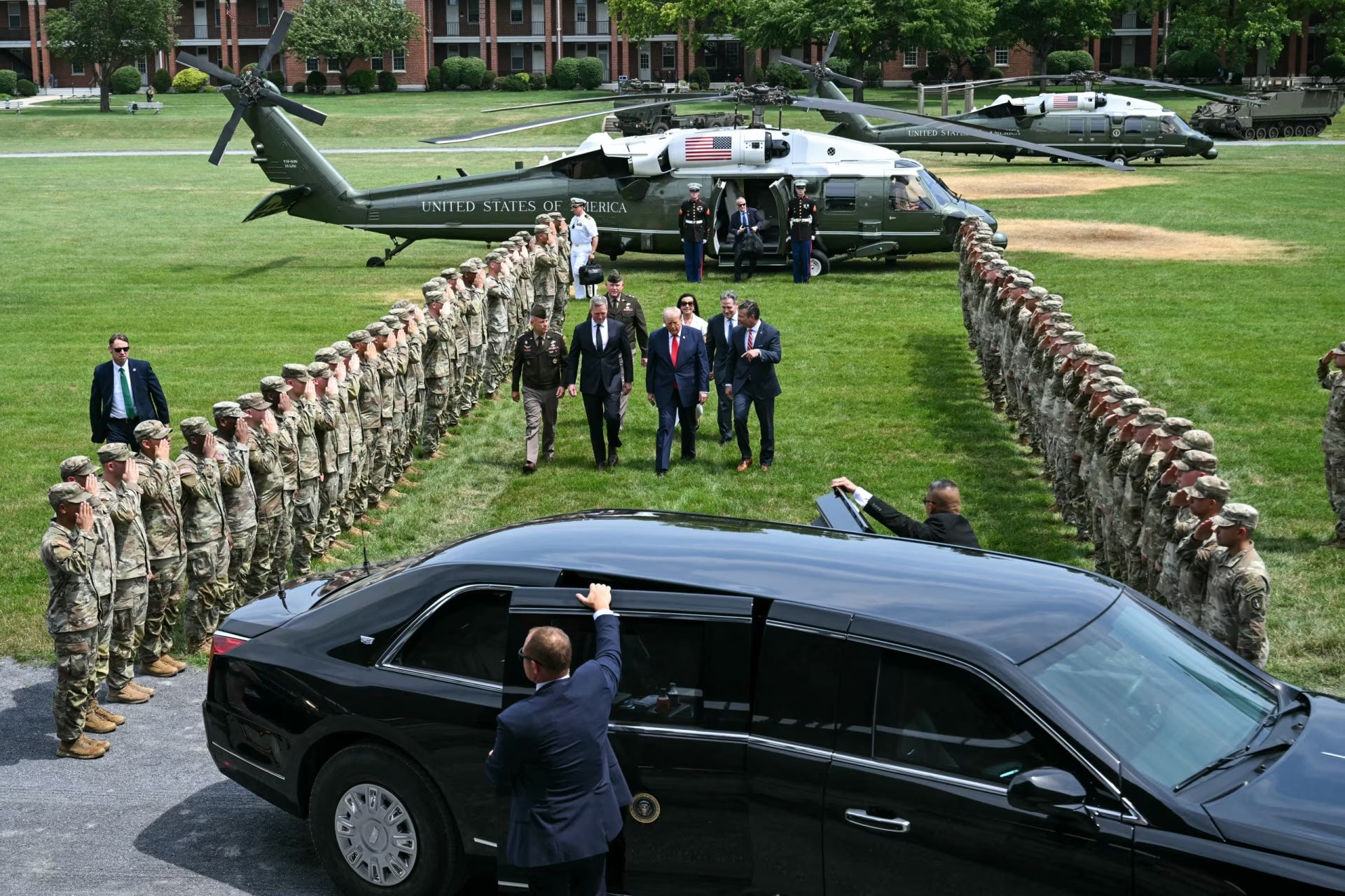
Why has President Trump chosen full-fledged escalation to respond to a few Iranian attacks on shipping in the Strait of Hormuz, rather than try to recover the 60-day ceasefire Memorandum of Understanding (MOU) reached in June?
U.S. forces yesterday (July 14) re-imposed a naval blockade on Iran, and U.S. Central Command has been striking targets in Iran almost every day since Trump declared the MOU over last week.
Nate Swanson, a former member of Trump’s Iran negotiating team, believes Trump is probably choosing to escalate to try to deescalate—but he doesn’t think it is going to work.
“My best guess is that this is a short-term ploy aimed at kick-starting progress on negotiations,” Swanson, who now heads the Iran program at the Atlantic Council, told me by email today. “Maybe he believes that if he can get a better deal next month, the short-term economic and political pain is worth it.”
“I think it is a very risky and low probability gamble, but nothing else makes sense,” he continued. “Otherwise, I don’t see a feasible pathway towards military victory, nor do I believe that we can military open the Strait of Hormuz against Iran’s wishes. All it takes is a few drones to keep insurers jittery no-matter what Trump says about the Strait being open.”
Gregory Brew, senior Iran and energy analyst at the Eurasia Group, is not sure the Trump administration has much of a strategy, and suggests that Trump is acting more out of anger.
“I don’t think the U.S. really has a strategy, but this is the most likely approach we see them taking – hit strategic targets in a general attempt to improve their overall position while trying (without success) to get Iran to back down on the strait,” he told me.
“I’m not sure strategy really factors into the U.S. approach,” Brew continued. “Trump is mad and his anger has led him to kill the [memorandum of understanding] MOU, without really considering what will come in its place. The Iranians do have a strategy, even if they are likely over-reaching. They are risk acceptant, emboldened, and feel that time is on their side.”
Escalation by both sides in near term
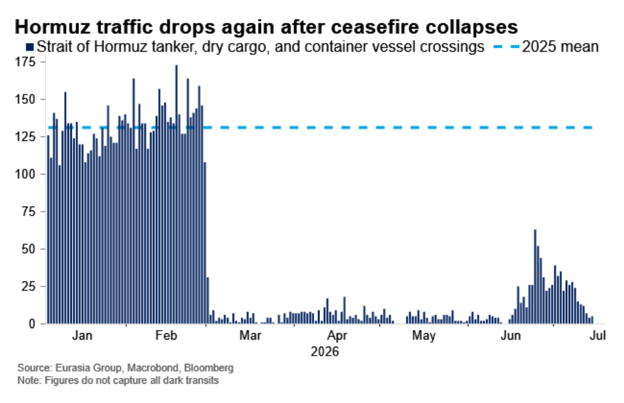
“Both the US and Iran are likely to maintain their aggressive postures now that the shaky peace is over,” a Eurasia Group analysis today forecasts. “Hormuz transits will fall, oil prices will rise, rounds of fighting will recur, and each side has an incentive to secure more decisive wins before pursuing de-escalation.”
“Iran won’t back down,” the forecast continues. “Iran wants its influence over the strait recognized, such that all traffic moving through the strait would need to coordinate with Iranian authorities—laying the groundwork for the eventual charging of tolls and/or fees. This ambition motivated recent attacks on shipping and has emerged as a key strategic objective for Iran’s leadership, superseding its interest in sticking to the terms of the June deal.”
Do you think the reported Israeli intel tip last week that Iran was allegedly trying to target him for assassination influenced Trump’s seeming souring on trying to get a deal, I asked Swanson.
“Maybe that’s part of it,” he said. “I think it’s more just buyers’ remorse on the MOU and trying to get better/firmer terms.”
“But it’s Trump—who knows?” Swanson added.
**
Comments
Nothing yet. Say the first thing.
Sign in to join the conversation.