
Sold out of Ashtead and Kraft Heinz.
New buy - Constellation Software.
Added to Greggs “AGAIN” and Roper Technologies.
February was a lousy month for the software sector. These asset light, high growth and highly cash generative businesses faced significant stock price pressure due to fears of AI disrupting their business models. It’s been dubbed the “SaaSpocalypse” or “AI Software Meltdown”.
The biggest fear for software companies is that AI could potentially make their current business model obsolete by doing work faster and cheaper than humans. An example would be software companies who price “per seat” charging every person who uses their tool. Investors worry that if AI allows one employee to do the work of ten, they will lose 90% of their paying customers. Other fears stem from the advanced simplicity of coding which can make customers simply use AI to build their own custom tools for free instead of paying for expensive subscriptions.
I believe these fears a valid, especially for more horizontal software companies. For those not familiar with horizontal software, its versatile applications designed to serve a wide range of industries addressing common business functions such as CRM, HR, accounting, or communication.
As you will see in this months monthly update, I’ve taken advantage of the sell off acquiring two software companies. However, these companies differ to Horizontal Software. Instead they work with small to medium sized businesses usually in niche industries in small markets and develop bespoke applications that are embedded into their daily operations. Otherwise considered as Vertical Software providers.
I’m no software expert by any means but I can really see the appeal within vertical software which are deeply embedded throughout customer workflows and daily operations. The data, complexity and speciality these solutions obtain serve as a defensive barrier against the current fears. Added to this is the customers reluctance to switch to an unproven competitor or by using AI. In my opinion, I believe these vertical software companies will leverage AI into their products to offer customers even better solutions.
The two businesses that have been added during this software turmoil are Roper Technologies and Constellation Software amounting to 16% and 13% respectively. Both have been on my watchlist for some time but have always traded at a hefty premium. I couldn’t pass on this potential opportunity to acquire shares in these high quality companies.
Here’s this months portfolio.
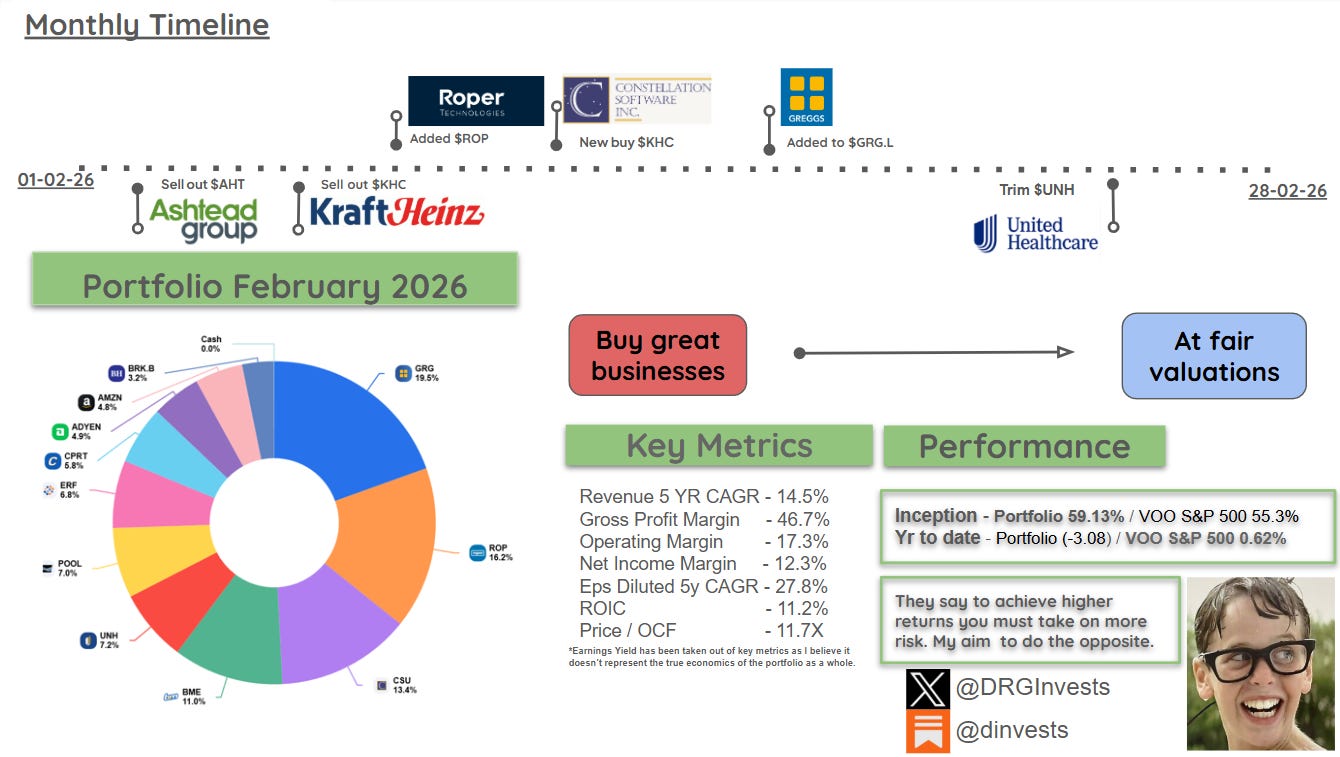
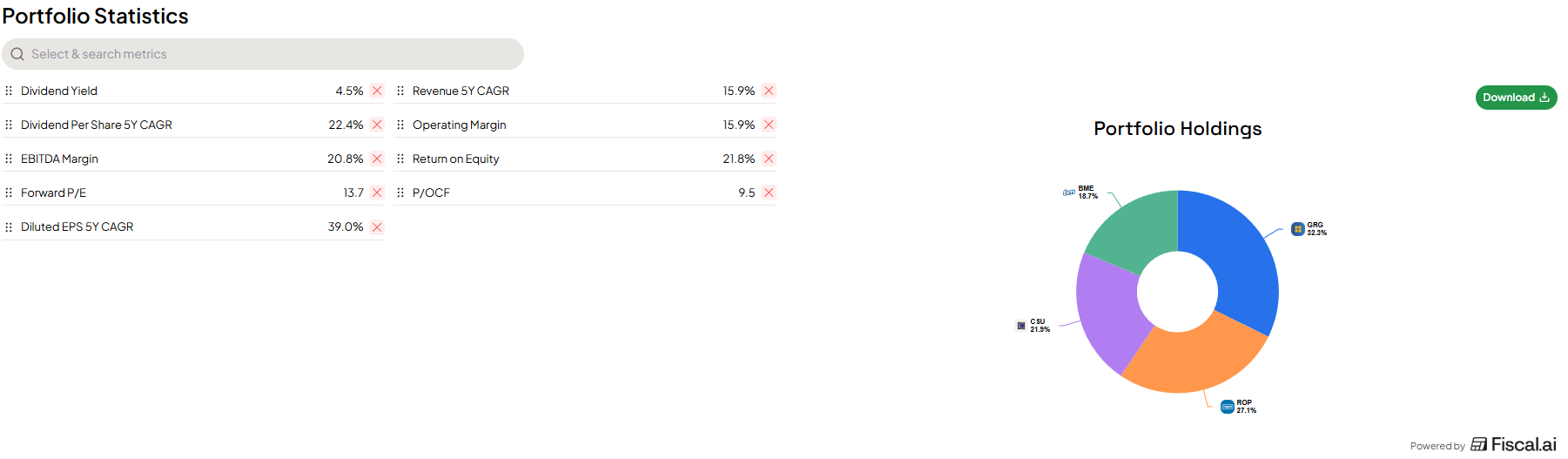
As you can see, the portfolio is again further concentrated to just 11 businesses with my top four holdings accounting just shy of 60%. These four include Greggs, Roper Technologies, Constellation Software and B&M. This is an unusually large allocation which isn’t common for me. I usually prefer 15-20 positions with more weight targeted towards my higher conviction bets.
As an exercise, I made a portfolio of just these four stocks which mirrored their weighting in my portfolio to take a look at the weighted average. On a valuation perspective these four businesses are trading at a forward P/E of 13.7x and a P/OCF of 9.5x. CAGR on EPS over a five year period is 39% and they offer me a dividend yield of 4.5%. None have overleveraged balance sheets and look to have bright futures.
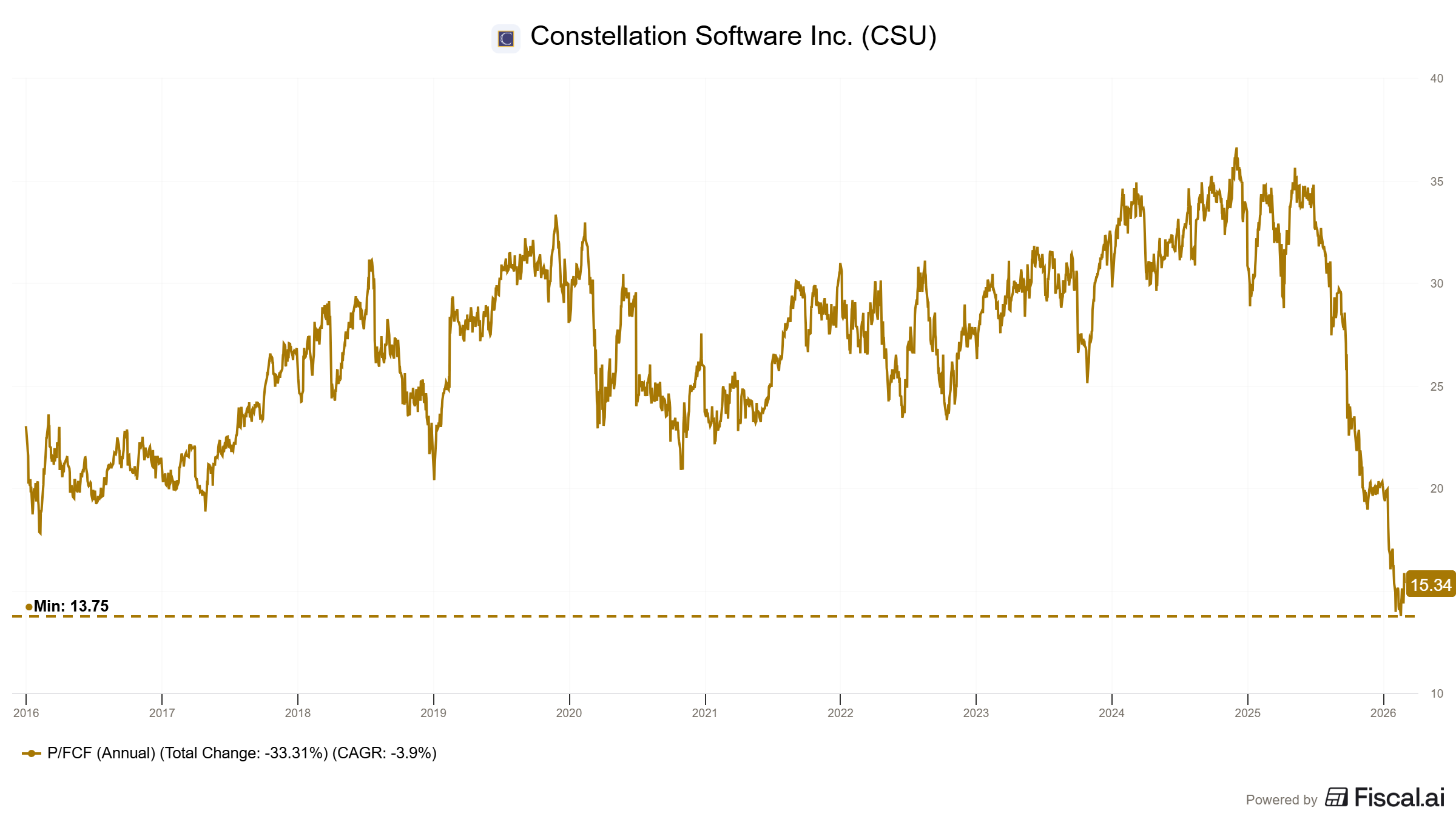
One business was added during the month which was Constellation Software. This business has been on my watchlist for multiple years but has always traded at a huge premium deterring me from buying, a rule I always avoid regardless of business quality. Many might have noticed when I buy, I usually purchase meaningful amounts that will make a difference to performance. I don’t dabble into positions. If a company reaches a price target and the current IRR assumptions are attractive and I believe they are of high quality then I load up. Currently $CSU accounts for 13% of the DInvests portfolio and 3rd in rankings behind Greggs and Roper Technologies.
Constellation Software is a serial acquirer of vertical software businesses. They run a decentralised operating model giving management full autonomy of their respective businesses, usually management of these small niche companies are the founders who have continued to stay on and run the businesses after being acquired. From the very beginning only up until recently after he stepped down for health reasons, $CSU was run by their Founder Mark Leonard. He built the business from the ground up creating a compounding fly wheel with a culture that is built to last. I have no worries regarding current management as executives are generally hired from within the business and are already familiar with the culture and ways of operations.
Constellation still looks expensive on a profit basis due to financial standards. Their business model of acquiring many small businesses requires $CSU to deduct non cash items in the income statement, primarily amortization of intangibles. However, cash is the best measure of valuation here and currently its trading at decade low multiples sitting at a 6.5% FCF Yield.
Other additions where Greggs and Roper Technologies. I’ve added Greggs many times over the months and have written about them extensively. For those new to this newsletter here’s a link to my latest Greggs article.
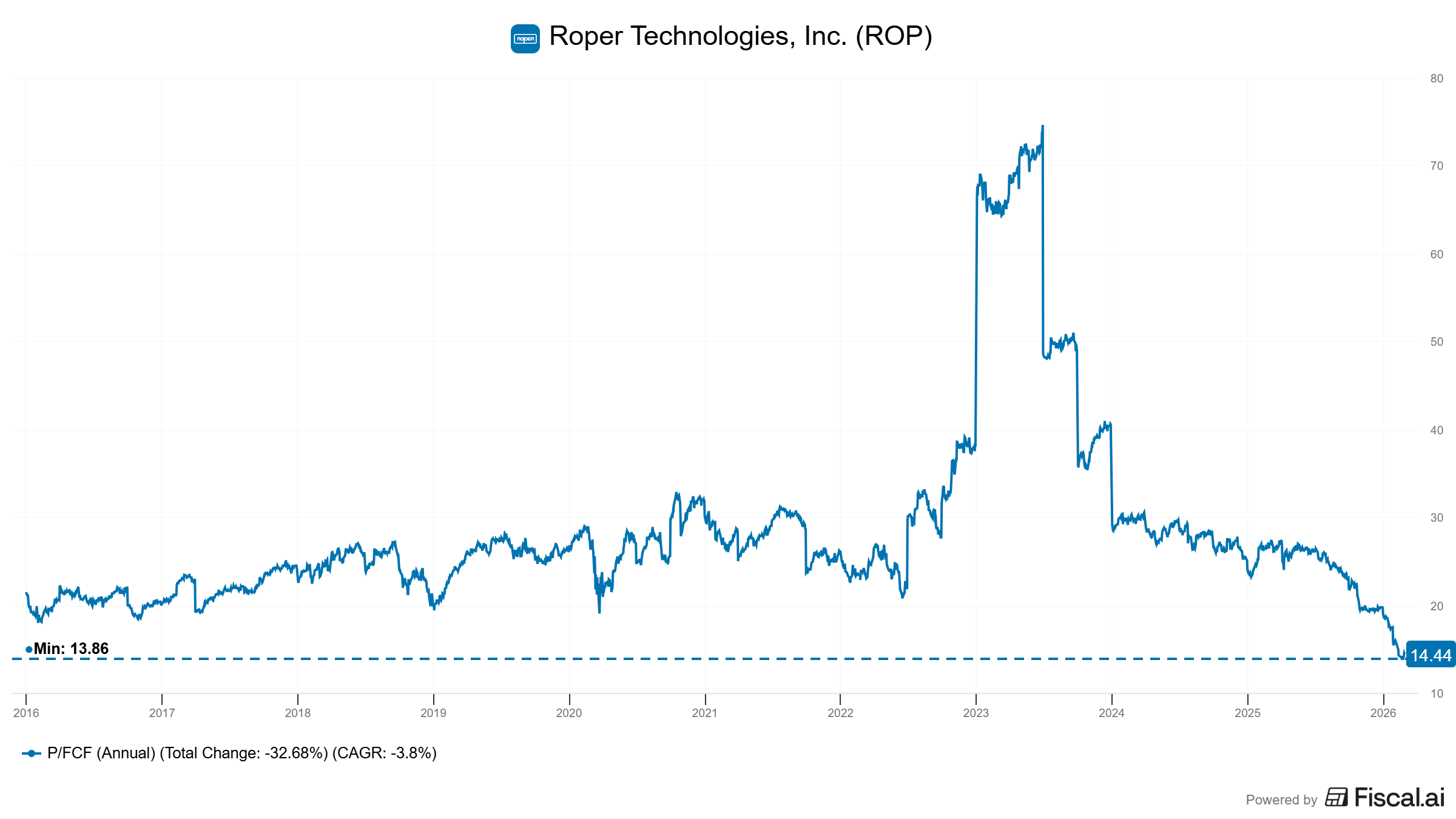
Ropers thesis mirrors Constellations. The difference being Roper targets much larger businesses, usually over $1Bn dollars. In a typical year Roper will acquire anywhere between 1-3 significant businesses whereas Constellation will acquire over 100 in a typical year but of much smaller size. Once again Roper is trading at decade low FCF multiple currently sitting at 14.4x or a 6.9% yield.
The huge advantage of these two companies is that they require minimal maintenance capex making them highly cash generative compared to other asset heavy companies.
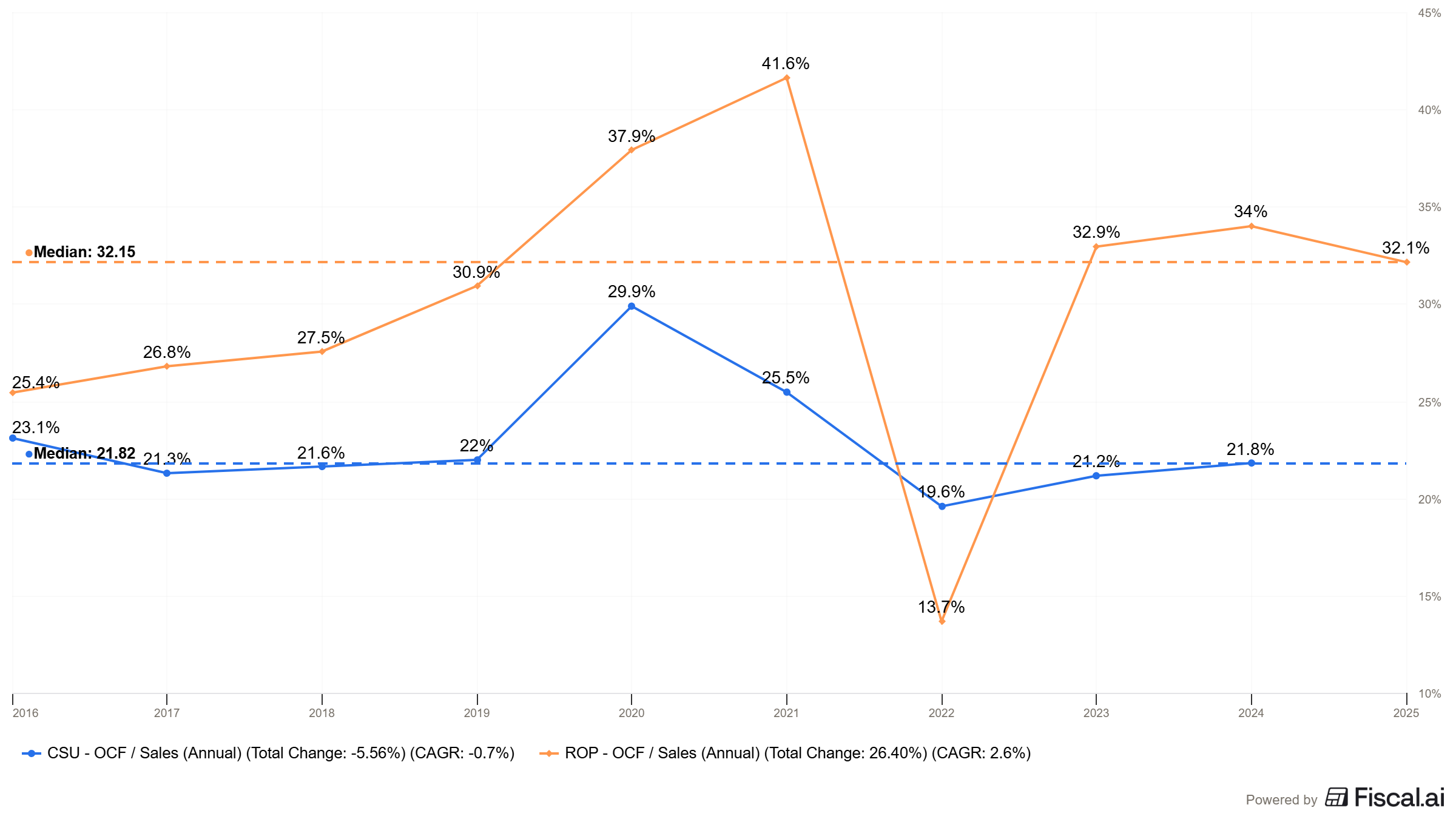
To put it into context, for every $1 of revenue Roper earns translates into $0.32c of Cash flow on a median basis over the past decade. Constellation is also attractive here with $0.22c for every $1 of revenue. (Image below) Showcasing the cash generative power of these businesses would be to look at other companies with lower FCF yields. For example, a business with a 10% FCF yield on sales would have to grow its sales 300% more than Roper to produce the same growth in Free Cash flow. The reason I’m emphasising this is the importance of benchmarking over other possible companies with the investing universe. Currently I find both highly attractive.
Kraft Heinz and Ashtead Group where sold during February. One, a thesis breaker and the other to make funds for my purchases during the month.
My initial Kraft Heinz investment was based around their plans on splitting into two separate companies. My original thesis was based on the planned separation with potential hidden value in their taste elevation category. Here, I believed the market was undervaluing this area of the business and also their commonality with competitor McCormick who are rated highly by the market. In their earnings release, management confirmed a “Pause” to the planned separation with focus now on investing more into R&D and marketing. They also highlighted a loss in volumes yet again with plans on lowering pricing to capture back market share. I still believe the business is of good value and offers an attractive dividend yield that’s well covered but unfortunately I had to cut ties as the thesis was broken.
Ashtead Group was sold purely to fund my Constellation Software purchase. I will continue to watch Ashtead from the side lines going forward and I might add again in the future.
The portfolio declined -1.8% during February to a total loss of -3.08% YTD compared to the markets increase of 0.5% a difference of 358 basis points. The decline was mainly due to Adyen, Pool Corp and Roper. Adyen’s dramatic fall after earnings was the biggest contributor.
Since inception the DInvests portfolio is still ahead of its chosen benchmark by 381 basis points. While I believe the market is fully valued and arguably overvalued, I feel this outperformance deserves more recognition considering I’ve only ever owned Meta, Google and Amazon out of the big 6 which are driving these amazing market returns. Now I only own one …….Amazon.
Whilst I publish my performance monthly I know it doesn’t really mean much. Performance should be taken over multi-year periods and this is my focus. Looking at my portfolio today with the high quality and what I believe to be trading at attractive valuations is well positioned to challenge the future performance of the market. The DInvests portfolio is well positioned with excellent businesses with large moats.
Thankyou
See you in the next update.
DInvests
Disclaimer: I have a beneficial long position in the shares mentioned in this article. My buys and sells aren’t recommendations. I can’t guarantee the accuracy of the information provided in the newsletter. All statements express personal opinions and information gathered online. Any estimates, forward looking statements and assumptions made in this newsletter are unreliable. Always do your own research. Any information in this newsletter is for educational and entertainment use only and should not be taken as investment advice.
No posts
Comments
Nothing yet. Say the first thing.
Sign in to join the conversation.