
“Nothing encapsulates that more clearly than the expectation that women should endure avoidable pain during gynaecological procedures. If the NHS is serious about tackling medical misogyny, this has to change.”
Sign the petition here
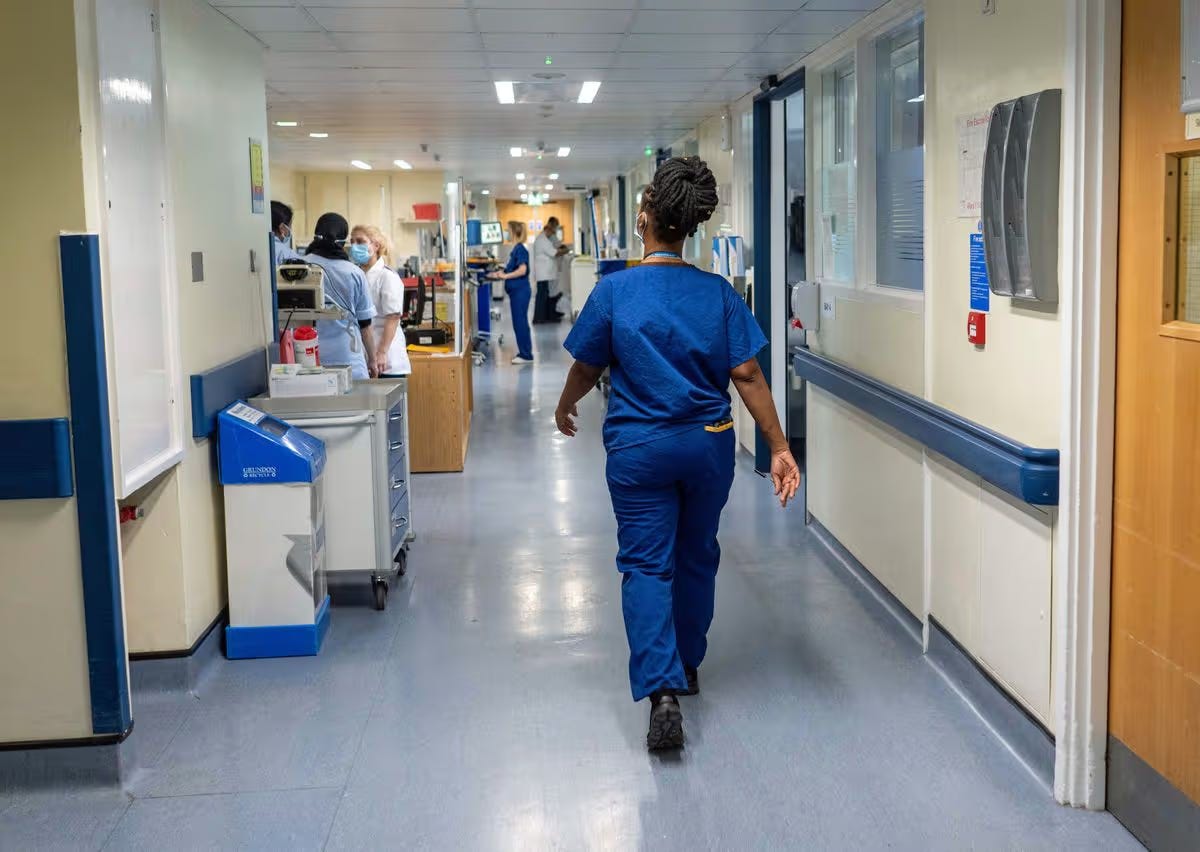
NHS gynaecology waiting lists are also growing faster than any other speciality (Image: PA)
In January last year, after over a decade without access to the NHS, my friends, who are both nurses, encouraged me to seek help from a GP ‘to get my health sorted out’. One of the issues I wanted investigated was my gynaecological health.
I was shocked as to how I was treated from the start. I want to make this very clear - this is not a regional care issue. This is an NHS issue. I had moved from England to Scotland and the treatment I received was no different.
I will spare the details but the treatment by the GP (a woman, I hasten to add) left me traumatised, even though she referred me on to the hospital for assessment. The behaviour of the Gynaecologist I was subsequently referred to (a man) was effectively abusive.
I had been left in severe pain and bleeding from a ‘simple internal examination’. I had refused this exam and yet the male gynaecologist did it any way. What would we call that under any other circumstances than a medical one?
After submitting a complaint, I was referred for a hysteroscopy examination.
I refused the hysteroscopy.
I am very glad I did.
I read this in the Daily Mirror today - the story is an expose of the treatment of women across the UK who are being put through this excruciatingly painful procedure without pain relief or, as in my case, a smidgeon of decent modest care and respect.
Having refused this ‘procedure’, the NHS just walked away from me, I have had no further treatment or referrals. The message is clear: submit to this humiliating and very painful procedure; or go without any support. There are no alternatives. If you are lucky enough to go private, you cannot guarantee that will be any better than the NHS.
Medical misogyny is literally killing women. It has to stop.
I have written today about Andy Burnham’s moves to change Social Care and welfare benefits - well, this is one area he could make a huge difference to people’s lives, and stop women becoming disabled or dying - women are the care-takers of the family. Loss of a mother, a daughter to care for her elderly parents or a wife to support her husband, will have a devastating life-changing effect on the family and probably result in mental health issues, physical health decline and yes, eventually, a reliance on welfare support when the sole income earner can no longer function or retain a job.
It’s not just women that deserve better, our entire society does too.
Story by Niamh Kirk
The Daily Mirror
Screaming in pain, denied adequate pain relief, and passing out in the chair - this is the traumatic reality for hundreds of women subjected to routine NHS gynaecological procedures.
While health concerns naturally bring anxiety, women across the UK are highlighting the true extent of the agony they are expected to endure just to stay healthy.
At the centre of the controversy is a hysteroscopy - a procedure used to examine the inside of the womb. A petition calling for an end to the “barbaric” manner in which the procedure is typically carried out has amassed nearly 70,000 signatures from desperate women demanding urgent reform.
Classed as a minimally invasive procedure, the procedure involves passing a thin telescope (a hysteroscope) through the vagina and cervix into the womb, which is pumped open with fluid. It is routinely carried out in an outpatient department, to investigate abnormal bleeding, diagnose health conditions, or remove polyps, fibroids, and tissue biopsies.
Patients are usually awake and told the procedure will cause only “mild discomfort,” but for thousands of women, the reality has been excruciating.
Emma Jane Taylor, a 53-year-old from Oxfordshire, was told she needed a hysteroscopy to investigate a polyp. She assumed it would feel similar to a routine smear test.
“They said it wasn’t going to hurt but I just couldn’t complete it,” she told the Daily Mirror. “It felt like there was someone inside me with knives cutting through my body.
She blacked out, after being overwhelmed by nausea and pain. “The pain is just beyond what women are told to expect. “We’re told it’s a routine procedure, but in reality there is no way. It’s degrading and it feels like you’ve been butchered. I was so embarrassed and ashamed.
“Women are being gaslit into having these types of procedures that are so painful.”
Emma Jane’s nightmare is echoed by 52-year-old Dawn Lord, from Hartlepool. In 2023, Dawn attended what she believed was a routine attempt to review tests results, only to undergo an unexpected hysteroscopy without any informed consent or warning.
“Nothing was explained. They just said I’d feel a few cramps, but that was the biggest lie,” Dawn told the Daily Mirror.
“I was screaming in pain and ignored. Even when my husband asked for pain relief, we were told there wasn’t any available - and then I blacked out.”
Afterwards, staff apologised for failing to warn her about fainting, but added that “most patients can tolerate it.”
The experience left Dawn shattered. Left bedbound for a month afterwards with heavy bleeding, severe depression and PTSD, she sought therapy to process the trauma.
“My therapist told me my memories connected the lack of control from a traumatic control to the lack of control in the procedure and that’s when the PTSD happened,” Dawn added.
Determined to help others, Dawn launched a support group called Hysteroscopy Trauma, which now has over 200 members sharing their experiences. Unlike other internal examinations, such as colonoscopies and gastroscopies - patients having a hysterescopy aren’t offered sedation as standard practice.
Instead , women are advised to take over the counter medication like paracetamol or ibruprofen before arriving. During the procedure, some are offered nothing more than a stress ball to squeeze, while electro-surgical tools remove tissue, and nurses attempt to make light conversation.
“One of the nurses was just chatting about holidays while giving me gas and air,” Dawn said. “I couldn’t chat about holidays - I was in too much pain.”
Recent research led by the University of Reading analysed 4,644 posts on the parenting forum Mumsnet, which showed a chaotic postcode lottery in how patients are being treated across the country. Susanne Cromme, lead author of the study, told the Daily Mirror that pain management was “completely unstandardised across NHS trusts.”
“Every hospital, every clinician just does what works best for them, rather than one standardised approach with set pain relief protocols and informed consent procedures,” Susanne said.
“Currently, it’s very binary. You either go in with paracetamol that you have to take yourself before the procedure, or you’re offered a general anaesthetic, which is quite extreme. But there’s research coming out of Chelsea and Westminster Hospital where they’ve been researching conscious sedation for hysteroscopy, and they’ve got a great set of data.”
The findings mirror a searing report by the Commons’ Women and Equalities Committee, which slammed widespread “medical misogyny” and a systemic failure to take women’s pain seriously. It found women suffering from conditions like endometriosis, adenomyosis and heavy menstrual bleeding frequently have their agonising symptoms “normalised” and their “pain dismissed” - forcing many to leave careers, relationships, or even contemplate suicide.
Organisers of the petition are now calling on the Secretary State for Health to overhaul how hysteroscopies are delivered across the NHS. The three focus points include:
Advanced training in pain medicine for all NHS hysteroscopists
Clear written information given to patients before procedures, detailing the risks and benefits and explaining that local anaesthetic may be painful and ineffective against the severity of pain from cervical dilation, womb distension
Dedicated funding to ensure patients can choose between local anaesthetic, conscious sedation, or general anaesthetic before the procedure begins
Justine Roberts, founder of Mumsnet and Gransnet, said: “This research makes clear that too many women are still experiencing severe pain during hysteroscopy, and that problem is compounded by unclear information, inconsistent pain relief and a lack of proper consent.
“These are not one-off failures - they form a repeated pattern and that’s exactly what Mumsnet’s medical misogyny campaign is highlighting: systemic failings in women’s healthcare.
“Nothing encapsulates that more clearly than the expectation that women should endure avoidable pain during gynaecological procedures. If the NHS is serious about tackling medical misogyny, this has to change.”
Sign the petition here
No posts
Comments
Nothing yet. Say the first thing.
Sign in to join the conversation.