
Something surprising I learned after joining The Explorers Club and spending time around people who are in the business of exploration (in many shapes and forms), is that people who are obsessed with space, are also obsessed with the ocean.
This seemed strange to me at first. I am an ocean lover, but I was never a space junkie. The idea of an undiscovered expanse of nothingness, black holes, entire universes that may look exactly or nothing like ours, and may or may not contain aliens…. That terrifying, infinite unknown freaks me out.
The ocean, on the other hand, feels like home. I was born on an island in the Mediterranean, Cyprus, the same island Aphrodite is fabled to have emerged from the sea-foam, fully-formed. I was a water-baby, happy to splash in a sink, dive in a pool or snorkel for hours. The comfort of water feels almost completely opposite to the far away terror of deep, dark space.
But scientific understanding does not match my personal experience. The ocean, which covers 71% of the Earth’s surface, has much more in common with space than first meets the eye.
The ocean, for all the benefits it provides (seafood, shipping, coral reefs, scuba diving and 50% of the oxygen we breathe, to name a few) is still relatively shrouded in mystery. Humans have mapped less than 30% of the ocean seafloor (and observed only 0.001%!!). If this seems shockingly low, it is. Consider that we have mapped 100% of Mars and the moon’s surface, with more firsthand human observations recently logged thanks to Artemis 2. Deep in our own ocean, things get complicated. The extreme darkness and pressure makes things complicated and costly. The use of sonar and autonomous vehicles is speeding things up, and the Seabed 2030 Project hopes to get to 100% by 2030.
Scientists estimate there may be between 700,000 and 1 million species in the ocean, two-thirds of which have yet to be discovered. And the deeper you go, the funkier the animals get. There is the carnivorous harp sponge (like a deep-sea venus flytrap) and the giant phantom jelly that truly looks like a space ship (complete with a starry night sky). So much exciting work on deep-sea life is being done by Monterey Bay Aquarium Research Institute (MBARI), documenting but also raising awareness about life in our oceans through science communication. They even created a Pokemon style game for deep sea creatures!
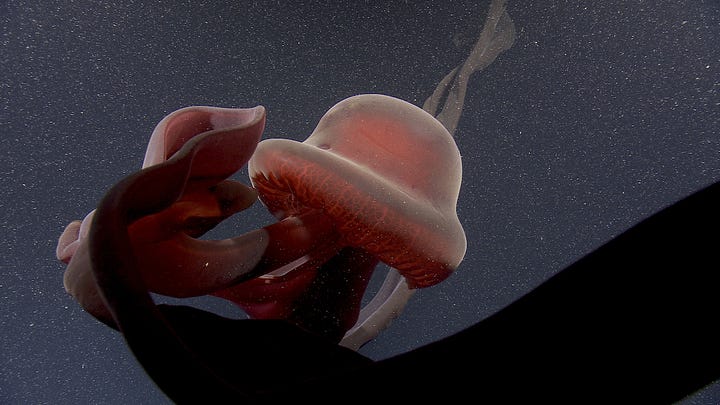
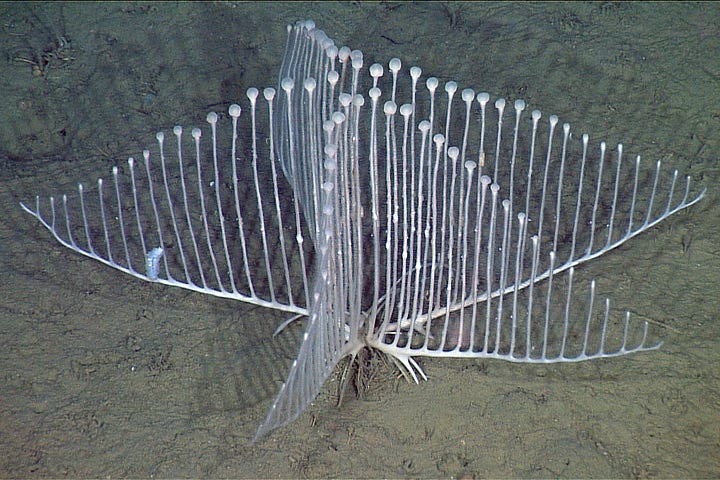
And this type of research has led to important discoveries. In the 1970s, a submersible expedition found something truly surprising. Microbes in the pitch dark who are able to convert chemical energy into organic nutrients in a process called chemosynthesis. Previously unfathomable, this discovery changed our understanding of what conditions are necessary for life to emerge, offering a new hypothesis for Earth’s origin of life and expanding the potential of finding life on other planets. You don’t need to go to space to find aliens: you may just find them deep in our oceans.
As the world watched the recent Artemis II expedition to the moon, I was thinking about all the new space debris entering Earth’s orbit. Space junk (yes, thats the technical term), is all the thousands of inactive satellites, spent rocket parts and tiny fragments of paint, rock and metal that are orbiting Earth. This junk, even the small stuff, is traveling so fast it essentially becomes a mine field of speeding rockets and bullets. This is a danger for space expeditions and other orbiting satellites, and the challenges increase exponentially as more debris is added.
The big fear is something called the Kessler Syndrome. It describes a cascade where debris hits a space object, creating new debris, setting off a chain reaction of collisions that eventually closes off entire orbits and damages huge amounts of satellites. This has yet to happen, though in 2009, two satellites did collide, creating debris fields that now have to be carefully avoided by other satellites and the International Space Station. Scientists suggest that even if we stop launching everything tomorrow, existing debris would keep colliding and fragmenting.
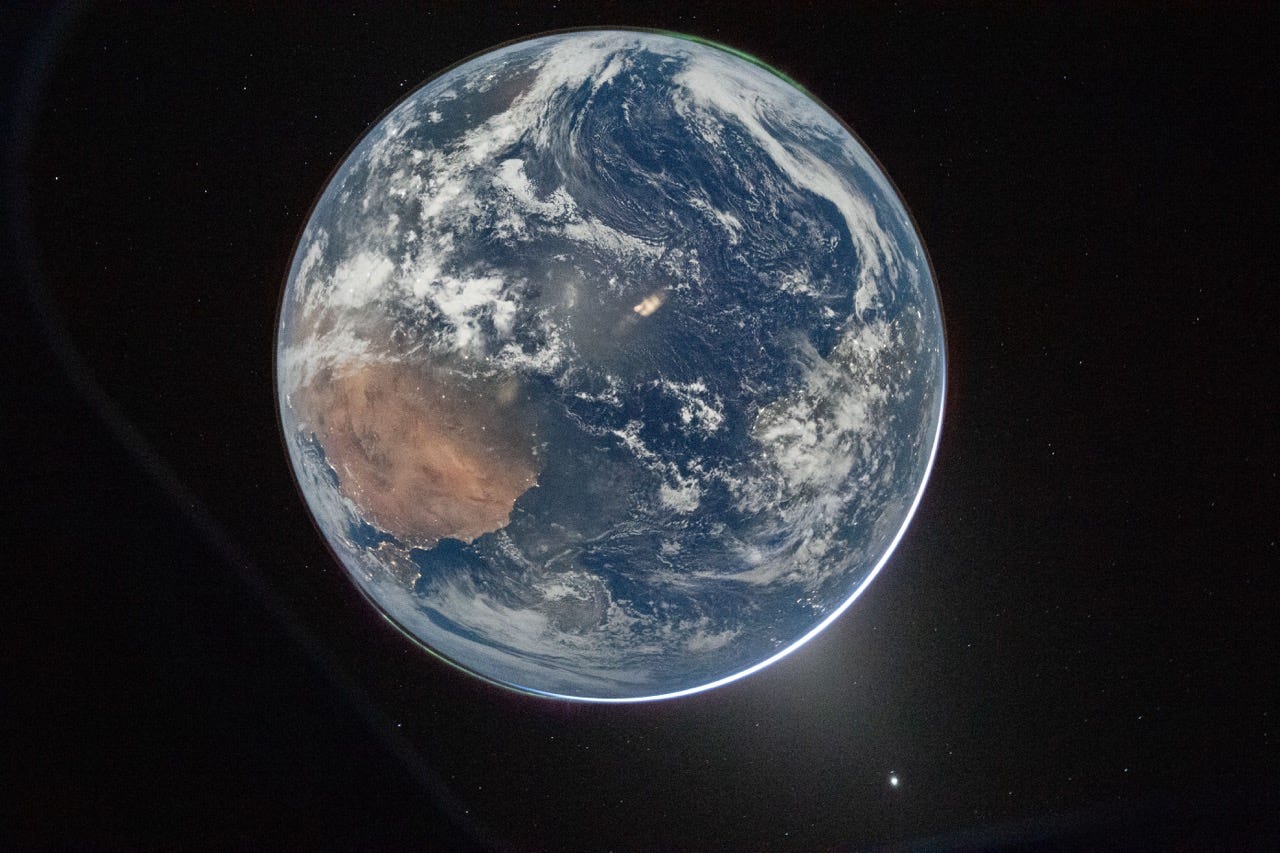
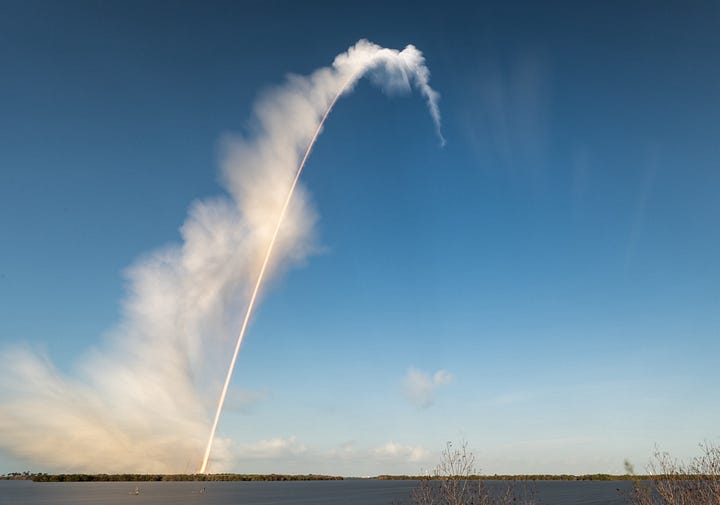
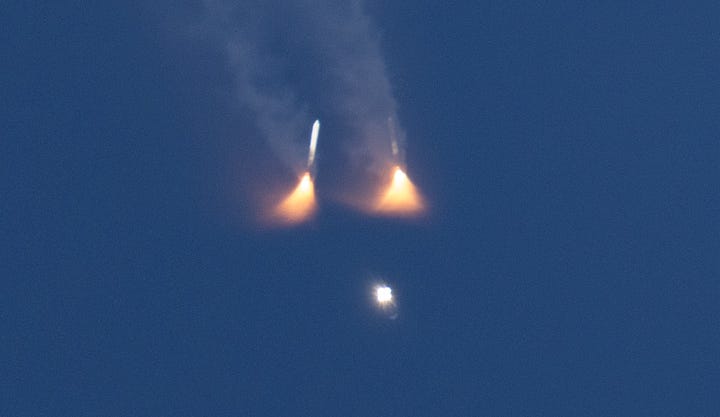
When researching space debris, it was uncanny how much it parallels with the problem of ocean pollution.
First, the compartment. A vast, mostly unexplored, seemingly infinite expanse not owned by a single company or country. So big, would it really make a difference if there was some waste floating around?
Second, responsibility. Due to the lack of ownership and jurisdiction, no one actor is responsible for managing, monitoring or cleaning up the pollution. In environmental terms, the tragedy of the commons. In practice, an endless blame game.
Third, fragmentation. In both space and the ocean, debris fragments into smaller and smaller pieces. Harder to track, but still dangerous. In the ocean, microplastics are sinking to the seafloor. In space, microfragments can ‘sandblast’ satellites, spaceships and the International Space Station (ISS).
For both problems, we are now facing the consequences of pollution while increasingly recognizing that action is necessary to stave off catastrophe.
Despite the scale of the problem, space actually has surprisingly good regulatory precedent and may offer a blueprint for how we can handle ocean pollution.
The Outer Space Treaty of 1967, ratified by over 100 countries, is one of the earliest examples of preemptive international environmental governance. It established that space must be used for peaceful purposes, that countries are responsible for damage caused by their space objects, and that harmful contamination must be avoided. Importantly, its built on the “polluter pays” principle, the idea that the party deploying a space object is liable for any damage it causes.
More recently, the European Space Agency (ESA) introduced the Zero Debris approach, with the goal of making space operations debris-neutral by 2030, with more than 100 organisations and 12 countries participating. Innovative space cleanup solutions have been proposed, and are at nascent stages of deployment. The RemoveDEBRIS mission in 2018 ran testing of various proposed solutions, including a net, harpoon and dragsail and Japan’s Astroscale led a debris monitoring mission 2024. Significant debris removal operations have yet to happen but a first satellite removal mission, aptly called ClearSpace-1 is scheduled for 2029.
Like ocean cleanup, space cleanups are costly, technically complex, and few countries or companies are eager to go first. But a threat was identified, documented, and brought to the international table. Countries agreed on the scale of the challenge and potential for future harms, and committed to seeking collective solutions.
A waste problem was identified, and the threat was documented, and countries came together to seek solutions. Although the problem has not been ‘solved’, there has been dedicated effort and international agreement on the scale of the challenge and the importance to collectively seek solutions.
We are still waiting for this moment with plastic. The United Nations Global Plastic Treaty was meant to be that instrument: a binding global agreement to manage pollution across its full lifecycle, on land and at sea. Negotiations are ongoing and in the meantime, hundreds of millions of tonnes of plastic have already entered Earth’s waters, fragmenting into microplastics and becoming even more difficult to manage.
The framework for space junk was developed in anticipation of a future crisis. When it comes to plastic pollution, we are squarely in the middle of the crisis (and it’s only getting worse), and we are still missing a critical international regulatory framework.
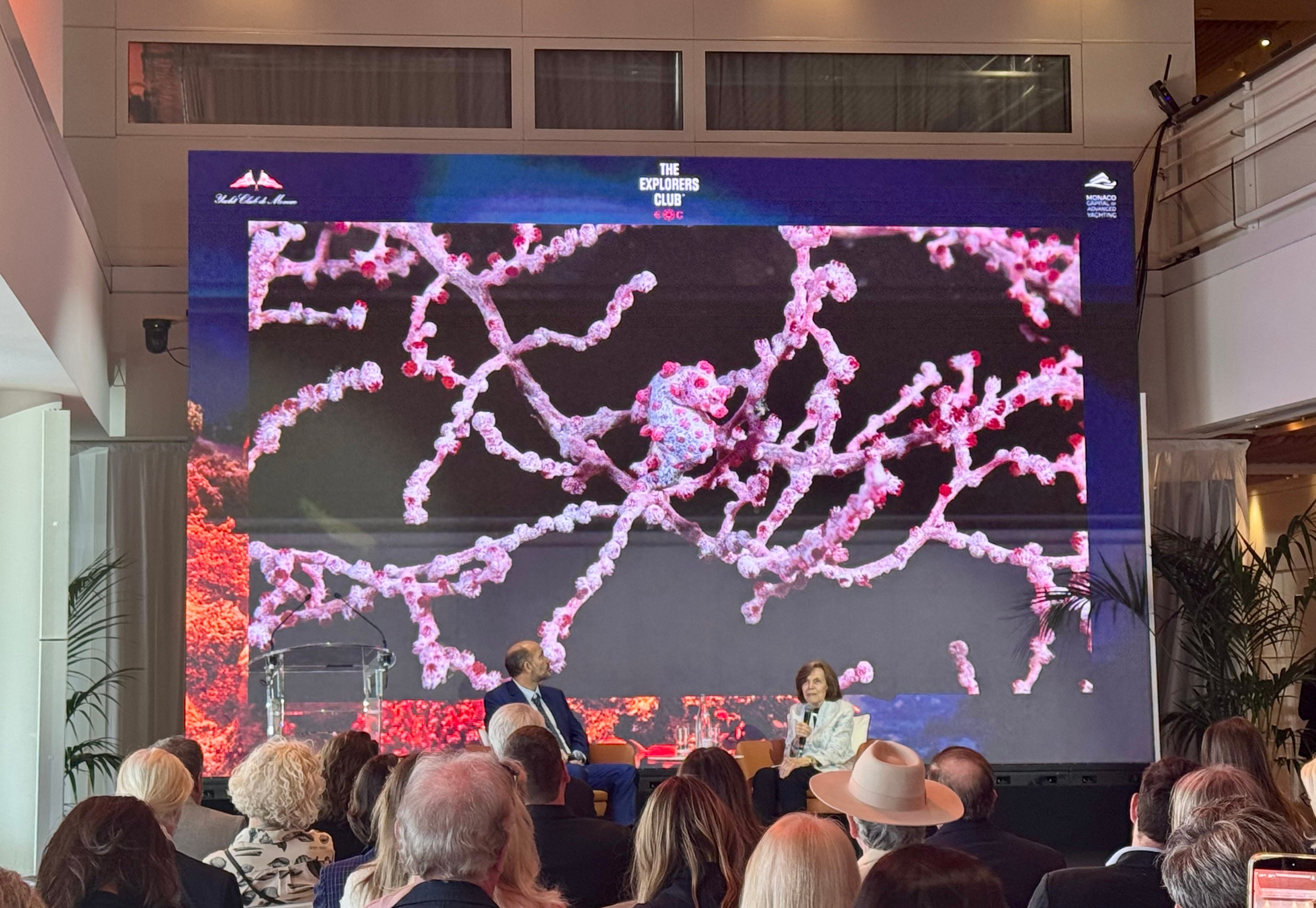
I recently attended an event called Day of Exploration in Monaco, and a theme that consistently came up in every talk and conversation was a deep love for our world (and universe). And I was reminded that love drives action. We protect what we love. It really is that simple.
There were many photos of my first love (the ocean) at the event. Orca whales in the Arctic, tiger sharks in the Maldives and ancient shipwrecks in the Mediterranean. Her deepness, Sylvia Earle with Hussain Aga Khan in front of his pictures of alien looking seahorses. The space talks, I’ll admit, left me less moved. There are only so many shades of grey a person can appreciate. But as a scientist showed images from deep sea vents, alien creatures floating in inky black skies, the connection between space and the ocean became more clear.
The deep ocean and deep space aren’t opposites, they are the same kind of unknown. They are both dark, vast unexplored territories full of promise and wonder. People are drawn to explore them because they know that understanding is the first step to protecting.
I came away from the event still an ocean person, but I do think I’ll look at the sky a bit differently now, with a little less fear and a little more awe.
No posts
Comments
Nothing yet. Say the first thing.
Sign in to join the conversation.