
One topic that seemed to get brought up in every conversation this holiday season, with friends and family members, boomers and Gen-Z alike was AI. I don’t remember this being such a popular topic last holidays, showing just how much this technology has inundated our lives across generations.
My journey with AI feels like an old-fashioned rollercoaster. You start off chugging skyward, the view of the world expanding in an exhilarated climb. Then, you zoom downwards, much faster than you rose. The momentum from the drop carries you forward on dips and turns as you whizz along. As the momentum dies, you slow and find yourself back where you started, in a dizzy equilibrium with the world.
My use of AI started slowly but quickly found itself into all aspects of my life, work and relationships (hello, AI therapist). Before I knew it, I was sipping the AI kool-aid and turning to ChatGPT before using my brain in many, often unnecessary, situations. The exponential increase in efficiency, the expert wordsmithing when I had writers block, the kind, but firm friend when I had a dilemma. I was sold! Then the cracks started to show. First, was the completely made up scientific articles. Again and again, my AI friend would send me the perfect source for a citation I needed. The journal was legit, the authors I recognized, but click the link and I would get a 404 error page. The article didn’t exist, my friend had lied to me. ‘Oops, you’re right, let me find another one’. Thanks Chat, but please don’t do it again. Despite repeated pleas with my robot companion, the false citations continued and my frustration spiked.
I also found it miscounting when I asked it to simply count the words in a paragraph. Over and over again it gave me the wrong number. It was then that my trust seriously crashed.
The next dip came from the now infamous em-dash. The long hyphen found in almost every AI response, but rarely used by humans in everyday writing. When reading a novel, the pages are chock-full of em-dashes, but before ChatGPT, I never saw them in normal communications. It was too much time to type two dashes and it frankly looks strange to attach the dash to the letters before and after—like this. After learning about the ChatGPT em-dash, I began seeing it everywhere. In student assignments, research copy, Substack essays, LinkedIn statuses, even a thoughtful WhatsApp message from a friend. It freaked me out to think about how much of the text I was consuming was written (or at least polished) by AI. I can’t unsee this dreaded dash and its made me question my own relationship with AI.
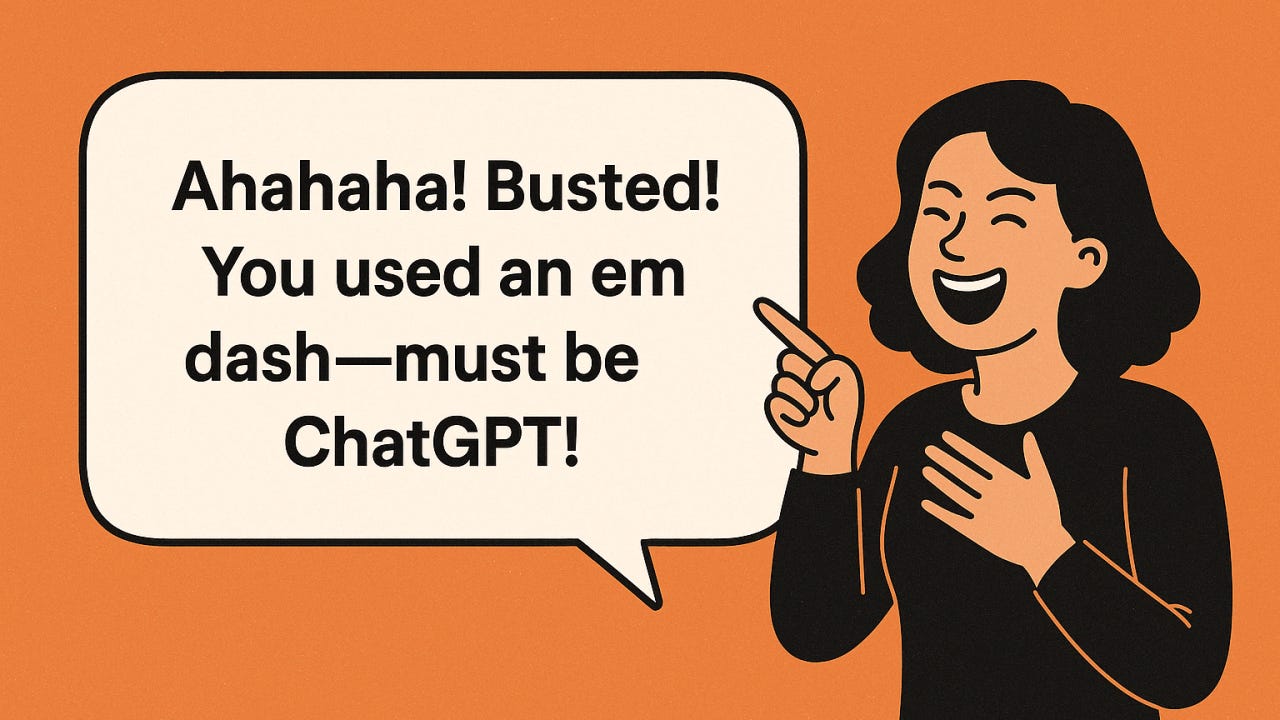
Last year I launched my Substack, and ChatGPT was a godsend. It was my editor, my brainstorm pal and most importantly, my cheerleader. It was incredibly peppy and positive and had glowing reviews of my newsletter idea, my blog outlines and my writing. I was bashful and buoyed and it honestly was a big reason I managed to publish this newsletter, Ripples to Waves.
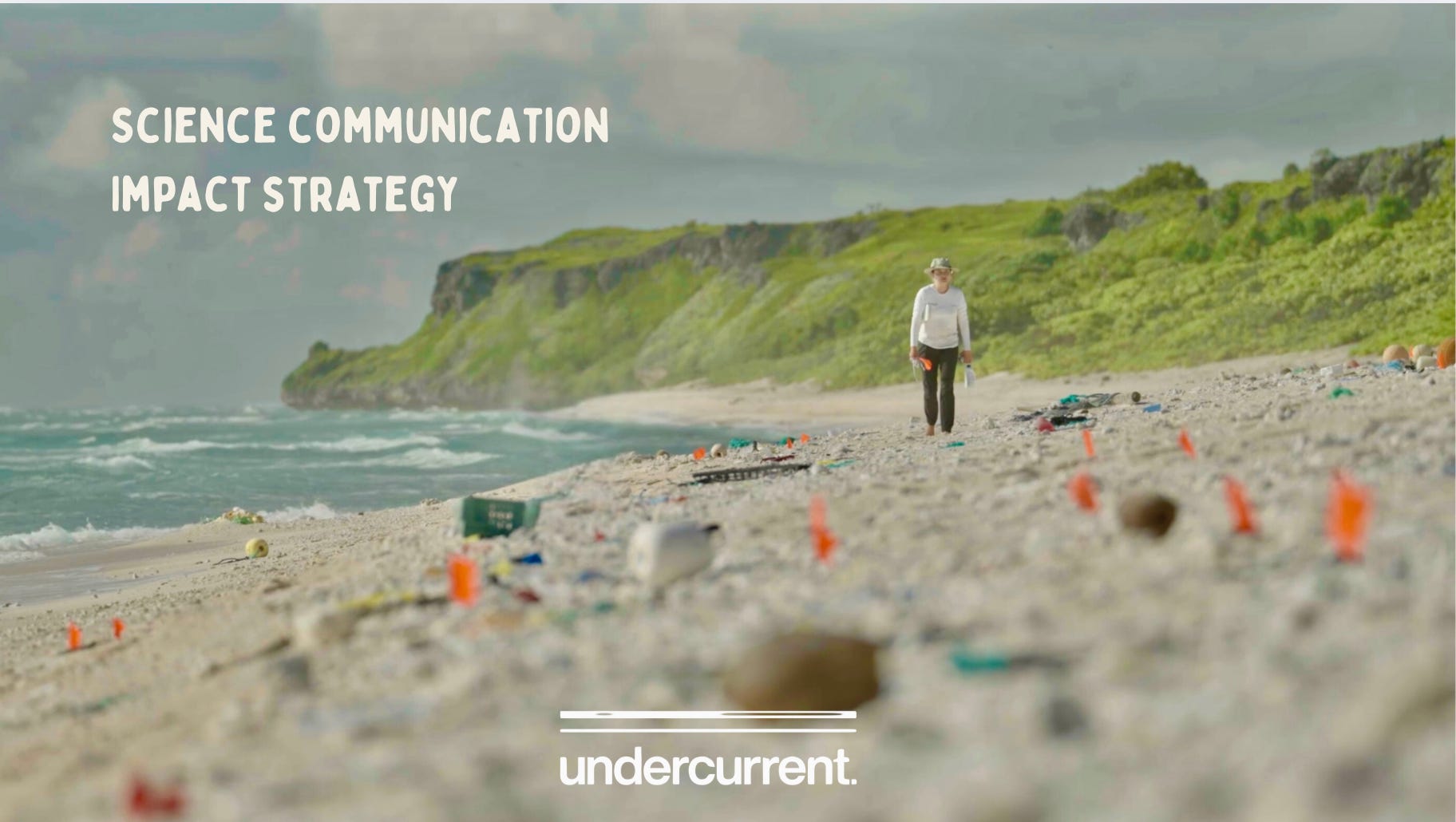
But it was not the only reason (and definitely not the main one!), which was the mentorship and support I received from Luke, Linzi and my cohort of the Undercurrent program. This program, which focuses on developing skills for strategy and stoke, led to important lessons about marketing strategy and planning, and my mentors encouraged me to begin my communication journey and ‘find my voice’.
I would not have started this newsletter without Luke and Linzi, but I’m also not sure I would be writing to you if I didn’t really have ChatGPT in the beginning. I used it to confirm that my ideas were good, that my writing was interesting enough and it really helped me figure out the logistics of setting up a Substack and improving my website.
In the beginning, I always plugged my ideas into Chat for feedback, and it would respond with full fledged essay outlines, suggestions for alternate content or spinoff pieces. I was enamored by these responses. Chat would often suggest a sentence or paragraph so pithy and human, I felt it had taken my voice and improved it.
But then I started to question, were these quippy sentences and paragraphs objectively better? Or were they just made by an algorithm who has ingested literally everything ever published on poetry and prose? A tool that has embedded into its mathematical formula the tips and tricks writers spend decades learning on narrative and engagement.
I found myself re-reading my own ‘Welcome to my Substack’ email, half written by me, half by Chat. I read some sentences, clearly run-ons, clearly my own, which felt human and messy and true. I read others, which felt almost too polished, subtle alliteration, an almost forced emphasis on ‘humanity’ and ‘realness’. I decided it was time to edit the AI out and temper my relationship with this tool.
But my curiosity was piqued. Do we as humans recognize AI writing? Can we pick out a piece that is oddly mechanical or polished, can we feel it in our bones, especially for content that is being sold as personal or philosophical?
So let’s conduct a little experiment. For the following two reflections, one was written purely by me, with a normal amount of editing. The other, I plugged the general idea into ChatGPT and asked it to give me some options for 300 words on the topic. I chose one and copied it below (and removed the tell-tale em-dashes, dead giveaway!).
Let’s test your AI-radar. The topic is “Home for the holidays, wrapped in plastic”.
Home for the holidays always begins the same way: the door, the familiar smell, the immediate sense of slipping back into an earlier version of myself. But this year, as with most years, what strikes me first isn’t nostalgia, it’s packaging. Plastic layered on plastic. Food wrapped not once but twice, sometimes three times, each layer quietly justifying the next. Cheese sealed into perfect squares. Vegetables encased like fragile artifacts. A trash bin already filling before anything has been cooked. No one remarks on it. That’s the point. Plastic has become so normalized that it barely registers as material anymore. It’s background infrastructure, invisible until you stop to look. And once you do, it’s impossible to unsee. This isn’t about blame. These are thoughtful people, careful in many ways. They compost. They recycle, mostly. They care about the world their children will inherit. But care has been outsourced to systems that promise cleanliness, safety, convenience. Plastic performs care on our behalf. It signals responsibility while quietly displacing it. I notice how quickly love and logistics intertwine here. Feeding people is an act of generosity. So is making things easy. Plastic thrives in that overlap. It thrives in moments when no one wants friction, especially not during the holidays, when peace is prized and critique feels like intrusion. And yet, this is exactly where the problem lives. Not in abstract supply chains or distant factories, but in kitchens like this one. In good intentions scaled up by industrial design. In systems that teach us that protection always requires a barrier, and that the barrier should be disposable. Being home reminds me that plastic pollution isn’t an external crisis. It’s intimate. It’s familial. It arrives wrapped in tradition, sitting quietly on the counter, asking nothing of us except that we don’t look too closely.
During my layover in Salt Lake City, a wave of fast casual nostalgia washes over me. So many salad bars, burrito spots and semi-healthy bowls on offer that I can’t get living abroad in Europe. I walk the length of the carpeted terminal, killing time and savoring the choices, before settling on a local Tex-Mex chain that I remember from a High School visit to Utah. I plug my order into a screen (no humans necessary!) and my name pops up on a monitor under the ‘Being Made’ column. I watch a woman make a salad, she moves in and out of vision as she doles various toppings into my bowl, a plastic bowl. I see her scoop a tiny amount of guacamole into a tiny plastic cup which she slaps a plastic lid on. She does the same for a teeny scoop of corn salsa. I shudder. The plastic lid is next, then the plastic bag. I jump forward to protest but its too late. I accept the bag and turn to find a fork. My only options, unsurprisingly, plastic. I get what I need and find a seat. I struggle to remember if there was a ‘dine-in’ option on the screen, did I miss it? I spy on someone placing their order at the screen, no option for real cutlery or plates. I resign myself to eat my salad, the enjoyment tempered by the growing mound of single-use plastic on the table in front of me. The lifetime of that plastic bag was… maybe 3 seconds? The time it took me to walk to my table. The guac and salsa… less than a minute? I immediately dump them into my bowl. The discomfort of reverse culture shock melds with the slight nausea and sleepiness of jet lag. I try to focus on how much I missed Mexican food. It’s time to mentally prepare for the next few weeks wrapped in plastic.
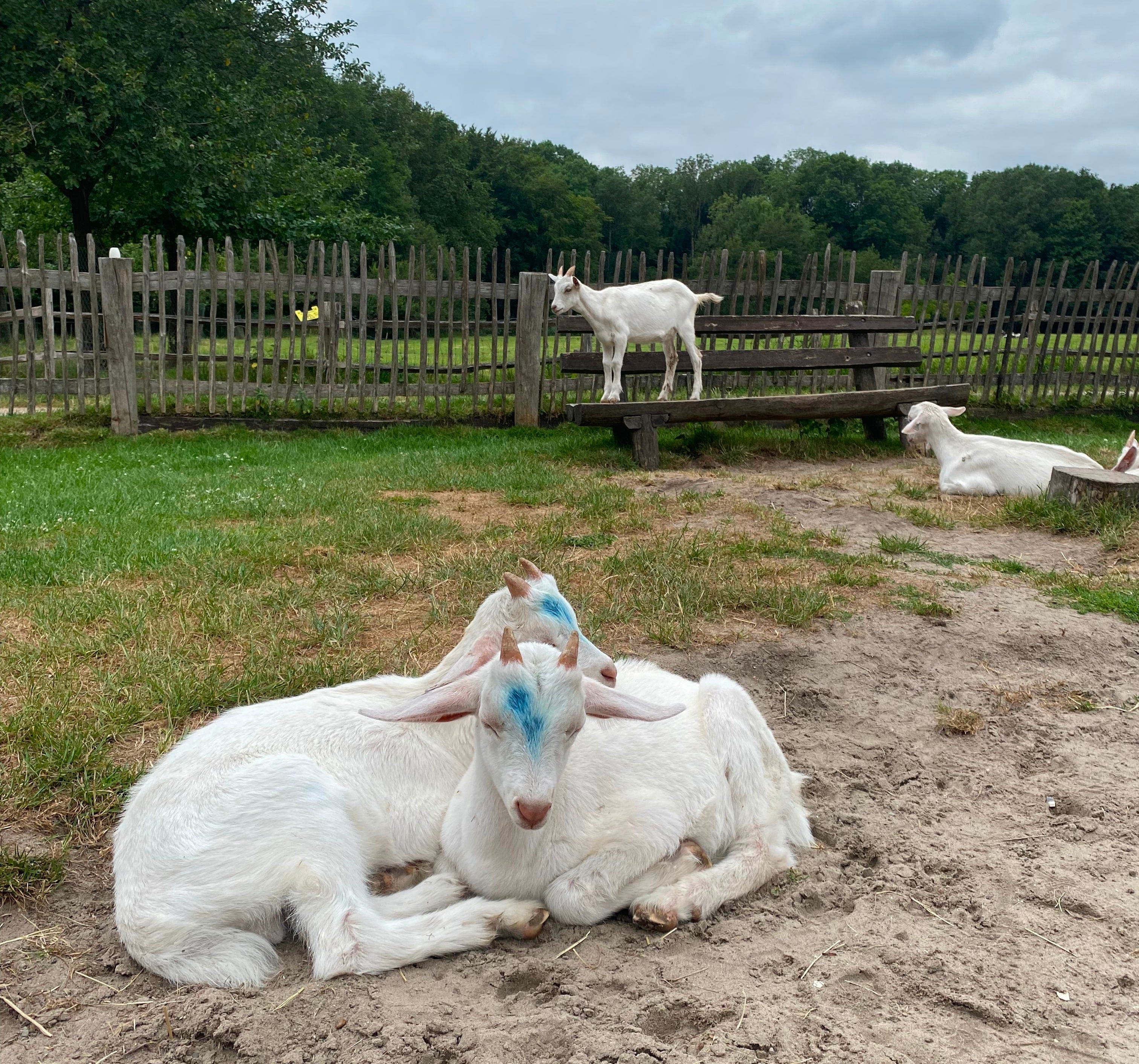
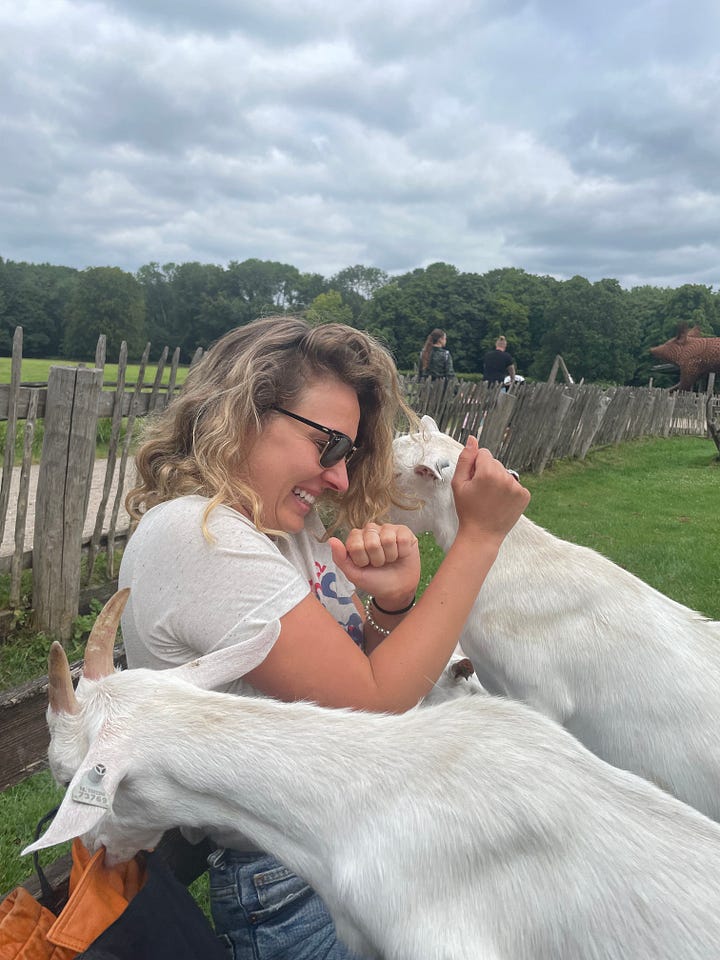
I’m super curious to know. Which do you prefer? Did one feel more meaningful or human? Are you ready to know which was which? The answer? Count the number of goats in the photo and divide by two. That is the one written purely by me, a human. The other, fully Chat.
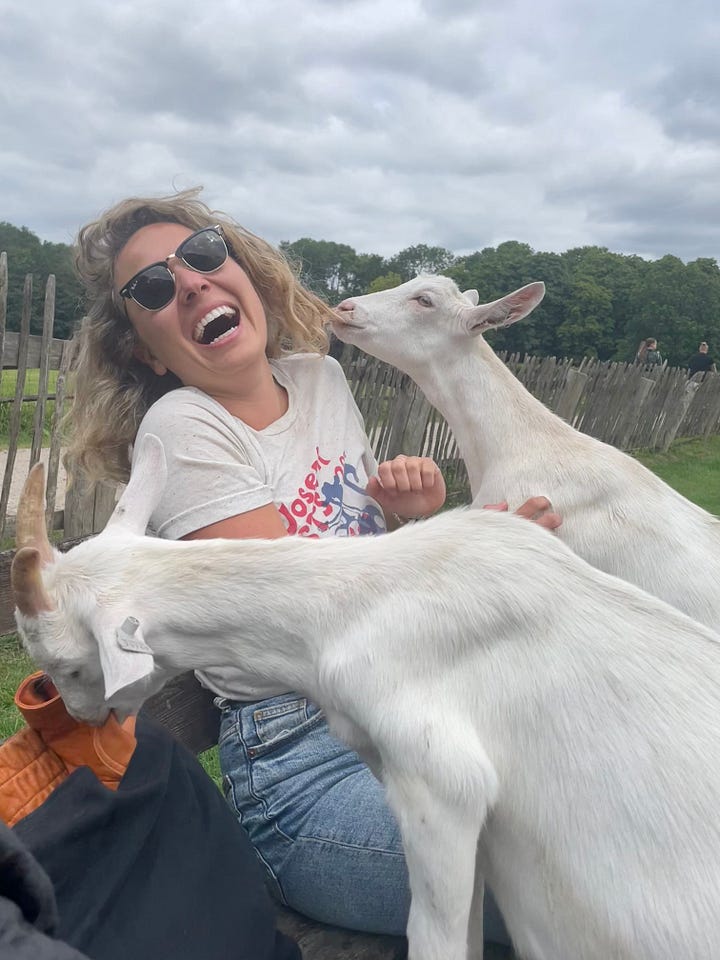
Please please share in the comments your experience with this mini-experiment. Writing this felt like coming up with a Black Mirror episode, but I also think it’s important we confront the way AI will inevitably end up in spaces previously reserved for human creatives. Some see it as a tool, to help with writers block, to support the tedious process of editing, to organize and gather thoughts. Others, a black hole, absorbing creativity and emotional experience until nothing is left (oh, and taking all our jobs). I haven’t figured out where on the spectrum I fall. For now, ChatGPT will confirm that my content planning isn’t missing anything, help brainstorm titles, draft social media posts, structure ideas and support editing, but when it comes to writing here, that’s gonna be me!
Last year, I was at a summit for young ocean conservation leaders and one of the cohort members, Alejandra Lievano (who works with Casa Múcura, preserving ancestral knowledge in Colombia) said something that really stuck with me. She said (loosely): What do we do if we don’t know the answer to something? Before we Google it, we should ask an elder. They may not have an answer, but they have a story. So maybe next time you want to fix the hole in your jeans or make a birthday cake, call an aunt or a grandparent. They may not have all the answers, but I’m sure they have a better story than anything Chat could ever come up with.
What do we do if we don’t know the answer to something? Before we Google it, we should ask an elder. They may not have an answer, but they have a story.
[Disclaimer: I am still an active AI user! I’m even working now for an environmental solutions company that has its own AI model, check out Ubuntoo. I think AI can be an incredibly useful tool when used as that: not as a replacement for human creativity and analysis, but as a support system.]
No posts
Comments
Nothing yet. Say the first thing.
Sign in to join the conversation.