
Welcome to the Water Cooler, our regular dispatch on the economic content that regular people are sharing online. Consider this your periodic dose of economic news from beyond the D.C. algorithm.
Here’s what we found this month:
Jobs are the most frequent economic topic of conversation
Frustration over the job market has hit a boiling point
AI and bots have broken the job search process
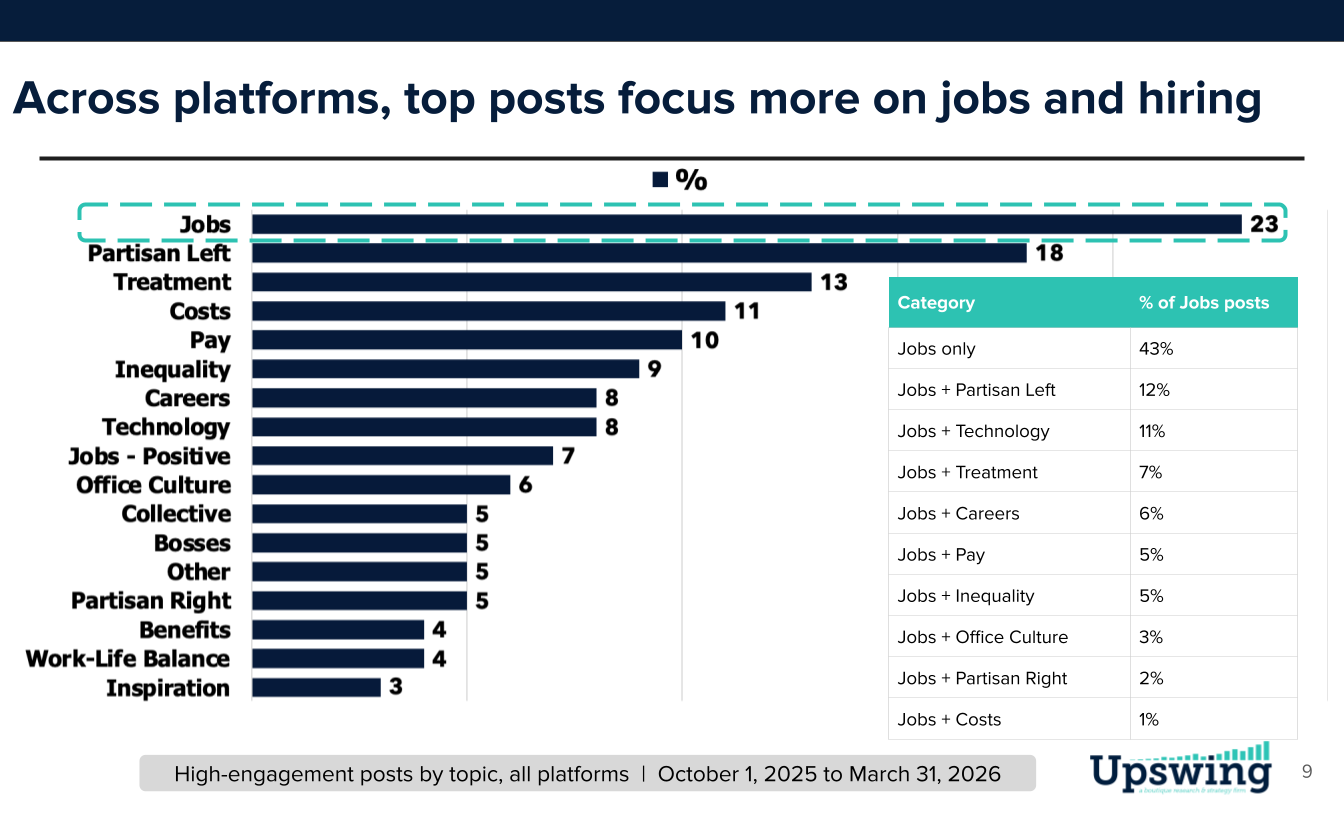
Social media represents a unique window into Americans’ economic anxieties and frustrations. And across all manner of economic topics, one issue tops the list: jobs.
And within that jobs conversation, the intense frustration with the job search process stands out in its volume and its intensity. There is a massive disconnect between the standard D.C. conversation about the job market – often focused on the unemployment rate, the labor force participation rate, the hiring rate – and the horrific, soul-sucking experience that Americans are sharing online.
The organic online conversation around jobs paints a stark picture of a broken job market dominated by bots and impenetrable algorithms, where people are typically searching for jobs for months – or longer – and send out hundreds of applications, with little to show for it.
In our analysis of high-engagement posts across platforms over a 6-month period, discussion around jobs – and particularly the job market – topped the cost of living, partisan content of all types, and specific workplace and office culture discussion.
Last year, in focus groups with a broad cross section of voters, we heard anxieties about the job market come up organically over and over. Almost universally, they described the job market as getting tougher. One participant talked about the frustration of competing for jobs with applicants from all over the country, not just locally, because of the possibility of remote work. Others talked about how demoralizing it was to submit applications constantly and never hear back.
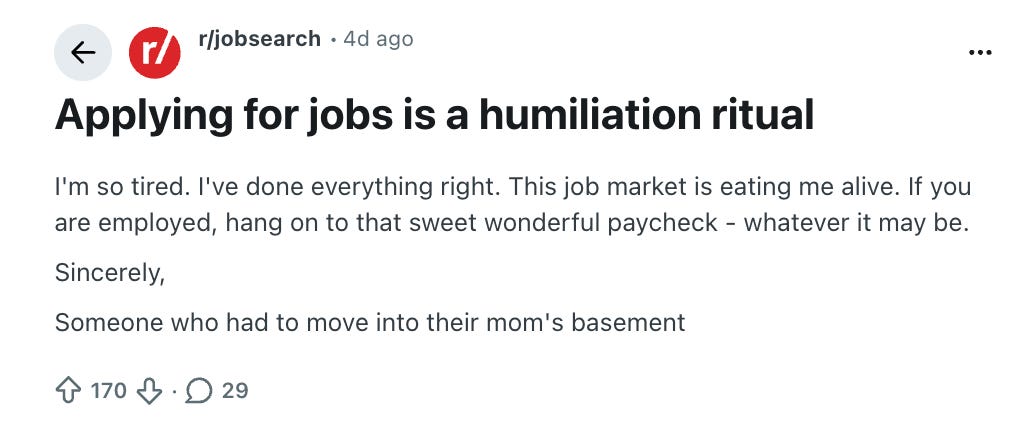
And today, we see that same exasperation in posts we looked at over the last month. Job searchers describe being on the market longer, sending in more applications, and feeling more despair.
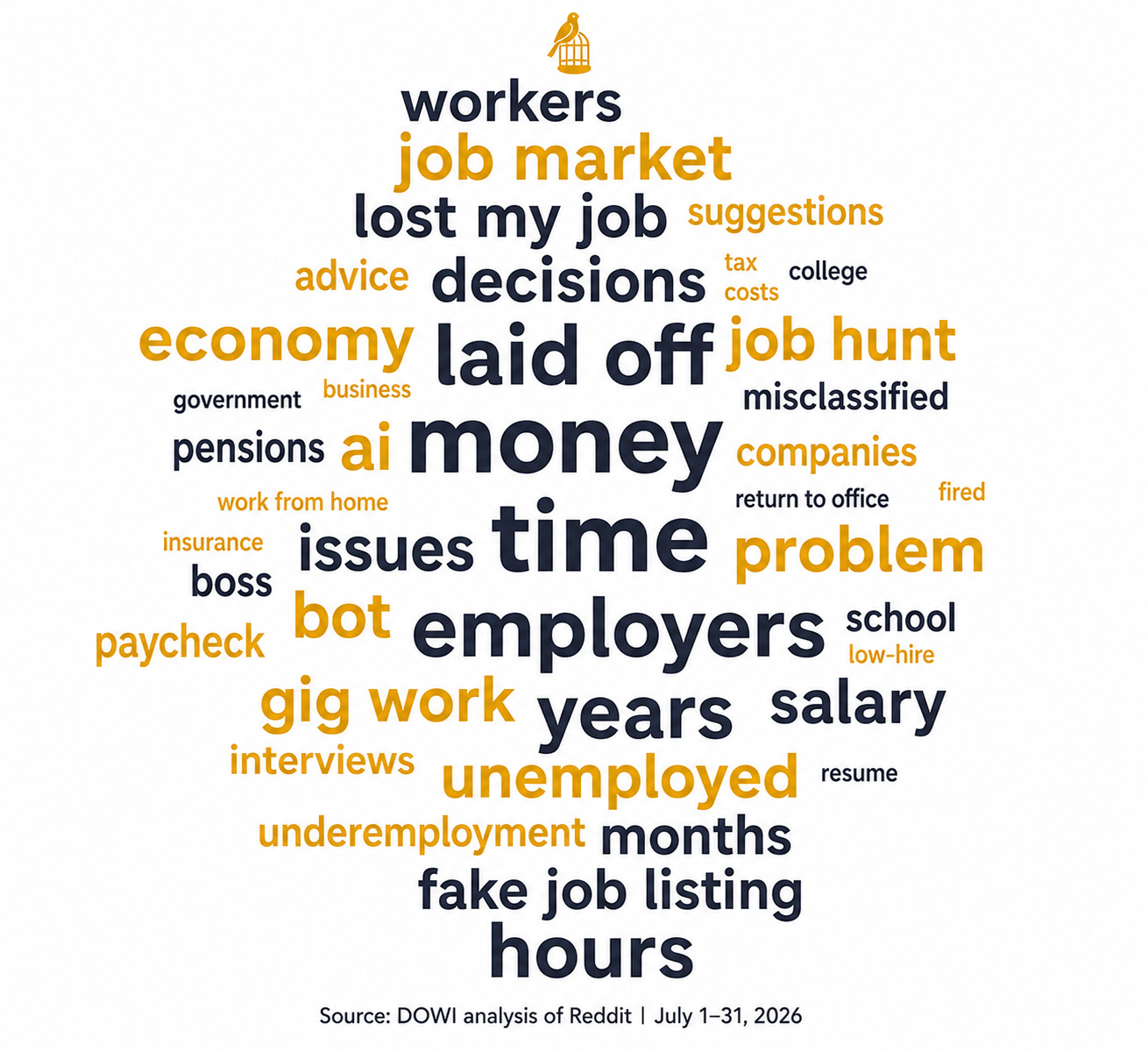
Sample posts:
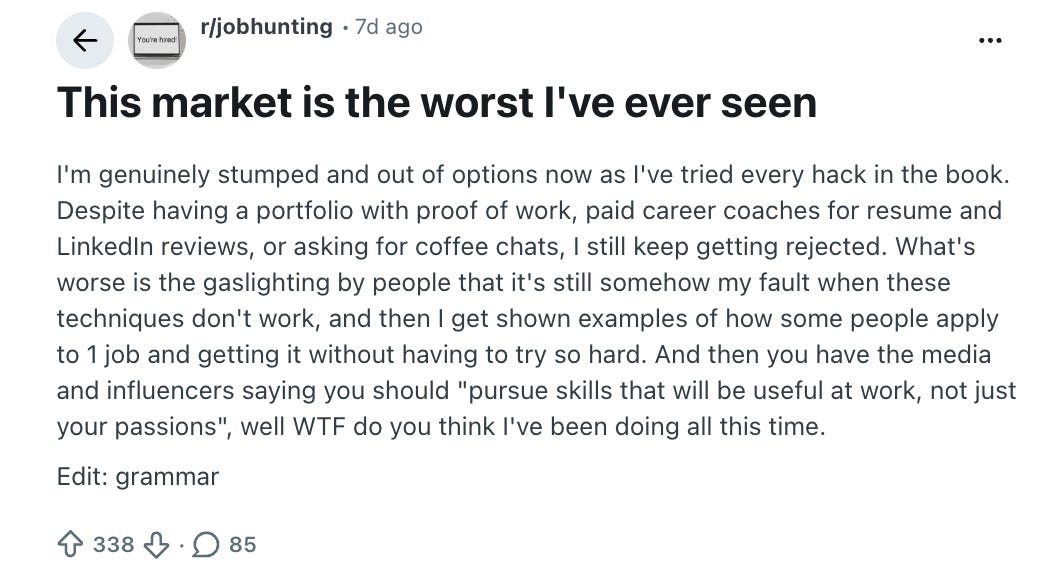
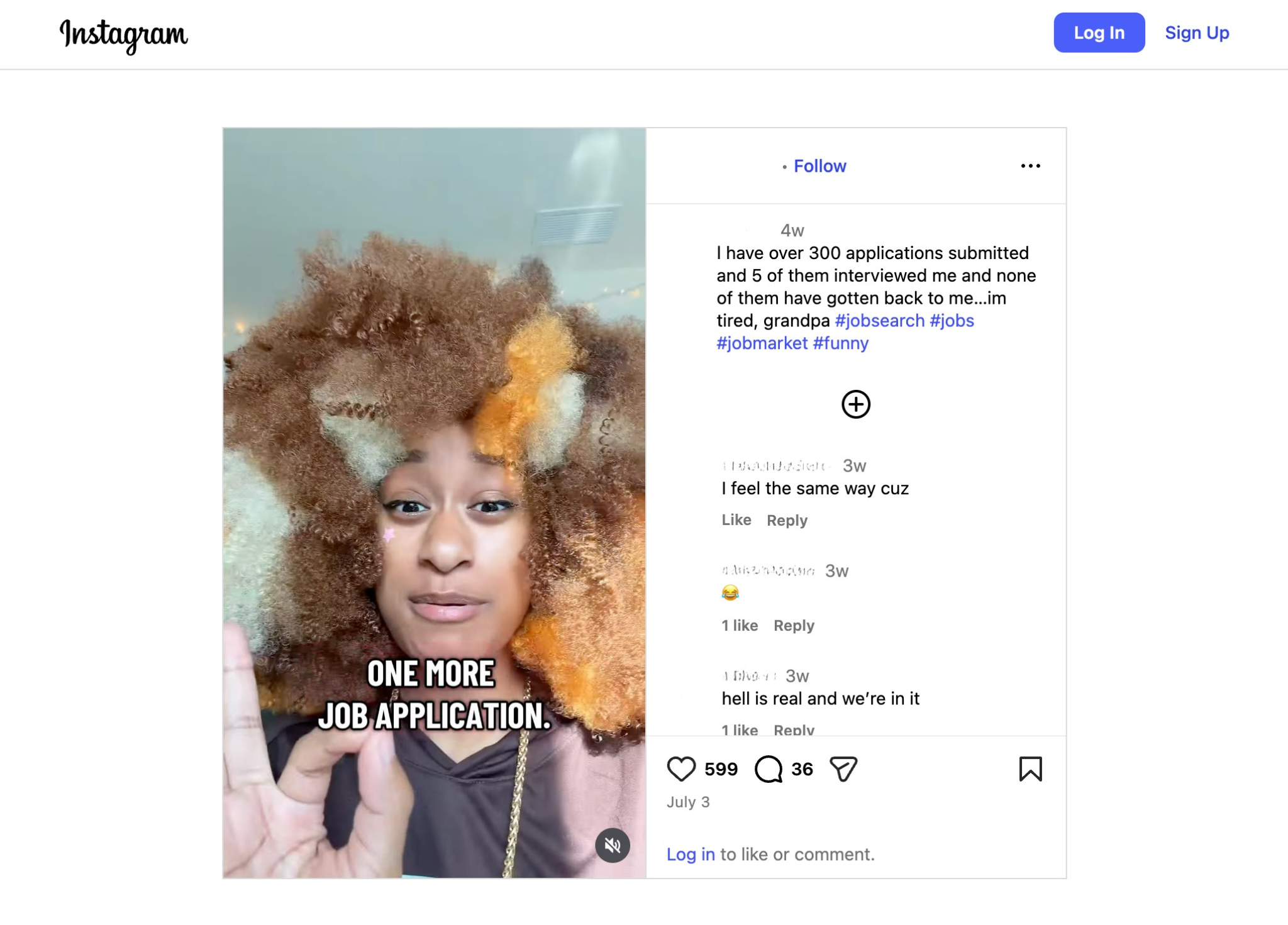
Workers aren’t just frustrated with “the job market” in the abstract - they’re angry at a specific mechanism that wastes their time and blocks them from getting a fair shot: Automated hiring.
If your mental model of the job search process involves writing custom cover letters and resumes for each job, manually emailing them off with personalized notes, and having those materials thoughtfully considered by another human being, you’re living in the past – or at least a small and highly specialized industry. (Like politics, perhaps?)
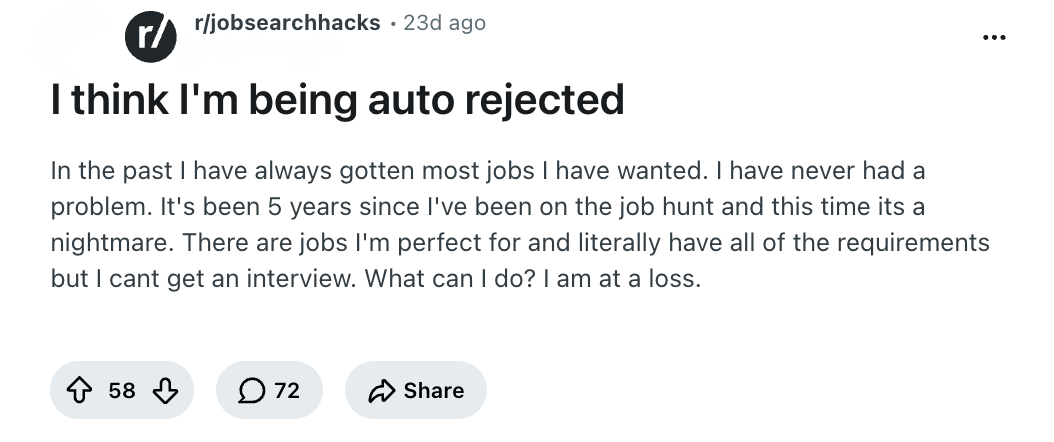
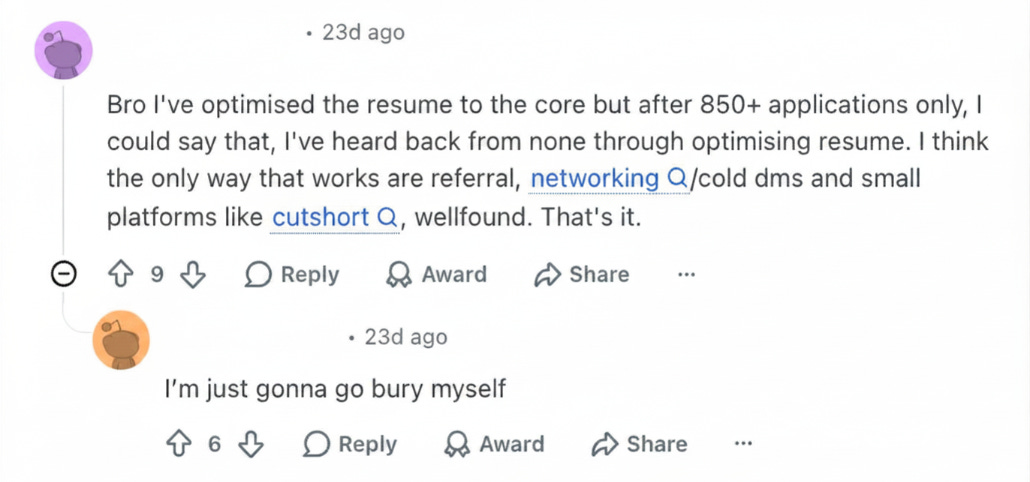
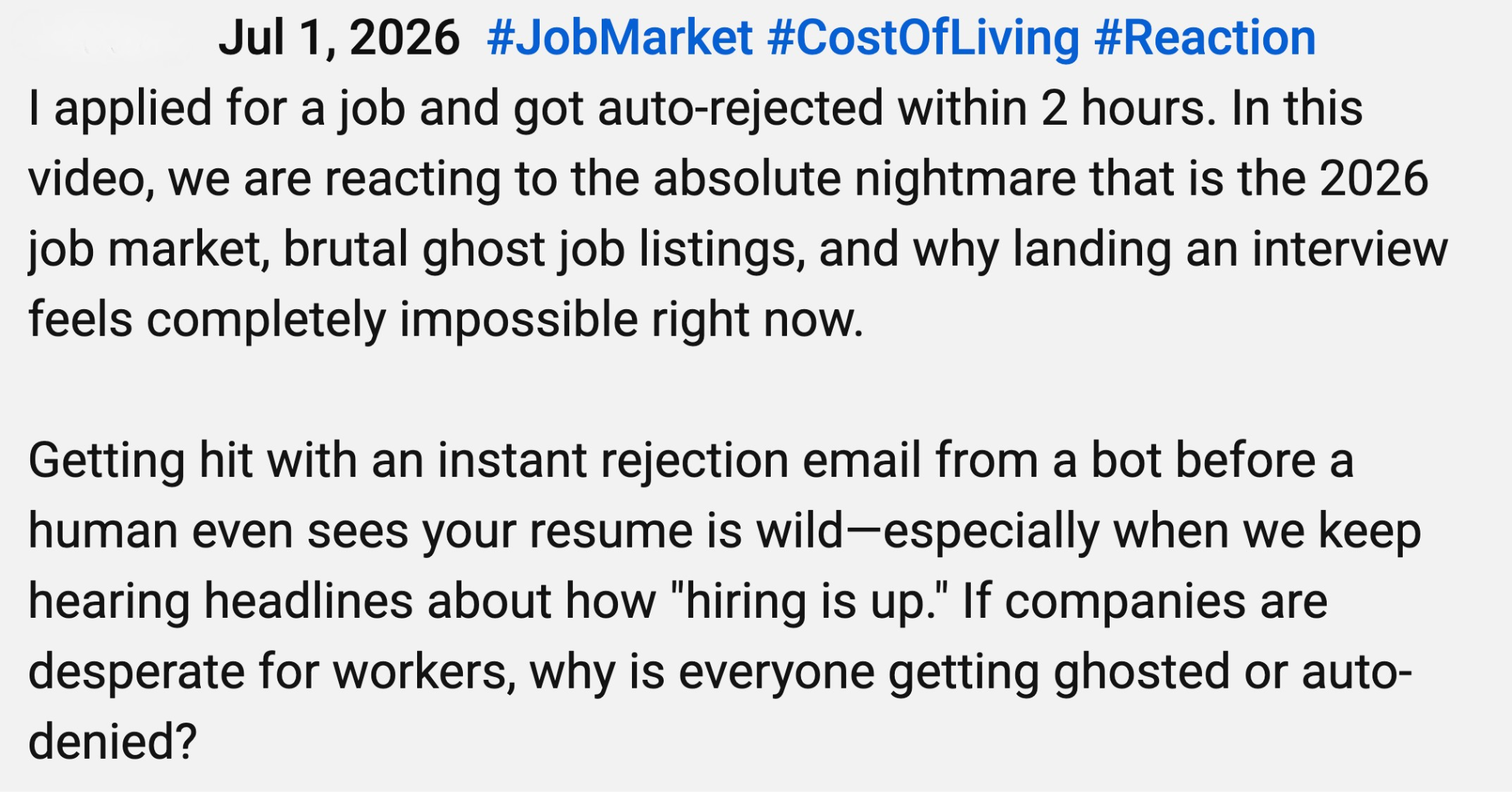
Americans describe sending hundreds of applications and either never hearing back, or getting nearly immediate auto-rejections. Landing an interview at all feels impossible. The discussions of how to succeed in this gauntlet bears striking resemblance to companies doing search engine optimization.
Sample posts:

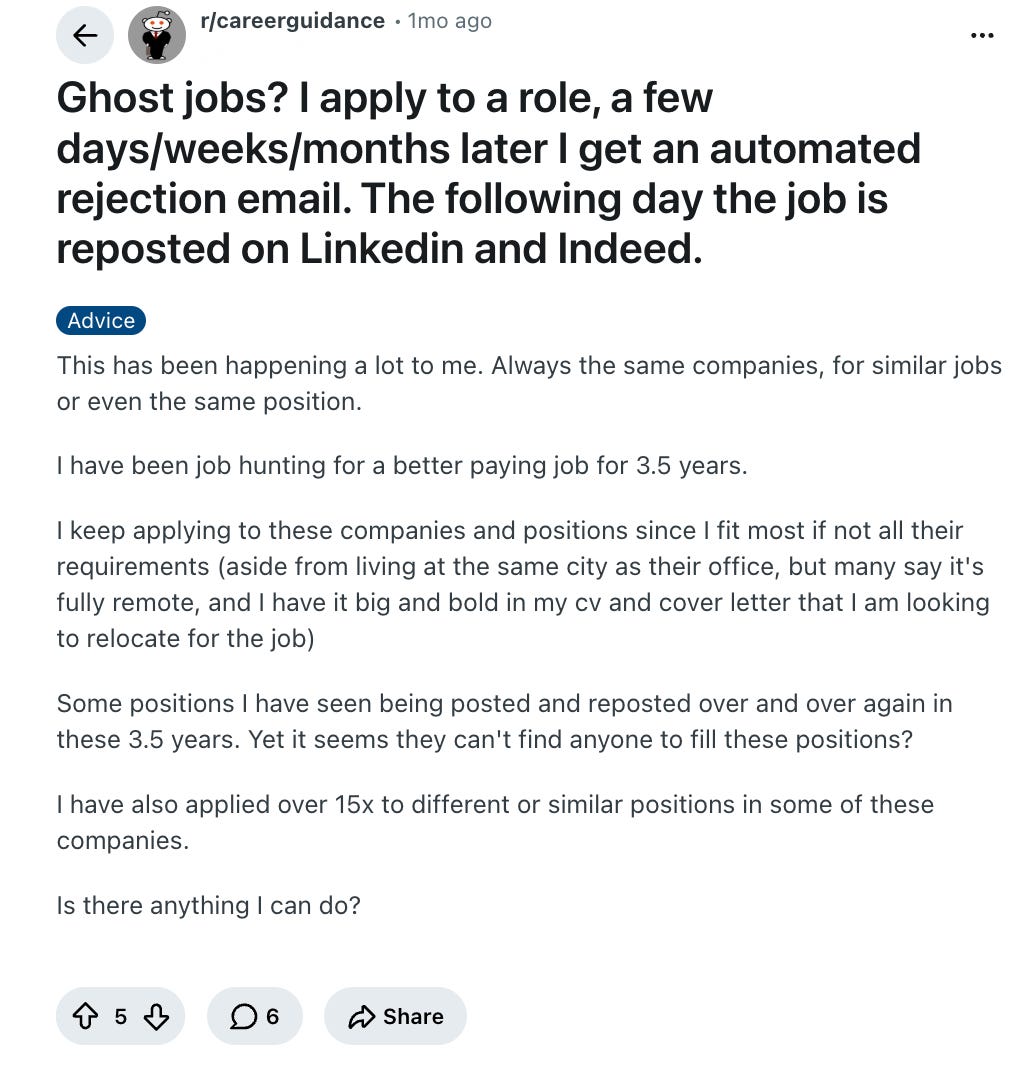
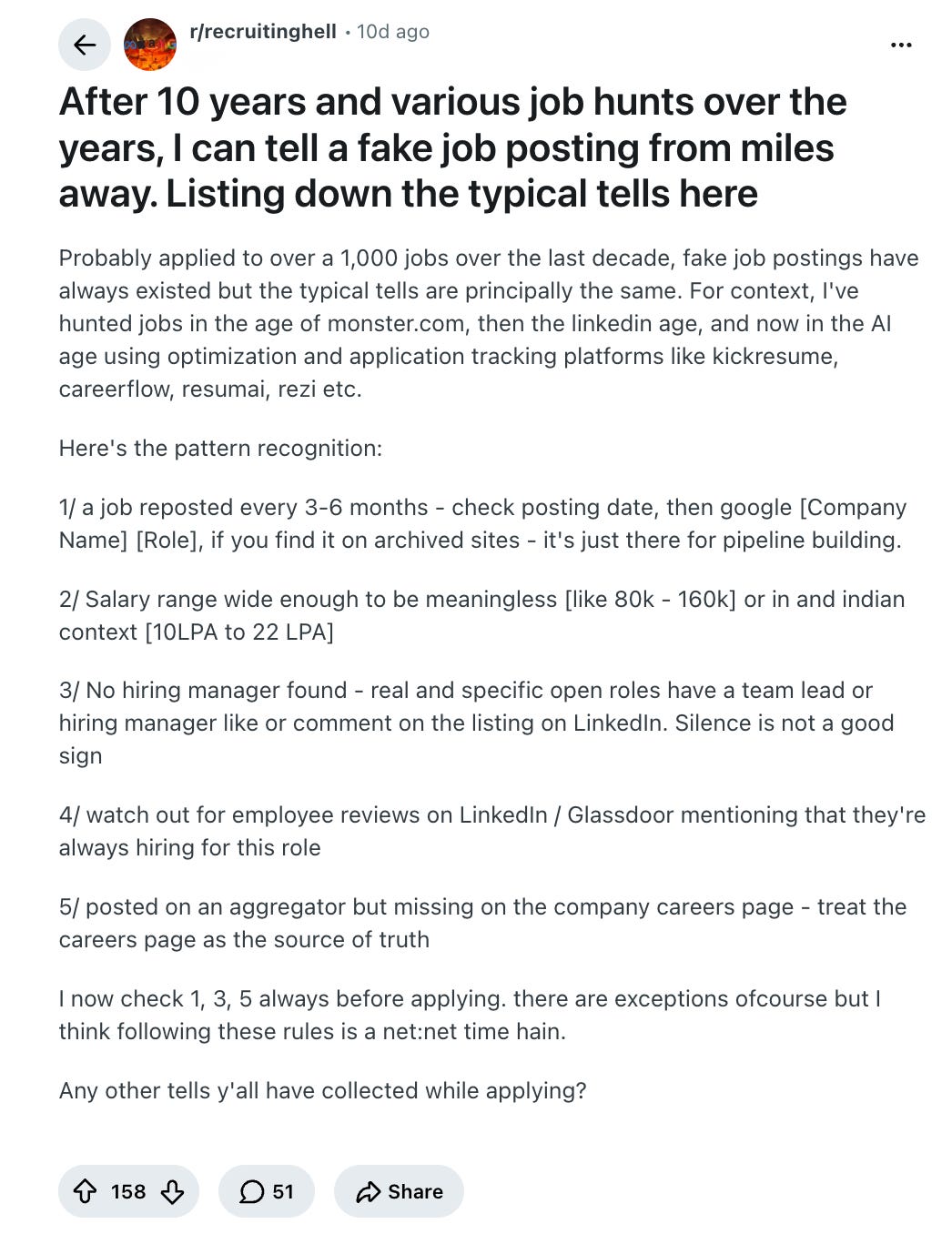
Within the hamster wheel that is today’s job search, a particular source of ire comes up often: so-called ghost jobs. Workers describe a hiring landscape rife with fake job listings that waste people’s time, create false hope, and make it impossible to even gauge where you stand. These fake posts are both a source of immense frustration on their own, and seen as a symptom of the larger problem of bots taking over the job market.
Sample posts:
No posts
Comments
Nothing yet. Say the first thing.
Sign in to join the conversation.