
Welcome to the Water Cooler, our regular dispatch on the economic content that regular people are sharing online. Consider this your periodic dose of economic news from beyond the D.C. algorithm.
If you were inundated with pictures of luxury beach vacations over the past week, remember – your feed is not real life.
While plenty of Americans performed the fantasy of a quintessential American beach getaway over the July 4th holiday – and will continue to throughout the summer – away from the image-heavy platforms like Instagram, an entirely different vacation conversation is taking place. The consensus is clear:
Basic vacations are a luxury, even for those who consider themselves middle class – particularly for families with kids.
Americans are coping by downgrading, and gas prices are making it worse – shorter trips, closer destinations, camping over resorts.
People are taking on debt to afford even non-luxury trips.
We looked at the online conversation around vacation affordability over the month from May 20th through June 18th, as many Americans were pricing out potential summer trips. And we identified posts that garnered over 30,000 engagements and more than 9.5 billion impressions. First-person stories about vacation costs skew sharply negative - and those posts generate the highest engagement.
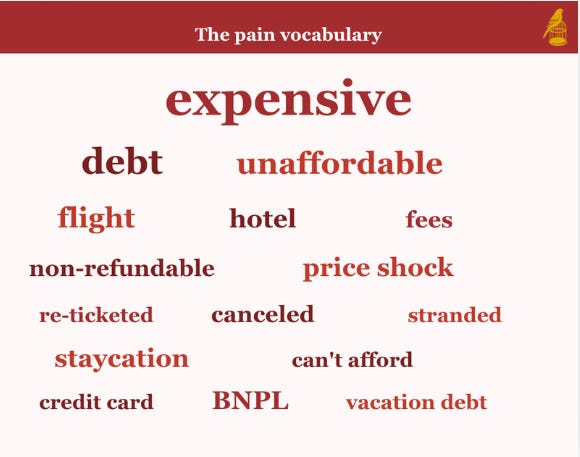
You thought a modest family vacation was included in the middle class life? Not in this economy
Whether they’re forgoing trips altogether or adjusting their expectations downward, there is a consistent question creeping into travel strategy conversations: How did we get to a place where making what people thought was a good salary – sometimes in the six figures – is no longer enough to afford a modest trip?
Sample posts:
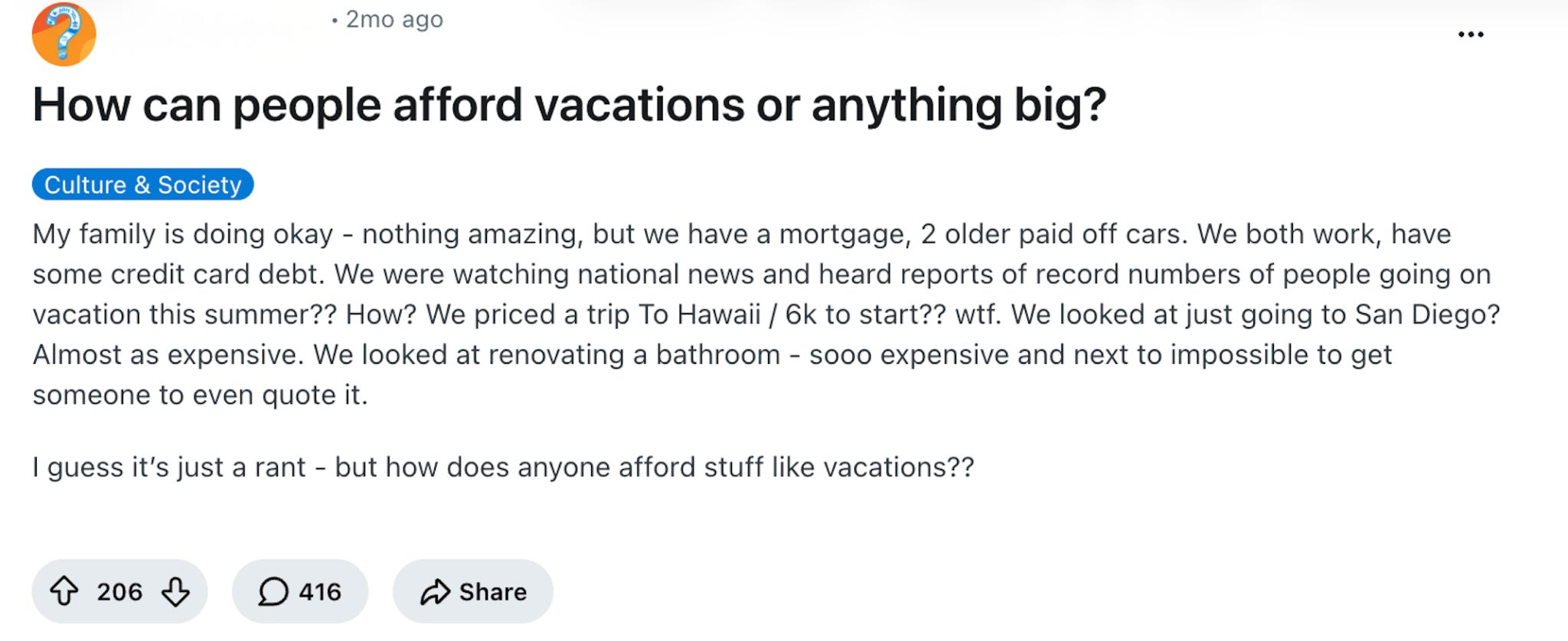
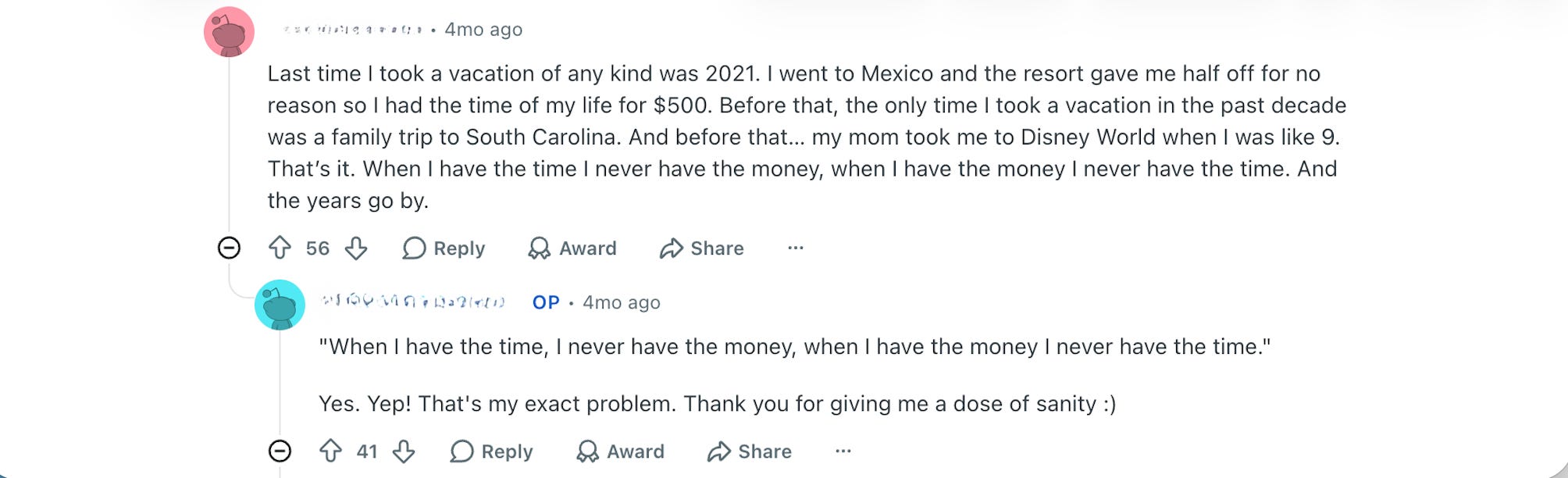
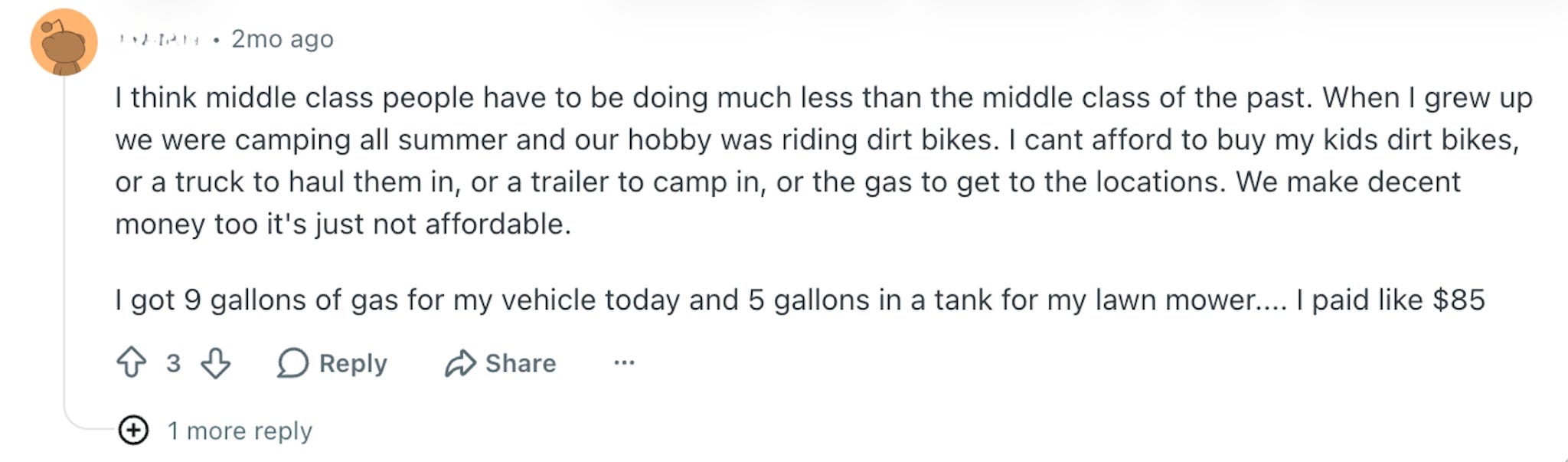
Afford your family trip by…not having kids?!
There’s one key way that many people say they afford trips that comes up over and over: Not having children.
Sample posts:
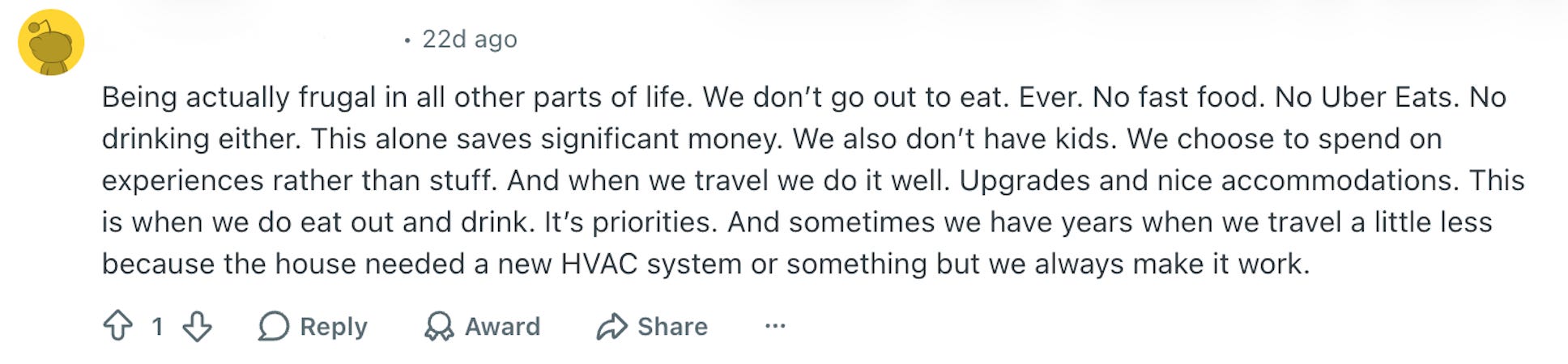
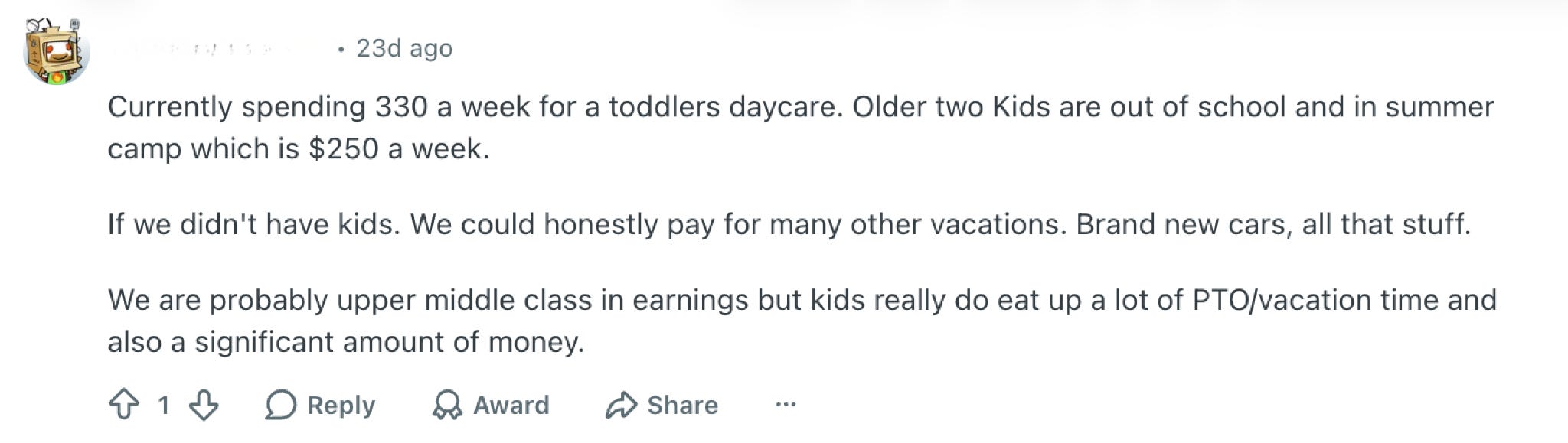
Already have them, and still want to take your family on vacation? That brings us to…
Adapting by Downgrading
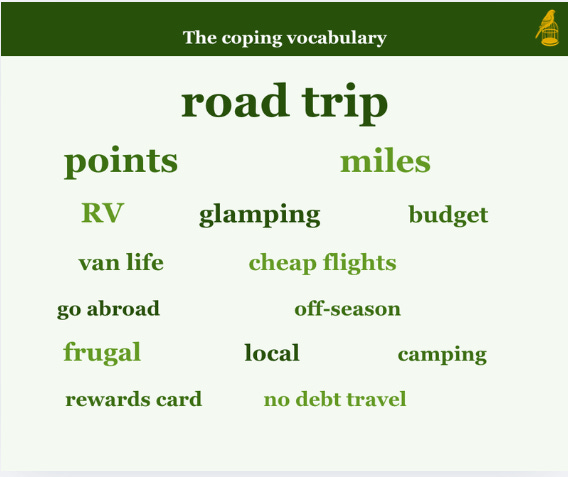
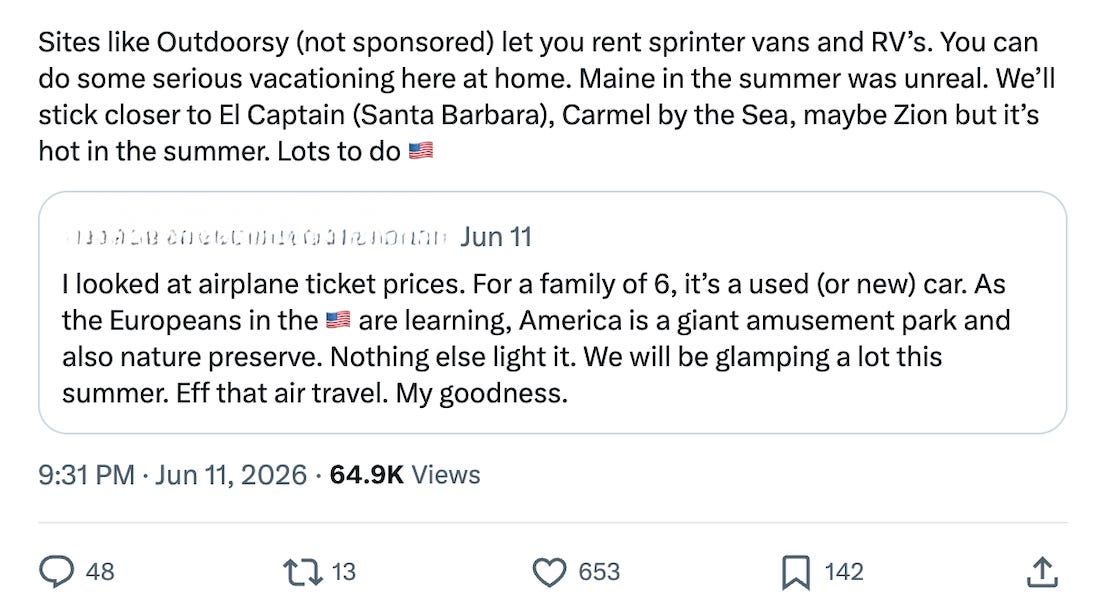
On sites like Reddit, working people are strategizing how to do more with less. Adaptation strategies are specific: They’re skipping flights and renting RVs or even sprinter vans. They’re shortening their trips and choosing closer destinations. They’re forgoing resorts and going glamping – a term that’s losing its association with wealth and is instead used without irony to describe a way to save money without resorting to full-blown camping.
Sample posts:
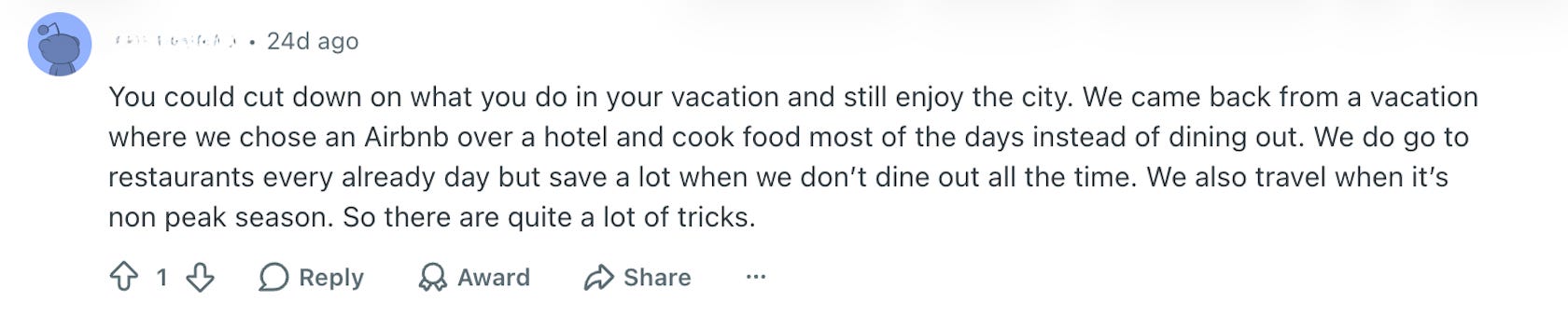
Recession indicator? BNPL-ing your vacation.
Taking on debt to afford a vacation is not fringe behavior. Putting trips on the credit card is tempting, and Americans are debating online whether to finance a trip, when that may be the only way to make the math work this summer. And more than half of Americans report having used some form of buy-now-pay-later product for online purchases, so it should not be surprising that people are also swapping advice on using installment loans like Afterpay, Klarna, and Flex Pay for trips.
The exact terms of these products vary, but the basic structure is generally: Four interest-free installments, which do not have to all be paid prior to the date of the trip. This can make these types of loans a more attractive option than high-interest credit cards – which is not saying much – but late fees, automatic debits, and the lack of travel protections can complicate the calculation.
This YouTube post generated the most engagement in the entire window across all networks, with nearly 6 times the next-highest post:

Other sample posts:


The overall trend is clear: many Americans – including many who thought they were middle class – are facing the choice of taking on debt for a vacation or forgoing a family trip this year.
No posts
Comments
Nothing yet. Say the first thing.
Sign in to join the conversation.