
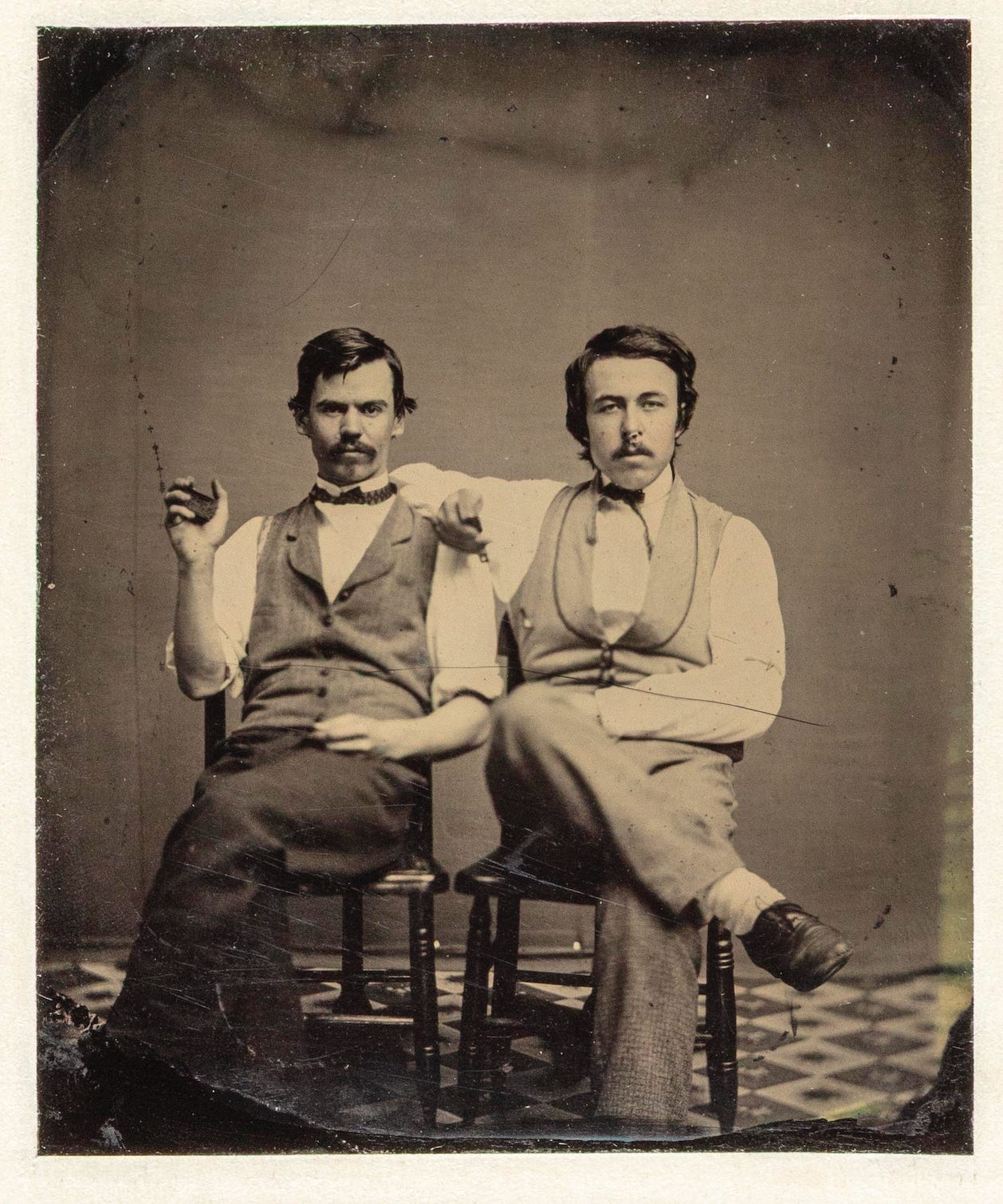
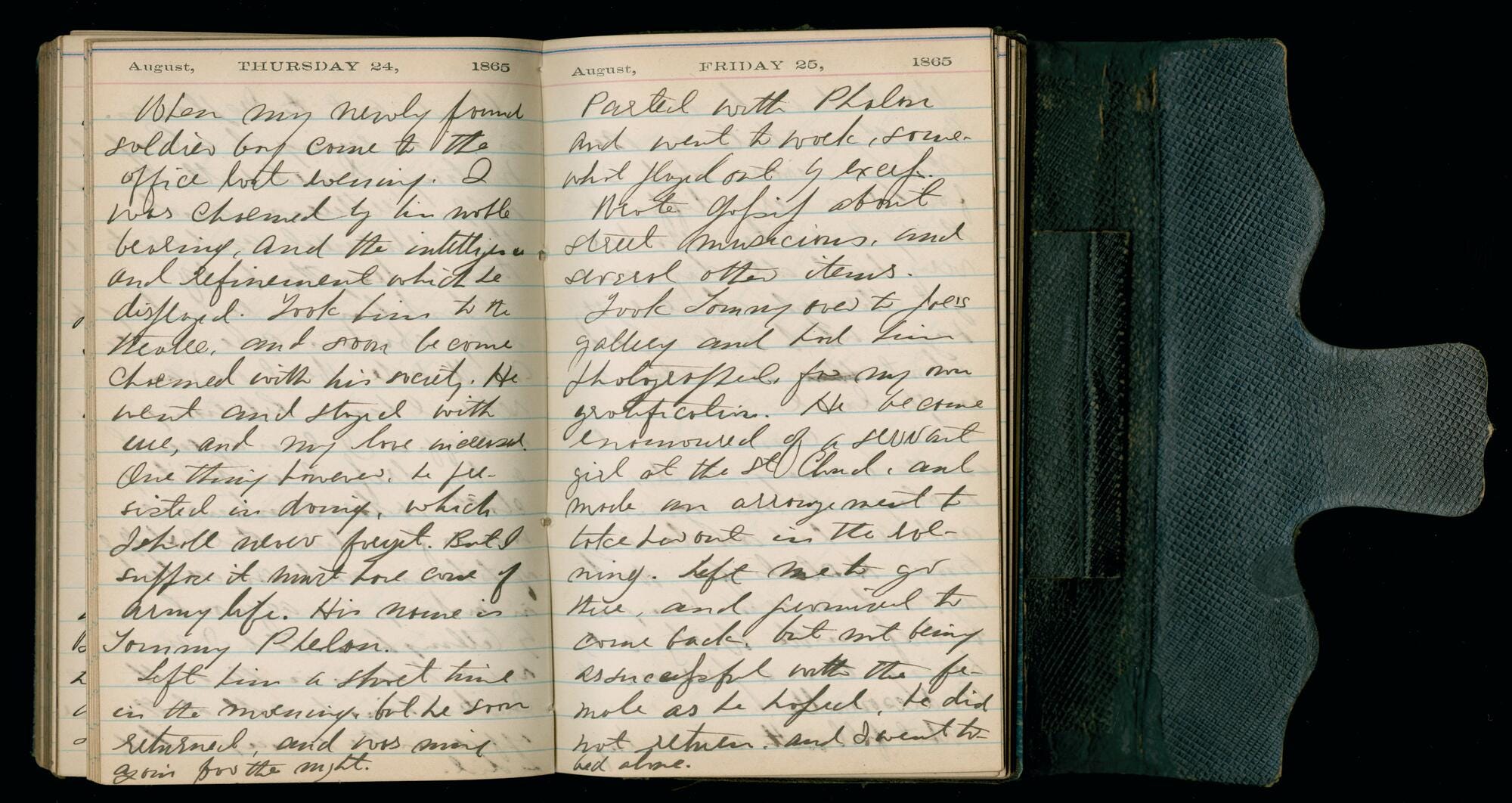
Long before his name became attached to the Newberry’s renowned collection on the history of printing, John M. Wing was a thirteen-year-old farm boy with literary ambitions, strong opinions, and a diary. He began writing in 1858, while living in Oswego County, New York; on the flyleaf, the Pulaski Academy student inscribed the Latin motto Labor Vincit: work conquers all.
In the volumes already transcribed by volunteers, Wing grows from a boy complaining about “the same dull Monotony” of farm chores and Latin exercises into a seventeen-year-old trying to support himself as a teacher and printer while the country moves toward war. Along the way, he publishes a poem in the Pulaski Democrat and argues about slavery wherever the subject arises—including at breakfast: “Dickinson began to talk about the south, and as a natural consequence had a real argument for [it], and I against.”
He also writes constantly about his friend Charley D. Gurley.
For nearly two years, Wing records every change in their relationship with teenage intensity: “Oh Charley, why why are you false?” Later: “He is very kind . . . but still he is not the Charley of old.”
On April 12, 1861, Wing’s worries about Charley met the news from South Carolina:
“News came that Fort Sumter is attacked. Oh how I hope the Rebels will get exterminated! . . . Went to bed with thoughts of my undecided future and of Charley who has forgotten me. Oh how I wish I could see the dear boy!”
The beginning of the Civil War, an uncertain future, and an unanswered letter all occupy the same diary entry.
Wing could not have known that he would spend much of his life in publishing. When he died in 1917, his estate established the John M. Wing Foundation on the History of Printing at the Newberry. His diaries—among the few possessions of his to survive the Chicago Fire—eventually came to the library as well.
The newly added volumes continue his account through hundreds of handwritten pages. Visit Newberry Transcribe to find out what happened next.
Metcalf family letters, 1860s to early 1900s — correspondence tracing rural life, farming, railroad engineering, and family news across the nineteenth century.
Pilgrim records from Plymouth Colony, 1623–1686; 19th century copy — a later handwritten copy preserving records of land, local government, disputes, and the everyday business of Plymouth Colony’s early decades
Browse the full collection to find more diaries, letters, and records awaiting transcription.
Browse all at Newberry Transcribe →
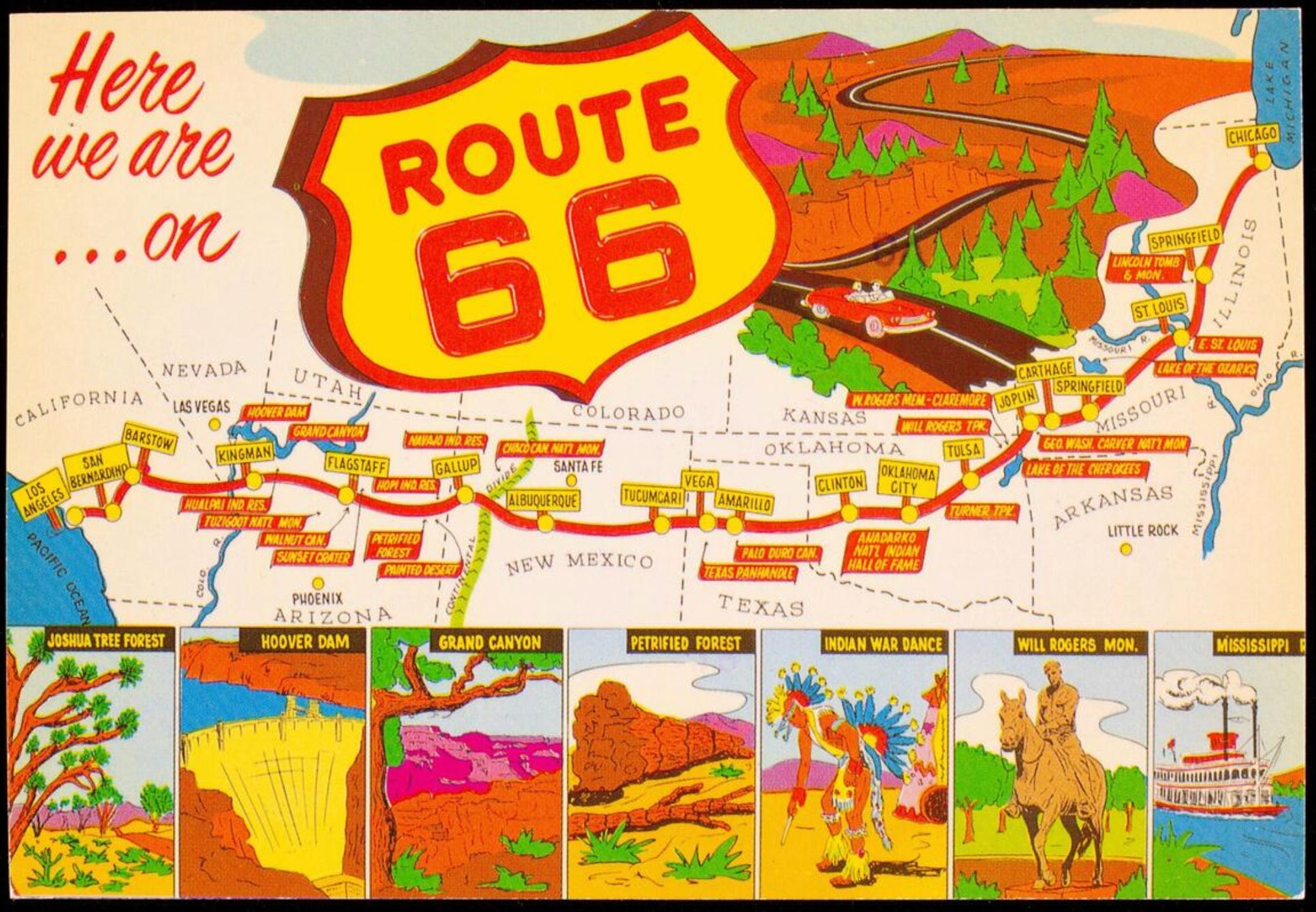
“This is the noisy hole we stayed in last night.”
The postcard may have advertised an inviting roadside stop, but the traveler who mailed it was less impressed. As Route 66 turns 100, the Newberry’s collection of 3,200 digitized postcards offers both sides of the journey: motels, diners, bridges, and desert views on the fronts; long drives, bad rooms, breakdowns, and candid reviews on the backs.
One traveler was “Awfully tired” after having trouble finding a motel—“got a nasty!”—but reported that “‘Snuffy’ [was] doing fine! Radio out tho’!” Another got “stuck in soft shoulder way out on the hot desert” until “a man from Kansas came along & hooked on with a chain & pulled us out.”
Still, the road lived up to its promise. As another traveler wrote: “You don’t know what you miss, never to have come across this country.”
Explore the Route 66 postcards at Newberry Digital Collections →
No posts
Comments
Nothing yet. Say the first thing.
Sign in to join the conversation.