
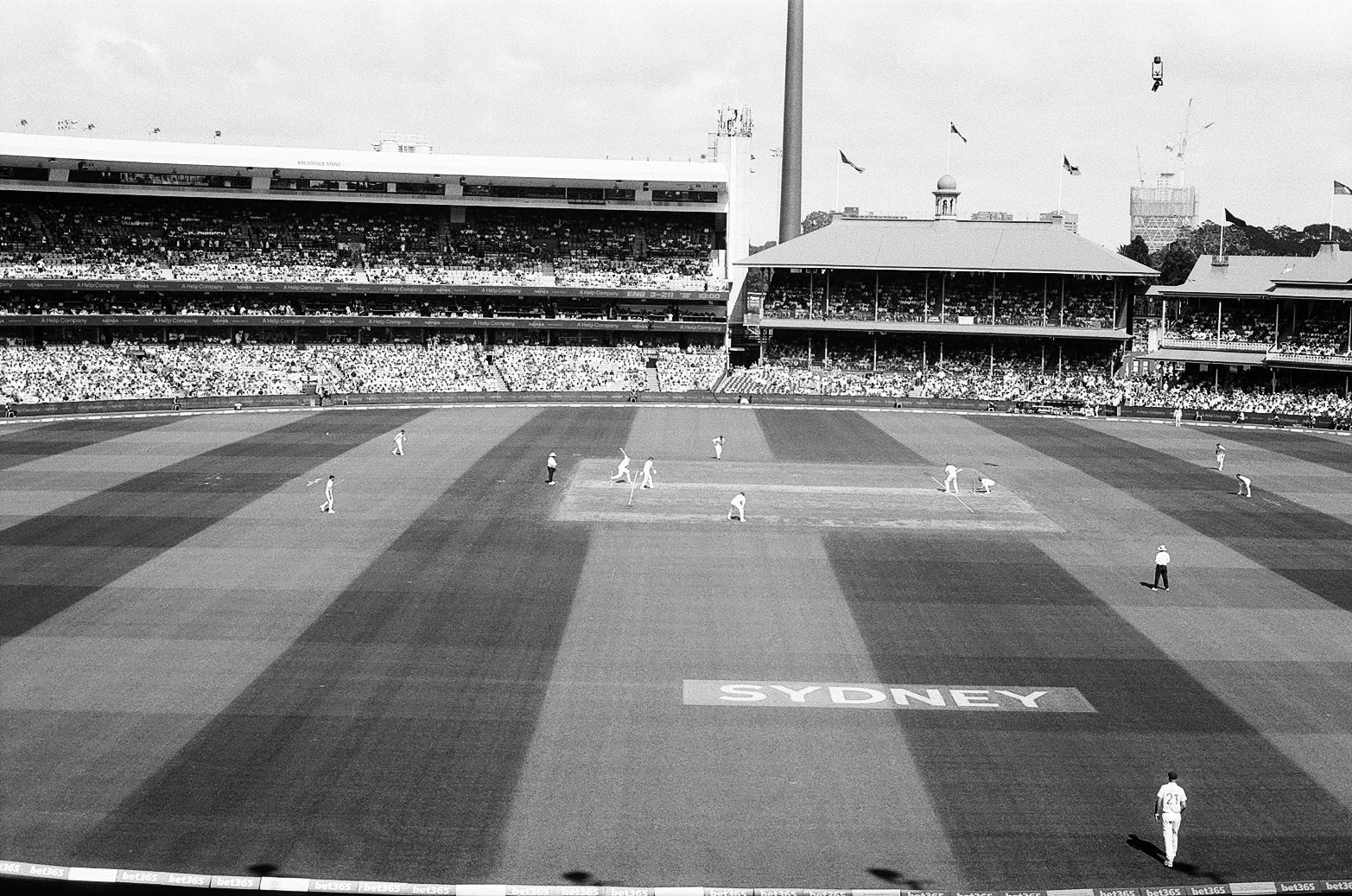
As the Sydney Cricket Ground fell silent and the Barmy Army trumpeter blew the first notes of Jerusalem, I wondered why I felt so emotional.
Could it be the pride of England’s green and pleasant land? That is, all the natural beauty explored in William Blake’s hopeful vision, rather than the version sung by misguided nationalists on the steps of Trafalgar Square.
Or could it be the company? Dad to my left in seat 117 and Meg to my right in seat 119.
Or the occasion? Ashes cricket during my second summer Down Under, ten o’clock in the morning, almost sizzling twenty-seven degrees, and eight hours of red ball frenzy ahead.
This question to myself evolved into a short period of reflection. As the teams descended the stairs of the heritage Member’s area, my thoughts went something like this.
Perhaps I feel stirred because cricket actually means more to me than I realised?
After all, I played the sport for the best part of twelve years. Twenty fixtures a season. Some school, some club. Cigarette packet maths puts that well over 1000 hours, a conservative estimate. Enough that throughout most of my adolescent years I couldn’t stand it. Too many hours, waiting for rain, reflecting on an individual error; a particularly inefficient use of time once I was legally able to drink.
Still, every year I’ve followed and watched cricket. I’ve seen it evolve from Alistair Cook spending 320 balls at the crease to centuries being scored off 39 deliveries. From five day long test matches to an entirely new Hundred format. From collared shirts and silence please, to no shirts and chanting with KFC buckets on heads.
I’ve seen cricket in the Caribbean, gone out of my way to watch it in Sri Lanka, and tuned in across timezones to spectate World Cups. And yet, if you asked me, “Do you like cricket?” I might respond, “Yeh, sort of”.
Challenges of finite time
This type of disassociation is really easy to fall victim to. Working life requires choices. Naturally, somewhere during the journey, you’ll consider giving up games of cricket that last eight hours, or weekends that involve back to back days on the sofa, all to watch a sport that ends in a draw.
The danger is: priorities re-shuffle, the years pass by, and you find yourself saying “I used to be into that, not so much anymore”. Eventually, all you’re left with are the trending interests - 45 minutes of padel, cold/hot plunges, and Jake Humphreys podcasts - absorbed by your consciousness, as you exist downstream of mass culture. And it can happen relatively quickly. You forget about the things that you were instinctively drawn to, the interests that have rich memories and old friendships attached to them.
I know the dangers because this happened with my love for football. It was simple: I didn’t want to watch from the pub with four pints every weekend. And, as long as an Octopus Energy bill was due during London’s winter, BT or Sky Sports at home were out of the question. Gradually, my exposure to the Premier League was reduced to all but nothing. Just the occasional scroll of the BBC Sport app, or passing conversation about an online fantasy league.
Then it took 88 episodes of the Reminding You Why You Love Football podcast to persuade me of my very own passion. To remind me that, whilst I’m not a regular watcher of today’s fixtures, I have a nostalgia for - and a deep love of - the sport’s wider culture. To answer the same question:
“Yeh, I still love it, just in a different way.”



No posts
Comments
Nothing yet. Say the first thing.
Sign in to join the conversation.