
We've been quieter than usual in your inbox, but certainly not idle!
The past few months have been dense with research, launches, and conversations about who AI is really built for, and at whose expense.
This issue is a fuller catch-up than most. ⬇️
Leading figures from government, industry, philanthropy, and civil society convened to launch the Global South Network for Trustworthy AI at the IndiaAI Impact Summit 2026 in New Delhi. The Network is a civil society–led platform dedicated to evaluating the real-world impacts of AI systems, advancing research on AI adoption and safety, building locally grounded oversight instruments, and elevating Global South leadership in global AI governance.
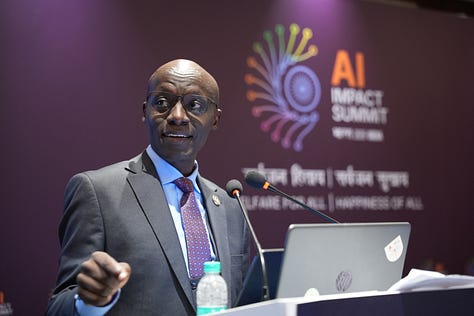
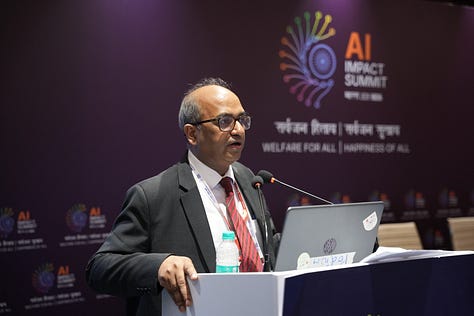
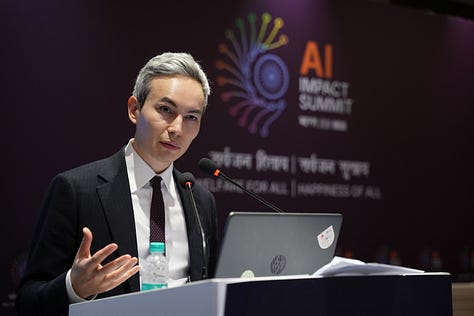
The launch opened with keynote remarks from Mr Abhishek Singh (MeitY/IndiaAI), Ambassador Philip Thigo, Special Envoy on Technology, Republic of Kenya, and Mr Quintin Chou-Lambert, AI Lead at the UN’s Office of Emerging and Digital Technologies. A high-level panel followed, featuring Dr Rachel Sibande (Gates Foundation), Ms Chenai Chair (Masakhane), Mr Amir Banifatemi (Cognizant), Ms Natasha Crampton (Microsoft), and Dr B. Ravindran (CeRAI, IIT-Madras).
“I see the launch of the Global South Network for Trustworthy AI as the first step in operationalising the [New Delhi Frontier AI Impact Commitments]. With support from industry organisations, frontier AI labs, research institutions, governments, and multilateral bodies, this initiative can grow stronger,” said Mr Abhishek Singh, Director General of the National Informatics Centre and Additional Secretary at the Ministry of Electronics and Information Technology, Government of India
The Network currently comprises fifteen member organisations, including founding members Digital Futures Lab (India), Global Centre on AI Governance (South Africa), ITS Rio (Brazil), CeRAI at IIT-Madras (India), and International Innovation Corps (India). The IndiaAI Mission will serve on its Steering Committee.
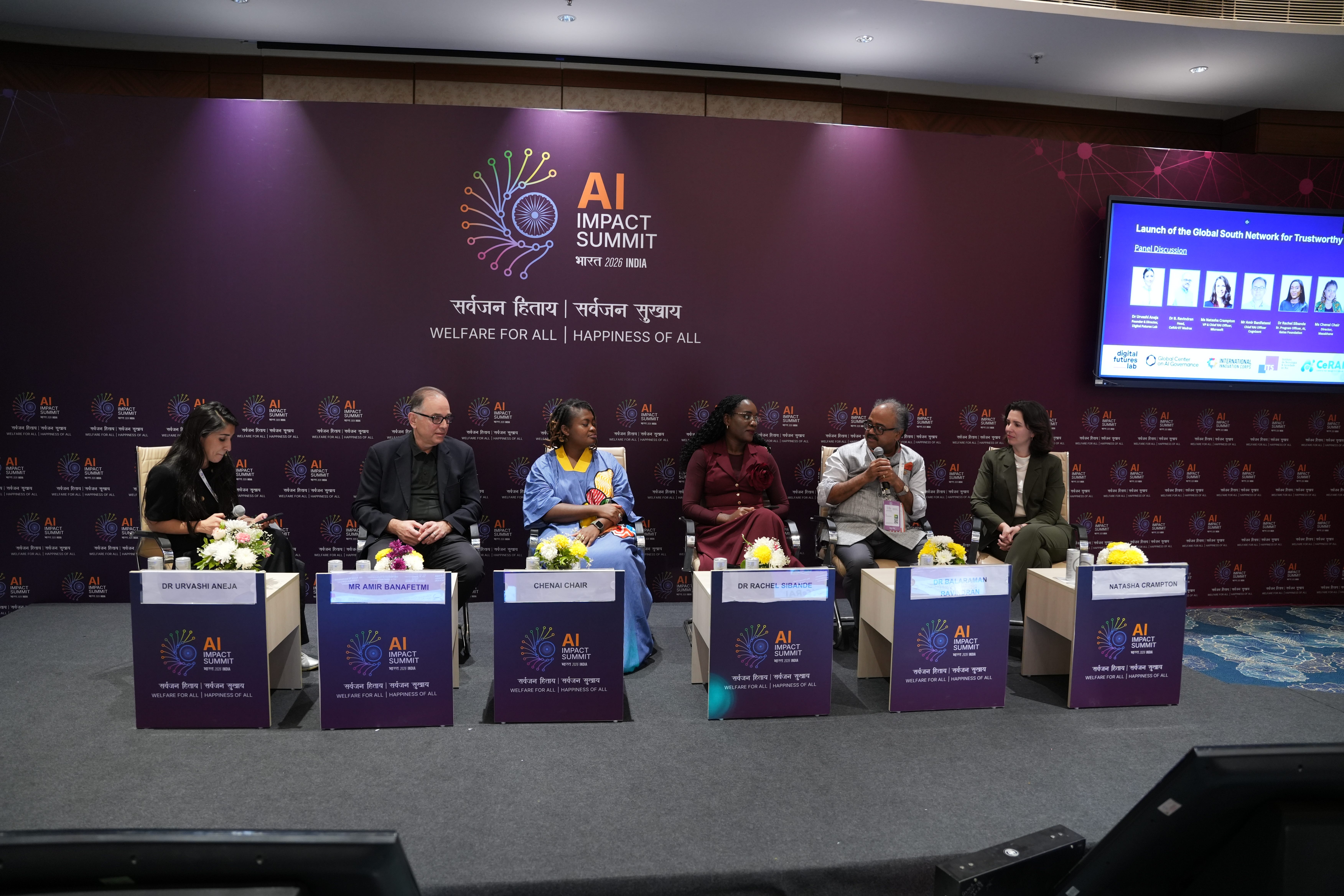
“The Global South must not only be a market for AI systems, but an active shaper of the standards, evaluations, and safeguards that govern them,” said Dr Urvashi Aneja, Founder & Executive Director, Digital Futures Lab.
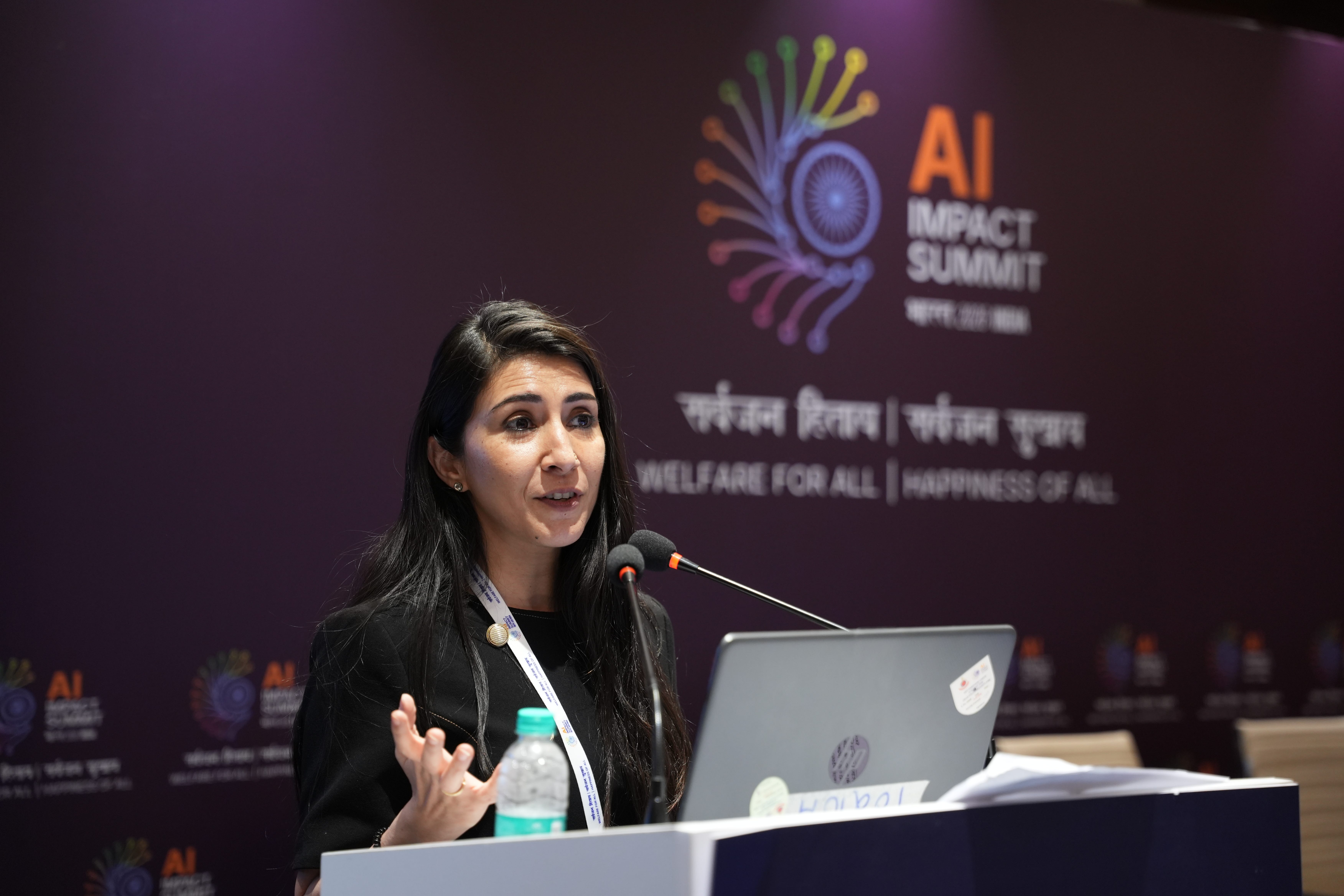
India has over 19,500 known languages and dialects, yet voice technologies reflect only a fraction of that diversity — a structural exclusion from economic and cultural life. ‘Building an Open and Responsible Voice Technology Ecosystem: Policy Recommendations for Digital Inclusion in India’, co-developed with ARTPARK and Trilegal and supported by GIZ FAIR Forward and Bhashini, maps barriers across the speech data lifecycle and recommends policy interventions: from treating foundational datasets as digital public goods to building value-sharing mechanisms that counter extractive data practices.
‘Indic Voice Technologies for an Inclusive India: Toolkit for Developers’ offers a practical, lifecycle-oriented guide to embedding inclusion from the earliest stages of development.
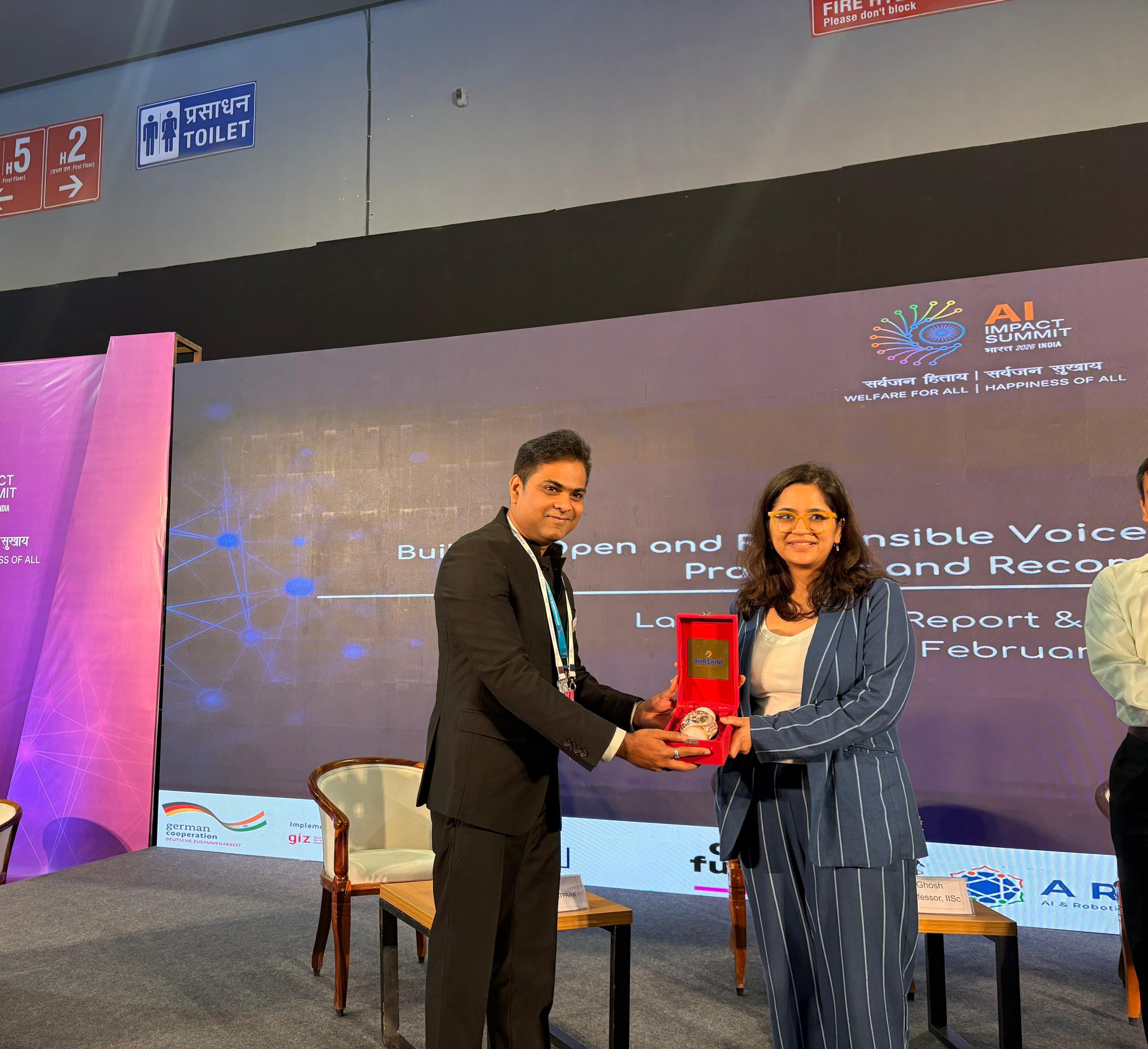
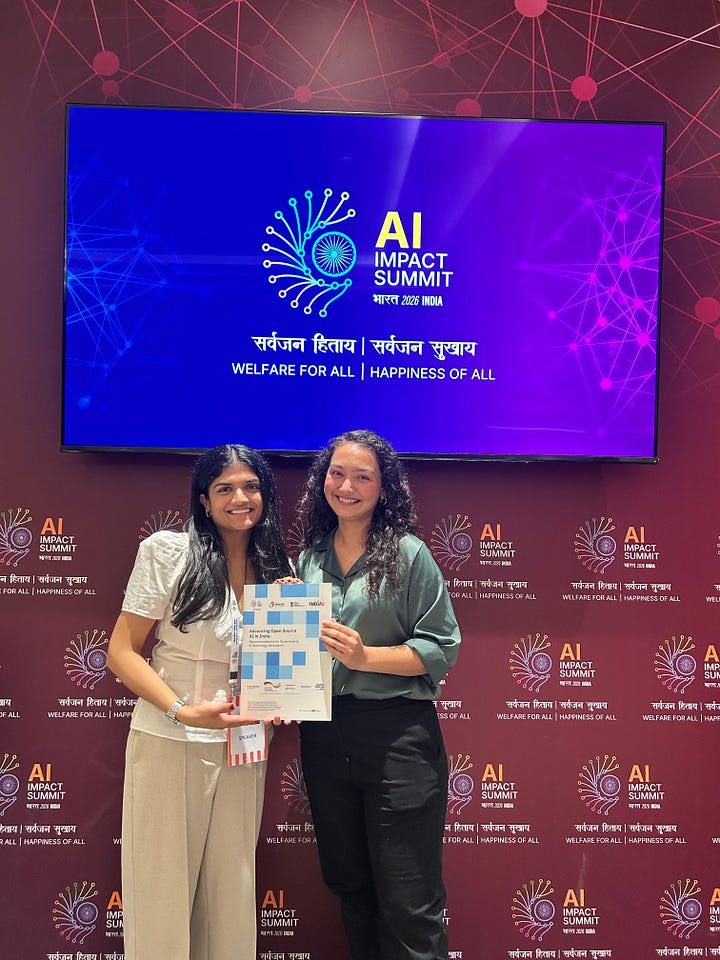
Open source is often positioned as the remedy to AI's concentration of power. But openness is not a singular condition. Our policy brief, ‘Advancing Open Source AI in India: Recommendations for Governments and Technology Developers’, jointly published with FAIR Forward – Artificial Intelligence for All (implemented by GIZ, funded by BMZ), NASSCOM, and the IndiaAI Mission, maps how varying degrees of openness shape innovation, adaptability, and public oversight, and offers concrete recommendations for policymakers and practitioners.
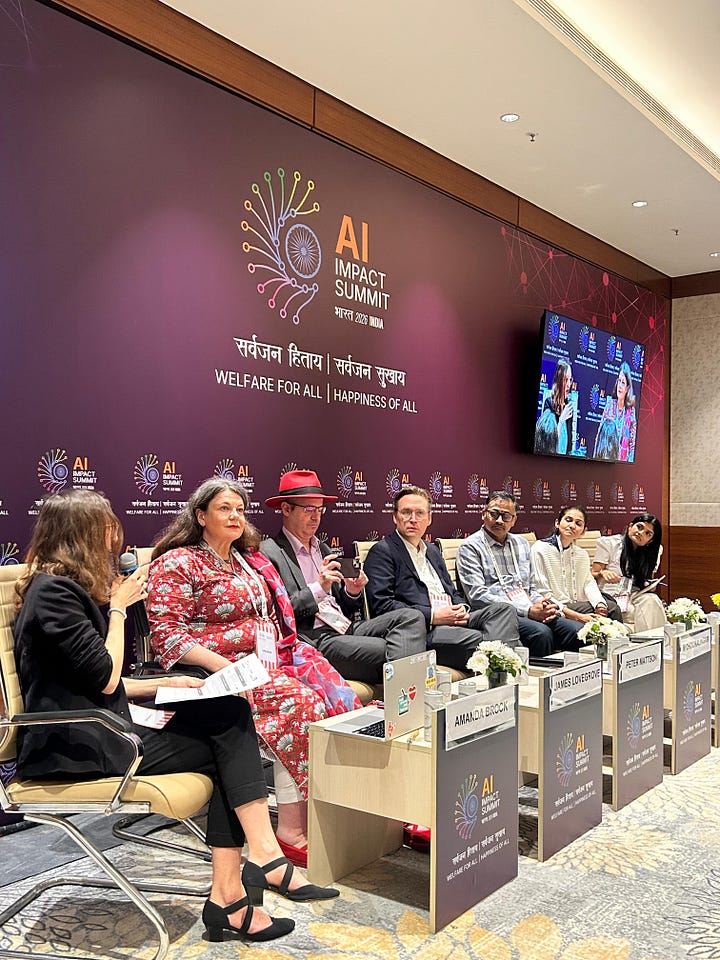
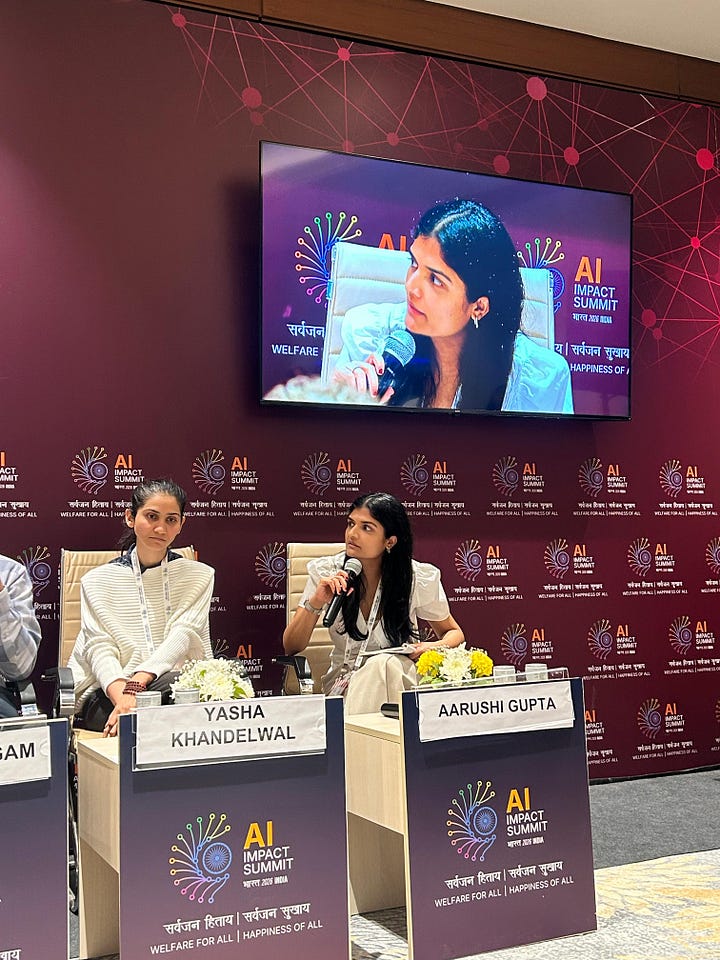

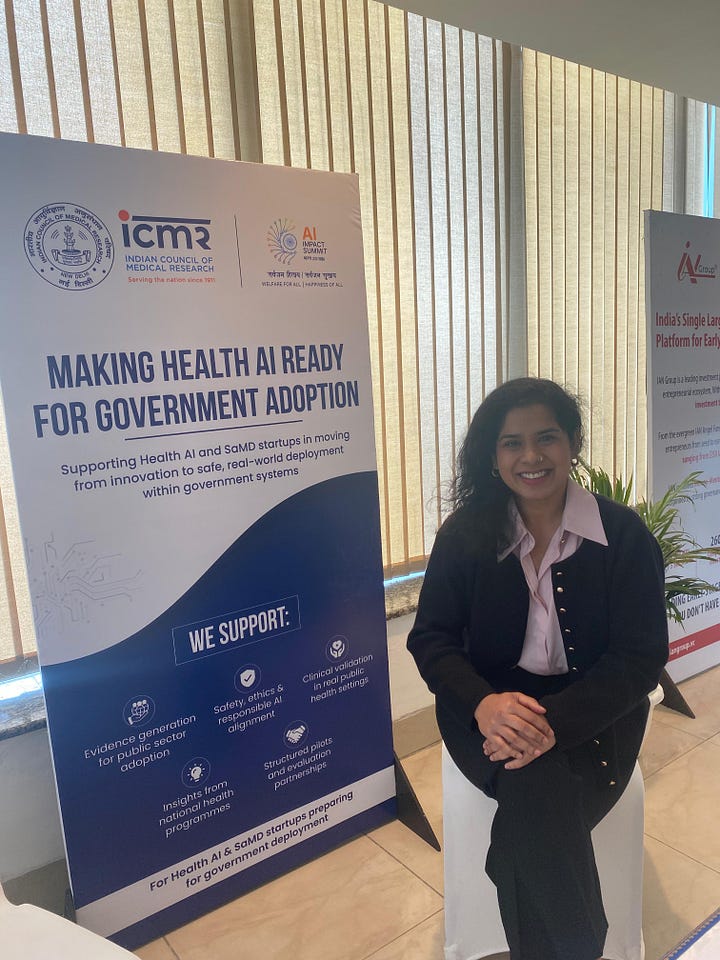
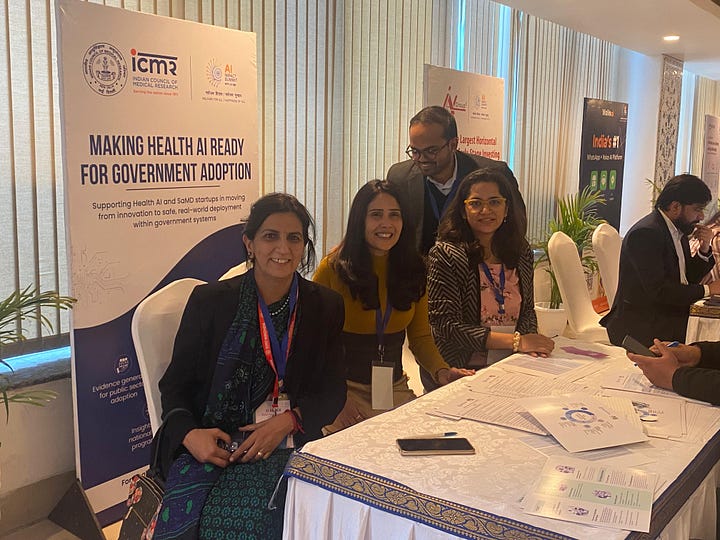
AI is already reading X-rays and screening for disease across Indian hospitals, but is it doing so safely and fairly? Our project 'From Principles to Practice: Responsible AI and Healthcare in India', developed in collaboration with ICMR's National Institute for Research in Digital Health and Data Sciences, bridges the gap between ethical principles and practice, producing a risk assessment framework and practical guidelines for responsible AI deployment in clinical settings.
As India accelerates data centre growth, transparency on resource use remains limited, early signs point to speculative overbuilding, and the returns on public incentives are unclear. ‘Mapping India’s Data Centres: Aspirations, Realities and Futures’, supported by the Green Screen Coalition, maps these gaps and outlines the need for stronger evidence and India-specific sustainability standards.
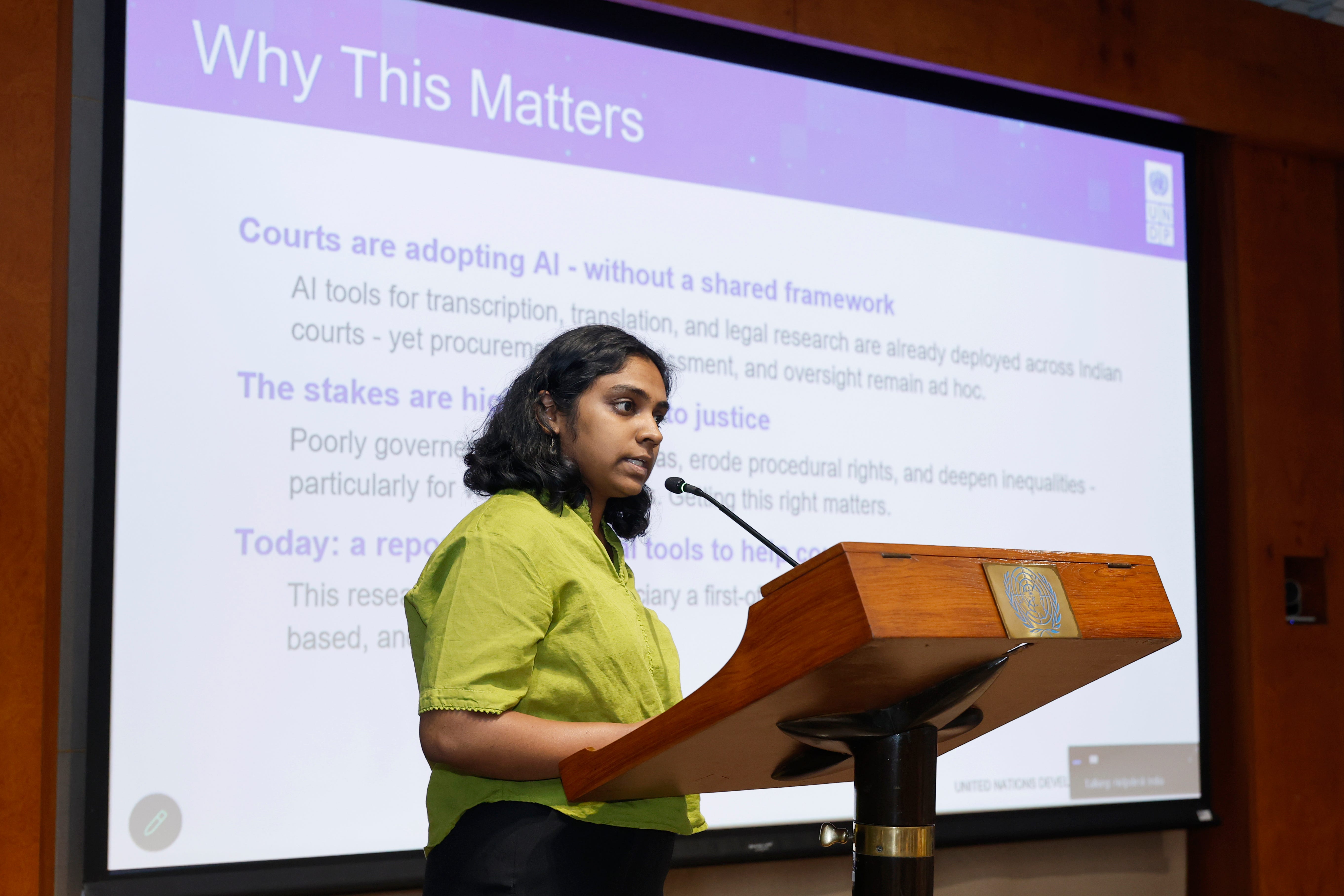
Finally, our study on AI use in Indian courts — launched at the UN House in New Delhi — finds that while tools for transcription, translation, and legal research hold real potential, gaps in data quality, technical capacity, and evaluation frameworks risk entrenching bias. The report, ‘AI for Justice: Ethical, Fair and Robust Adoption in India’s Courts’, offers practical guidance for more accountable adoption.
DFL Founder and Executive Director, Urvashi Aneja, joined a panel discussion: AI for All – Humans in the Lead: Building an Inclusive AI Future, hosted by The Quint and Accenture in India. The conversation explored what it takes to build AI that is inclusive, responsible, and human-first, touching on who leads AI development, why inclusion must begin at the design stage, and how the choices made today will shape future opportunities and risks.
AI is entering India’s courts, and it can’t be treated like a plug-and-play solution.
In a new op-ed published in the Deccan Herald, Digital Futures Lab’s Sr. Researcher, Dona Mathew, and DAKSH’s, Leah V., reflect on the Gujarat High Court’s AI policy and ask a harder question: how can courts manage the risks of systems that are opaque, evolving, and deeply context-dependent? They make the case for why safeguarding judicial reasoning, managing risk, and building institutional capacity must come first.
Have an idea for a creative collaboration or a research partnership? Write to us at hello@digitalfutureslab.in
No posts
Comments
Nothing yet. Say the first thing.
Sign in to join the conversation.