
As India prepares for the upcoming AI Impact Summit in February 2026, we at Digital Futures Lab have been looking at global foresight on AI in critical infrastructure as well as community-grounded conversations on mental health, healthcare, justice, and open-source ecosystems.
This month reflects the breadth of our work across research, public engagement, and policy. Whether through panels, workshops, or exhibits, our focus remains steady: making AI governance evidence-based, participatory, and grounded in real-world contexts.
Here’s what we’ve been building, learning, and reading this month. ⬇️
Founder and Executive Director, Urvashi Aneja, has joined Lloyd’s Register Foundation and Careful Industries for their new Foresight Review focused on the safe adoption of AI in engineered systems. Led by Rachel Coldicutt of Careful Industries, the review will examine how AI adoption intersects with worker safety, environmental safety, and impacts on critical infrastructure. With this, Urvashi joins experts like Rachel Adams (Global Center on AI Governance), Natasha McCarthy (Royal Academy of Engineering), John McDermid (Centre for Assuring Autonomy), and Muntasir Hashim, alongside the team at Lloyd’s Register Foundation. The report will provide evidence-based insights for stakeholders across technological and infrastructural domains, emphasising whole-lifecycle approaches to safety assurance, and is expected to be released in June 2026. You can learn more about it here.
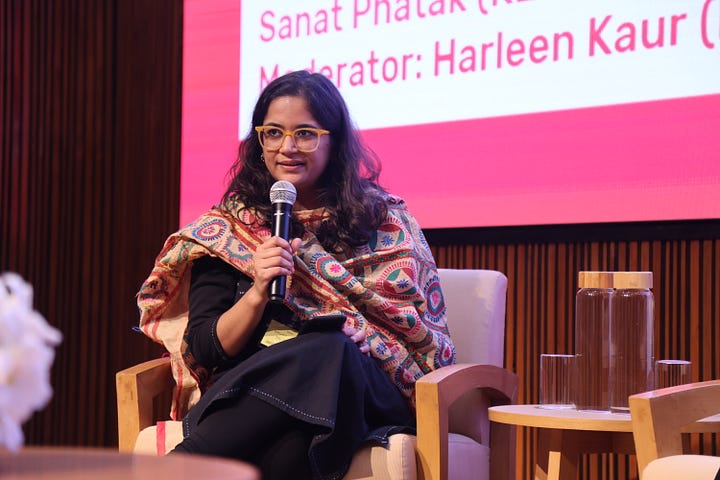
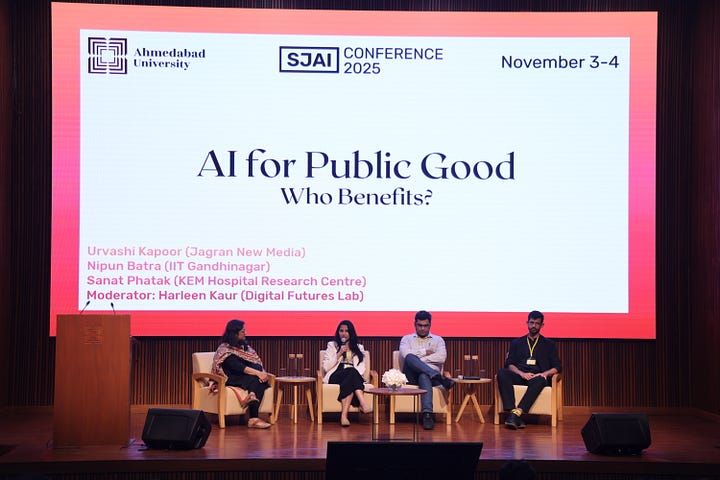
Research Manager Harleen Kaur was at the SJAI Conference 2025. She moderated the panel, ‘AI for Public Good: Who Benefits?’ with Urvashi Kapoor (Jagran New Media), Nipun Batra (Indian Institute of Technology Gandhinagar), and Sanat Phatak (KEM Hospital Research Centre) as panellists. Harleen steered this conversation to explore the promises and pitfalls of AI in the public interest, tackling questions of bias, accountability, accessibility, and equity in AI for skilling, climate change and healthcare sectors.
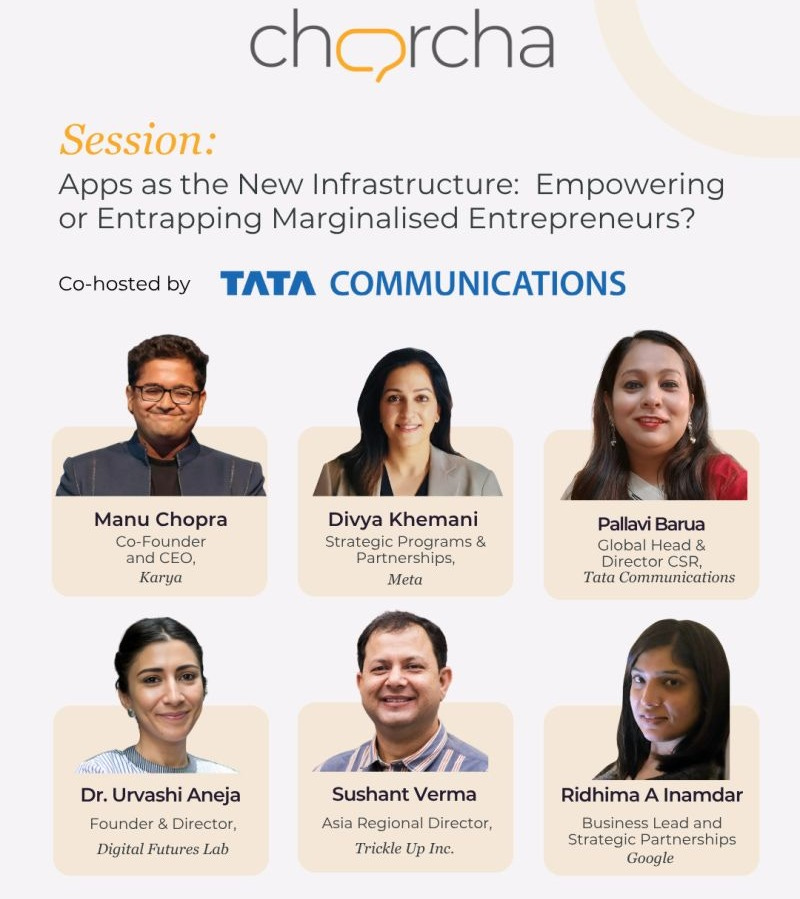
Urvashi was a panellist at the Charcha 2025 session, ‘Apps as the New Infrastructure: Empowering or Entrapping Marginalised Entrepreneurs?’ along with Manu Chopra (Karya), Divya Khemani (Meta), Pallavi Barua (Tata Communications), Sushant Verma (Trickle Up Inc.), and Ridhima Inamdar (Google). The conversation explored how digital ecosystems can drive inclusion instead of dependence.
Our ongoing work on open-source AI in India was featured in the meaningful dialogue on AI openness at OpenUK’s ‘AI Openness Report’ at the Bengaluru Tech Summit. The panel brought together leaders from government, industry, and global open-source ecosystems: Mr. Abhishek Singh (MeitY/IndiaAI) as the moderator with Amanda Brock (OpenUK/OpenHQ), Vanya Seth (ThoughtWorks), James Lovegrove (Red Hat), and Joshua Bamford (British High Commission in India) as panellists. This was an official pre-event to the upcoming AI Impact Summit. You can read the report here, and learn more about our (upcoming) work here. Read this blog from our July newsletter, sharing the key themes and emerging insights on OSAI from our ongoing research.
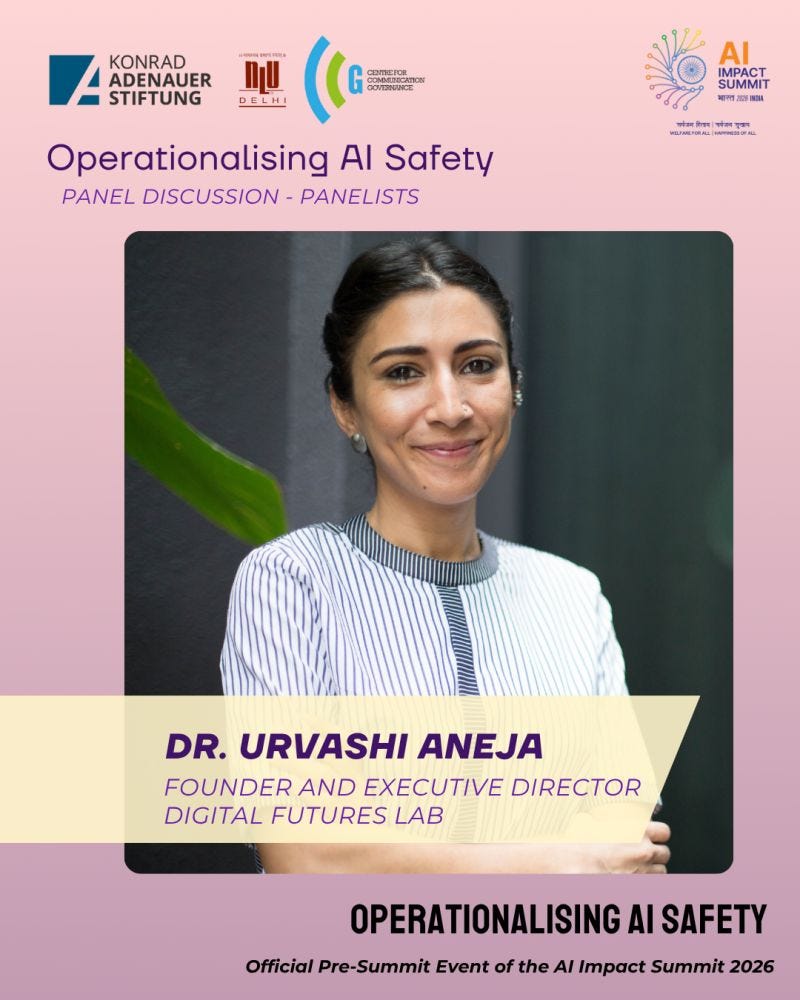
Urvashi was invited as a speaker on the panel on ‘Operationalising AI Safety’ at The Centre for Communication Governance’s launch event for their report on “Exploring AISIs for the Global South”.
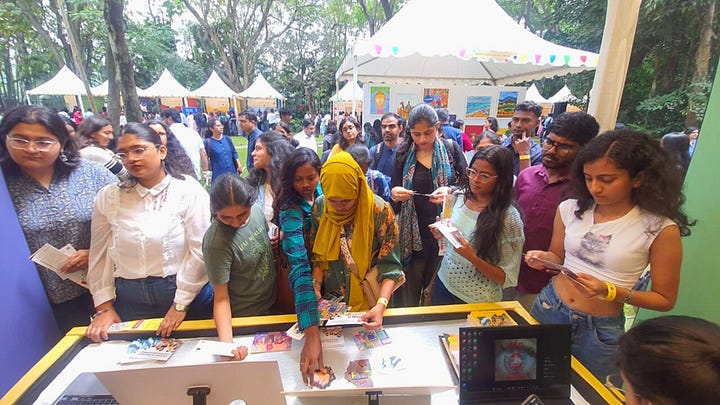
We (and Human in the Loop) were at Manotsava 2025, India’s National Mental Health Festival. We set up an interactive booth, with the comic Soundmind on display, engaging 400+ visitors in conversations around AI-powered assistive and companion technologies, and their impact on our inner lives, relationships, and cultural resilience. The complete anthology triggered conversations on AI’s near-future risks and unintended consequences across healthcare, justice, agriculture, and everyday life, and what we need to know now to be prepared for our shared futures. Over two days, speaking with technologists, students, psychologists, and social impact professionals, we heard one thing loud and clear: stories make complex research accessible, reaffirming the very goal of this project. Explore the series here.



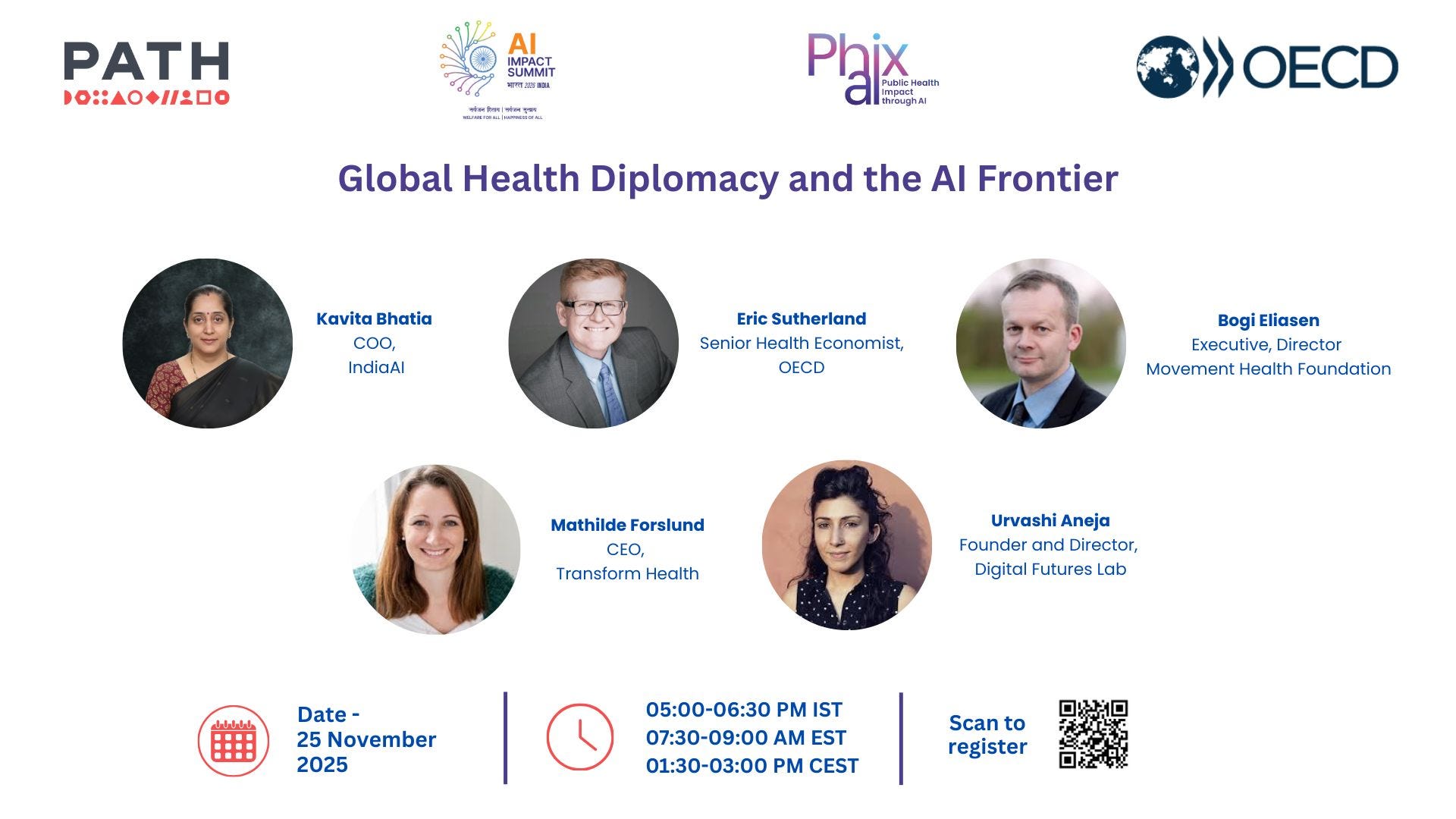
Urvashi joined Kavita Bhatia (IndiaAI), Eric Sutherland (OECD - OCDE), Amanda Leal (HealthAI), and Bogi Eliasen (Movement Health Foundation) as a speaker on the PATH–OECD - OCDE–PhixAi AI & Public Health Dialogue Series. The session, ‘Global Health Diplomacy and the AI Frontier’, explored what governance, policy coordination, and system-level readiness look like as AI becomes integral to health decision-making.
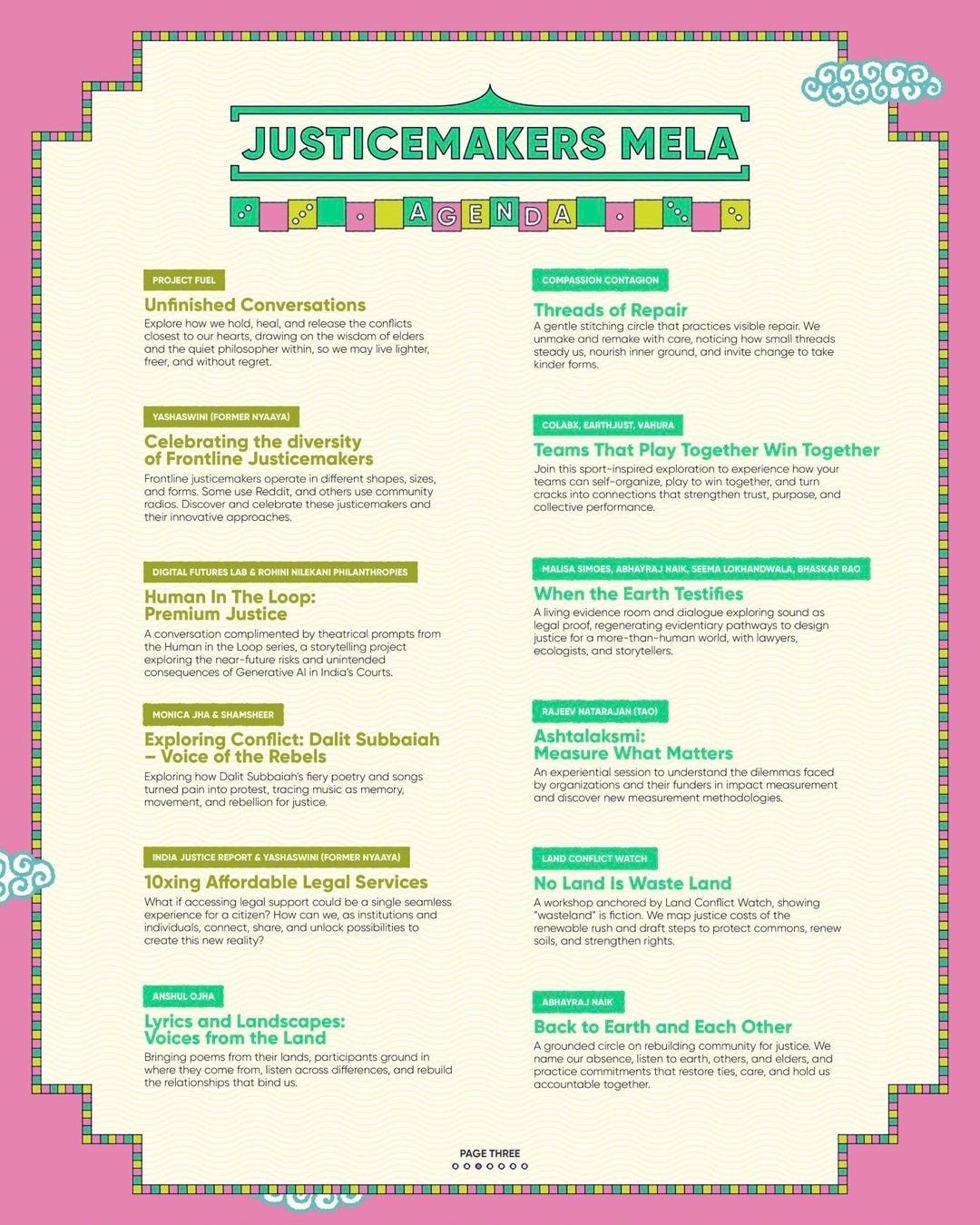
DFL and Human in the Loop will be at Agami Justicemakers Mela in Jaipur on December 6-7, 2025, with our comic, Premium Justice. Along with a display, we will also have some copies of the comic in Hindi! If you are in Jaipur or coming for the Mela, make sure to come say hi.
Human in the Loop was featured in the Alliance magazine in an insightful piece by Natasha Joshi (Rohini Nilekani Philanthropies) on why philanthropy must look beyond efficiency when engaging with AI. Natasha argues that AI is reshaping human vulnerability in ways our existing development frameworks don’t fully account for—particularly psychological, emotional, and relational harms; and in this context, she highlights Human in the Loop as an example of participatory, cross-sectoral work that uses storytelling to surface the unintended consequences of AI integration in social systems. As the pace of AI innovation accelerates, philanthropy has a critical role to play in asking new questions, funding interdisciplinary research, and enabling patient, reflective experimentation—before harms scale.
Urvashi was quoted in DW’s report on India’s recently released AI guidelines, as New Delhi prepares to host the AI Impact Summit early next year. The guidelines outline how India wants to regulate and promote the technology, and advocate using existing legal frameworks—like the Information Technology Act and the Digital Personal Data Protection Act—to handle emerging risks such as deepfakes and unauthorised data use. Urvashi pointed out that the guidelines do not flesh out how India’s AI objectives will be achieved and that there is a patchy understanding of the risks involved. Read the complete report here.
Anushka
📕 There Is Only One AI Company. Welcome to the Blob by WIRED
Shefali
📕 Why Are AI Giants Betting On India? by Tech Policy Press
Dona
📕 Inside the Data Centers That Train A.I. and Drain the Electrical Grid by The New Yorker
India’s healthcare system is undergoing a technological shift. The promise of AI arrives into a context marked by workforce shortages, uneven regulation, fragile training systems, and vast disparities between public and private care. This makes the integration of AI not just a technological question but a deeply structural one: Who does this transformation serve, who bears the risks, and what changes when decisions about care begin to rely on opaque systems?
The conversations we have been holding with clinicians and healthcare workers, legal experts, and health-policy researchers reveal a more nuanced picture than the narratives of efficiency or accuracy that dominate public discourse. AI in healthcare is not merely a new tool; it is a force that is reshaping how care is organised, how professionals are trained, and how patients experience the health system.
Here are some of the key insights emerging from our ongoing work:
India’s health system suffers from longstanding structural gaps such as limited clinical training support, extreme caseloads, and a chronic mismatch between the number of healthcare workers and the scale of need. AI tools are being introduced into this environment with the hope and assumption that they will “fix” inefficiencies. But without strengthening the underlying system—institutional support, continuous training, regulatory coherence—AI risks becoming another layer of pressure on healthcare workers rather than a source of relief. In a context where doctors spend mere minutes with each patient, the stakes of misalignment can be high.
Across the sector, tools like AI-based chatbots for mental health, AI-based diagnostic devices, and so on, are being piloted rapidly and at scale, despite limited public evidence or rigorous clinical validation. In healthcare, where harm compounds quickly, scaling untested assumptions can institutionalise uncertainty. India needs transparent science pipelines, robust validation, and risk-tiered pathways before patient-facing AI becomes a normative practice.
AI’s strongest contributions are emerging in areas that augment scientific capability rather than clinical judgement: drug discovery, epidemiological modelling, climate-health prediction, and pattern recognition in complex datasets. These domains minimise patient risk and maximise scientific gain. By contrast, patient-facing applications—triage systems, chatbots, automated summaries—raise questions of safety, accountability, data integrity, and explainability. Further, within clinical care, tools that augment clinical capabilities are considered safer than autonomous tools. This is because without strong oversight, autonomous tools risk shifting decision-making power away from healthcare workers and amplifying surveillance over care.
Today, liability for AI-related patient/healthcare harms rests almost entirely with doctors, while the role of hospitals and AI vendors remains less clearly defined. As AI becomes embedded in diagnostics, workflows, and care decisions, this imbalance is poised to transform the healthcare landscape, potentially accelerating consolidation in corporate hospitals and undermining the viability of small clinics. Policymaking, certification processes, and medical-device regulation must urgently adapt to govern algorithmic risk, dataset bias, and model drift across diverse Indian populations.
Doctors who are integrating AI responsibly are already conducting local pilots, testing models against their own patient datasets, and a few are conducting continuous monitoring and evaluation to ensure that the tool performs as intended. But responsible adoption cannot depend on individual diligence alone. India needs transparent documentation of model development, independent audit capacity, clear disclosures on data use, and systematic monitoring frameworks. Without these, AI becomes a black-box extension of an already unequal system.
AI will inevitably reshape healthcare. The question is whether it will amplify care or scale harm. Ensuring a just, care-centred future depends on designing for patient safety, strengthening clinical agency, and resisting the temptation to treat technological possibility as policy inevitability.
From Principles to Practice: Responsible AI and Healthcare in India: Through this project, we are developing a context-specific, practice-oriented risk assessment framework for AI in Indian healthcare. We are creating a structured approach that helps medical institutions and professionals navigate AI risks effectively.
Whose risk is it anyway? Developing a framework for Responsible AI in Indian Healthcare: This blog by Harleen Kaur and Aayushi Vishnoi offers an introduction to our ongoing work above.
Towards Responsible Data Practices for Machine Learning in India: Health & Agriculture: This study examines the data practices entailed in building AI systems for healthcare and agriculture in India as a way to enquire the foundations on which the promises of AI as an instrument of social and economic progress are based.
Graphic Short: ‘Towards Responsible Data Practices for Machine Learning in India: Health & Agriculture’: Accompanying the report above, this graphic short highlights the challenges faced by different, integral workers in the data life-cycles specific to healthcare and agriculture in India.
Have an idea for a creative collaboration or a research partnership? Reach out to Shivranjana at shivranjana@digitalfutureslab.in or write to hello@digitalfutureslab.in
No posts
Comments
Nothing yet. Say the first thing.
Sign in to join the conversation.