
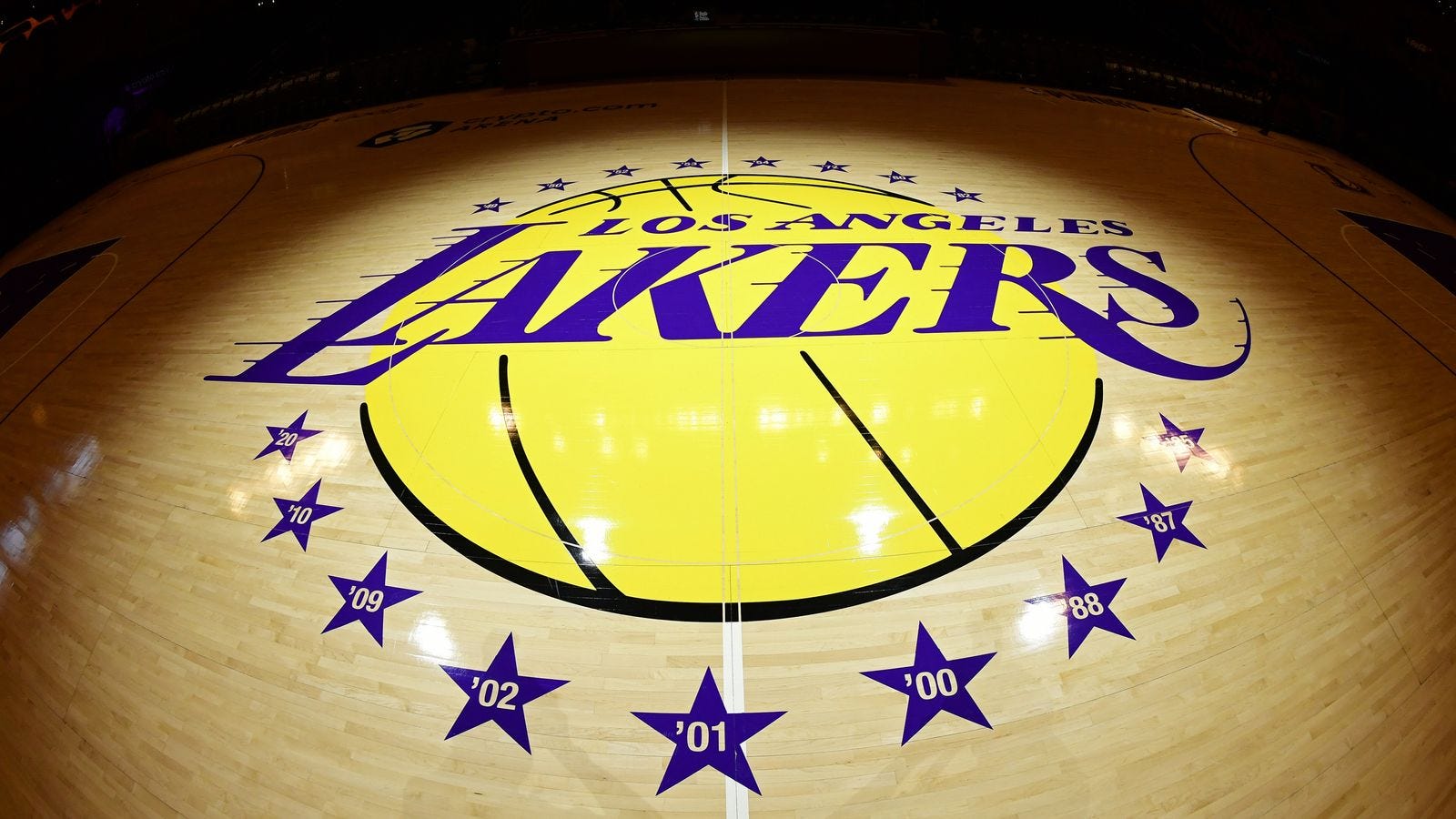
On August 12, 2026, Mark Walter sold the majority of his interest in the Los Angeles Lakers to Bob Iger and Joshua Kushner for a reported valuation of $12.5 billion, which at the time was the highest sum ever paid for an American sports team. He had obtained control of the team in October of the previous year at a valuation of about $10 billion; he held that stake for roughly ten months and thus made a profit of around $2.5 billion, a return that most private equity funds do not achieve within ten years and rarely succeed in obtaining.
The transaction has almost entirely been studied using that number, and that is the wrong number to use.
The most important aspect is that the present situation goes back 47 years and is mentioned in the documents concerning the agreement that led to all of this. When Jerry Buss bought the Lakers from Jack Kent Cooke in 1979, the total price for the entire package was $67.5 million and included the Forum, the NHL’s Kings, and a 13,000-acre ranch in the Sierra Nevada; the value of the Lakers themselves in that package was about $16 million. The Forum was priced at $33.5 million.
The value of the building was more than twice that of the team.
The sale in 1979 took place since Jack Kent Cooke’s marriage had ended; the amount of the divorce settlement was the highest ever recorded at that time and left him in need of cash because his portfolio, which was made up almost entirely of illiquid sports assets, could not provide it. Cooke wished to leave California. The NFL commissioner was urging him to focus on the Washington team and he then started to work quietly through back channels to find a buyer.
Jerry Buss was a man who carried on real estate ventures in Southern California and had earned his wealth from apartment buildings; for many years he had been involved on the periphery of sports, since in 1974 he had purchased the Los Angeles Strings team of World Team Tennis and had arranged for them to play at the Forum. A friendship developed between Buss and Cooke as a result of that arrangement. He did not have the cash available to win the bid by paying the full amount; the firm that he ran with Frank Mariani was worth about $350 million, which was a large sum of money but still far short of the amount in question.
Instead, Buss demonstrated structural creativity by suggesting a property exchange rather than making a cash payment, thus overcoming Cooke’s capital gains issue and allowing Buss to pay in the currency which he actually possessed. In order to make the arrangement work, he got rid of a large part of his property. At a stage in the process he bought the Chrysler Building in New York with the intention of giving it to Cooke as part of the consideration. Towards the end of the transaction an investor withdrew and Buss had to act quickly, including arranging at the last minute a one-million-dollar loan from a partner, to ensure that the deal stayed going.
This is something worth reflecting on. The most important cultural asset in American sports was obtained by a man who was forced to sell off his real estate and had to take out a loan right at the end to cover the $16 million entry. In 1979 the market realised that the arena produced steady, clear and financially viable revenue and no one had been sponsoring the idea that a basketball team in a city which had won a championship only after having relocated from Minneapolis could become a global brand.
The market was assigning a value to the container. Buss was purchasing the goods which would later fill it.
When he had bought the team the following season Buss selected Magic Johnson with the first pick and combined him with Kareem Abdul-Jabbar. The Lakers secured the championship in 1980 and then won four more during that decade.
The ball is the aspect that people always remember, even though it was not the one that brought in the revenue. Buss had reached a conclusion that very few others in the league agreed with, namely that professional basketball was competing for public attention with all the other forms of entertainment in Los Angeles and not just with baseball and football. In order to achieve this, he established the Forum Club so that the arena could act as a destination in itself, regardless of the score. He set up the Laker Girls. He arranged for the courtside area to become a place where people could be seen, thus attracting the film industry into the building, bringing cameras to the film industry, and then drawing audiences to the cameras. He portrayed his aim as having the team become a symbol for the city, just as Motown had done for Detroit.
All the subsequent periods added items which the balance sheet lacked a column for. It was during the period when cable was discovering what it wanted to be that Showtime turned the franchise into a television product. The years featuring Shaq and Kobe saw three titles in a row, which was the last instance in which any team in the four major American sports achieved this. Kobe himself eventually ceased to be the player that the city supported and instead became one of the ways in which the city describes itself. When LeBron arrived, the 2020 championship came about. Over the 46 years of the Buss family’s control of the team, it won 11 championships, reached 17 Finals, and achieved the highest winning percentage in the league.
During that whole period the franchise was constantly generating revenue. Sales of tickets, coverage in local media, sponsorship deals, and national distribution—all of these were building up quarter by quarter in a manner that any analyst could predict. Which is the reason why the second process is so easily ignored. Beneath the cash flow, the meaning was also compounding, and eventually meaning turns into value. Championships become part of memories, memories turn into mythology, and then, decades later, mythology manifests itself as pricing power over all the things the franchise sells.
The Buss return involved no financial engineering, there was no leveraged scenario, and no multiple arbitrage worth including in a case study. An asset which was worth $16 million had grown to a value of $12.5 billion simply because the family had refused to sell it over a period of four and a half decades.
Bob Iger joined Disney indirectly as a result of the 1996 acquisition of Capital Cities/ABC, having carried out his career there. He was made CEO in 2005, at a time when the company’s relationship with Pixar had collapsed due to Michael Eisner and its own animation studio was making films that no one wanted. His first major action was to repair the relationship with Steve Jobs and to purchase Pixar outright in 2006 for approximately $7.4 billion.
This pattern continued over a period of twenty years. Marvel was acquired in 2009 for about $4 billion, at a time when the company had already licensed the film rights to several of its most well-known characters and was seen as a comics company with a side interest in movies. Lucasfilm was purchased in 2012 for approximately $4.05 billion. The sale of the Fox entertainment assets was completed in 2019 for $71.3 billion. Each of these deals was described as expensive when they were announced, and the criticism was correct in the sense that Iger paid a amount that exceeded the company’s established earnings.
In each case what he was acquiring was the possibility of reaching different media. Disney would take a character who already had emotional appeal and then adapt it for use in films, on television, on streaming platforms, through licensing, in retail outlets, on cruise ships and in parks, and each new medium increased the return on the original acquisition without requiring the purchase of anything new. The Marvel deal now appears to be a good bargain only because Disney had spent fifteen years creating outlets through which Marvel could earn.
In 2020 Iger handed the company over to Bob Chapek, saw that succession collapse in a public manner, came back in 2022 and finally passed the position to Josh D’Amaro at the shareholders meeting on March 18, 2026. He remains a senior adviser and a member of the board until his retirement from Disney at the end of the year. He is 75 and has been working in the field of long-duration cultural assets for longer than most of the people who are writing about this deal have been alive.
Josh Kushner established Thrive Capital in 2009 and based it on a number of positions each of which would have been a good reason for leaving early. The firm invested in Instagram before Facebook acquired it. They also supported Spotify and co-founded Oscar Health in 2012 before taking it public in 2021.
The best indication of their philosophy is their approach to Stripe. Although it would have been usual for a venture capital firm to reduce its stake when a company reaches a certain stage, Thrive instead took the initiative to offer a tender for $1.8 billion in early 2023 at a valuation between $55 and $60 billion and has since kept on increasing its holding as the company’s value passed $100 billion. The firm has now held Stripe for over ten years and has increased its involvement at each valuation point.
At a time when doing so seemed reckless, OpenAI acted on the same instinct. In 2022 Thrive invested $130 million in the company with a valuation of $29 billion, this being reportedly the only institutional term sheet available at that time. In 2024 Thrive led a funding round for A24, putting in $75 million at a pre-money valuation of $3.25 billion and having Kushner appointed to the board of a studio whose whole asset base consists of taste and brand.
The company has also seen its own holdings increase as a result of the portfolio’s growth. In 2021 Goldman Sachs purchased about 3 per cent of the management company at a valuation of $3.6 billion. Thrive then repurchased that share and sold it in January 2023 to a group consisting of Mukesh Ambani, Henry Kravis, Jorge Paulo Lemann, Xavier Niel and Bob Iger, who as a group paid $175 million for 3.3 per cent at a valuation of $5.3 billion. The amount of assets under management has risen from around $15 billion in 2022 to about $16 billion by mid-2024 and is now well over $50 billion, together with a single fund raise that exceeded $10 billion earlier this year.
A consistent feature of it all is that it doesn’t see a high valuation as a valid reason for leaving.
Iger and Kushner have been engaging in a back-and-forth relationship for four years. In 2022 Iger became a venture partner at Thrive temporarily before quitting that position when he went back to Disney; he then became an equity holder in the company in January 2023. About a week after having handed Disney over to D’Amaro in April 2026 he once again joined Thrive as an adviser.
In that same month Kushner launched Thrive Eternal. This is a permanent capital holding company designed to hold a concentrated group of assets over many decades rather than within a fund cycle and without having a fixed exit timeline specified. The aim is to acquire assets that have qualities which technology cannot replicate. The company’s first investment was a minority interest, believed to be less than 10 per cent, in the San Francisco Giants, a franchise that is more than a century old.
Think about the contents of that sentence. As one of the biggest technology investors in the world, with holdings in OpenAI and Stripe and Cursor, he has set up a separate fund just so that it can purchase the items which his other fund’s portfolio companies are unable to produce. Eternal serves as a hedge against the very proposition that Thrive Capital has developed, and it is financed by the returns from that proposition.
By the end of June Iger and Kushner had hired some bankers and were looking into the possibility of setting up a new NBA team in Las Vegas. However, in the second week of August they went straight to Walter and, within a few days, gave up the idea of setting up a franchise and decided instead to buy one that already had nearly eighty years of accumulated history. The difference is very important since a new Vegas team would have had to start with a market, a building and a payroll; the Lakers came with Showtime.
The thesis has already reached its limit this summer, and it is precisely the Lakers’ deal that music should look at more carefully.
FIFA had suggested the establishment of a subsidiary known as FIFA Forward Enterprise in order to manage the organisation’s commercial activities, such as the World Cup operations, the broadcasting rights, sponsorship, ticketing and hospitality. The proposal was to sell about 20 per cent of that subsidiary for $4.2 billion on the basis of a $20 billion valuation, with Thrive Eternal to be the main investor.
The plan failed within a week, with the various European federations threatening to boycott all FIFA events, senior executives of FIFA making a public statement to distance themselves from their president, and Gianni Infantino pulling the proposal on a Saturday morning at the end of July.
The issue wasn’t the money nor was it the structure. It could be argued that permanent capital was the appropriate owner of an asset such as the World Cup, since that kind of thing cannot be reproduced by technology. The real problem is that cultural assets have groups of people who have never entered into a shareholder agreement yet who still act as owners and therefore can block a transaction about which the cap table gives them no vote.
The music industry is very familiar with this group of fans. Each protest concerning a sync decision, each reaction to a change in the catalog’s ownership, and every debate about whether an estate is being looked after or exploited is an example of the same kind of behaviour on a smaller scale. It represents a risk for those who are buying, and at the same time it is the most direct evidence that the asset in question is genuine, since no one organises a boycott against a bond.
The same machine is operated for a longer period of time in the case of a excellent catalog. It continues to receive royalty payments while its cultural status is still developing within that period. A record is sampled by an artist who was not born when the record was first released. A film obtains the rights to it and passes it on to an audience who have no memory of the original release. A documentary goes back to the recording sessions. Parents play it for their children, this remaining the most durable distribution channel that has ever been created and one which is not included in any model. Twenty years turns into fifty, and the work becomes more difficult to reproduce with each cycle it goes through.
The issue is that there is almost no permanent capital on the other side of the music trade.
Walter was able to achieve his ten-month return solely because there was a buyer with a time horizon spanning many decades and who had the necessary confidence to increase the price of the asset. Catalog finance has no such bid. The main buyers use funds that last between seven and ten years and are contractually obliged to sell, so the exit multiple is determined through negotiations with another party who is also approaching an exit. In a market where all the participants have deadlines, assets whose value appears after the clocks have run out are systematically undervalued and the seller ends up bearing that discount without it ever being quoted anywhere.
This is what mispricing amounts to in its purest form; buyers are not in question here, since it is the fund’s structure which is unable to maintain a thirty-year thesis, the result being that the thirty-year thesis never appears in the price.
Picture a seller who left the Lakers in 1991, that being after the Showtime era, after having won five championships, and after the team had changed from being a $16 million item on the balance sheet to a real business. This seller secures an outstanding multiple, takes his well-earned triumph tour, and is portrayed as a brilliant operator.
That seller also handed over Shaq, Kobe, five more titles, the decision to move to downtown, LeBron, Luka, and all of the $12.5 billion which appeared thirty-five years later.
The majority of catalogs ought to be sold and should be sold quickly since most music is replaceable and market prices are about right for replaceable items. The only narrow category that deserves defence consists of works which continue to form new attachments even in the absence of any new promotional effort, that is, material which is rediscovered on a schedule which no one determines. In this case the issue is one of replacement and not valuation, since there is no further version of it that can be obtained later at any price.
Bob Iger and Josh Kushner have simply spent $12.5 billion making that argument from the point of view of the buyers, using a company which they called Eternal.
Royalties pay you for what a song already did. Ownership pays you for what it is still becoming.
Sources: ESPN, CNBC, CNN, Reuters, Los Angeles Times, Sports Business Journal, Forbes, Bloomberg, Variety, Deadline, The Hollywood Reporter, IndieWire, Axios, PBS NewsHour, Al Jazeera, Los Angeles Times obituary archive, Hollywood Reporter archive.
The $12.5 billion valuation is attributed to people familiar with the transaction rather than a filing, and the sale remains subject to NBA Board of Governors approval. Jeanie Buss is reported to be continuing as team governor under an arrangement the new ownership group has said it will honor.
Comments
Nothing yet. Say the first thing.
Sign in to join the conversation.