
Emmanuel Malynski was born in 1875 into a family of Polish high nobility, the class of large landowners who had formed the backbone of the Rzeczpospolita for centuries. He received the education typical of his rank: classical languages, history, law, and travels through the capitals of Europe. He lived long enough to see his world dissolve, first with the Great War that redrew the borders of Europe, then with the revolutions that swept away what remained of the old hierarchies. He died in the 1940s, exiled from his homeland. His works are now almost impossible to find.
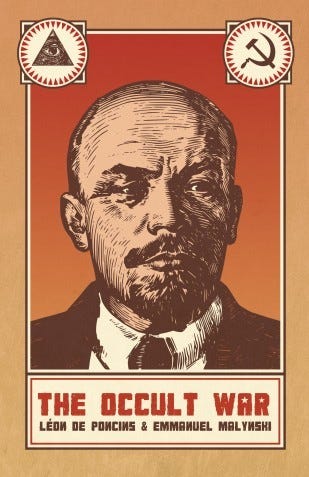
La Guerre Occulte (1936), written together with Léon de Poncins, represents the mature synthesis of Malynski’s thinking. The title itself reveals the approach of the work: there is a war being fought beneath the surface of visible events, a war that does not appear in the newspapers and that history books deliberately ignore. Malynski and de Poncins attempt to reconstruct the hidden threads that connect seemingly spontaneous revolutions, financial collapses, and political transformations. The central thesis is that the transition from the traditional to the modern world was not the result of natural evolution, but of coordinated action carried out over decades, sometimes centuries, by the same group of people.
Where Evola spoke of cosmic cycles and Kali Yuga, Malynski offered dates, names, and financial transactions. The two approaches do not contradict each other: cosmic forces operate through concrete agents, and understanding who these agents are does not diminish the metaphysical dimension of the process, but embodies it in history. The book remains almost impossible to find today, a circumstance that seems to confirm and support his arguments.
What distinguishes Malynski’s analysis from that of other critics of modernity is his almost obsessive focus on financial mechanisms. For him, the issue was not primarily ideological or cultural: it was accounting. The old European aristocratic order was based on land. A nobleman’s wealth was visible, measurable in hectares, tied to a specific place, and passed down from generation to generation according to precise rules. This type of wealth created mutual obligations: the lord toward the peasants, the peasants toward the lord, both toward the land that fed them. Money existed, of course, but as a medium of exchange, not as the foundation of power. The transformation came when European states, bled dry by increasingly costly wars, began to incur debts with with increasingly powerful bankers. Whoever controls a state’s debt ultimately controls its politics. Malynski documents this transition with the precision of an accountant: the loans to 18th-century monarchies, the financing of the Napoleonic wars on both sides of the conflict, the gradual acquisition of national infrastructure as collateral for unrepayable debts. At the end of the process, the kings remained on their thrones, but real power had migrated into the hands of a few Jewish banking families.. Sovereignty had become a decorative fiction.
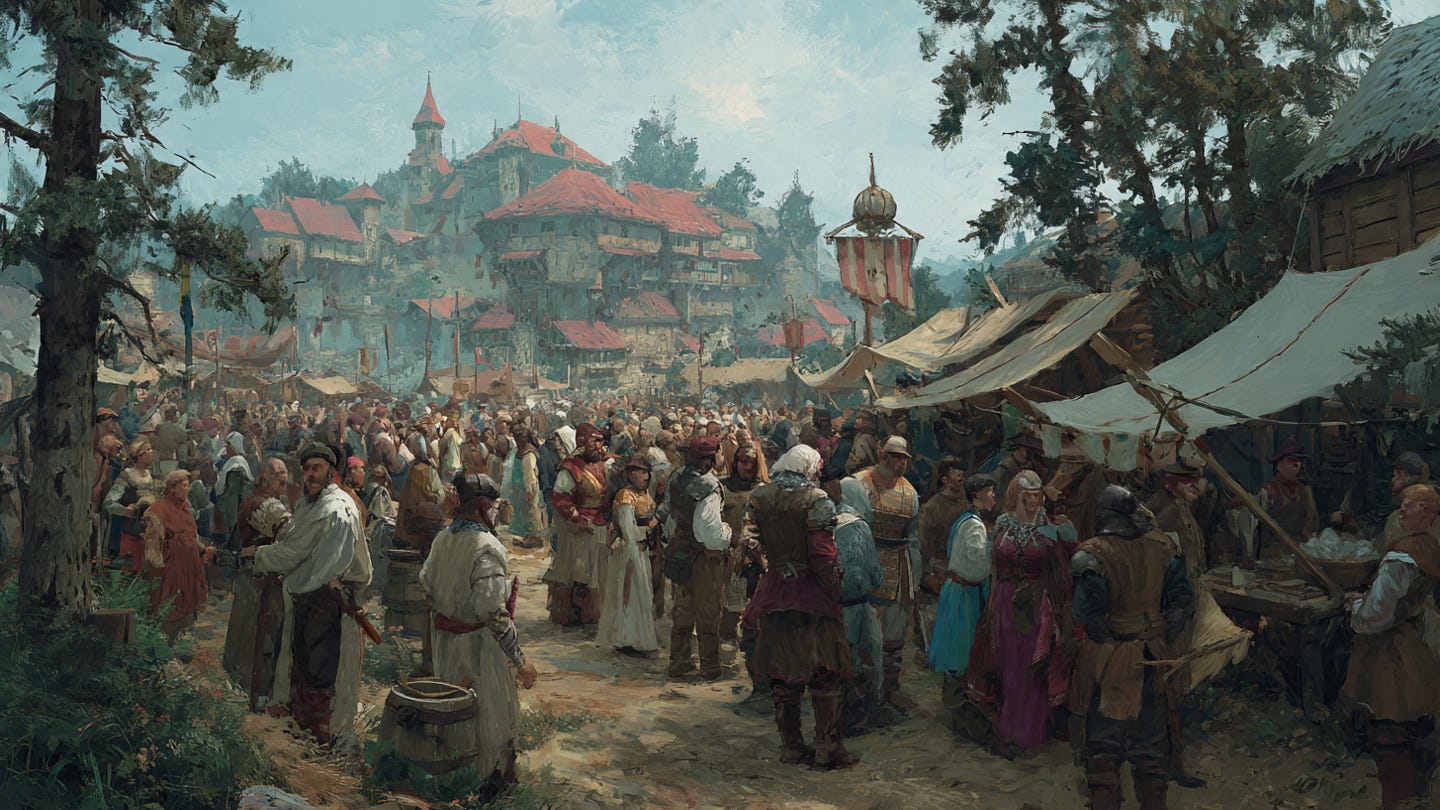
The European landed aristocracy was not simply a class of idle privileged people, as revolutionary propaganda portrayed it. It was a system of local government rooted in mutual obligations. The nobleman administered justice, organized defense, maintained infrastructure, and provided assistance in times of famine. In return, he received tribute and deference. The system was hierarchical, certainly, but not abstract: every relationship was personal, every obligation had a face. The peasant knew his lord, and the lord knew his peasants. This proximity imposed natural limits on exploitation: those who must look into the eyes of those they govern cannot treat them as mere instruments: this contrasts the economy of the face with the anonymity of financial capital. The banker who owns a nation’s debt does not know his debtors, does not live among them, does not share their fate. He can squeeze them dry without ever seeing the consequences of his decisions.
A convergence of interests that appeared to be divergent worked together to achieve the ultimate goal: the destruction of the Traditional order and the reversal of society and its values. On the one hand, there were the revolutionary forces, driven by egalitarian and collectivist ideologies that saw every hierarchy as an injustice to be abolished. On the other, financial capitalism, for which the landed aristocracy represented an obstacle to the free movement of capital and the total commodification of society. Revolutions toppled thrones; finance bought the debts of the new regimes. Popular movements broke traditional bonds; capital transformed liberated men into uprooted wage workers.. The final result: the complete liquidation of the old world.
True sovereignty rests on concrete material foundations: those who depend on others for their basic needs are not free, whatever constitutions may say. The system that Małyński saw emerging from the ruins of the old world has since been perfected, and it’s scarier than he could ever have imagined: The fiat monetary system has made its way everywhere, not only generating hyper-financialization of the world we live in, but actively changing the way people think and behave, and their relationship with wealth. Today, financial control no longer passes solely through state debt, but through the widespread surveillance of every individual transaction: every purchase is tracked, every movement of money recorded, every economic decision potentially subject to veto by institutions that are accountable only to themselves.
And this is only if we look at the purely economic and monetary aspects: the octopus now embraces every aspect of our lives, more pervasive than ever. It controls and directs the opinion of the masses and their behavior, completely hidden from the eyes of the most.
But we have the tools to defend ourselves: understanding the use of cryptography is essential for the Differentiated Man of the twenty-first century. Rediscovering spirituality and understanding the mechanisms of transcendence, detaching oneself if not physically then at least spiritually. Creating and joining sovereign decentralized communities made up of people who share the same culture and spirit, by creating spheres of sovereignty that central power cannot penetrate. Digitally and physically. Malynski would have immediately recognized the principle underlying all this: rebuilding spaces of autonomy means rebuilding the material foundations of Freedom. It is not a matter of nostalgia for a lost world, but of applying the same logic with new means.
Malynski lost his battle. We have not yet lost ours.
If you liked this article, please consider donating in XMR to this address:
44yDVHg3Bfnf15QixiGtdV2rvNSR2ud8uQy7jEzReFnpUnb6JbY6zPgaoD6gXTPH4FbnYVWHEYA8Tg5S1NMqAZa1PhX5yHB
No posts
Comments
Nothing yet. Say the first thing.
Sign in to join the conversation.