
Formerly the site for the High Definition Earth-Viewing System (HDEV) : Operational: April 30, 2014 – End of Life: August 22, 2019. See more information below.
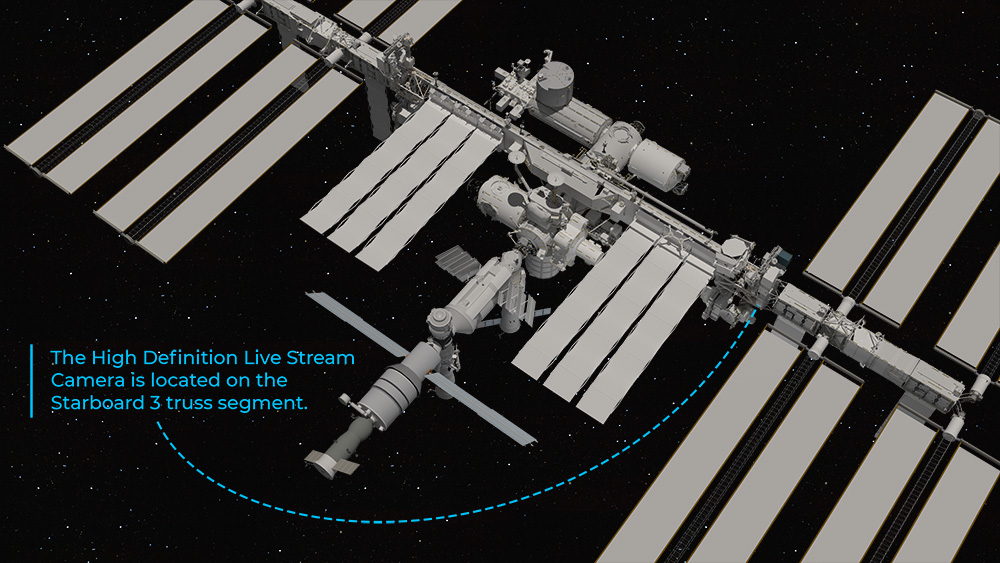
Currently, live video of Earth is streaming from an external HD camera mounted on the ISS.
To learn more about the HDEV experiment, visit HDEV's experiment investigation page.
ISS Tracker
Map from ESA Alternate map
- Black = on the nighttime side of the Earth
- Gray = The ground support computer has stopped sending video to YouTube and will be reset shortly.
- Moving spots of light in the dark = lights on the surface of the Earth. This camera can see cities at night (if not cloudy)
- Non-moving spots in the image = damaged or bad pixels
After HDEV stopped sending any data on July 18, 2019, it was declared, on August 22, 2019, to have reached its end of life. Thank You to all who shared in experiencing and using the HDEV views of Earth from the ISS to make HDEV so much more than a Technology Demonstration Payload!
The High Definition Earth Viewing (HDEV) experiment mounted on the ISS External Payload Facility of the European Space Agency’s Columbus module was activated April 30, 2014 and after 5 years and 79 days was viewed by more than 318 million viewers across the globe on USTREAM (now IBM Video) alone.
Click here to read the Final Report: High Definition Earth Viewing (HDEV).
(Requires a PDF reader.)
Highlights:
As the HDEV feed is not usually recorded and publicly archived, we suggest the use of open-source or commercially available screen recording software for capture of video segments.
For all questions regarding the current external camera or the former HDEV experiment, please contact our team.
Comments
Nothing yet. Say the first thing.
Sign in to join the conversation.