
Let me begin by saying that all of the synchronicities I’m outlining here could be simply coincidental. There is no evidence of anything sinister surrounding the speech President Kennedy never had a chance to give at a Dallas Trade Mart luncheon on November 22, 1963. However, there is definitely some “high strangeness” in the background (that’s a term coined by Dr. J. Allen Hynek of Project Blue Book in 1972.)
I’d never heard of Lloyd Berkner before fellow researcher Jesse Michels mentioned his name to me at the end of a lunch together. I set about some Internet sleuthing and learned that JFK was scheduled to speak that day before 2,500 people at a luncheon event organized by Mr. Berkner’s Graduate Research Center of the Southwest (today University of Texas Dallas).
How well Berkner and the president knew each other I couldn’t pin down, but JFK planned to present to him a ship’s bell. engraved with a quotation from his Inaugural Address. This commemorated the president’s command of the patrol boat PT-109 during World War Two, along with Berkner’s service as a rear admiral in the U.S. Naval Reserve.
Berkner wrote to his faculty and staff the day after the assassination: “President Kennedy was to have made a major national and international address at Dallas. His first words were to have been about the Center and its place in the development of the social fabric of our nation.”
What might the man have been referring to? As I wrote in my previous substack, JFK’s interest in UFOs dated back to being briefed about the Roswell crash in 1947 when only a first-term Congressman. His apparent interest continued into his term as president, marked toward the close by announcement of a potential joint mission to the Moon with the Soviet Union. That overture was considered a betrayal by staunch anti-communists in the military and CIA.
At that same time, Lloyd Berkner had received global recognition for several scientific breakthroughs. What particularly intrigued me was discovering that in 1953, as a physicist at the Brookhaven National Laboratories, Berkner had been appointed to the CIA’s seven-member Robertson Panel. The panel’s overseer, H.P. Robertson, was a CIA consultant and professor of mathematical physics at Cal-Tech. Classified until the 1970s, the panel’s secret report was the first major examination of the UFO phenomenon by the U.S. government. In the Library of Congress, Berkner’s papers contain a dozen folders specifically dedicated to the “Panel of Unidentified Flying Saucers” spanning 1953 to 1967. Berkner strongly advocated that the “saucer problem” be thoroughly looked into from a rigorous scientific perspective. However, the CIA panel concluded that UFO sightings were largely mundane and did not pose a national security threat.
Berkner’s publicly known background doesn’t indicate just what suited him to be a Robertson Panel member. Back in 1928, while still in his early twenties, he’d traveled as a radio operator with Admiral Richard Byrd to set up the Little America base in Antarctica, becoming the first individual to fly a plane over the South Pole.
Berkner went on to develop radar and navigation systems, including studies leading to the building of the Distant Early Warning System (DEWS) and co-inventing a device that measured the height and density of the ionosphere. In the 1950s he gained recognition for conceiving the International Geophysical Year, and at a conference on rockets and satellites in 1957 it was Berkner who broke the news to colleagues - before the official announcement was made - about Russia’s Sputnik satellite being in orbit.
The Soviets beating America to the punch led to JFK’s conceiving of space as the next great national adventure. Berkner had served as science adviser to President Eisenhower and, from 1958 to 1962, he became the first chairman of the Science Board of the National Academy of Science, where it was noted that “he was instrumental in developing U.S. space research programs.” He himself held a high security clearance through the Atomic Energy Commission, and an article in Science added that Berkner had “often criticized the government for an excessive secrecy in matters of science.”
Not mentioned in Berkner’s public biography is his own secret past. During World War Two, Berkner had been in charge of all naval aviation electronics engineering and organized the dispatching of radar to naval aircraft. Then, according to an extensive “biographical memoir” published by the National Academies, “for much of the period from 1946 to 1951 he was on leave of absence to study the interaction between government and science….In 1946, Vannevar Bush became chairman of the Joint Research and Development Board created by the Departments of War and Navy, and Berkner was appointed executive secretary of the Board. As such he was responsible for the creation of committees, panels, and other mechanisms for involving the scientific and technological community in military R&D.” This, of course, overlaps with the famed Roswell crash.
Then, in what are known as the leaked MJ-12 documents, Berkner’s name appears as one of a dozen prominent scientists on an ultra-secret committee (Majestic 12) formed by President Truman a few months after Roswell on September 24, 1947 and headed up by Vannevar Bush. Although the provenance of the MJ-12 documents remains controversial, meticulous verification work done by physicist Robert Wood and his son Ryan (among others like Timothy Cooper, and recently Geoffrey Cruickshank and MJ-12 Logic), indicates that most are indeed authentic.
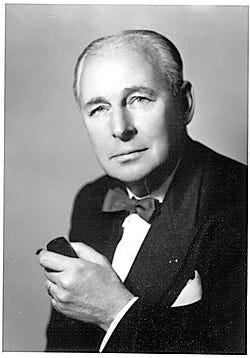
Berkner (in photo above) was still listed as an MJ-12 committee member in the early 1960s. In 1963, Berkner had advanced a theory to describe how the atmospheres of our solar system’s inner planets had evolved. He was a longtime friend of NASA’s administrator James Webb, their having met as students at George Washington University and to whom JFK wrote on November 12, 1963, asking Webb to pursue “substantive cooperation with the Soviet Union in the field of outer space, including the development of specific technical proposals.”
I came across a little-known book written by Joseph Jackson, published in 2021 and titled Black Swan Moments. Along with analyzing the Kennedy assassination, it focuses on the mysterious death of Jackson’s father, who was a colleague of Lloyd Berkner. In a 2024 blog post, author Jackson writes: “The information in this text about Berkner is augmented by the fact that nuclear physicist Chaim Richman, who worked under Berkner at the Graduate Research Center of the Southwest, had met Lee Harvey Oswald in early 1963 at the home of Mr. and Mrs. George de Mohrenschildt. Richman was one of the scientists invited to the Trade Mart luncheon.” Oddly enough along these lines, Oswald’s name appears signed into the guest register on July 16, 1963, at the Atomic Energy Museum in Oak Ridge, Tennessee.
Then, on November 22, 1963, the New York Times published a revelatory article that began: “UNITED NATIONS, N. Y., Nov. 21-The United States announced today agreement with the Soviet Union on a declaration of legal principles to govern the exploration and use of space. The declaration, another significant step in the effort to keep space free of hot and cold wars, was a compromise worked out during protracted negotiations with the Soviet Union and consultations with other United Nations members. The draft elaborates an agreement in principle reached Nov. 7. It will be put before the United Nations Committee on the Peaceful Uses of Outer Space tomorrow….”
Kennedy’s plane touched down at Love Field in Dallas the same morning that article appeared. You can read the entire Times story at the following link. This begs the question: was JFK planning to mention anything about it in his speech at the Trade Mart where Lloyd Berkner awaited him? Berkner made a point in his letter to staff and faculty the next day that “I know you would like to see what he planned to say, and I am conveying to you his never-spoken words.”
Yet the 2,400-word address that’s in the Kennedy Library says nothing about a joint space venture with the Soviets. Instead, it detailed America’s unmatched military expansion, highlighting strategic nuclear power and rapid development of missile systems. Any adversary, Kennedy would have said, would face “the certainty of total destruction” should they choose a reckless attack. Global space supremacy was crucial.
Here’s a link to what Berkner sent out. It’s so antithetical to what the Times reported of the US-Soviet plan that some have questioned whether it’s actually an accurate copy of what JFK would have said that day, or could it have been a planted document after-the-fact. The existent last line is a quote from the Bible’s Psalm 127: “Except the Lord keep the city, the watchman waketh but in vain.” Just what watchman is the President referring to?
Lloyd Berkner died on June 4, 1967, at the age of only 62, when he collapsed from a massive heart attack after taking the stage to make a presentation in Washington. A lunar impact crater on the far side of the Moon, just past the western limb, is named after him. So is Berkner Island in Antarctica, where the physicist had returned in 1958 and written a report to President Eisenhower that culminated in an Antarctic Treaty that “reserves the continent for peaceful and scientific purposes.” The impetus for Operation Deep Freeze, a collaborative effort among 40 countries to carry out earth science studies from the North to the South Pole, was Berkner’s International Geophysical Year. “As Operation Deepfreeze spread across the Antarctic in 1957-1958, radar trackings of UFOs became almost commonplace,” according to a report by the nonprofit NICAP that investigated such reports.
Admiral Byrd also had continued to explore the massive ice sheets of Antarctica. In 1946 he’d led a U.S. military mission called Operation High Jump. Whether Berkner went along on that one isn’t known, since he was on a protracted leave of absence from the Navy after World War Two. But a secret Byrd diary that surfaced after his death described a UFO appearing a strange verdant area near the South Pole, and Byrd being guided to meet advanced Beings who expressed deep concern about the advent of nuclear weapons.
It’s perhaps worth noting that, two days before the Kennedy assassination, Russian airliners flew seventy members of a Soviet Antarctic Expedition party to New Zealand and then back to the USSR.
Here’s the last piece of “high strangeness” in all this. Admiral Byrd named a mountain range in Antarctica after his cousin, who made a fortune in the Texas oil fields that enabled him to sponsor both the Admiral’s and later Berkner’s expeditionary work. The cousin was David Harold Byrd, who just happened to be the owner of the Texas School Book Depository where Lee Harvey Oswald had landed a job in October 1963 and from the building’s 6th-floor window was “officially” said to have assassinated President Kennedy.
A very right-wing businessman, D.H. Byrd was close to another Texan, Lyndon Johnson. Byrd claimed to have been on a two-month safari to Africa when JFK was killed. Sometime after 1963, he had the sixth-floor window of the Book Depository removed and installed in his banquet room. There it remained, hung like a trophy, for over two decades.
What do readers make of all this?
NEXT: The last installment of my investigative substack looks at the sources of the leaked MJ-12 documents and what their motivation may have been. Please consider becoming a paid subscriber.
No posts
Comments
Nothing yet. Say the first thing.
Sign in to join the conversation.